
China’s 5-Dept Battery Traceability Drive Impacts Botanical Extracts Equipment Exports
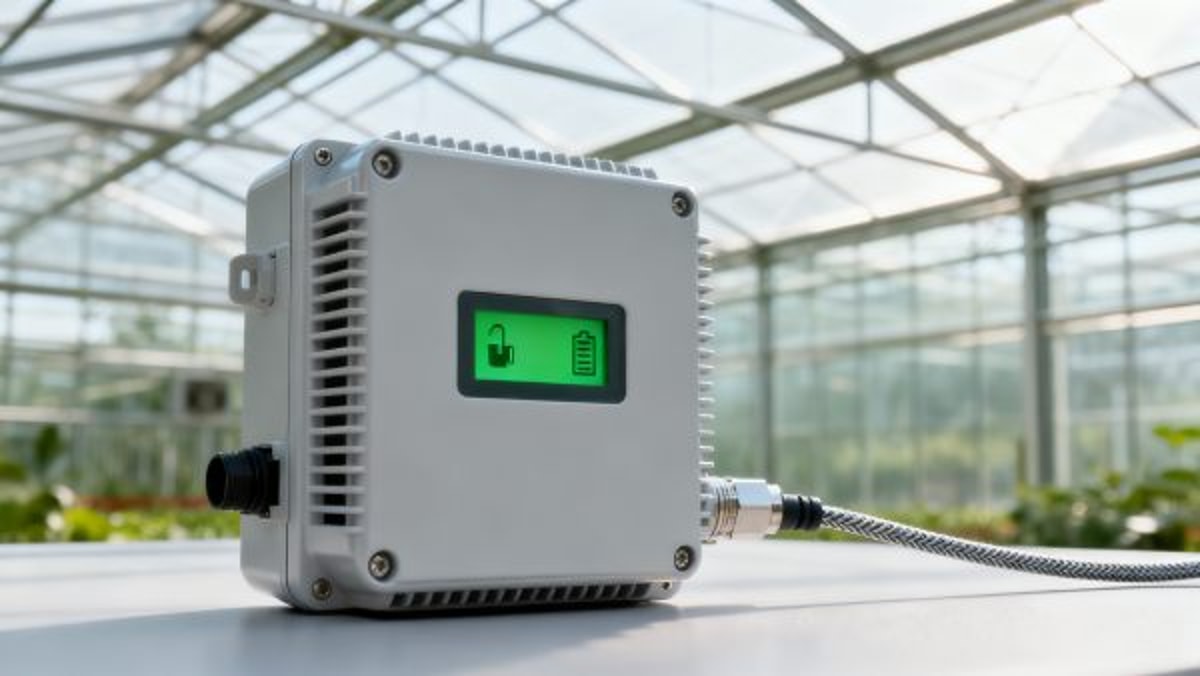
On April 27, 2026, China’s Ministry of Industry and Information Technology (MIIT) and four other departments jointly launched a coordinated enforcement campaign targeting the recycling and reuse of spent power batteries. Though focused on electric vehicle and energy storage batteries, the initiative introduces new traceability requirements for battery-integrated equipment—including those used in botanical extracts processing, water treatment, greenhouse automation, and recirculating aquaculture systems—making it highly relevant for exporters of lithium-powered agricultural and environmental control devices.
Event Overview
On April 27, 2026, MIIT, the Ministry of Ecology and Environment, the Ministry of Commerce, the State Administration for Market Regulation, and the National Development and Reform Commission jointly issued a notice initiating the ‘Special Joint Law Enforcement Action to Standardize the Recycling and Utilization of Spent Power Batteries’. The notice mandates full-lifecycle battery traceability documentation for equipment containing battery modules—including aeration & water tech systems, smart greenhouse controllers, and RAS (Recirculating Aquaculture Systems) devices—when exported from China. This requirement applies specifically to devices classified as ‘battery-equipped agricultural, water treatment, or greenhouse control equipment’.
Industries Affected
Equipment Manufacturers Integrating Lithium Battery Modules
Manufacturers embedding lithium-ion battery packs into devices such as automated nutrient dosers, portable pH/EC sensors, solar-powered greenhouse climate controllers, or compact RAS monitoring units are now required to maintain and submit verifiable battery origin, usage history, and end-of-life recovery commitments. Impact arises not from battery chemistry or capacity per se, but from the device’s classification under the notice’s scope—i.e., whether it falls under ‘battery-equipped agricultural/environmental control equipment’.
Export Trading Companies Handling Battery-Integrated Devices
Trading firms exporting such equipment must now include battery traceability documentation in customs declarations and commercial invoices. Overseas buyers—especially in EU, Japan, and Canada—are increasingly requesting proof of supplier-side battery recycling agreements and third-party-verified chain-of-custody records. Absence of these may delay clearance or trigger buyer compliance audits.
Supply Chain Service Providers (Logistics, Certification, Compliance)
Third-party logistics providers, testing labs, and compliance consultants supporting export-oriented manufacturers face increased demand for battery-specific documentation review, battery passport verification, and alignment with evolving national traceability platform standards (e.g., China’s National Battery Traceability Management Platform). Services related to battery data submission, recovery partner vetting, and audit-ready file packaging are now operationally relevant.
What Enterprises and Practitioners Should Focus On Now
Monitor official implementation guidance and platform integration timelines
The notice confirms the policy direction but does not yet specify technical formats for traceability files, deadlines for system registration, or whether legacy shipments will be grandfathered. Analysis shows that detailed operational rules—including acceptable data fields, interoperability with international battery passport frameworks (e.g., ISO 21963), and enforcement start dates—are expected in supplementary notices by Q3 2026.
Identify and categorize affected product lines by battery integration architecture
Not all battery-powered devices fall under the scope: only those where the battery is integral to core functionality (e.g., off-grid greenhouse controllers) and classified under agricultural/water/greenhouse control categories—not standalone power banks or auxiliary backup units. From industry perspective, companies should conduct internal product mapping using the notice’s functional definitions rather than battery weight or voltage thresholds.
Verify and document upstream battery supply chain commitments
Exporters must now ensure their battery suppliers provide written commitments covering collection, transport, and recycling pathways—and confirm those partners are registered with China’s official battery recycling network. Observation shows that overseas buyers are beginning to request copies of signed recovery agreements and evidence of participation in certified take-back programs (e.g., CATL’s or BYD’s OEM recycling channels).
Prepare for buyer-facing communication and documentation upgrades
Current best practice includes updating product datasheets to flag battery traceability readiness, drafting standardized battery lifecycle statements for customer inquiries, and assigning internal ownership (e.g., compliance officer or export manager) for traceability file generation and version control. This is not yet mandatory—but analysis indicates early adopters are reducing pre-shipment delays during buyer due diligence.
Editorial Perspective / Industry Observation
This notice is better understood as a regulatory signal than an immediate operational mandate. While enforcement begins formally in April 2026, actual inspection protocols, penalties, and platform interoperability remain undefined. Observably, the policy reflects China’s broader shift toward extending extended producer responsibility (EPR) to embedded battery applications—not just standalone batteries. It also aligns with tightening global ESG procurement expectations, especially in agri-tech and clean-water equipment markets. Industry stakeholders should treat this as a forward-looking compliance milestone, not a sudden barrier: the focus remains on documentation readiness and supply chain transparency, not technical redesign.
Conclusion
For exporters of battery-integrated botanical extracts, water treatment, and controlled-environment agriculture equipment, this action marks the formal extension of China’s battery circular economy framework to embedded applications. Its immediate significance lies in documentation discipline and upstream supplier coordination—not product redesign or market access loss. Currently, it is more appropriately interpreted as a procedural calibration step within China’s evolving green trade infrastructure, requiring attention but not alarm.
Information Sources
Primary source: Joint notice issued by MIIT, MEE, MOFCOM, SAMR, and NDRC on April 27, 2026. Title: ‘Notice on Launching the Special Joint Law Enforcement Action to Standardize the Recycling and Utilization of Spent Power Batteries’.
Areas under ongoing observation: Implementation guidelines, traceability platform technical specifications, and cross-border recognition of Chinese battery passports.
Related Intelligence
- Aeration & Water TechAsia-Pacific to Middle East Aeration & Water Tech Container Rates Up 18%Aeration & Water Tech container rates surge 18% Asia-Pacific to Middle East—critical for RAS, smart greenhouse & precision water-tech exporters. Act now.
- Aeration & Water TechChina’s 5-Dept Battery Traceability Drive Impacts Botanical Extracts Equipment ExportsChina’s 5-dept battery traceability drive impacts botanical extracts equipment exports—key compliance insights for exporters of lithium-powered agri-tech and water treatment devices.
- Aeration & Water TechAsia–Middle East Aeration & Water Tech Container Freight Up 18%Aeration & Water Tech container freight surges 18% on Asia–Middle East route—urgent implications for exporters, OEMs & forwarders. Act now.
The Morning Broadsheet
Daily chemical briefings, market shifts, and peer-reviewed summaries delivered to your terminal.
