
Indonesia BPOM Updates Natural Ingredients Labeling Rules
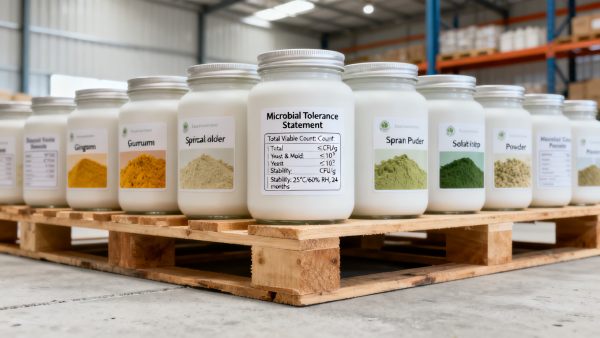
On April 28, 2026, Indonesia’s National Agency of Drug and Food Control (BPOM) issued Regulation No. 22/2026, amending mandatory labeling requirements for imported natural ingredients — specifically introducing a new ‘Microbial Tolerance Statement’ field. This update directly affects exporters of natural pigments, plant powders, and fermented extracts from China and other countries supplying the Indonesian market.
Event Overview
On April 28, 2026, BPOM published Perka BPOM No. 22/2026, which revises the mandatory labeling provisions for imported natural ingredients. The regulation introduces a new required label element: the ‘Microbial Tolerance Statement’. This statement must specify the total viable count, yeast and mold limits, and stability data under defined storage conditions (e.g., 25°C/60% RH), covering the full shelf life of the product. The regulation enters into force on August 1, 2026.
Industries Affected
Direct Exporters to Indonesia
Companies exporting natural pigments, botanical powders, or fermented extracts to Indonesia will face immediate compliance requirements. The new labeling rule applies at the point of customs clearance; non-compliant packaging may result in rejection, delays, or re-labeling mandates. Impact is most acute for shipments scheduled between August and December 2026, when transition buffers are minimal.
Raw Material Sourcing & Blending Firms
Firms sourcing or pre-blending natural ingredients for downstream export (e.g., contract manufacturers supplying finished formulations to Indonesian importers) must now verify microbial stability data across their supply chain. Absence of validated, batch-specific tolerance data — especially under BPOM-specified conditions — may break traceability and prevent label certification.
Contract Packaging & Label Design Providers
Service providers responsible for final packaging and label printing must adapt templates to include the new Microbial Tolerance Statement field. This requires coordination with clients to secure validated stability parameters and formatting alignment with BPOM’s layout guidance (not yet publicly released but expected in upcoming technical circulars).
Key Focus Areas and Recommended Actions
Monitor BPOM’s upcoming implementation guidance
Perka BPOM No. 22/2026 is the regulatory framework, but technical annexes — including acceptable test methods, declaration formatting, and transitional allowances — have not yet been published. Companies should track BPOM’s official portal and registered notifications for updates expected before June 2026.
Validate microbial stability data under BPOM-specified conditions
Existing shelf-life studies conducted under different environmental parameters (e.g., 30°C/75% RH or accelerated conditions) may not satisfy the new requirement. Exporters should prioritize retesting or commissioning new stability studies aligned with BPOM’s stated condition: 25°C/60% RH — particularly for hygroscopic or fermentation-derived ingredients prone to microbial drift.
Update internal labeling workflows and supplier agreements
Label content now depends on microbiological performance data, not just composition or origin. Firms should revise quality agreements with suppliers to require provision of validated tolerance statements, and integrate this requirement into purchase order terms and QC checklists ahead of the August 1, 2026 deadline.
Prepare for potential customs verification during early enforcement
Initial enforcement is likely to focus on high-volume or high-risk categories (e.g., turmeric powder, spirulina extract, fermented soy peptides). Exporters should ensure documentation — including test reports, storage condition declarations, and batch-specific tolerance values — is readily available in English and Bahasa Indonesia for customs review.
Editorial Perspective / Industry Observation
Observably, this amendment signals BPOM’s shift toward functional safety accountability — moving beyond identity and purity verification to demand evidence of real-world microbial behavior under local storage conditions. Analysis shows it is less a sudden compliance shock and more a formalization of emerging expectations already reflected in recent BPOM inspection findings. From an industry perspective, it reflects tightening harmonization with ASEAN Common Technical Dossier standards, though BPOM retains unique environmental parameters. Current enforcement posture suggests this is a policy signal with near-term operational consequences — not merely procedural alignment.
This regulation is best understood as a targeted upgrade in regulatory oversight for natural-ingredient imports, rather than a broad market access restriction. Its practical effect lies in elevating documentation rigor and aligning stability claims with ambient-condition realities in tropical climates. For affected exporters, proactive validation and label system updates — not strategic market reassessment — represent the most appropriate response at this stage.
Information Sources:
• BPOM Official Gazette: Perka BPOM No. 22/2026 (published April 28, 2026)
• BPOM Regulatory Database (accessible via bpom.go.id)
Note: Technical implementation guidelines, test method specifications, and transitional provisions remain pending and are subject to ongoing monitoring.
Related Intelligence
- Natural IngredientsIndonesia BPOM Updates Natural Ingredients Labeling RulesIndonesia BPOM Updates Natural Ingredients Labeling Rules: New 'Microbial Tolerance Statement' required for natural pigments, plant powders & fermented extracts by Aug 1, 2026.
- Natural IngredientsIndonesia BPOM Updates Natural Ingredients Labeling RulesIndonesia BPOM updates natural ingredients labeling rules: New 'Microbial Tolerance Statement' required for plant powders, fermented extracts & peptides—act now to avoid customs delays.
- Natural IngredientsIndonesia BPOM Updates Label Rules for Natural Ingredients ImportsIndonesia BPOM updates label rules for natural ingredients imports: New pH ≤4.6 & 60°C/30min tolerance statement required by Aug 1, 2026 — act now to avoid customs rejection.
The Morning Broadsheet
Daily chemical briefings, market shifts, and peer-reviewed summaries delivered to your terminal.
