
The Authority in Global Agricultural Chemistry & Bio-Resources
Feed and grain processing technology trends that cut waste
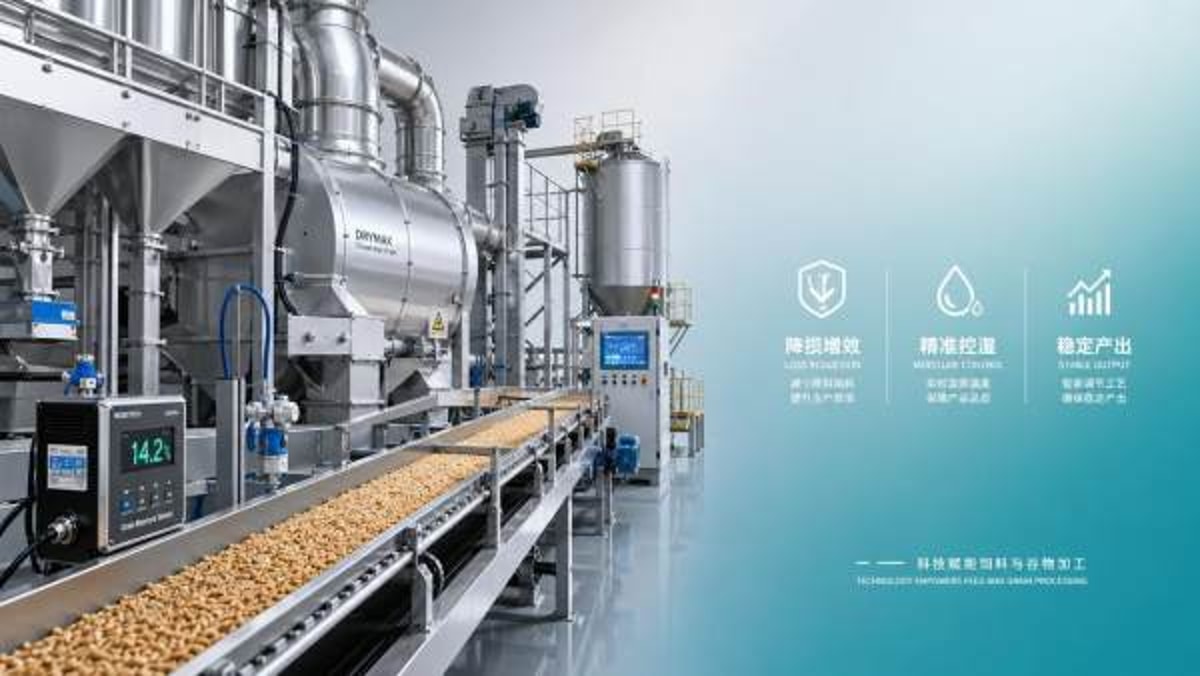
As margin pressure, raw material volatility, and sustainability targets intensify across primary industries, Feed & Grain processing technology is becoming a decisive lever for operational efficiency. This article examines the latest trends helping processors cut waste, improve yield consistency, and strengthen compliance, offering business decision-makers practical insight into where technology investment can deliver measurable returns.
For most business leaders evaluating Feed & Grain processing technology, the core question is not whether innovation matters, but which upgrades will reduce loss, stabilize throughput, and pay back in a realistic timeframe. In today’s environment, waste is no longer just a plant-level inefficiency. It affects procurement strategy, energy exposure, compliance risk, customer specifications, and long-term competitiveness.
The strongest technology trends are therefore those that convert process variability into usable control. They help operators detect quality shifts earlier, optimize moisture and energy use more precisely, reduce giveaway, prevent contamination, and turn production data into better decisions. For processors under pressure to do more with less, these are not incremental advantages. They are becoming baseline capabilities.
Why waste reduction has become a board-level priority in feed and grain processing
Waste in feed and grain operations rarely comes from a single obvious source. It accumulates through raw material inconsistency, excess moisture, dust losses, over-drying, poor segregation, unplanned downtime, formulation drift, product rework, and weak traceability. Each issue may appear manageable in isolation, but together they can erode margins significantly.
That is why Feed & Grain processing technology is attracting more executive attention. Leaders are no longer viewing plant automation purely as a labor-saving tool. They are assessing it as a system for protecting yield, ensuring product compliance, and making operations more resilient against input volatility. This shift is especially important where commodity prices fluctuate sharply or customer specifications are tightening.
Decision-makers also recognize that sustainability commitments increasingly overlap with cost control. Lower energy use, reduced water consumption, fewer rejected batches, and better by-product utilization all support environmental goals while improving profitability. In this context, waste reduction technology creates operational and reputational value at the same time.
Which technology trends are delivering the clearest returns today
The most valuable trends in Feed & Grain processing technology are practical rather than futuristic. They improve how the plant measures, controls, and responds to variability in real time. While advanced robotics and fully autonomous plants may attract attention, most processors are achieving stronger returns from targeted digitalization and process optimization.
One major trend is the wider use of inline sensors and real-time analytics. Moisture, temperature, density, particle size, and composition data can now be measured more continuously and integrated into control systems. Instead of relying only on periodic sampling, operators can adjust settings during production, reducing overcorrection and minimizing off-spec output.
Another high-impact trend is model-based process control. In drying, grinding, pelleting, and blending, software can recommend or automate parameter changes based on incoming material conditions and target product characteristics. This improves consistency and often cuts both energy use and rework. For executive teams, the appeal is straightforward: less variability means fewer losses hidden in routine operation.
Digital traceability platforms are also moving from compliance support to value creation. Better lot tracking, process history, and quality documentation help plants isolate problems faster, reduce recall exposure, and verify performance across suppliers or shifts. When integrated well, traceability systems do more than satisfy auditors. They shorten decision cycles and reduce the cost of uncertainty.
Finally, predictive maintenance is proving its value in equipment-intensive operations. Vibrational monitoring, thermal sensing, and machine condition analytics help prevent failures in mills, conveyors, dryers, and pellet presses. Since waste often spikes when equipment degrades gradually rather than fails suddenly, earlier intervention can preserve throughput and product quality at the same time.
How better raw material intelligence cuts loss before processing even starts
Many processors still focus technology investment inside the plant while underestimating the waste created by weak incoming material control. Yet raw material variability is one of the most important drivers of inefficiency across feed and grain systems. Differences in moisture, contamination, kernel integrity, nutrient profile, and storage condition directly affect downstream performance.
Advanced intake inspection is therefore becoming a high-priority area. Near-infrared analysis, automated sampling, and digital grading systems allow plants to characterize materials more accurately on arrival. This supports better segregation, more appropriate routing, and tighter production planning. It also reduces the tendency to run conservative settings that sacrifice yield just to avoid quality risk.
For business leaders, the value of raw material intelligence extends beyond process optimization. It strengthens procurement discipline. If a plant can measure how specific suppliers or origins influence yield, downtime, or final product quality, sourcing decisions become more evidence-based. Over time, this can improve contract structures, supplier accountability, and gross margin predictability.
There is also a risk-management benefit. Better visibility into incoming inputs can help identify contamination, mycotoxin exposure, or storage-related degradation before materials move further into production. Preventing a single major quality incident may justify the technology investment more convincingly than routine efficiency gains alone.
Why moisture management and drying control remain among the biggest opportunities
In many feed and grain operations, moisture is where waste hides in plain sight. Over-drying destroys value through weight loss and unnecessary energy consumption. Under-drying increases spoilage risk, storage instability, and non-compliance. Because moisture affects both commercial yield and product safety, precision in this area has an outsized financial impact.
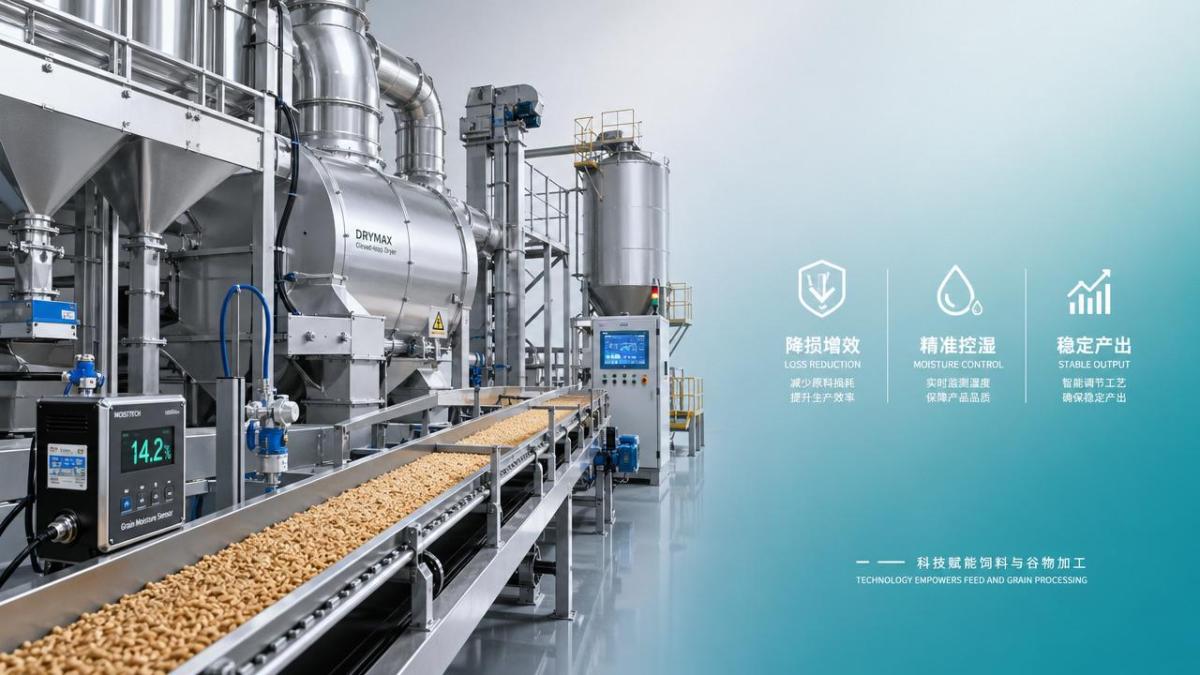
Modern drying systems are increasingly using adaptive control logic rather than fixed operating rules. By linking sensor data to airflow, heat input, residence time, and product targets, these systems can maintain tighter moisture windows even when raw material conditions change. That leads to more saleable output, lower fuel use, and fewer downstream handling issues.
For executive teams comparing capital priorities, moisture control often deserves a higher ranking than it initially receives. The savings are distributed across multiple line items: utility costs, recovered mass, reduced spoilage, improved shelf life, and fewer customer complaints. Because these gains are partly hidden in existing operations, companies may underestimate the true return until they measure baseline loss carefully.
Plants should also assess whether drying upgrades require a full equipment replacement. In some cases, retrofitting sensors, automation layers, burner controls, or airflow balancing systems can unlock meaningful performance gains at lower cost. A staged modernization approach may deliver faster payback while preserving future upgrade flexibility.
How automation and data integration improve yield consistency
One of the most important shifts in Feed & Grain processing technology is the move from isolated machine automation to connected operational intelligence. A plant may already have automated components, but if dryers, grinders, mixers, pellet mills, and packaging lines operate as separate information islands, waste remains harder to diagnose and control.
Integrated systems allow production, maintenance, quality, and management teams to work from the same operational picture. When process data, laboratory results, alarms, inventory, and downtime records are connected, plants can identify patterns that would otherwise remain hidden. For example, a recurring quality deviation may correlate with a specific material lot, equipment wear condition, or shift-level operating practice.
This matters especially for organizations trying to standardize performance across multiple facilities. Data integration makes it easier to compare sites, replicate successful settings, and identify where variability is coming from. For decision-makers, this creates a more scalable model for continuous improvement than relying solely on local operator experience.
It also supports faster intervention. If deviations are visible in near real time, the plant can reduce the duration and cost of quality drift. That may mean less rework, fewer customer claims, and less wasted labor. In businesses with narrow margins, shortening the time between problem emergence and corrective action can materially improve annual performance.
What decision-makers should look for when evaluating technology investments
Not every technology trend deserves immediate adoption. The best investment cases usually start with a clear operational constraint rather than a vendor promise. Leaders should first identify where waste is actually occurring: yield loss, energy overuse, dust generation, inconsistent pellet quality, excessive downtime, high rework rates, or poor traceability response times.
Once those loss points are defined, the next step is to evaluate whether the proposed technology addresses the root cause directly. A useful screening question is simple: will this tool help us measure a key variable better, control it faster, or prevent a recurring failure more reliably? If the answer is vague, the project may be more about modernization optics than operational return.
Payback analysis should also go beyond headline labor savings. In feed and grain processing, the most meaningful value often comes from recovered yield, reduced giveaway, lower utility consumption, fewer compliance events, and improved uptime. Companies that quantify only direct labor effects may reject investments that are actually economically strong.
Implementation risk is another essential factor. A technically capable system may still underperform if it is difficult to integrate with legacy equipment, poorly supported in the local market, or too complex for current staffing levels. Decision-makers should examine vendor service capability, cybersecurity posture, training requirements, spare parts access, and data ownership terms before committing capital.
Finally, executives should favor technologies that create a platform effect. A sensor network, historian, or control layer that supports future optimization projects can be more valuable than a standalone solution with narrow benefits. In an industry where digital maturity varies widely, flexibility matters almost as much as immediate functionality.
How to prioritize projects by plant type and business objective
The right Feed & Grain processing technology roadmap depends on the plant’s economics and strategic goals. A high-throughput commodity grain processor may gain most from drying optimization, inventory visibility, and predictive maintenance. A specialty feed producer serving demanding nutritional specifications may benefit more from formulation control, traceability, and contamination prevention.
If the primary business objective is margin protection, leaders should prioritize technologies that improve material yield and energy efficiency. If the priority is customer retention or premium market access, consistency, traceability, and quality verification may deserve more weight. If labor availability is the limiting factor, automation that simplifies operation and shortens response time can be more valuable than maximum theoretical efficiency.
Multi-site groups should also distinguish between enterprise-level and plant-level value. Some investments, such as digital reporting standards or centralized analytics, create stronger benefits when deployed across the network. Others, such as a dryer retrofit or machine monitoring package, may be justified site by site based on local conditions.
A practical approach is to divide the roadmap into three layers: quick wins, structural upgrades, and strategic digital foundations. Quick wins may include sensor additions, alarm rationalization, or maintenance analytics. Structural upgrades may involve dryers, grinders, or mixing systems. Strategic digital foundations include data integration, traceability architecture, and enterprise visibility. This sequencing helps avoid fragmented spending and improves capital discipline.
The compliance and resilience case for modernization
Waste reduction is often the headline argument for modernization, but compliance and resilience may be equally important. Feed and grain processors operate in an environment of increasing scrutiny around food safety, environmental controls, emissions, storage integrity, and supply chain documentation. Technologies that improve process visibility can reduce both operational and regulatory exposure.
For example, automated records and audit trails make it easier to demonstrate control over critical parameters, respond to customer inquiries, and investigate deviations. Better environmental monitoring can also help plants manage dust, emissions, and housekeeping risks more effectively. These capabilities matter not only for passing inspections but for maintaining customer trust and securing access to regulated markets.
Resilience is another strategic benefit. Operations with stronger sensing, analytics, and process control can adapt more effectively to changes in raw material quality, energy costs, labor constraints, or customer demand. In uncertain markets, adaptability has real financial value. It reduces dependence on heroic operator intervention and makes performance more repeatable under stress.
Where the market is heading next
Over the next several years, Feed & Grain processing technology is likely to evolve around greater interoperability, better use of AI-assisted analytics, and wider deployment of modular upgrades rather than full greenfield replacement. Processors want solutions that can fit existing assets, generate visible returns, and produce decision-ready data without major disruption.
AI will be most useful where it strengthens practical control and forecasting. Examples include predicting moisture behavior, optimizing maintenance intervals, detecting abnormal process patterns, and improving blending or formulation decisions. However, the market will remain skeptical of tools that promise intelligence without offering transparency or measurable operational outcomes.
At the same time, sustainability reporting pressures will push more companies to connect waste reduction with formal carbon, water, and energy metrics. This will make performance monitoring more strategic and may influence procurement, financing, and customer relationships. Plants that already have strong data systems will be better positioned to respond.
For most decision-makers, the central lesson is clear: the most effective investments are those that reduce variability, make waste measurable, and support faster operational decisions. Technology is not replacing process discipline. It is making discipline easier to maintain at scale.
Conclusion: invest where technology turns variability into control
For feed and grain processors, cutting waste is no longer just an efficiency project. It is a strategic response to cost pressure, quality demands, sustainability expectations, and supply chain complexity. The most relevant technology trends are those that improve visibility into materials, tighten control over moisture and process parameters, integrate plant data, and reduce downtime before it becomes expensive.
Business leaders should resist the temptation to pursue innovation broadly and instead focus on where Feed & Grain processing technology can remove specific sources of loss. The best opportunities often lie in better measurement, smarter control, and stronger traceability rather than in the most dramatic capital project.
When evaluated properly, these technologies do more than cut waste. They improve yield consistency, support compliance, strengthen resilience, and create a more dependable operating model. For companies competing in increasingly volatile markets, that combination is where the real return on modernization will be found.
Related Intelligence
- Commercial Feed PelletIndia Launches Sunset Review on Anti-Dumping Duty for Chinese Feed PelletsIndia's sunset review of anti-dumping duty on Chinese feed pellets begins April 2026—key for exporters, importers & feed mills. Act now.
- Commercial Feed PelletFeed and grain processing technology trends that cut wasteFeed & Grain processing technology trends that cut waste: explore smarter drying, real-time sensors, predictive maintenance, and traceability to boost yield, compliance, and ROI.
- Commercial Feed PelletFeed and grain processing equipment downtime usually starts hereFeed & Grain processing equipment downtime often begins with small, overlooked warning signs. Learn the early fault points, hidden maintenance gaps, and practical fixes that help mills prevent costly shutdowns.
The Morning Broadsheet
Daily chemical briefings, market shifts, and peer-reviewed summaries delivered to your terminal.
