

The Authority in Global Agricultural Chemistry & Bio-Resources
Feed and grain processing equipment downtime usually starts here
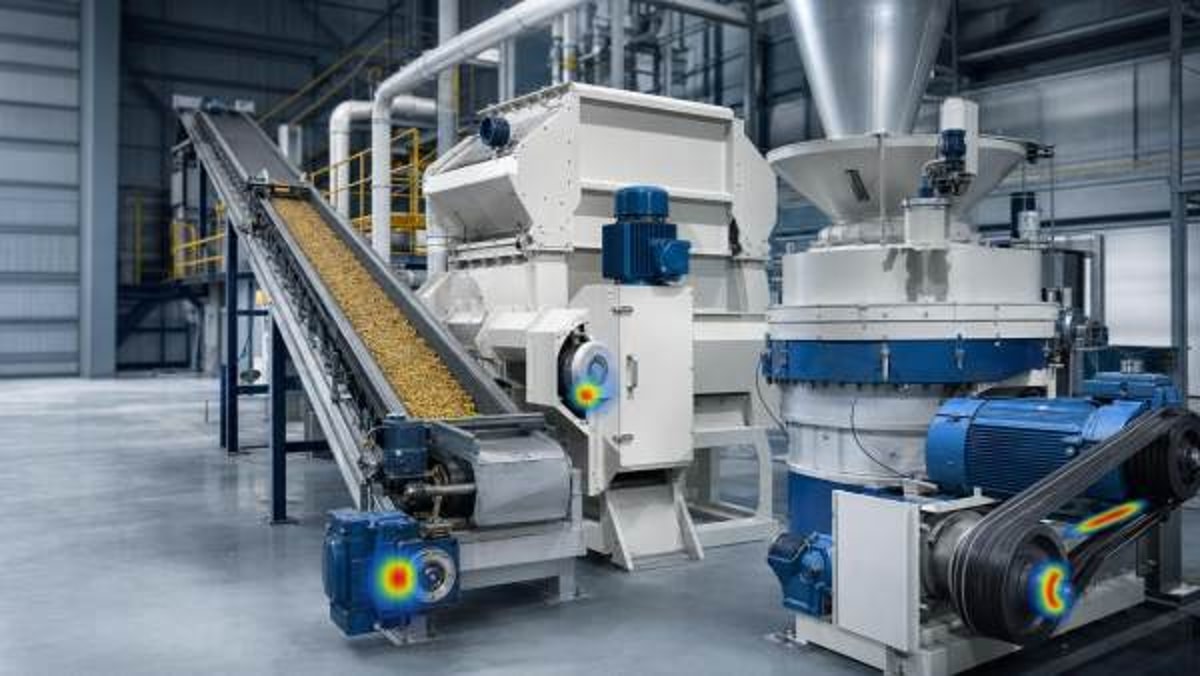
In feed mills, unplanned stoppages rarely begin with a major failure—they often start with small warning signs that go unnoticed. For after-sales maintenance teams, understanding where Feed & Grain processing equipment downtime usually begins is critical to protecting throughput, product quality, and service credibility. This article examines the early fault points, hidden maintenance gaps, and practical interventions that help prevent costly disruptions before they escalate.
Why downtime patterns are changing across Feed & Grain processing equipment
A noticeable shift is taking place in the way mills experience failure. In the past, breakdowns were often linked to obvious mechanical wear or overdue replacement of major assemblies. Today, downtime in Feed & Grain processing equipment more often develops from smaller, earlier-stage deviations: inconsistent lubrication, unstable sensor feedback, minor misalignment, air leakage, belt tracking drift, moisture variation, and control logic interruptions. These issues may not stop a line immediately, but they gradually weaken reliability until a production bottleneck appears.
This change matters because feed and grain operations are under heavier pressure than before. Mills are expected to run tighter production schedules, maintain stricter product consistency, and respond faster to customer orders. At the same time, many facilities are processing more variable raw materials, integrating newer automation layers, and working with leaner maintenance staffing. As a result, after-sales maintenance personnel are no longer judged only by how fast they repair a breakdown. They are increasingly valued for how well they detect where downtime is likely to start.
For AgriChem Chronicle readers in primary processing and equipment support, the practical signal is clear: the weak points in Feed & Grain processing equipment are becoming more interconnected. Mechanical, electrical, pneumatic, digital, and process-control issues now influence each other much earlier in the failure chain.
The earliest warning zones are often small, repeatable, and easy to dismiss
Most unplanned stops do not begin at the point of visible failure. They begin at interfaces—where one component depends on another, where material flow changes condition, or where settings drift from the original design envelope. In Feed & Grain processing equipment, these early warning zones are especially common around conveying transitions, grinding systems, pelleting lines, screens, dosing systems, and dust handling modules.
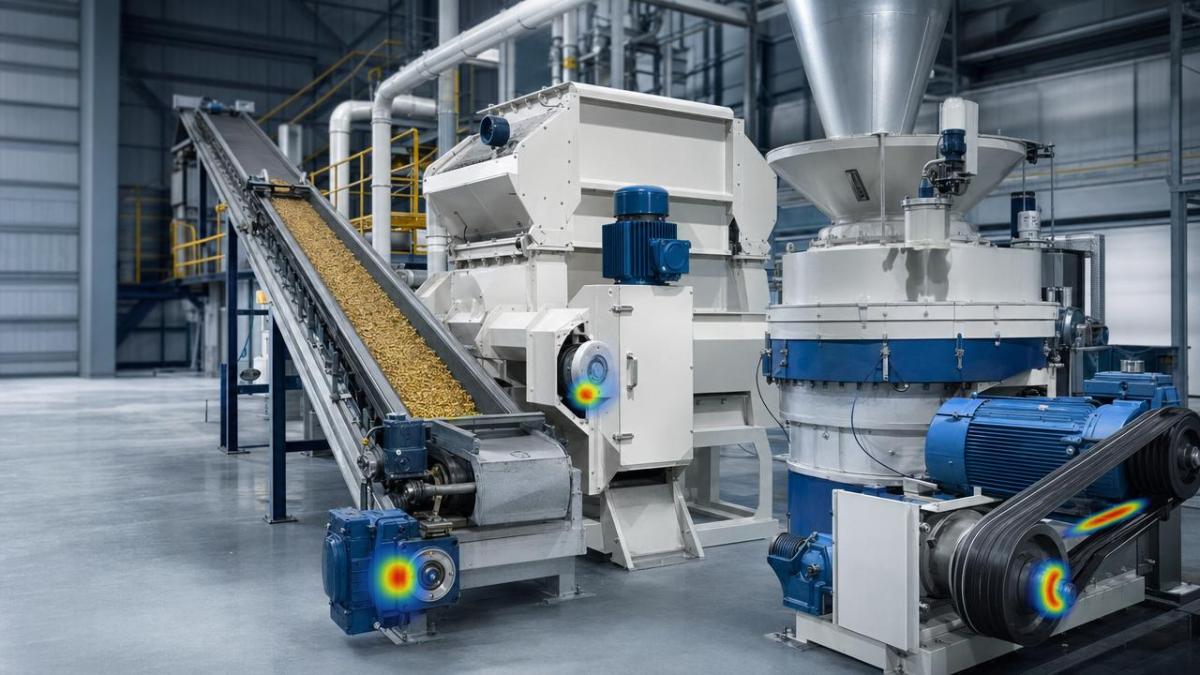
For after-sales teams, the pattern is familiar. A motor does not fail without earlier signs of overload. A bearing rarely collapses without changes in heat, noise, or vibration. A pellet mill does not suddenly lose output without clues in die condition, feeder behavior, steam quality, or roll adjustment. Yet these symptoms are often normalized by operators because the line still runs. That normalization is where downtime usually starts.
The strategic implication is that maintenance teams should treat “minor repeat issues” as trend data, not as isolated annoyances. When the same alarm, vibration pattern, or cleaning problem appears every week, it is no longer a small issue. It is a forecast.
What is driving this trend in modern mills
Several forces are pushing Feed & Grain processing equipment toward more subtle and earlier-stage downtime behavior. First, raw material variability has become more difficult to manage. Changes in moisture, particle size, density, oil content, and contamination levels affect grinders, mixers, pellet presses, sifters, and conveyors in ways that may not be visible during startup checks. Equipment that is mechanically sound can still drift into unstable operation when process conditions shift.
Second, automation has expanded, but maintenance maturity has not always kept pace. More mills now rely on sensors, PLCs, VFDs, interlocks, and remote diagnostics. These technologies improve visibility, but only if thresholds are set correctly, data is interpreted consistently, and technicians are trained to connect control signals with physical root causes. When that link is weak, teams either overreact to harmless alerts or miss the alerts that matter.
Third, service expectations are rising. Equipment OEMs, distributors, and contract support teams are being asked to deliver not only repair competence but uptime assurance. In that environment, after-sales maintenance is shifting from reactive intervention to condition-based judgment. The market increasingly rewards those who can identify where Feed & Grain processing equipment is vulnerable before the customer loses a production window.
Downtime now starts at the intersection of process and maintenance
One of the most important industry signals is that equipment reliability can no longer be separated from process discipline. A well-maintained machine can still become a downtime source if feeder settings are unstable, steam conditioning is inconsistent, magnets are not checked, or upstream screening is neglected. This is especially true in Feed & Grain processing equipment, where material behavior changes from one lot to another and where minor process drift creates mechanical stress over time.
For example, hammer mill performance often degrades long before a hard stop occurs. Screens may wear unevenly, hammers may lose balance, airflow may weaken, or foreign material may begin impacting internals. Operators may compensate by increasing load or extending run time. That keeps output moving temporarily, but it also accelerates wear and raises the probability of a larger unplanned event. The same logic applies to bucket elevators, pellet coolers, drag conveyors, and bagging systems.
This means after-sales teams should move beyond component replacement history and review process-side behaviors with equal discipline. If the line repeatedly requires manual adjustment to stay productive, the problem is already developing.
Which maintenance gaps are becoming more costly
The most expensive maintenance gaps are no longer always the obvious ones. In many plants, the biggest hidden cost comes from poor escalation rules. Teams record abnormalities, but they do not clearly define when a symptom crosses from observation to intervention. As a result, small defects remain active too long. Another gap is fragmented ownership. Mechanical technicians, electricians, controls specialists, and operators may each see part of the issue, but no one assembles the full failure picture.
A third gap is overreliance on calendar-based servicing. Time-based PM still has value, but it is less effective when Feed & Grain processing equipment runs under variable loads and changing formulations. A machine that appears “within service interval” may already be outside safe operating condition. This is why trend-based inspection routines—temperature comparison, vibration routes, amperage pattern review, seal condition checks, and transfer-point cleanliness audits—are gaining importance.
How these changes affect after-sales maintenance teams
For after-sales professionals, the shift is both operational and commercial. Operationally, technicians need stronger diagnostic habits across the full system, not just the failed component. If a gearbox overheats, the question is not only whether the gearbox is damaged, but why the load, alignment, lubrication state, or upstream process allowed that condition to develop. Commercially, customers increasingly judge service partners by their ability to reduce repeat downtime, shorten fault isolation time, and offer practical prevention plans.
This has direct implications for service models around Feed & Grain processing equipment. Preventive site visits should include trend review, not only physical inspection. Spare-parts recommendations should be tied to actual failure patterns. Remote support should focus on interpreting small abnormalities before they trigger a stop. Documentation should also improve: photos, temperature readings, vibration trends, control screenshots, and material-condition notes all help convert isolated repairs into usable reliability intelligence.
What signals deserve closer attention over the next service cycle
Several signals are worth monitoring more closely in the current operating environment. Repeated short stops are one of the strongest indicators that Feed & Grain processing equipment is heading toward a more serious interruption. Another signal is performance compensation: if operators are steadily adjusting speed, feed rate, steam input, or dwell time to maintain output, the line is revealing instability. Rising housekeeping burden is also meaningful. More dust, more carryback, more buildup, or more leakage often indicates wear progression or poor sealing that can later affect both uptime and safety.
Technicians should also watch for drift in “normal.” When unusual vibration, temperature, or sound becomes accepted as part of daily operation, risk increases sharply. Many costly failures happen after a condition has been observed for weeks but no longer treated as urgent. In trend terms, normalization of abnormality is one of the clearest precursors to avoidable downtime.
A practical response framework for Feed & Grain processing equipment reliability
The most effective response is not a single technology upgrade. It is a disciplined framework that connects observation, prioritization, intervention, and learning. Start by identifying the five to ten components in each line where downtime most often begins: bearings, belts, screens, dies, rolls, sensors, valves, chains, seals, or transfer chutes. Then define what “early warning” looks like for each one. That may include heat rise, load fluctuation, contamination, product inconsistency, or cleaning frequency.
Next, improve escalation rules. Not every defect requires immediate shutdown, but every recurring defect requires a clear decision owner and a response timeline. Third, review process data alongside physical inspection findings. A maintenance route that ignores formulation changes, moisture variation, and throughput pressure will miss why a fault developed. Finally, close the loop after every incident. Ask not only what failed, but what earlier signal was visible and why it did not trigger action.
Short checklist for the next visit
During the next customer visit, after-sales teams should confirm whether the line has recurring alarms, recurring manual adjustments, rising cleanup effort, increasing part consumption, or unexplained output variation. These five questions often reveal more about future downtime in Feed & Grain processing equipment than a simple pass-or-fail inspection sheet.
FAQ: common judgment points for after-sales teams
Is every small abnormality a downtime threat?
No. The key is whether the abnormality repeats, spreads to adjacent components, affects load stability, or forces operator compensation. In Feed & Grain processing equipment, repetition is often more important than severity at the start.
Should teams prioritize mechanical or control issues first?
Prioritize by production impact and fault chain, not by discipline. A false sensor reading may trigger a stop just as quickly as a worn bearing, and a mechanical overload may be first visible in electrical data.
What is the most overlooked cause of repeat downtime?
Incomplete root-cause closure. Replacing a failed part without addressing alignment, contamination, flow condition, or operating practice often guarantees recurrence.
Where the strongest service value will come from next
The service market is moving toward earlier insight, not just faster repair. For organizations supporting Feed & Grain processing equipment, the strongest value will come from helping customers recognize the first stage of downtime formation. That means translating scattered symptoms into clear action: what changed, why it matters, what happens if ignored, and what should be checked next. In a sector where output continuity, product quality, compliance, and labor efficiency are all under pressure, that kind of judgment is becoming a differentiator.
If a business wants to assess how these trends affect its own operation, the most useful questions are practical ones: Which repeated minor faults have become normalized? Which equipment interfaces create the most instability? Which alarms lead to action, and which are routinely ignored? Which process changes are creating mechanical stress? The more clearly these questions are answered, the less likely small defects in Feed & Grain processing equipment will grow into expensive, avoidable downtime.
Related Intelligence
- Commercial Feed PelletIndia Launches Sunset Review on Anti-Dumping Duty for Chinese Feed PelletsIndia's sunset review of anti-dumping duty on Chinese feed pellets begins April 2026—key for exporters, importers & feed mills. Act now.
- Commercial Feed PelletFeed and grain processing technology trends that cut wasteFeed & Grain processing technology trends that cut waste: explore smarter drying, real-time sensors, predictive maintenance, and traceability to boost yield, compliance, and ROI.
- Commercial Feed PelletFeed and grain processing equipment downtime usually starts hereFeed & Grain processing equipment downtime often begins with small, overlooked warning signs. Learn the early fault points, hidden maintenance gaps, and practical fixes that help mills prevent costly shutdowns.
The Morning Broadsheet
Daily chemical briefings, market shifts, and peer-reviewed summaries delivered to your terminal.
