

The Authority in Global Agricultural Chemistry & Bio-Resources
Bio-Extracts extraction methods that change active yield the most
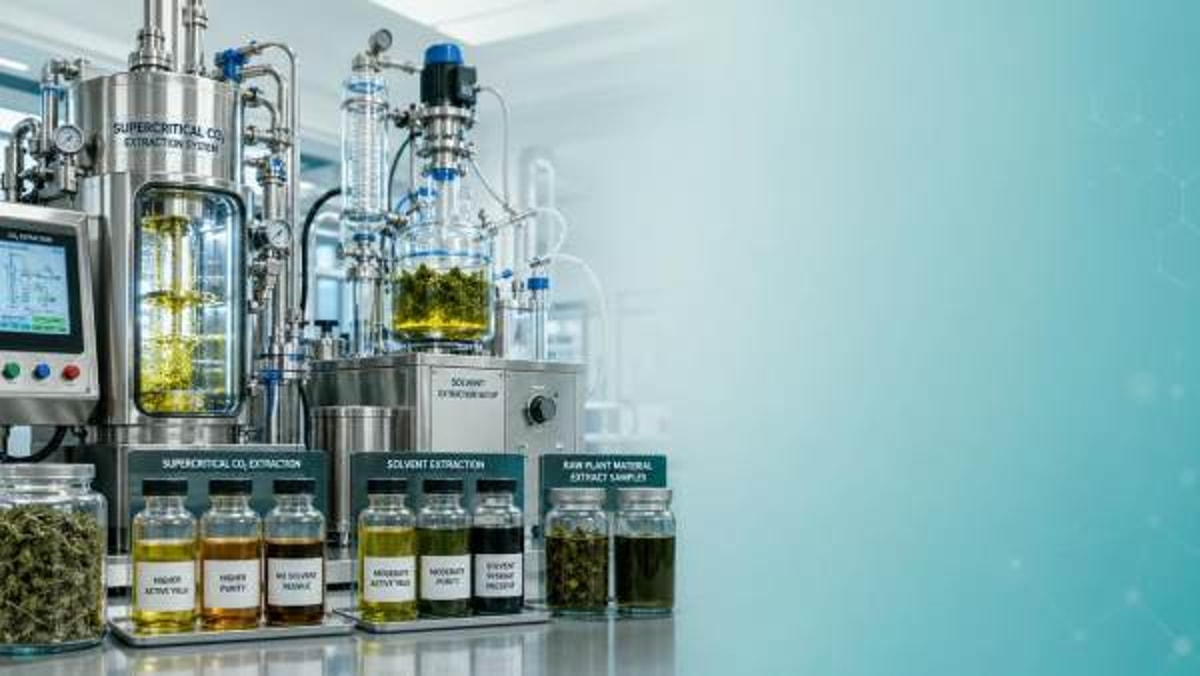
For technical evaluators in regulated supply chains, Bio-Extracts extraction methods are not interchangeable variables but decisive levers that can sharply alter active yield, purity, scalability, and compliance risk. This article examines which extraction approaches most significantly change output performance and why process selection now matters as much as raw material quality in commercial bio-ingredients production.
Why do Bio-Extracts extraction methods change active yield so dramatically?
The short answer is that extraction is not only a separation step; it is also a transformation environment. Temperature, solvent polarity, pressure, pH, residence time, shear, and oxygen exposure can all affect whether the target compound is released, preserved, degraded, or co-extracted with unwanted material. For technical evaluators, this means Bio-Extracts extraction methods directly shape the commercial value of an ingredient long before downstream purification begins.
In practical terms, two processors can start with the same botanical, algae biomass, fermentation cake, or marine raw material and end with very different active yields. One may recover a high percentage of marker compounds but also generate chlorophyll, waxes, proteins, or solvent residues that lower usability. Another may achieve cleaner fractions but lose heat-sensitive actives in the process. Yield therefore should never be interpreted as a single number without context. Evaluators should distinguish between crude extraction yield, active yield, standardized yield, and usable finished yield after specification adjustment.
This is why Bio-Extracts extraction methods attract so much attention in pharmaceuticals, nutraceuticals, feed additives, and specialty ingredients. The extraction route determines not only how much active is obtained, but how much of that active remains stable, legally supportable, and economically scalable.
Which extraction methods usually change active yield the most?
Among major Bio-Extracts extraction methods, the biggest yield shifts are usually seen when moving between conventional solvent extraction and intensified technologies such as supercritical CO2, subcritical water, ultrasound-assisted extraction, microwave-assisted extraction, and enzyme-assisted extraction. The reason is that these methods alter mass transfer efficiency and selectivity at the same time.
Conventional solvent extraction remains common because it is familiar and scalable. Ethanol, water, hexane, acetone, and mixed solvents can be tuned for broad raw material classes. However, active yield can vary widely because conventional systems often pull large volumes of non-target compounds, requiring more cleanup and sometimes causing active losses later. It works well when target molecules are robust and the matrix is relatively simple, but it can underperform for sensitive or tightly bound actives.
Supercritical CO2 often changes output performance the most for lipophilic compounds such as essential oils, carotenoids, cannabinoids, sterols, and certain oleoresins. It offers strong selectivity, low thermal stress, and no residual organic solvent in the classic sense. When pressure and co-solvent settings are optimized, active yield can rise substantially while impurity burden falls. Yet it is not a universal winner. Polar compounds may show poor recovery unless modifiers are used, and capital expenditure is significantly higher.
Subcritical water extraction can sharply improve recovery of certain polyphenols, peptides, and polar actives by changing water’s solvent behavior under temperature and pressure. For evaluators, this method is attractive because it reduces solvent handling risk. Still, the same thermal conditions that improve release can also degrade unstable targets. Yield gains are therefore highly matrix-dependent.
Ultrasound-assisted and microwave-assisted systems often produce the most noticeable jump in extraction speed and sometimes active yield because they break cell structures and improve solvent penetration. These methods can be excellent for pilot optimization, but scale-up discipline matters. A small lab gain does not automatically translate into industrial consistency if energy distribution becomes uneven in larger equipment.
Enzyme-assisted extraction can be the most yield-changing method when the target active is trapped behind cell walls or bound within polysaccharide and protein networks. Proper enzyme selection can release compounds that conventional extraction leaves behind. However, enzyme cost, batch variability, allergen declarations, and residual activity control must be evaluated carefully in regulated applications.
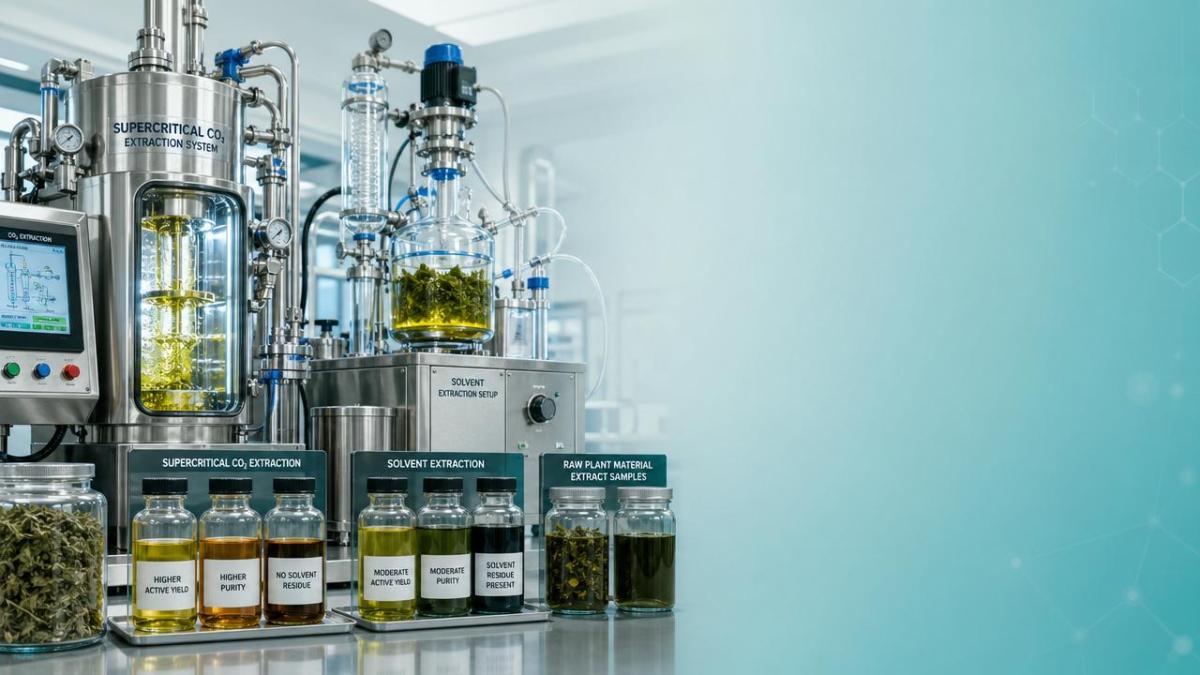
How should evaluators compare Bio-Extracts extraction methods without being misled by headline yield claims?
A common error is to compare only extraction percentage or total solids recovery. That approach can reward inefficient selectivity. Technical evaluators should instead compare methods using a layered framework: active recovery, impurity profile, standardization burden, solvent or processing residues, batch reproducibility, and cost per compliant kilogram of active.
For example, a method that gives 18% crude extract yield may appear better than one giving 9%. But if the first contains large volumes of inert solids, pigments, or unstable fractions, and the second delivers a cleaner active-rich concentrate, the lower crude yield may actually produce a higher sellable output. In regulated supply chains, “best yield” usually means best specification-adjusted yield.
The table below summarizes how Bio-Extracts extraction methods should be judged in a procurement or technical review process.
Which Bio-Extracts extraction methods fit which types of active compounds?
No extraction platform is universally superior. The right answer depends on chemical class, matrix complexity, target specification, and end-market regulation. Technical evaluators should map extraction technology to compound behavior rather than follow market trends.
For non-polar actives, especially oils, terpenes, waxes, and sterol-like compounds, supercritical CO2 often provides the strongest combination of yield preservation and clean-label positioning. Its advantage grows when solvent residue limits are strict or when oxidation is a concern.
For polar compounds such as polyphenols, glycosides, certain alkaloids, and water-soluble fractions, hydroalcoholic extraction remains highly effective and commercially proven. The yield difference often comes from solvent ratio optimization, extraction stage design, and oxygen management rather than from changing technology entirely.
For heat-sensitive and matrix-bound compounds, ultrasound-assisted or enzyme-assisted extraction can deliver major gains. These methods are especially relevant where raw materials have rigid cell structures, such as certain seeds, bark, fungi, algae, and marine biomass. In those cases, Bio-Extracts extraction methods that disrupt cell architecture without severe heat exposure can create measurable improvements in active release.
For peptide-rich or protein-adjacent extracts, extraction methods must be evaluated alongside denaturation and microbial control risks. A process that increases release may also complicate bioburden management or downstream filtration. Therefore, the best method is often the one that balances yield increase with manageable process hygiene.
What are the most common mistakes when judging extraction performance?
The first mistake is treating supplier yield claims as directly comparable without knowing the analytical basis. Was yield measured on dry basis or as-is basis? Was the marker measured before or after solvent removal? Was recovery calculated against total biomass or enriched intermediate? Without this context, numbers can be technically true but commercially misleading.
The second mistake is overlooking raw material variability. Even excellent Bio-Extracts extraction methods cannot fully compensate for poor harvest timing, storage degradation, particle size inconsistency, or contamination in the incoming feedstock. Evaluators should ask whether the method is robust across seasonal variance or only performs well on ideal lots.
The third mistake is separating extraction from purification economics. Some methods appear efficient because they generate a high-loading crude extract, but they may demand expensive chromatography, deodorization, winterization, or decolorization steps later. True process efficiency must be reviewed as an integrated flow sheet.
The fourth mistake is ignoring compliance-linked loss. If a method introduces problematic residues, heavy metal concentration effects, pesticide concentration effects, or unstable degradation byproducts, the apparent yield advantage may vanish during release testing. In highly regulated supply chains, rejected output is not yield.
How do cost, scale, and compliance change the choice of Bio-Extracts extraction methods?
In industrial reality, the method with the highest active recovery is not always the best commercial choice. Technical evaluators must balance capital intensity, throughput, utility demand, solvent recovery infrastructure, cleaning validation burden, operator skill requirements, and documentation quality.
Conventional solvent extraction often remains dominant because it offers familiar equipment, lower capital barriers, and broad raw material flexibility. For many ingredient categories, especially where specifications are moderate and margins are tight, this practicality outweighs the benefits of advanced systems.
Advanced Bio-Extracts extraction methods become more attractive when one or more of the following conditions apply: the active has high value per kilogram, the target is highly heat-sensitive, residue limits are strict, sustainability claims matter commercially, or downstream purification costs are otherwise too high. In such cases, better selectivity can justify higher upfront investment.
Compliance also changes the equation. Methods that simplify residual solvent control, improve batch traceability, or reduce contamination pathways can lower audit risk and release delays. That benefit is especially important for buyers serving pharmaceutical, feed, food, and export-regulated markets. The process that looks more expensive on paper may be cheaper once deviation management and failed lot exposure are included.
What should a technical evaluator ask before approving a supplier or process route?
Before approving Bio-Extracts extraction methods, evaluators should request a process-specific data package rather than a generic product sheet. At minimum, they should confirm extraction principle, solvent system, temperature range, pressure range if relevant, target marker assay method, batch-to-batch consistency, residual control, and scale of proven operation.
It is also wise to ask for failure-mode evidence. What happens when raw material moisture rises? How is oxidation controlled during hold time? Has the supplier validated cleaning when switching between botanicals or marine species? Are there data showing that active yield remains stable across commercial campaigns rather than only in development runs? These questions reveal whether the method is operationally mature.
A strong evaluator will also compare claimed extraction efficiency with market positioning. If a supplier promotes premium-grade purity but uses a broad, low-selectivity extraction approach, there should be clear evidence of robust downstream refinement. If a supplier claims sustainability benefits, there should be measurable data on solvent recovery, energy use, and waste handling rather than branding language alone.
What is the practical takeaway for selecting the right extraction route?
The Bio-Extracts extraction methods that change active yield the most are usually the ones that alter both cell disruption and solvent selectivity, especially when the target compound is sensitive, tightly bound, or chemically distinct from the surrounding matrix. Supercritical CO2, enzyme-assisted extraction, ultrasound-assisted extraction, and well-optimized hydroalcoholic systems can each outperform standard approaches under the right conditions, but none should be chosen on reputation alone.
For technical evaluators, the right decision framework is straightforward: define the target active clearly, separate crude yield from in-spec active yield, test scalability assumptions, and price the process by compliant output rather than extraction volume. That approach reduces the risk of selecting a method that looks efficient in trials but underperforms in audited, commercial production.
If you need to confirm a specific extraction route, operating parameter window, validation requirement, lead time, cost structure, or supplier suitability, the most useful starting questions are these: what is the exact target marker, what purity and residue limits must be met, what scale has already been proven, and what data support consistent yield under real production conditions?
Related Intelligence
- Botanical ExtractsZhiAnHua GNA Launches LingMou Global Compliance Monitoring System for Botanical ExtractsLingMou Global Compliance Monitoring System by ZhiAnHua GNA tracks real-time regulatory & AI-platform terminology risk for botanical extracts—empowering smarter, proactive compliance.
- Botanical ExtractsANVISA New Rule: Botanical Extracts Import Traceability to Tier-2 SuppliersANVISA new rule mandates botanical extracts import traceability to Tier-2 suppliers from 1 July 2026 — act now to ensure GACP compliance and avoid Brazil customs delays.
- Botanical ExtractsWhy Bio-Extracts for pharmaceutical applications need tighter specsBio-Extracts for pharmaceutical applications need tighter specs to reduce batch risk, strengthen GMP/FDA compliance, and improve supplier confidence—see the key controls buyers should verify.
The Morning Broadsheet
Daily chemical briefings, market shifts, and peer-reviewed summaries delivered to your terminal.
