

The Authority in Global Agricultural Chemistry & Bio-Resources
India Launches Sunset Review on Anti-Dumping Duty for Chinese Feed Pellets
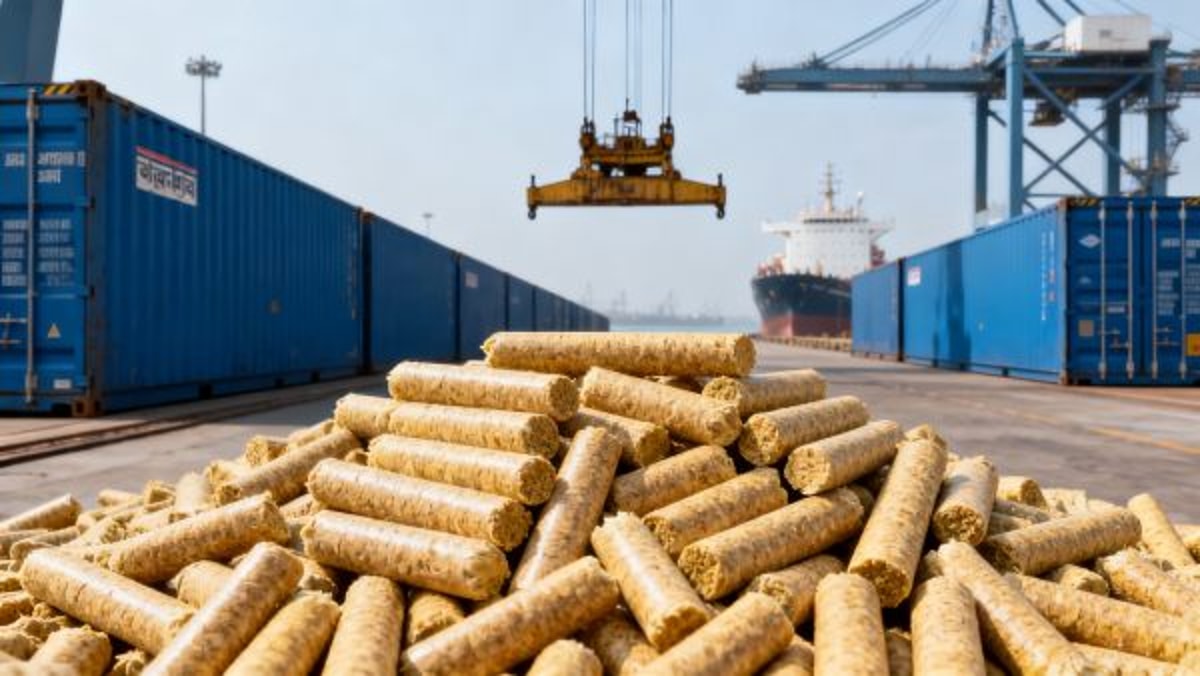
India’s Central Board of Indirect Taxes and Customs (CBIC) initiated a sunset review of the anti-dumping duty on Commercial Feed Pellets from China on 30 April 2026, with sampling notices issued to four Chinese exporters requiring submission of export price, cost structure, and downstream usage evidence by 20 May 2026. This review directly affects feed pellet exporters, importers, and downstream compound feed manufacturers operating in or supplying to the Indian market — and signals potential shifts in trade terms and supply chain continuity from December 2026 onward.
Event Overview
The Central Board of Indirect Taxes and Customs (CBIC), under India’s Ministry of Finance, published a notice on 30 April 2026 launching a sunset review of the anti-dumping duty imposed in 2021 on Commercial Feed Pellets originating in or exported from China. As part of the review process, CBIC selected four Chinese exporting companies for sampling and requested detailed information—including export prices, cost breakdowns, and documentary proof of end-use in India—by 20 May 2026. The outcome will determine whether the anti-dumping duty remains in force beyond its scheduled expiry in December 2026.
Industries Affected
Direct Exporters of Commercial Feed Pellets
Chinese manufacturers and trading firms exporting Commercial Feed Pellets to India face immediate procedural obligations: responding to CBIC’s sampling request within the deadline, substantiating pricing and cost data, and demonstrating legitimate downstream use in India. Failure to comply may result in adverse facts being applied during the review, potentially leading to higher duty rates or exclusion from the review process altogether.
Indian Importers and Distributors
Importers handling Chinese-sourced feed pellets must prepare for possible duty reinstatement or rate adjustments effective December 2026. Any change impacts landed cost calculations, margin planning, and contractual renegotiations with domestic feed mills. Uncertainty around the review timeline also complicates inventory and forward-buying decisions over the next six months.
Domestic Compound Feed Manufacturers (India)
Indian compound feed producers relying on imported Chinese feed pellets as raw material inputs may face cost volatility and sourcing delays. If duties are extended, alternative suppliers — including domestic pellet producers or non-Chinese exporters — may gain short-term pricing leverage, prompting re-evaluation of input mix and formulation flexibility.
Supply Chain Service Providers
Freight forwarders, customs brokers, and trade compliance consultants supporting China–India feed pellet shipments must monitor CBIC communications closely. Documentation standards for end-use verification and cost disclosure are likely to tighten; service providers may need to adjust client advisory protocols and audit readiness support ahead of the December 2026 decision date.
What Stakeholders Should Monitor and Do Now
Track official CBIC updates and sampling outcomes
CBIC has not yet published the full list of sampled parties or detailed questionnaire templates beyond the initial notice. Stakeholders should monitor CBIC’s official portal and India’s Directorate General of Trade Remedies (DGTR) for follow-up notifications, especially regarding deadlines for supplementary submissions or hearings.
Verify and organize export documentation for the 2023–2025 period
Exporters selected—or anticipating selection—should consolidate invoice-level export data, production cost records (including raw material procurement, energy, labor, and overhead), and verified end-user affidavits or purchase contracts from Indian buyers. Data integrity and traceability across three fiscal years are critical to meeting CBIC’s evidentiary threshold.
Distinguish between policy signal and enforceable obligation
The current phase is an investigative sampling step—not a final determination. While the review’s initiation reflects continued scrutiny, it does not confirm duty extension. Companies should avoid premature operational changes (e.g., shifting sourcing or pricing) until DGTR issues preliminary findings, expected no earlier than Q3 2026.
Prepare contingency plans for procurement and channel management
Indian importers and compound feed mills should assess dual-sourcing feasibility (e.g., Vietnamese, Thai, or domestic pellet alternatives) and update commercial terms with Chinese suppliers to include duty-contingent clauses. Forward logistics planning—including container booking windows and customs clearance buffers—should account for potential post-review duty application starting December 2026.
Editorial Observation / Industry Perspective
Observably, this sunset review functions primarily as a procedural checkpoint rather than an indication of imminent policy reversal. Analysis shows that India’s trade remedy authorities have maintained consistent scrutiny of agri-input imports, particularly where domestic production capacity remains limited or fragmented. From an industry perspective, the timing—coinciding with India’s ongoing livestock sector expansion and rising protein demand—suggests heightened sensitivity to input cost stability. Current developments are better understood as a signal of regulatory continuity than a discrete event with immediate commercial impact. Sustained attention is warranted not because the outcome is predetermined, but because the review sets precedent for how future trade remedy cases involving agricultural intermediates may be structured and enforced.
This is not yet a binding decision—but it is a defined inflection point in the India–China feed trade relationship. Stakeholders should treat it as a structured risk assessment opportunity, not a trigger for reactive action.
Conclusion
The CBIC’s initiation of the sunset review on anti-dumping duties for Chinese Commercial Feed Pellets marks a formal, time-bound evaluation of existing trade measures—not a new imposition nor a guaranteed continuation. Its significance lies in the procedural rigor it demands, the transparency it requires from exporters, and the strategic planning window it opens for all actors along the India–China feed supply chain. For now, the most appropriate interpretation is that this is a scheduled administrative process with material implications only upon conclusion — making disciplined monitoring, documentation readiness, and scenario-based preparation the highest-value responses.
Source Attribution
Main source: Public notice issued by the Central Board of Indirect Taxes and Customs (CBIC), Ministry of Finance, Government of India, dated 30 April 2026.
Points requiring ongoing observation: Final determination timeline, DGTR’s preliminary findings, and any subsequent public hearings or extensions to the review period.
Related Intelligence
- Commercial Feed PelletIndia Launches Sunset Review on Anti-Dumping Duty for Chinese Feed PelletsIndia's sunset review of anti-dumping duty on Chinese feed pellets begins April 2026—key for exporters, importers & feed mills. Act now.
- Commercial Feed PelletFeed and grain processing technology trends that cut wasteFeed & Grain processing technology trends that cut waste: explore smarter drying, real-time sensors, predictive maintenance, and traceability to boost yield, compliance, and ROI.
- Commercial Feed PelletFeed and grain processing equipment downtime usually starts hereFeed & Grain processing equipment downtime often begins with small, overlooked warning signs. Learn the early fault points, hidden maintenance gaps, and practical fixes that help mills prevent costly shutdowns.
The Morning Broadsheet
Daily chemical briefings, market shifts, and peer-reviewed summaries delivered to your terminal.
