

The Authority in Global Agricultural Chemistry & Bio-Resources
Disc harrows manufacturer selection: build quality or lead time first?
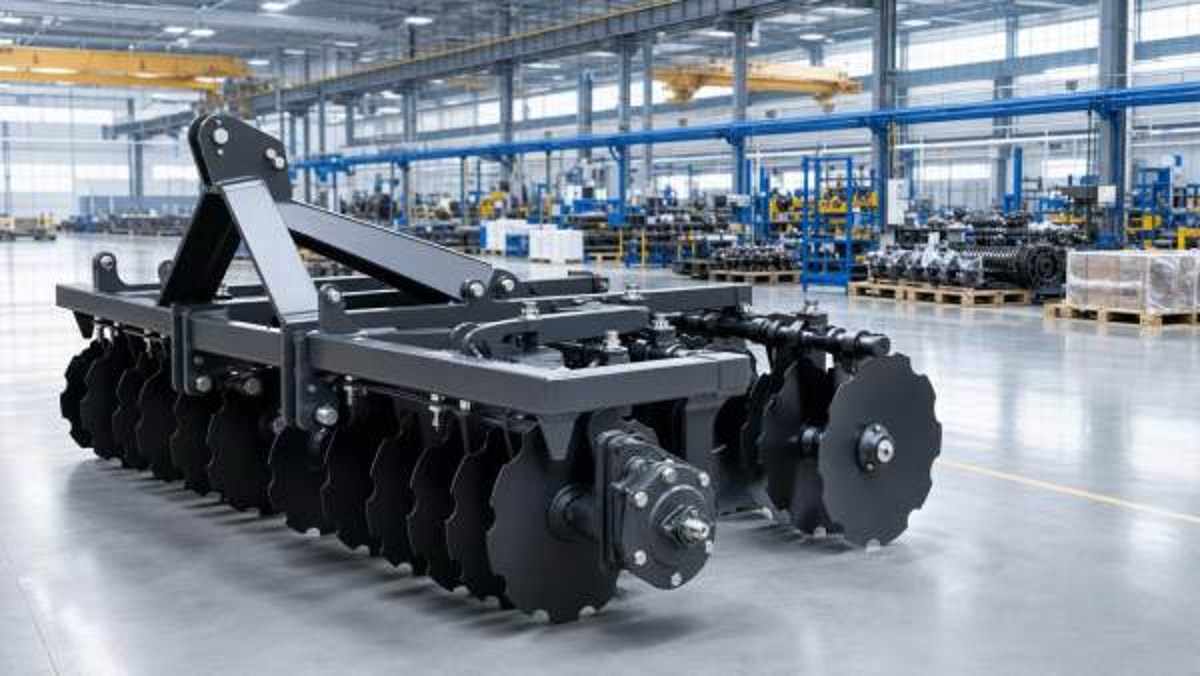
Choosing a disc harrows manufacturer is rarely a simple trade-off between build quality and lead time. For project managers and engineering leads, the real challenge is securing equipment that meets field performance targets, budget controls, and delivery schedules without creating downstream operational risk. This article explores how to evaluate manufacturers through a practical procurement lens, helping buyers balance durability, production capability, and supply chain reliability.
Why is the choice of disc harrows manufacturer getting more attention now?
A disc harrows manufacturer now influences much more than the purchase price of a tillage implement. In many agricultural and primary processing projects, machinery sourcing is tied to seasonal deployment windows, land preparation schedules, labor efficiency targets, and long-term maintenance planning. If a supplier delivers late, under-spec equipment, or inconsistent assemblies, the impact can spread through planting calendars, contractor availability, and operating cost forecasts.
For project managers, the concern is rarely limited to “Will it work?” The real question is “Will it work reliably under our field conditions, arrive when required, and remain serviceable over time?” That is why the evaluation of a disc harrows manufacturer increasingly includes welding quality, steel sourcing, bearing reliability, spare parts commitment, documentation discipline, and manufacturing consistency. A shorter lead time may look attractive during tender review, but if poor build quality increases downtime during critical field operations, the original gain disappears quickly.
This is especially relevant for institutional buyers, farm infrastructure projects, machinery distributors, and integrated agribusiness operations that cannot afford procurement surprises. In these cases, selecting a disc harrows manufacturer is not a transactional decision; it is a risk allocation decision.
Should build quality come before lead time when comparing suppliers?
In most cases, build quality should come first, but not in isolation. A project team should treat quality and lead time as linked procurement variables rather than as separate boxes to tick. A durable machine that arrives too late can miss a crop cycle, while a fast shipment with weak frame integrity or poor disc alignment can create immediate field failures. The smarter question is not which factor matters more in theory, but which one creates greater business risk in your actual operating timeline.
Build quality matters first because disc harrows operate in abrasive, impact-heavy, and often unpredictable soil conditions. Weak gangs, poor heat treatment, inferior bearings, uneven disc spacing, or low-grade fasteners can reduce penetration, increase vibration, and accelerate wear. These are not cosmetic issues. They affect fuel consumption, tillage consistency, operator confidence, and maintenance frequency.
However, lead time deserves equal scrutiny whenever projects are tied to weather, crop rotation, or financing milestones. If a disc harrows manufacturer cannot prove realistic production scheduling, then quoted delivery dates may be little more than optimistic sales promises. For that reason, experienced buyers place build quality first as a non-negotiable baseline, then compare lead time only among manufacturers that already meet acceptable technical standards.
A practical way to rank the two
If equipment failure during use would create higher cost than delayed commissioning, prioritize build quality. If a delay would stop an entire land preparation program and there is no buffer in the agricultural schedule, lead time becomes more critical. In either scenario, the best disc harrows manufacturer is the one that can demonstrate both engineering reliability and schedule discipline with evidence, not just claims.
What build quality signals should a project manager verify before approval?
When reviewing a disc harrows manufacturer, project managers should focus on measurable production indicators rather than broad descriptions like “heavy duty” or “export quality.” The most useful checks relate to material grade, fabrication discipline, assembly accuracy, wear component quality, and quality control records. These factors are far more predictive of field performance than brochure language.
Start with the frame. The main structure should use appropriate steel thickness and section design for the working width and expected soil resistance. Ask whether the manufacturer uses certified raw material inputs, whether cut parts are standardized, and whether welding procedures are documented. Rework marks, inconsistent bead profiles, and visible dimensional variation often indicate weak process control.
Next, examine the disc gangs and bearings. These components absorb heavy shock loads, so bearing housing durability, sealing performance, shaft machining accuracy, and fastener retention are critical. A credible disc harrows manufacturer should be able to specify bearing brands or equivalent standards, explain corrosion protection methods, and provide realistic wear-life expectations based on soil conditions.
Disc blade metallurgy also deserves attention. Blade hardness, edge consistency, and resistance to cracking matter more than visual finish. If the manufacturer cannot explain heat treatment, hardness range, or sourcing traceability, buyers should be cautious. For engineering-led procurement, a simple technical file is often more revealing than a polished catalog.
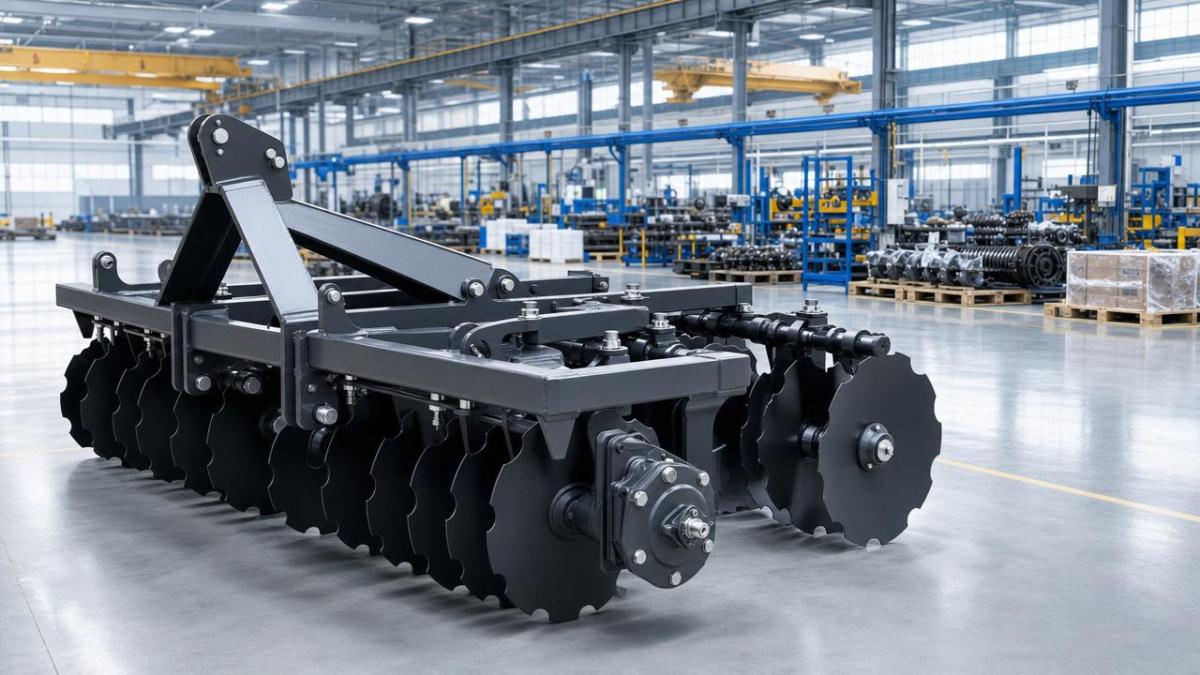
Finally, review finish quality and inspection records. Paint is not the core issue, but uneven coating, poor surface preparation, or exposed corrosion points may suggest shortcuts elsewhere. Better manufacturers normally maintain inspection sheets for alignment, torque settings, dimensional checks, and final assembly verification. Those records indicate process maturity and lower variability between units.
How can you judge whether a quoted lead time is realistic?
Lead time should never be accepted at face value. A disc harrows manufacturer may quote aggressive delivery to win business, but actual performance depends on raw material availability, component sourcing, production loading, and export coordination. Project managers should therefore test the credibility of the timeline through operational questions.
Ask what portion of the machine is made in-house and what portion depends on external vendors. If critical items such as discs, bearings, hubs, or hydraulic assemblies are outsourced, then supplier delays can easily affect final shipment. A reliable manufacturer should provide a simple production sequence: steel preparation, welding, machining, painting, assembly, testing, packing, and dispatch. If these steps are vague, the lead time may not be well controlled.
It is also important to ask about current order backlog. A good disc harrows manufacturer may not always be the fastest one, because stable demand often means constrained capacity. Ironically, a very short quote can sometimes reflect underutilization, but it can also signal unrealistic planning. What matters is not the shortest calendar promise, but the most believable one supported by capacity data, historical delivery records, and clear milestone reporting.
For larger projects, consider requesting staged updates tied to production completion percentages. This allows engineering and logistics teams to prepare site readiness, freight booking, and receiving inspections more effectively. A disciplined manufacturer should be comfortable with progress visibility.
Which common mistakes cause buyers to choose the wrong disc harrows manufacturer?
One common mistake is assuming all disc harrows are functionally interchangeable. They are not. Variations in frame stiffness, gang angle adjustment, blade specification, bearing sealing, and machine balance can change performance significantly in clay, stubble, rocky land, or high-moisture conditions. Buyers who compare only by size and price often overlook these differences until after commissioning.
Another mistake is overvaluing factory appearance and undervaluing process evidence. A clean facility is positive, but it does not replace documentation, bill-of-material consistency, dimensional control, or after-sales capability. A disc harrows manufacturer should be judged by repeatability, not presentation alone.
A third error is ignoring lifecycle cost. Lower upfront pricing can mask higher replacement frequency for blades, bearings, scrapers, or fasteners. Over two or three seasons, these costs can exceed the original purchase savings, especially in intensive operations. Project teams should compare total cost of ownership, not only invoice value.
Finally, some buyers fail to define the actual application clearly. If the manufacturer does not know tractor power range, field condition, working depth target, operating speed, and annual usage profile, any recommendation may be only partially suitable. The wrong specification can make even a competent manufacturer look unreliable.
How should engineering teams compare suppliers in a structured way?
A structured comparison helps prevent subjective decisions and keeps procurement aligned with project risk. The best approach is to score each disc harrows manufacturer across a balanced set of technical, commercial, and execution criteria. This makes it easier to defend the final choice internally and identify where a lower-priced option may carry hidden risk.
Key criteria usually include frame design robustness, blade and bearing specification, manufacturing documentation, customization capability, lead time realism, spare parts availability, warranty clarity, packaging quality, and export experience. If the order is large or part of a development program, include responsiveness during pre-sales engineering because communication quality often predicts post-sales support quality.
When is a faster manufacturer the better choice?
A faster disc harrows manufacturer may be the right choice when the technical gap between suppliers is small and schedule pressure is severe. This often happens in pre-season land development, contract farming mobilization, dealer replenishment, or public procurement tied to funding deadlines. If two manufacturers meet the same minimum engineering standard, the one with stronger production responsiveness may create more immediate value.
That said, speed should still be verified through evidence. Look for suppliers who can adjust production in a controlled way, not by skipping inspections or substituting components without approval. Fast does not necessarily mean risky, but ungoverned fast usually does. A dependable disc harrows manufacturer should explain how expedited orders are managed, what remains unchanged in quality control, and how shipment readiness is documented.
In practical terms, a faster supplier makes sense when your team has already defined acceptable technical thresholds and the operational penalty of delay is larger than the residual quality difference between shortlisted vendors.
What should you confirm before requesting quotation or starting supplier talks?
Before engaging any disc harrows manufacturer, buyers should organize a concise but complete requirement brief. This should include working width, intended soil conditions, target tillage depth, tractor power range, transport limitations, expected annual operating hours, preferred disc size, adjustment requirements, and any local compliance or packaging needs. Without this baseline, quotations are difficult to compare and technical mismatches become more likely.
It is also wise to define the procurement priority order internally. Is your project more sensitive to delivery date, service support, durability, customization, or cost ceiling? Once the internal ranking is clear, discussions with a disc harrows manufacturer become more productive, because both sides can align on trade-offs early. This prevents late-stage surprises where a low-cost proposal turns out to have weak spare parts coverage or an attractive lead time depends on uncertain component sourcing.
For project managers and engineering leads, the best next step is to prepare a supplier checklist that covers technical specification, manufacturing evidence, production schedule logic, after-sales support, spare parts lead time, warranty process, and reference projects. If you need to confirm a concrete solution, parameters, timeline, price structure, or cooperation model, start by asking these questions first: What exact field conditions is the machine designed for? Which components define durability? What delivery milestones can be committed contractually? How are replacement parts handled after shipment? And what documentation proves the manufacturer can deliver consistently at the required standard?
Related Intelligence
- Heavy Agri MachineryRotary tillers wholesale quality checks before placing a large orderRotary tillers wholesale quality checks: verify welds, gearboxes, blades, CE compliance, and batch consistency before large orders to reduce risk and choose suppliers with confidence.
- Heavy Agri MachineryWholesale lawn mowers or ride-ons? Matching mower type to terrainWholesale lawn mowers or ride-ons? Learn how to match mower type to terrain, acreage, labor, and obstacles to stock smarter, reduce service issues, and win more commercial buyers.
- Heavy Agri MachineryManure spreaders wholesale: the maintenance issues worth checking firstManure spreaders wholesale maintenance starts with the right first checks. Discover how to inspect chains, PTO, hydraulics, and corrosion points to reduce downtime and improve spread performance.
The Morning Broadsheet
Daily chemical briefings, market shifts, and peer-reviewed summaries delivered to your terminal.
