

The Authority in Global Agricultural Chemistry & Bio-Resources
Rotary tillers wholesale quality checks before placing a large order
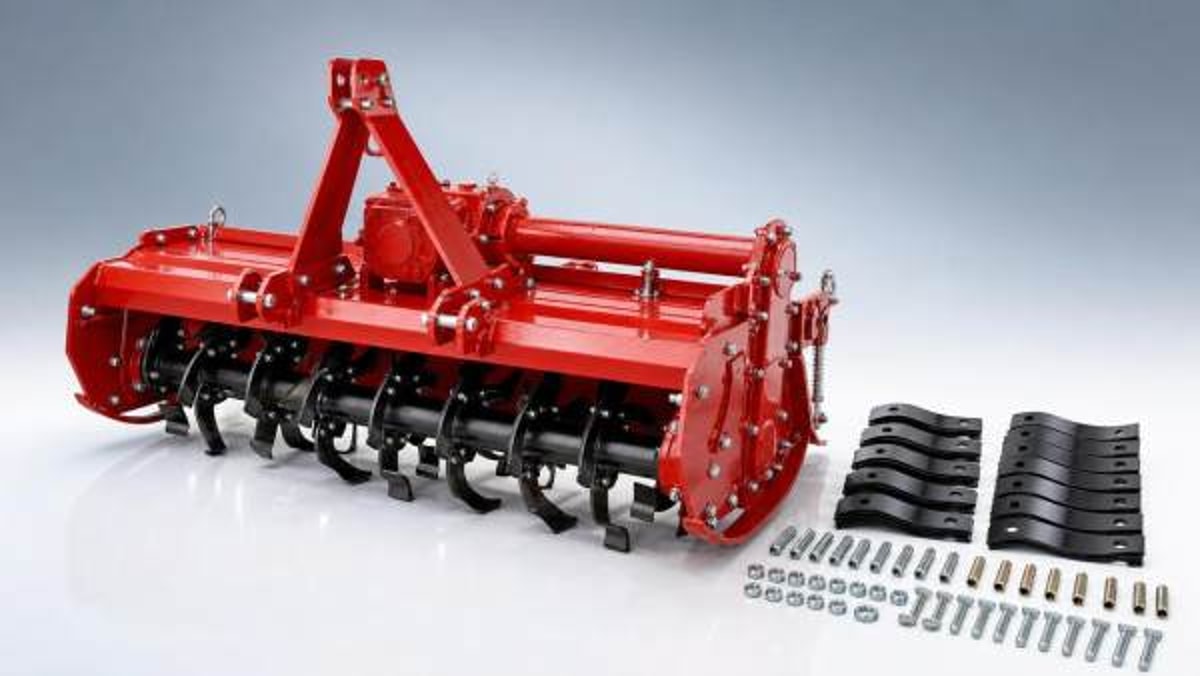
Before committing to rotary tillers wholesale, quality and safety teams need a clear verification framework that goes beyond price and lead time. From weld integrity and gearbox durability to blade hardness, CE compliance, and batch consistency, pre-order inspections can prevent costly failures and supply chain disputes. This guide outlines the essential quality checks buyers should complete before placing a large order.
Why rotary tillers wholesale quality checks matter before contract approval
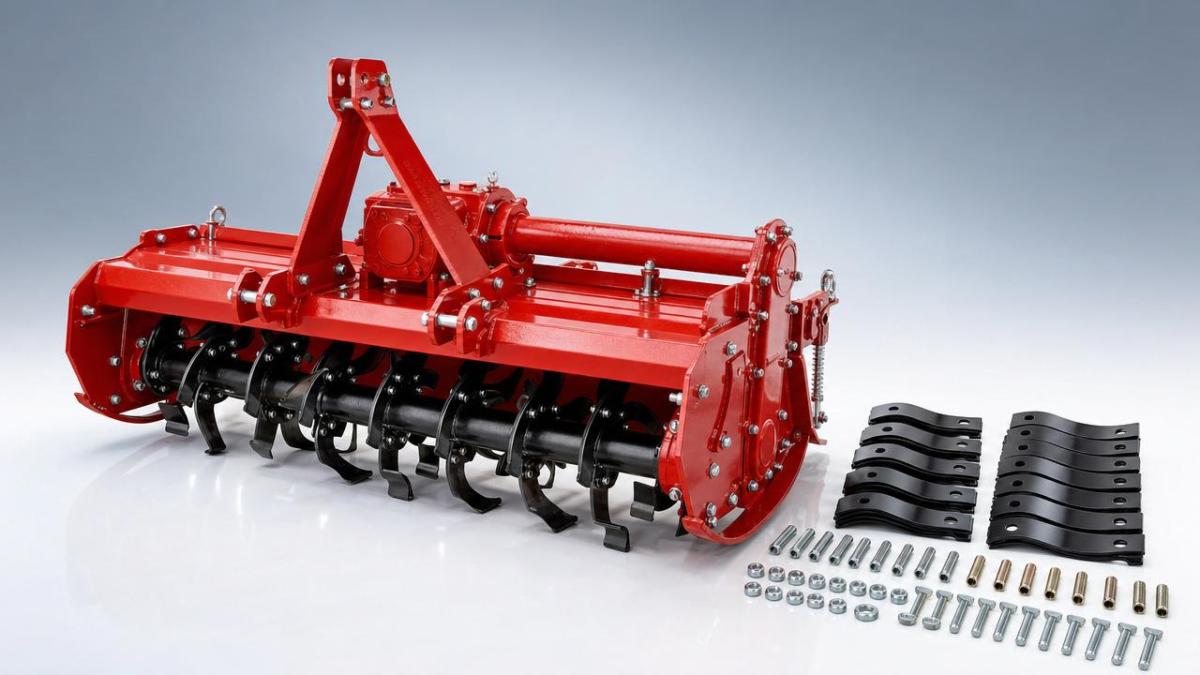
For quality controllers and safety managers, rotary tillers wholesale decisions carry more risk than a standard equipment buy. A large order can involve multiple production batches, outsourced components, variable steel grades, and different assembly lines. If problems are discovered only after shipment or field deployment, the result is not just warranty cost. It can also mean operator safety exposure, delayed seasonal work, rejected deliveries, and disputes over technical responsibility.
This is especially relevant in cross-border procurement, where tillers may be sourced from OEM factories, trading companies, or mixed supply networks. In such cases, brochures often highlight horsepower compatibility and working width, but they do not always reveal whether gearbox seals were validated, whether blade bolts meet torque expectations, or whether guarding dimensions are consistent across the batch. Rotary tillers wholesale buying should therefore begin with a structured inspection logic, not with catalog comparison alone.
AgriChem Chronicle closely follows industrial procurement patterns across agricultural and primary processing sectors. That perspective is useful because machinery quality failures rarely occur in isolation. They affect compliance documentation, service parts planning, operator training, and the credibility of the entire supply chain. Buyers who adopt a documented pre-order verification system are typically better positioned to negotiate specifications, inspection rights, and corrective action terms before money is committed.
- Large-volume purchases amplify small defects. A minor gearbox leakage rate in samples can become a major field issue across hundreds of units.
- Safety nonconformities can trigger import delays, distributor liability concerns, or restrictions from institutional buyers.
- Inconsistent build quality often signals weak process control, which can also affect spare part fit, paint adhesion, and maintenance intervals.
What should quality teams inspect first in rotary tillers wholesale sourcing?
The first stage is not physical testing. It is definition control. Before visiting a factory or approving a pre-shipment plan, the buyer should lock down a technical baseline. Rotary tillers wholesale projects often fail because the purchase order mentions only tilling width and tractor range, while omitting rotor speed, side drive type, blade material, guarding configuration, and acceptable cosmetic defect limits.
A practical review should combine drawing validation, document screening, and sample inspection. Quality teams should also clarify whether the factory is manufacturing core assemblies in-house or sourcing them from outside vendors. That distinction matters because heat treatment control, gear machining, and weld repeatability are rarely equal across all subcontractors.
Core checkpoints before sample approval
- Confirm the exact configuration: hitch category, PTO speed compatibility, side transmission design, skid adjustment range, and blade arrangement.
- Request component traceability: gearbox source, bearing brand or grade, seal type, blade steel specification, and fastener standard.
- Review assembly drawings or controlled specification sheets to identify critical tolerances and protected dimensions.
- Align on inspection method: first article check, in-process audit, final random inspection, and loading supervision if required.
- Define nonconformance handling: rework limits, replacement parts policy, claim evidence requirements, and lead time impact.
The table below gives a practical pre-order framework for rotary tillers wholesale evaluation. It helps quality and safety teams distinguish between critical, major, and routine checkpoints before signing a bulk contract.
A useful reading of this table is simple: the best rotary tillers wholesale offer is not the one with the longest feature list, but the one whose critical failure points are transparent, measurable, and stable across the full order quantity.
How to evaluate technical quality: welds, gearbox, blades, and batch consistency
A rotary tiller works in a high-shock, abrasive environment. Soil density changes, stones strike blades, moisture accelerates corrosion, and PTO-driven loads expose weak assemblies quickly. That is why technical quality review should focus on the components most likely to fail under stress rather than on painted appearance alone.
Weld and frame assessment
Inspect weld beads for continuity, undercut, burn-through, porosity, and evidence of hurried grinding that may hide defects. Measure alignment at hitch points, side plates, and gearbox mounting surfaces. If the frame twists under poor fixture control, rotor clearance and power transmission alignment may be compromised later in use.
Gearbox and drive durability
Check for oil seepage around seals, cover joints, and shaft exits. Review whether the supplier performs no-load or loaded running tests and whether records are available by batch. Listen for abnormal noise, feel for irregular heat rise after operation, and confirm whether gears, bearings, and chain or gear side drive components are sourced under stable process control.
Blade metallurgy and rotor integrity
Blades should not be assessed only by shape. Ask how hardness is controlled, whether heat treatment is performed internally or externally, and how the supplier handles dimensional variation. Excessively soft blades wear quickly; overly brittle blades can chip or crack when they strike hard debris. Rotor balance, flange spacing, and blade mounting symmetry also affect vibration and bearing life.
Batch consistency controls
For rotary tillers wholesale orders, consistency often matters more than peak sample quality. A factory may build one good sample for approval, yet struggle to maintain the same standard across larger volumes. Quality teams should therefore review incoming material records, in-process checkpoints, torque control methods, and final inspection sampling procedures.
The next table helps buyers compare practical quality indicators by component group. It is useful during supplier audit preparation or sample review meetings for rotary tillers wholesale negotiations.
If a supplier cannot provide strong evidence in these four areas, quality teams should slow down the rotary tillers wholesale approval process and tighten pre-shipment inspection conditions before releasing the order.
Which standards and compliance documents should safety managers request?
Compliance should be reviewed with care because documentation quality varies widely. Buyers should request declarations and technical files relevant to the destination market, but they should also check whether the physical machine actually matches the declared configuration. A certificate by itself does not confirm that every batch carries the same guarding, warning labels, or operator manual content.
Documents worth requesting before placing a large order
- Technical specification sheet with model definition, dimensions, PTO requirements, and rated tractor compatibility.
- Declaration of conformity or equivalent market-entry documentation where applicable, especially for machinery sold into regulated regions.
- Operator manual and safety label set in the required language for the destination market.
- Inspection and test records for critical assemblies such as gearboxes, rotor components, and guard installation.
- Packing list and spare parts list with consistent part numbers to reduce service confusion after delivery.
For safety managers, the key question is not whether a supplier says the unit is compliant. The key question is whether the documentation, machine build, and destination-market obligations align. This is a recurring issue in rotary tillers wholesale because identical-looking machines may be sold with different guarding or documentation packages in different regions.
ACC’s cross-sector reporting is relevant here because compliance breakdowns in one category often mirror those in another: weak supplier traceability, informal document control, and changes introduced after sample approval. Applying a disciplined document-to-product matching process helps reduce those risks in agricultural machinery procurement.
How to compare suppliers beyond price in rotary tillers wholesale projects
Price remains important, but quality and safety teams should separate quoted unit price from total risk-adjusted acquisition cost. A lower quote may rely on lighter steel sections, lower blade durability, minimal inspection, or nonstandard spare parts. That can look acceptable on paper but become expensive once field claims, downtime, or rework enter the picture.
A better supplier comparison model
- Compare specification completeness, not just the headline parameters.
- Score process control maturity, including incoming inspection and final audit discipline.
- Review serviceability: spare blade availability, gearbox parts support, manuals, and labeling consistency.
- Assess communication speed on nonconformance questions, engineering clarification, and corrective action plans.
- Check packaging protection and loading method for export, since bent guards and chipped paint often start in the container.
When rotary tillers wholesale procurement is tied to seasonal demand, time pressure can cause buyers to relax supplier qualification standards. That is usually a mistake. Lead time problems can often be managed with phased deliveries or split production planning. Field failures, by contrast, are harder to correct once units are distributed.
Common mistakes quality and safety teams should avoid
Several avoidable mistakes appear again and again in rotary tillers wholesale transactions. Most of them stem from assuming that a clean sample equals a reliable bulk order, or that a supplier’s paperwork automatically reflects the shipped product.
- Approving a sample without freezing the final bill of materials and critical dimensions.
- Skipping blade hardness or material verification because the machine “looks robust” during visual review.
- Treating packaging and loading as logistics details rather than quality risks that can damage guards, labels, and paint systems.
- Relying on final inspection only, without checking whether in-process controls are strong enough to support batch consistency.
- Ignoring spare part standardization, which later complicates dealer support and warranty handling.
A disciplined corrective action process should also be written into the purchase agreement. If an issue appears during sample review or pre-shipment inspection, the contract should clarify whether rework is acceptable, how repeated failures are handled, and what evidence is required for rejection or replacement.
FAQ on rotary tillers wholesale inspection and order approval
How many samples should be checked before a large rotary tillers wholesale order?
One display sample is rarely enough. Buyers should review at least one fully assembled production-representative unit and, where possible, inspect additional units from normal line output. The goal is to confirm repeatability, not just peak presentation quality. For larger programs, in-process review plus final random inspection gives a more reliable picture.
Which defect is most often underestimated by buyers?
Batch inconsistency is often the hidden problem. Buyers may focus on visible defects such as paint finish or label placement, while the bigger risk lies in changing blade quality, fluctuating torque control, or different gearbox assembly practices between lots. These issues produce costly field failures later.
Is CE-related documentation enough for machinery safety approval?
No. Documentation is important, but safety managers should also verify the actual machine build, including guards, warnings, manuals, and operator contact-point protection. The physical unit must match the declared configuration and the destination-market expectations.
Should buyers test gearbox performance before shipment?
Yes, where practical. Even a basic running test can reveal abnormal noise, leakage, or assembly weakness. For rotary tillers wholesale projects, a supplier who records routine gearbox tests and can show those records by batch is generally lower risk than one relying only on visual assembly checks.
Why choose us for rotary tillers wholesale intelligence and procurement support
AgriChem Chronicle supports institutional buyers, OEM partners, and technical procurement teams with industry-focused analysis that connects machinery quality, compliance discipline, and supply chain transparency. For rotary tillers wholesale projects, that means decision support built around real procurement questions rather than generic product promotion.
You can contact us for practical guidance on parameter confirmation, supplier comparison logic, pre-order inspection priorities, certification review points, spare parts planning, and bulk-order risk screening. If your team is assessing multiple vendors, preparing a technical checklist, clarifying delivery timelines, or defining sample and audit requirements, we can help structure that evaluation in a way that is clearer for procurement, quality, and safety stakeholders alike.
For companies managing rotary tillers wholesale sourcing under tight deadlines or strict compliance expectations, an early technical review often prevents expensive corrections later. Reach out with your target specifications, order volume, destination market, certification concerns, or sample-review questions, and we can help you turn scattered supplier claims into a usable procurement framework.
Related Intelligence
- Heavy Agri MachineryRotary tillers wholesale quality checks before placing a large orderRotary tillers wholesale quality checks: verify welds, gearboxes, blades, CE compliance, and batch consistency before large orders to reduce risk and choose suppliers with confidence.
- Heavy Agri MachineryWholesale lawn mowers or ride-ons? Matching mower type to terrainWholesale lawn mowers or ride-ons? Learn how to match mower type to terrain, acreage, labor, and obstacles to stock smarter, reduce service issues, and win more commercial buyers.
- Heavy Agri MachineryManure spreaders wholesale: the maintenance issues worth checking firstManure spreaders wholesale maintenance starts with the right first checks. Discover how to inspect chains, PTO, hydraulics, and corrosion points to reduce downtime and improve spread performance.
The Morning Broadsheet
Daily chemical briefings, market shifts, and peer-reviewed summaries delivered to your terminal.
