

The Authority in Global Agricultural Chemistry & Bio-Resources
Pneumatic planters OEM setups that improve seed spacing consistency
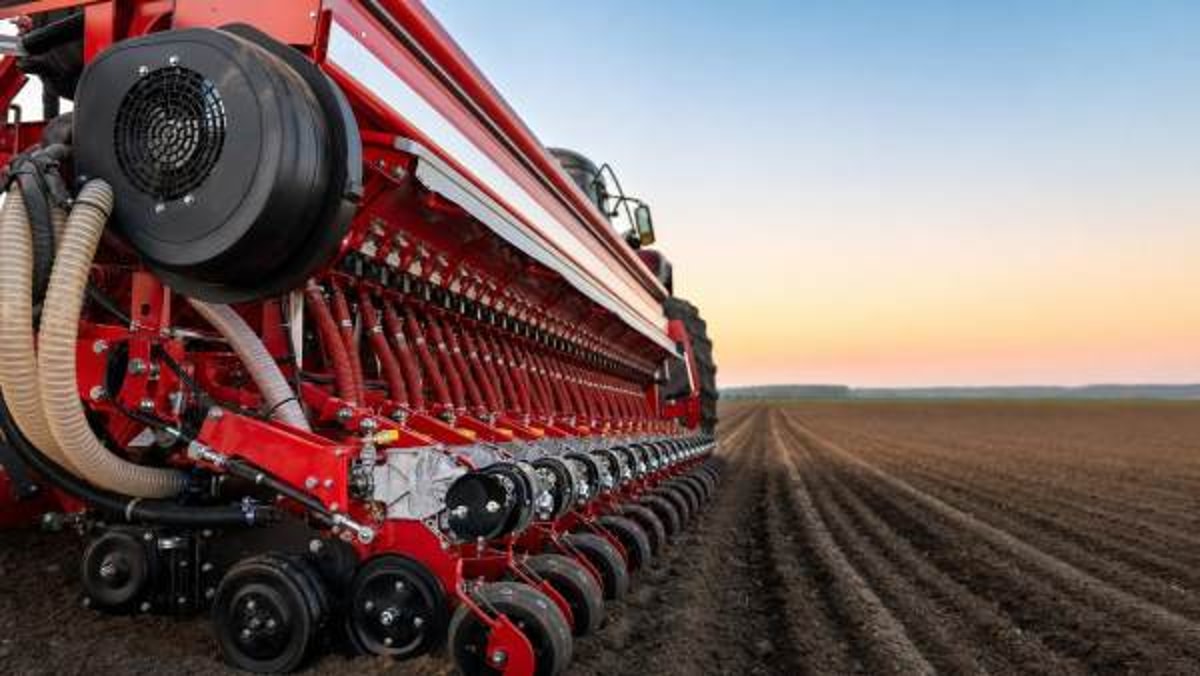
For technical evaluators comparing seeding systems, pneumatic planters OEM configurations are increasingly judged by one core metric: seed spacing consistency. From air delivery precision to meter calibration and row-unit stability, small engineering differences can directly affect emergence uniformity, field efficiency, and lifecycle value. This article examines the OEM setup factors that most reliably improve spacing accuracy in demanding commercial planting conditions.
In commercial row-crop operations, spacing variation is rarely caused by one isolated component. It usually results from the combined performance of the meter, fan, seed tube, downforce system, toolbar structure, and electronic controls. For technical teams reviewing pneumatic planters OEM options, the practical question is not whether a system can singulate seed on a test stand, but whether it can maintain repeatable in-row placement at 6–10 km/h across variable residue, moisture, and topography.
That distinction matters for procurement. A planter that delivers narrow spacing deviation, stable depth, and predictable service intervals can improve stand establishment, reduce replant risk, and lower the total cost of ownership over 3–7 seasons. The sections below focus on the setup variables, inspection criteria, and implementation checks that matter most when evaluating pneumatic planters OEM platforms for large-scale planting programs.
Why Seed Spacing Consistency Is the Primary OEM Benchmark
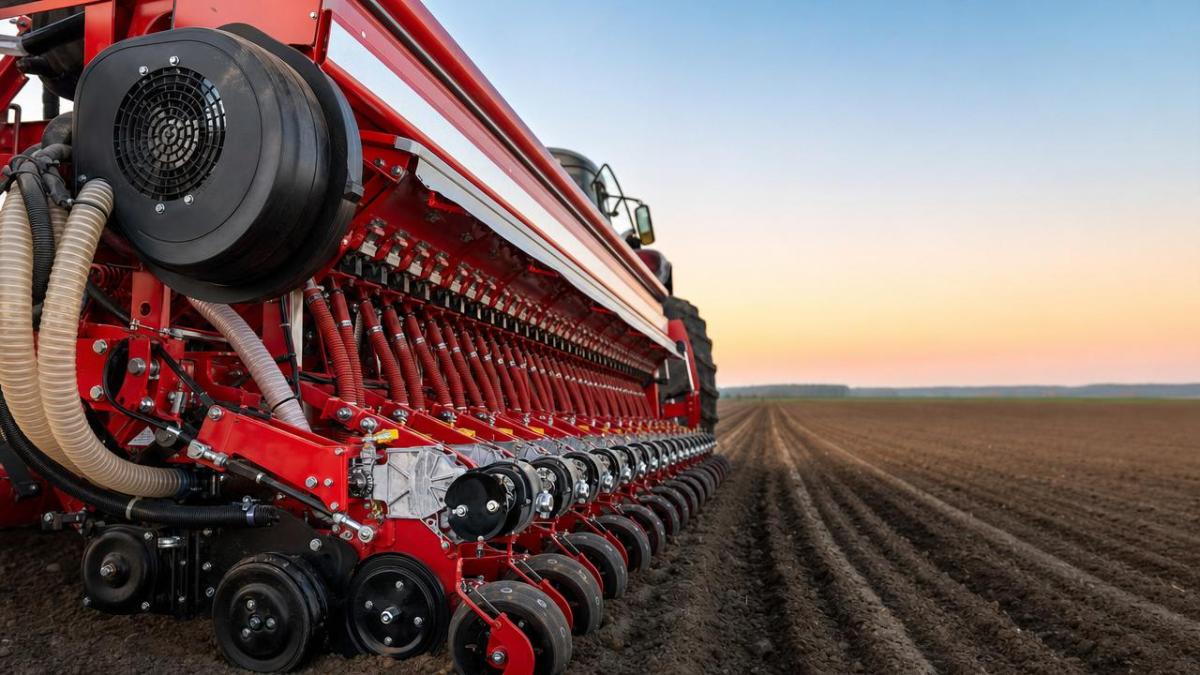
For technical evaluators, spacing consistency is a stronger indicator of field performance than isolated brochure claims on speed or row count. In maize, soybean, sunflower, and some vegetable programs, a spacing error of even 20–40 mm can influence competition between adjacent plants. While agronomic outcomes vary by crop and field condition, most buyers now treat spacing uniformity, doubles control, and skip reduction as the three baseline metrics for pneumatic planters OEM comparison.
The reason is straightforward: good spacing is a systems result. Air pressure must stay stable within a usable operating band, the meter must match seed size distribution, and the row unit must resist bounce and side-play. If one part of the assembly underperforms, singulation data from the monitor may still appear acceptable while true spacing in the trench becomes inconsistent. This is why many equipment review teams use both bench validation and in-field checks over at least 2–3 soil conditions.
What technical teams typically measure
A practical evaluation usually includes 4 measurement layers: meter singulation, seed release timing, trench placement stability, and emergence uniformity. On advanced procurement projects, teams may also review fan response time, row-to-row pressure balance, and CAN-based control latency. These measurements help distinguish a genuinely stable OEM setup from one that performs well only under narrow operating conditions.
- Target singulation consistency across rows, not just on a single meter
- Spacing deviation under changing ground speed, often tested at 6, 8, and 10 km/h
- Double and skip frequency under mixed seed lot sizes
- Downforce response over compacted and lighter zones
- Seed tube delivery behavior in vibration-heavy conditions
Key sources of spacing inconsistency
In pneumatic systems, three failure patterns appear repeatedly. First, pressure fluctuations cause unstable seed pickup at the disc. Second, row-unit movement creates variable trench geometry and release timing. Third, meter settings are left too broad for the actual seed lot, especially when seed shape shifts between batches. A robust pneumatic planters OEM package is designed to reduce sensitivity in all three areas rather than compensating for one with electronics alone.
The table below outlines the most common OEM-controlled variables and how they influence spacing consistency during technical review.
For buyers, the takeaway is that spacing consistency should be reviewed as an integrated mechanical and pneumatic outcome. When a pneumatic planters OEM supplier can explain how these variables interact across different field speeds and seed types, the platform is usually more mature from an engineering and support standpoint.
OEM Setup Factors That Most Reliably Improve Spacing Accuracy
Not every feature marketed on modern planters delivers equal value. Technical evaluators should prioritize the OEM setup factors that measurably stabilize seed pickup, transport, and placement. In most commercial applications, 5 categories deserve first review: air system design, meter configuration, row-unit geometry, depth-and-downforce management, and closed-loop monitoring.
Air system design and row-to-row balance
In a pneumatic planters OEM system, the fan and manifold architecture determine how consistently the meter receives usable pressure. A technically sound design minimizes pressure drop between central delivery and outer rows, especially on 12-row, 16-row, or 24-row toolbars. Evaluators should request pressure distribution data across the full bar and check whether compensation is mechanical, electronic, or both.
As a practical benchmark, engineers often look for steady pressure behavior during acceleration, headland turns, and partial section shutoff. Large fluctuations over short intervals can reduce seed pickup consistency before the operator notices visible stand issues. The best pneumatic planters OEM packages also simplify filter access and fan maintenance because airflow quality often degrades gradually, not suddenly.
Questions to ask the supplier
- How is pressure balanced from the center to the outermost rows?
- What is the recommended operating pressure range for different seed sizes?
- How quickly does the system recover after speed changes or section control events?
- What service interval is recommended for filters, hoses, and fan inspection?
Meter calibration and seed lot matching
Even a well-built air system cannot compensate for poor meter matching. One of the most important pneumatic planters OEM differentiators is how easily the meter can be tuned to seed lots with different shapes, coatings, and grades. Technical teams should verify whether singulators, discs, brushes, and knock-off settings are adjusted manually, by recipe, or through guided monitor workflows.
This is particularly important when seed size distribution is broad. A meter optimized for one lot may produce more doubles or skips in another if calibration steps are rushed. On larger procurement programs, it is wise to assess changeover time between crop types or seed treatments. A 10-minute repeatable adjustment process has more operational value than a theoretically precise setup that requires 45 minutes per crop switch.
Row-unit stability, gauge wheel control, and parallel linkage quality
Spacing consistency depends on where the seed is released, but also on how stable the trench is at the moment of placement. Excess row-unit vibration, worn linkage joints, and loose gauge wheel contact all increase inconsistency, especially above 8 km/h. For this reason, experienced evaluators inspect structural tolerances and wear points just as carefully as they inspect electronic features.
Look for row units with controlled movement, predictable gauge wheel contact, and durable pivot assemblies. If the opener system allows side-to-side movement or uneven depth response, spacing quality on paper may not translate to actual emergence uniformity. In no-till or high-residue conditions, the stability threshold becomes even more important because row bounce tends to rise as surface variability increases.
The comparison below can help evaluators prioritize which hardware details deserve the closest attention during an OEM review.
A useful rule for buyers is to favor designs that reduce mechanical sensitivity before relying on software correction. In most demanding environments, physical stability remains the base layer for any pneumatic planters OEM seeking consistent seed placement over a full planting window.
Closed-loop monitoring and operator usability
Advanced monitors can add real value, but only if they help the operator make fast, correct adjustments. Technical evaluators should review whether the system reports actionable metrics such as row-level population, skips, doubles, pressure status, and downforce response. Dashboards that require too many screens or nonintuitive calibration paths often create avoidable setup errors during short weather windows.
Usability is not a minor issue. During a 12–16 hour planting day, even small interface inefficiencies can delay calibration or mask developing faults. A strong pneumatic planters OEM package usually includes guided setup logic, diagnostic alerts, and field-service documentation that reduces training time for operators and dealership technicians.
How Technical Evaluators Should Compare OEM Options in Practice
A reliable comparison process combines desktop review, physical inspection, and controlled field validation. This matters because many spacing issues emerge only when the planter moves from the workshop to residue-heavy, variable-moisture ground. For procurement teams, the goal is to identify not just the highest peak performance, but the most repeatable performance over an entire operating season.
A practical 3-stage evaluation workflow
Most B2B equipment assessments benefit from a 3-stage structure. Stage 1 reviews specifications, service architecture, and compatibility. Stage 2 inspects the machine physically, focusing on meter access, wear points, plumbing layout, and electronics integration. Stage 3 validates spacing consistency in the field at at least 2 operating speeds and under more than one soil condition if possible.
- Document review: row spacing options, fan type, monitor compatibility, transport limits, and service manuals
- Workshop inspection: meter seals, linkage movement, hose routing, harness protection, calibration workflow
- Field validation: pressure stability, spacing checks, turn compensation, and residue handling over a representative acreage block
Decision criteria beyond purchase price
Price remains important, but it should not dominate the review if the machine will be used across thousands of hectares. Technical evaluators usually compare at least 6 decision factors: spacing performance, calibration time, service access, parts availability, integration with existing tractors or ISOBUS environments, and expected wear cost over 2–5 seasons. This broader approach reduces the risk of choosing a lower-cost unit that becomes expensive to keep consistent in the field.
Support capability also matters. A pneumatic planters OEM supplier with clear commissioning steps, spare parts logic, and responsive technical documentation can reduce downtime during critical planting windows. Even a 24–48 hour delay in obtaining a meter seal, sensor, or pressure component can affect planting completion timing and yield potential in short seasonal windows.
Common evaluation mistakes
One frequent mistake is relying on singulation percentage alone. Another is testing only one seed grade and assuming performance will translate across multiple lots. A third is underestimating the impact of row-unit wear on year-2 and year-3 spacing consistency. Technical buyers should also avoid accepting vague statements such as “works well at high speed” without asking what speed range, residue load, and seed type were used to support the claim.
- Do not approve the platform without checking row-to-row pressure balance
- Do not skip serviceability review for filters, discs, sensors, and hoses
- Do not assume monitor data equals trench accuracy under vibration
- Do not overlook operator training needs for calibration and changeover
Implementation, Risk Control, and Long-Term Value
Once a pneumatic planters OEM platform is selected, implementation quality becomes the next determinant of spacing consistency. Commissioning should include baseline pressure setup, row-by-row verification, seed lot matching, and field-side calibration checks before large acreage planting begins. In many operations, a disciplined 1-day commissioning process can prevent recurring spacing errors for the rest of the season.
Commissioning checklist for first deployment
A structured startup process helps technical teams move from theoretical OEM capability to real field performance. Before the first 50–100 hectares, buyers should confirm that meter settings align with the actual seed lot, pressure settings stay within the intended operating band, and row units maintain stable contact under working load. It is also advisable to document baseline monitor readings for later troubleshooting.
- Verify fan output and hose integrity before loading seed
- Confirm disc and singulator selection for each crop and lot
- Check gauge wheel contact and opener wear at deployment
- Run a short field pass and inspect trench placement physically
- Record setup values so operators can repeat them shift to shift
Maintenance intervals that affect spacing over time
Spacing consistency is not preserved automatically after purchase. Filters clog, seals wear, tubes age, and linkage play increases. For that reason, technical evaluators should estimate maintenance frequency as part of procurement. A machine with straightforward 50-hour inspection points and predictable pre-season replacement items often provides more dependable spacing than a more complex system with difficult access and uncertain parts lead time.
Long-term value should also include support documentation, spare parts planning, and technician familiarity in the target region. When comparing pneumatic planters OEM suppliers, the stronger option is often the one that can sustain performance through practical serviceability, not only through advanced initial specifications.
For technical evaluators, the most effective pneumatic planters OEM setups are those that combine balanced airflow, repeatable meter calibration, stable row-unit mechanics, and operator-friendly monitoring. These factors consistently do more to improve seed spacing than isolated premium features viewed in isolation. If your team is reviewing new planter programs, retrofits, or supplier shortlists, now is the right time to map spacing targets, validation criteria, and lifecycle support requirements in a single procurement framework.
AgriChem Chronicle supports industrial buyers and equipment decision-makers with technical editorial insight built for real procurement conditions. To discuss application-specific planter evaluation criteria, compare pneumatic planters OEM configurations, or explore a tailored content and visibility partnership for your manufacturing capabilities, contact us today to get a customized solution and learn more.
Related Intelligence
- Heavy Agri MachineryRotary tillers wholesale quality checks before placing a large orderRotary tillers wholesale quality checks: verify welds, gearboxes, blades, CE compliance, and batch consistency before large orders to reduce risk and choose suppliers with confidence.
- Heavy Agri MachineryWholesale lawn mowers or ride-ons? Matching mower type to terrainWholesale lawn mowers or ride-ons? Learn how to match mower type to terrain, acreage, labor, and obstacles to stock smarter, reduce service issues, and win more commercial buyers.
- Heavy Agri MachineryManure spreaders wholesale: the maintenance issues worth checking firstManure spreaders wholesale maintenance starts with the right first checks. Discover how to inspect chains, PTO, hydraulics, and corrosion points to reduce downtime and improve spread performance.
The Morning Broadsheet
Daily chemical briefings, market shifts, and peer-reviewed summaries delivered to your terminal.
