

The Authority in Global Agricultural Chemistry & Bio-Resources
Potato planter machines sized wrong? The field losses add up fast
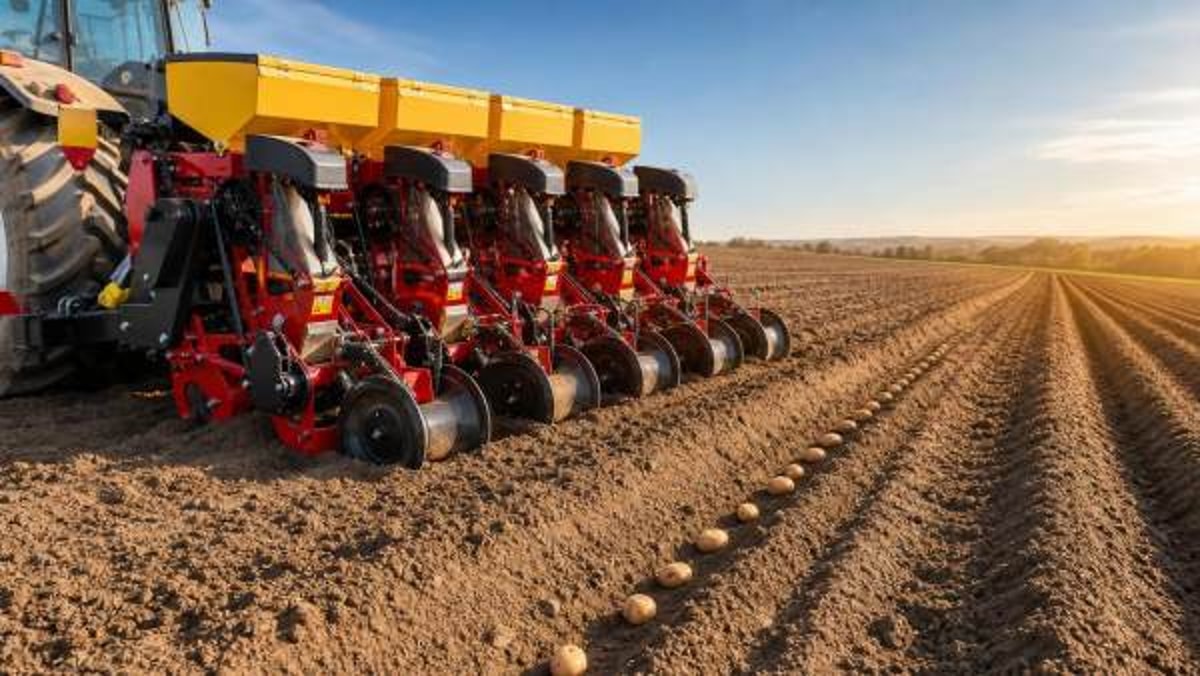
When potato planter machines are mismatched to seed size, row spacing, or field conditions, losses escalate quickly—from missed stands and doubles to higher labor, fuel, and replanting costs. For enterprise growers and procurement leaders, small sizing errors can undermine season-wide margins. This analysis examines where specification gaps occur and how to prevent them before they impact output, quality, and return on investment.
Why scenario differences matter more than the machine brochure
For many buyers, potato planter machines are evaluated by hopper size, row count, operating speed, or headline productivity. Those metrics matter, but they rarely tell the full story. A machine that performs well in one production setting can become a source of measurable loss in another. The reason is simple: potato planting success depends on a chain of fit decisions, not a single equipment decision.
Enterprise farming groups, contract growers, and machinery procurement teams often manage diverse field blocks with different soil textures, seed grades, irrigation systems, and output targets. In those conditions, sizing a planter only for average performance is risky. A mismatch between cup size and seed tuber dimensions, between row spacing and downstream harvesting equipment, or between machine weight and soil bearing capacity can produce losses that do not appear immediately on the purchase order. They appear later in stand variation, grading inconsistency, extra labor shifts, delayed emergence, and lower marketable yield.
This is why the practical question is not merely which potato planter machines are available. The better question is which machine configuration fits which planting scenario, under which operational constraints, and with what tolerance for seasonal variability.
Where sizing mistakes usually begin in real operations
Most sizing errors occur before field testing. They begin in procurement discussions that focus on capacity before agronomic fit. In large operations, planning teams may standardize on one model to simplify service and spare parts, yet fields may vary too much for a single setup to deliver consistent placement. In smaller but intensive production systems, managers may choose an oversized machine expecting faster planting windows, only to create maneuverability, compaction, or feeding problems.
The most common trouble points include seed piece size variation, planter metering design, row spacing compatibility, tractor power mismatch, uneven bed preparation, and moisture-sensitive soils. Potato planter machines that look technically adequate on paper can still fail if they are not matched to the actual seed lot profile and the field’s physical behavior during the intended planting window.
Typical application scenarios for potato planter machines
To make the selection process useful for business decision-makers, it helps to separate the market into practical operating scenarios. Each scenario places different pressure on machine sizing, metering precision, frame design, and serviceability.
Scenario 1: Large-scale processing potato farms
Processing potato operations usually prioritize uniform emergence, tight spacing control, and synchronization with downstream harvesting and storage systems. These businesses often plant large acreages within compressed weather windows. Here, potato planter machines must support speed without sacrificing placement consistency. A slightly wrong metering setup may cause doubles and skips across thousands of hectares, multiplying losses far beyond the initial equipment cost. In this scenario, the right machine is often one that balances high capacity with precise singulation across a narrow target seed range.
Scenario 2: Fresh market growers serving strict size grades
Fresh market producers often care more about visual quality and tuber size distribution than absolute field speed. If potato planter machines place seed inconsistently, plant competition changes within the row, which can widen size variation at harvest. For these growers, metering precision, depth consistency, and gentle handling of seed pieces are often more important than top-end daily capacity. A machine sized for aggressive throughput may damage seed or produce erratic placement if the planting material is irregular.
Scenario 3: Contract farming groups with mixed field blocks
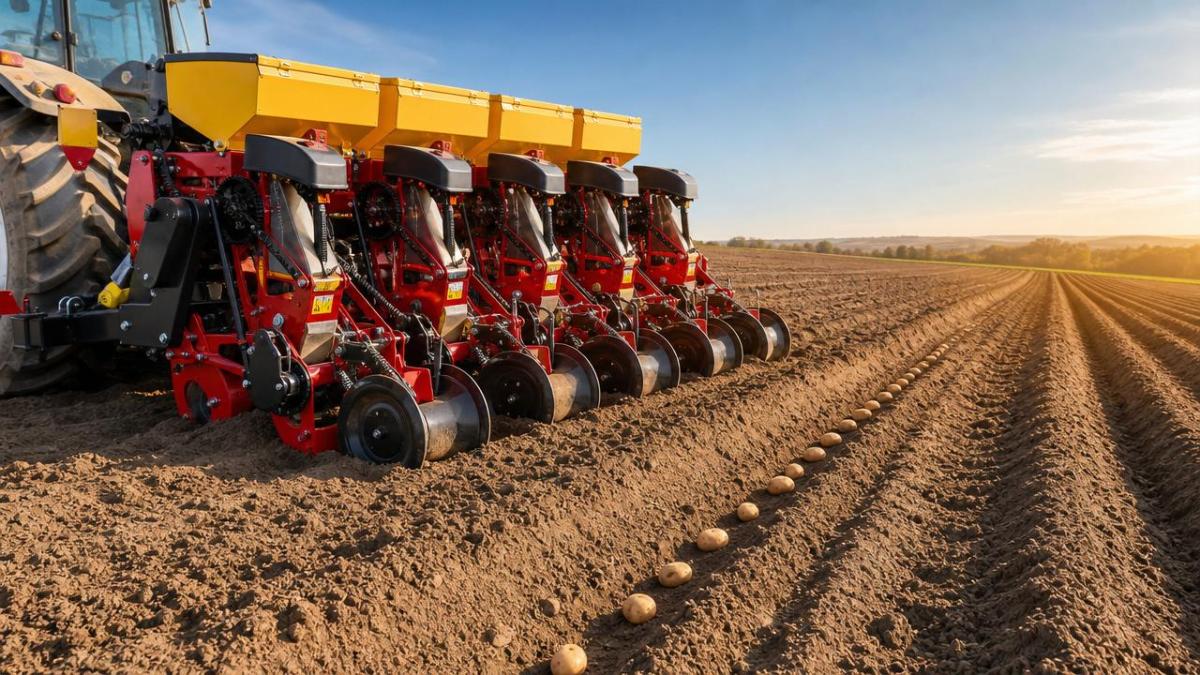
Contract growers and regional production alliances often deal with multiple field shapes, varying headland lengths, and heterogeneous soils. In this setting, potato planter machines must be adaptable, not simply powerful. A planter that excels in long, uniform blocks may underperform in fragmented fields where turning efficiency and setup flexibility determine actual daily output. Adjustable row spacing, easy metering changes, and fast calibration become valuable because the operation cannot afford long downtime between blocks.
Scenario 4: Mechanized operations in heavy or moisture-variable soils
Where soils are heavier, wetter, or more compaction-prone, machine size must be evaluated against flotation, drawbar load, and bed integrity. Potato planter machines that are physically too large or too heavy for field conditions may reduce stand quality even when the metering unit itself is accurate. In these scenarios, the correct choice may be a lower-capacity unit with superior soil-following behavior and lower compaction risk, especially if planting windows are commonly tight after rainfall.
A comparison of scenario-driven buying priorities
The table below shows how the same category of potato planter machines should be judged differently depending on the operating environment and business objective.
What enterprise buyers should verify before selecting potato planter machines
Across scenarios, procurement teams should insist on a more disciplined fit assessment. First, verify the statistical spread of seed size, not just the nominal seed grade. If the seed lot varies widely, metering systems that perform well with uniform tubers may become unreliable. Second, check compatibility with desired in-row spacing, ridge dimensions, and harvest equipment settings. Third, evaluate the power and hydraulic requirements against the tractors that will actually be assigned during peak season, not the ideal tractor in the fleet plan.
Fourth, model daily output under real turning, refill, and transport conditions. Rated capacity is often overstated once field logistics are included. Fifth, review wear parts, calibration complexity, and operator skill requirements. Some potato planter machines deliver excellent results only when managed by highly experienced crews; others are more tolerant in labor-constrained operations. Finally, request evidence from comparable field conditions, especially where soil type, seed preparation, and operating speed resemble your own environment.
Common misjudgments by scenario
Buying for peak acreage alone
This is common in large commercial farms. The planter is sized for the largest theoretical planting day, but not for average field conditions. The result is underutilization in some weeks and compromised placement in others. Potato planter machines should be sized for reliable seasonal performance, not just maximum headline capacity.
Assuming row count equals efficiency
More rows can reduce passes, but only if fields, tractors, labor, and transport support the setup. In smaller or irregular plots, a wide machine may waste time on turns and setup. For mixed operations, the most profitable potato planter machines are often those that preserve consistency while fitting the actual logistics chain.
Ignoring the cost of poor singulation
Skips and doubles are not minor agronomic imperfections. They create measurable economic loss through uneven canopy development, inconsistent tuber set, and grading penalties. In processing contracts and supply agreements, that inconsistency can affect revenue more than a modest difference in machine purchase price.
How to align machine choice with field reality
A practical evaluation framework for potato planter machines should combine agronomy, operations, and finance. Start with field segmentation: group land by soil behavior, block size, slope, and moisture risk. Then match each segment with the seed profiles and spacing targets expected during the season. After that, test whether one planter configuration can handle the spread without unacceptable compromise. If not, it may be better to standardize on a machine family with interchangeable metering or adjustable setups rather than force one configuration into every use case.
Decision-makers should also calculate the cost of mismatch directly. Include replanting, fuel, labor, downtime, yield reduction, grade loss, and harvesting inefficiency. Once those costs are visible, the case for more precise specification becomes much stronger. In many operations, the issue is not that potato planter machines are too expensive; it is that the hidden cost of the wrong size is underestimated.
FAQ: scenario-based questions buyers often ask
Are larger potato planter machines always better for enterprise operations?
No. Larger units are beneficial only when field geometry, tractor support, seed handling logistics, and soil conditions allow them to maintain placement quality. If those factors are weak, a smaller but better-matched planter may produce lower total cost per marketable tonne.
What is the first sign that a planter is sized wrong?
The earliest signals are usually inconsistent spacing, excessive doubles, uneven emergence, or refill and maneuvering delays that reduce expected daily output. These symptoms often appear before final yield losses become visible.
When should a business request field trials?
Field trials are especially important when seed size varies significantly, soils are difficult, or the operation is considering a jump in row count or planting speed. For capital-intensive purchases, scenario-based trials are not optional; they are risk control.
Final decision path for procurement leaders
Selecting potato planter machines should not be reduced to brand preference or nominal capacity. The stronger approach is to define the operating scenario first, identify the agronomic and logistical risks within that scenario, and then shortlist equipment that fits those conditions with measurable tolerance. For large buyers, this means comparing machines against seed variability, field architecture, labor capability, and downstream quality requirements—not just purchase price.
If your organization is reviewing planter investments, begin by auditing where current field losses actually originate. In many cases, they trace back to a preventable fit problem between machine specification and operating reality. The right potato planter machines do more than plant faster; they protect consistency, reduce hidden loss, and improve return across the entire production cycle.
Related Intelligence
- Heavy Agri MachineryRotary tillers wholesale quality checks before placing a large orderRotary tillers wholesale quality checks: verify welds, gearboxes, blades, CE compliance, and batch consistency before large orders to reduce risk and choose suppliers with confidence.
- Heavy Agri MachineryWholesale lawn mowers or ride-ons? Matching mower type to terrainWholesale lawn mowers or ride-ons? Learn how to match mower type to terrain, acreage, labor, and obstacles to stock smarter, reduce service issues, and win more commercial buyers.
- Heavy Agri MachineryManure spreaders wholesale: the maintenance issues worth checking firstManure spreaders wholesale maintenance starts with the right first checks. Discover how to inspect chains, PTO, hydraulics, and corrosion points to reduce downtime and improve spread performance.
The Morning Broadsheet
Daily chemical briefings, market shifts, and peer-reviewed summaries delivered to your terminal.
