
The Authority in Global Agricultural Chemistry & Bio-Resources
Agricultural plows bulk orders: which steel specs actually matter
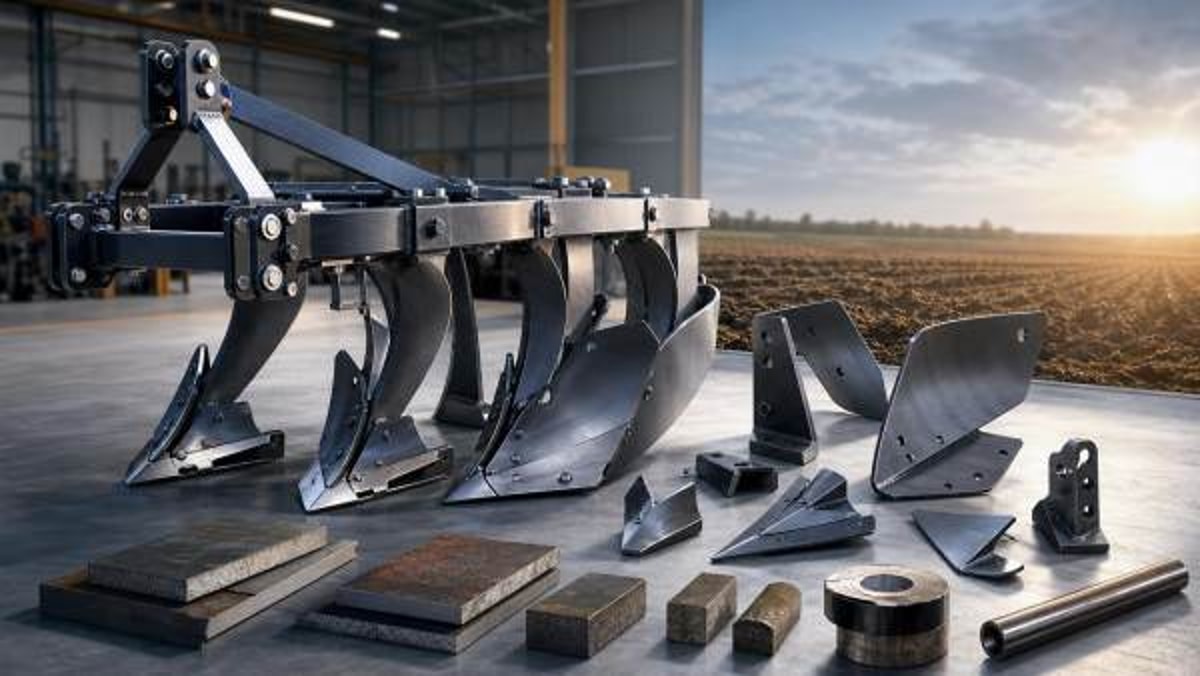
For procurement teams evaluating agricultural plows bulk orders, steel specification is not a minor line item—it directly affects wear life, field performance, maintenance cycles, and total landed cost. This article breaks down which steel grades, hardness ranges, and treatment standards truly matter, helping buyers compare suppliers more accurately and reduce sourcing risk in large-volume plow purchases.
What should buyers actually check in agricultural plows bulk specifications?
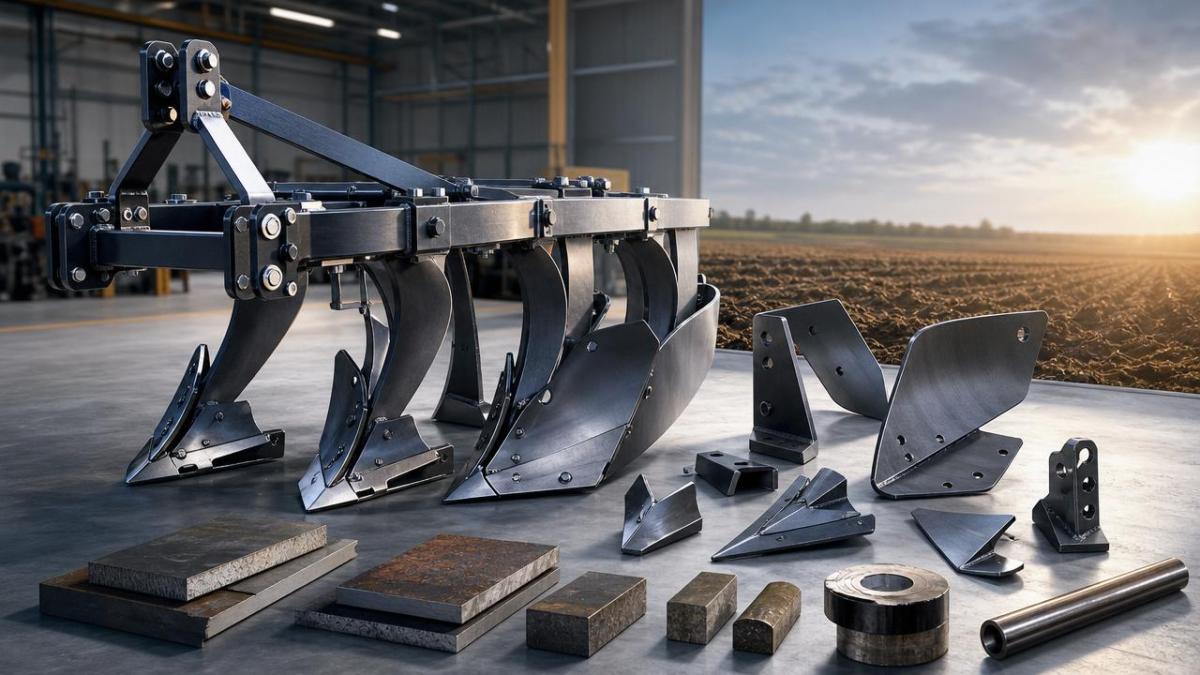
In agricultural plows bulk sourcing, many quotations look similar on the surface. Suppliers may list overall dimensions, frame weight, and tractor horsepower compatibility, yet leave out the steel details that determine field durability. For procurement personnel, that omission creates hidden risk. A lower-priced plow can become more expensive after one season if shares deform, moldboards wear too quickly, or frame weld zones crack under repeated load.
The practical question is not simply “What steel is used?” but “Which steel property matters for which component?” A plow is not one uniform steel product. The share, shank, moldboard, landside, frog, and main frame face different stresses. Abrasion, impact, bending fatigue, weldability, and corrosion exposure vary by part. Smart agricultural plows bulk evaluation therefore requires a component-by-component review instead of a single blanket material claim.
For institutional buyers, cooperatives, farm equipment distributors, and OEM procurement teams, the most useful approach is to separate steel concerns into four layers:
- Base grade selection for structural parts and wear parts.
- Hardness range and heat treatment consistency.
- Manufacturing process control, especially forging, rolling, machining, and welding.
- Inspection records and traceability that support large-volume acceptance.
This is where an intelligence-led publication such as AgriChem Chronicle adds value to industrial procurement. In cross-border sourcing environments, buyers do not just need catalog data. They need comparable technical language, realistic interpretation of standards, and a framework for questioning supplier claims before purchase orders are placed.
Which steel grades matter most for plow frames, shanks, and wear parts?
Not every plow component requires premium alloy steel, but not every component should be made from basic carbon steel either. A common procurement mistake in agricultural plows bulk buying is accepting a generic “high-strength steel” statement without identifying where it is used. Frames need strength and weldability. Shares and points need wear resistance. Shanks often need a balance of toughness and spring characteristics.
The table below gives a practical reference for procurement screening. Actual regional standards may vary, and equivalent grades should always be verified against mechanical properties rather than name alone.
For buyers handling agricultural plows bulk contracts, boron steel frequently deserves special attention on soil-contact parts. It is commonly selected because it can achieve a useful combination of hardness and toughness after heat treatment. However, the purchase decision should not stop at the word “boron.” Buyers should ask for chemical composition ranges, heat treatment method, and post-treatment hardness consistency across batches.
For frame assemblies, overly hard steel is not always better. If the frame steel is difficult to weld or too brittle in cold conditions, field failures can occur at weld toes or hole edges. Procurement teams should therefore align steel grade review with the function of each component, not with a simplistic assumption that harder means superior.
Why generic material descriptions create sourcing risk
Terms such as “special steel,” “alloy steel,” or “high wear resistant material” are not enough for supplier comparison. In agricultural plows bulk tenders, generic descriptions make it difficult to benchmark bids, negotiate replacement-part commitments, or predict maintenance frequency. They also weaken quality claims if there is a later dispute over wear performance.
How important are hardness range and heat treatment in agricultural plows bulk orders?
Hardness is one of the most referenced figures in plow sourcing, but it is often misunderstood. Procurement teams should treat hardness as a control value, not as a standalone buying signal. If a supplier advertises very high hardness on shares or points, that may improve abrasion resistance in sandy soils, but it may also raise brittleness risk under stones, roots, and shock loading.
The right hardness range depends on operating conditions, part geometry, and heat treatment quality. Uniformity matters as much as the target number. A part with uneven hardening may wear irregularly or crack in service. This is especially relevant in agricultural plows bulk purchasing because one inconsistent production lot can affect hundreds of units and disrupt dealer inventory planning.
The following table helps buyers connect hardness logic to component function.
When reviewing agricultural plows bulk proposals, ask whether the supplier uses through-hardening, induction hardening, or another process for wear parts. Also request the inspection location and test method. Hardness data is useful only if procurement can see where it was measured, how many samples were checked, and whether the record represents the actual shipment batch.
What documents should buyers request?
- Material certificate or mill test certificate for the declared steel grade.
- Heat treatment process description for critical wear parts.
- Hardness inspection report with sampling frequency and acceptance range.
- Dimensional inspection record for formed parts such as moldboards.
- Weld inspection evidence for frame assemblies if relevant.
Which standards and compliance signals help compare suppliers?
In global agricultural plows bulk transactions, steel decisions are often complicated by different regional naming systems and varying factory documentation quality. Buyers should avoid relying only on familiar grade names. Equivalent steels may be sold under different standards, while materials with similar names can perform differently depending on processing route and quality control.
A better method is to compare suppliers on measurable compliance signals. These do not guarantee field success on their own, but they improve transparency and reduce ambiguity in technical review.
- Declared steel standard reference, such as ASTM, EN, ISO, DIN, JIS, or equivalent national system.
- Mechanical property range, including hardness, tensile behavior, or yield values where applicable.
- Traceability by batch or heat number for major wear parts.
- Welding procedure consistency for frame fabrication, particularly in heavy-duty designs.
- Surface protection details where storage, transport humidity, or corrosive fertilizer exposure is relevant.
AgriChem Chronicle’s cross-sector editorial model is especially useful here because modern procurement rarely happens in isolation. Buyers in primary industries increasingly face the same challenges seen in fine chemicals and industrial processing: tighter supplier qualification, stronger documentation requirements, and greater pressure for traceable specifications. Even when the product is a plow rather than an API or a process component, the commercial logic is similar—unclear specifications increase downstream cost.
Do coatings matter as much as steel grade?
Coatings do matter, but they do not replace proper steel selection. Paint, powder coating, or anti-rust oil can protect storage and transport condition. They can also improve the arrival appearance of agricultural plows bulk shipments. However, they do not compensate for poor wear steel on soil-contact parts. Buyers should treat coatings as an additional preservation and presentation factor, not as the core performance driver.
How should procurement teams compare cost versus service life?
Price pressure is normal in agricultural plows bulk purchasing, especially for importers, distributors, and large farming groups managing seasonal budgets. The challenge is that low purchase price can hide high replacement frequency. A share that wears out much sooner than expected can affect labor planning, machine downtime, dealer warranty handling, and spare parts logistics.
The right cost discussion is therefore not only ex-works or FOB unit price. It should include field life, replacement interval, freight density, packaging method, and claim risk. Procurement teams should build a total-value comparison before final award.
This cost-focused comparison framework can support agricultural plows bulk decision-making:
The key takeaway is simple: in agricultural plows bulk procurement, a slightly higher steel specification may reduce total ownership cost if it meaningfully extends wear life or lowers breakage incidence. Buyers should ask suppliers to support price differences with measurable material and treatment data, not sales language.
What are the most common mistakes in agricultural plows bulk sourcing?
Many sourcing issues are not caused by poor supplier intent but by incomplete technical alignment at the quotation stage. When orders scale up, those small gaps become expensive. Procurement teams can avoid many problems by watching for the following mistakes.
- Approving a material description at assembly level instead of by component, which hides weak wear-part specifications.
- Comparing only nominal steel grade names without checking treatment condition and mechanical range.
- Ignoring weld quality on heavy frames because the focus stays only on the share or point.
- Failing to define inspection sampling and acceptance criteria before production begins.
- Choosing the hardest possible wear part for all soil conditions, even where impact toughness is more important.
- Not aligning spare part interchangeability and long-term replenishment with the initial bulk order.
These mistakes are especially costly for procurement teams supplying multiple regions. Soil composition, moisture, stone content, and user operating habits can change wear patterns significantly. That means the “best” steel spec in one market may not be the best commercial choice in another.
A practical pre-order checklist
- Map each major plow component to a declared material grade or property range.
- Request hardness targets and tolerance for soil-contact wear parts.
- Confirm whether heat treatment is outsourced or controlled in-house.
- Verify whether replacement shares, points, and moldboards use the same steel specification as the original batch.
- Agree on inspection, packaging, rust prevention, and claim handling before shipment.
FAQ: procurement questions buyers ask about agricultural plows bulk orders
Is boron steel always the best choice for agricultural plows bulk purchases?
Not always. Boron steel is widely used for wear parts because it responds well to heat treatment and can provide strong wear resistance. But “best” depends on part function and field conditions. For frame members, buyers usually need structural reliability and weldability more than very high hardness. For rocky ground, too much hardness on the share can increase fracture risk if toughness is not balanced properly.
What matters more in agricultural plows bulk orders: steel grade or hardness?
Both matter, but neither should be isolated. Steel grade affects hardenability, toughness, weldability, and response to treatment. Hardness reflects one output of processing. A good procurement decision reviews the combined system: declared grade, heat treatment, hardness consistency, and application by component.
How can buyers compare suppliers that use different national steel standards?
Start by asking for equivalent grades and then compare chemistry limits, hardness range, and intended application. Do not rely only on translated grade names. In agricultural plows bulk sourcing, practical comparability comes from property data, process transparency, and inspection records. If the supplier cannot explain equivalency clearly, the technical risk is higher.
Should procurement require sample testing before a large bulk order?
For higher-volume or new-supplier agricultural plows bulk contracts, sample review is a prudent step. It can include dimensional checks, hardness verification, visual weld inspection, and limited field evaluation where feasible. The goal is not to delay procurement unnecessarily, but to validate that the quoted specification matches actual production quality.
Why consult AgriChem Chronicle before finalizing supplier selection?
Procurement in primary industries now demands the same discipline seen in other regulated and technically sensitive sectors. Buyers must compare not just product claims, but documentation quality, traceability, and long-term supply credibility. AgriChem Chronicle supports that process by translating technical manufacturing language into practical procurement insight for decision-makers across agriculture, processing, and industrial supply chains.
If your team is reviewing agricultural plows bulk offers, ACC can help structure the evaluation around the issues that matter most in negotiation and supplier qualification:
- Parameter confirmation for wear-part steel, frame steel, and treatment scope.
- Supplier comparison logic for equivalent grades across different standards.
- Review of inspection documents, traceability expectations, and batch-level consistency questions.
- Discussion support for delivery schedules, replacement-part planning, and customization requirements.
- Editorial partnership opportunities for manufacturers seeking to present validated technical capabilities to institutional buyers.
If you need a clearer basis for product selection, delivery planning, certification interpretation, sample review, or quotation comparison, use ACC as a technical intelligence partner. The right agricultural plows bulk decision begins with the right questions about steel—and the right questions are what protect procurement budgets, service commitments, and downstream operational performance.
Related Intelligence
- Heavy Agri MachineryRotary tillers wholesale quality checks before placing a large orderRotary tillers wholesale quality checks: verify welds, gearboxes, blades, CE compliance, and batch consistency before large orders to reduce risk and choose suppliers with confidence.
- Heavy Agri MachineryWholesale lawn mowers or ride-ons? Matching mower type to terrainWholesale lawn mowers or ride-ons? Learn how to match mower type to terrain, acreage, labor, and obstacles to stock smarter, reduce service issues, and win more commercial buyers.
- Heavy Agri MachineryManure spreaders wholesale: the maintenance issues worth checking firstManure spreaders wholesale maintenance starts with the right first checks. Discover how to inspect chains, PTO, hydraulics, and corrosion points to reduce downtime and improve spread performance.
The Morning Broadsheet
Daily chemical briefings, market shifts, and peer-reviewed summaries delivered to your terminal.
