
The Authority in Global Agricultural Chemistry & Bio-Resources
Drip irrigation systems bulk buying mistakes that raise water waste
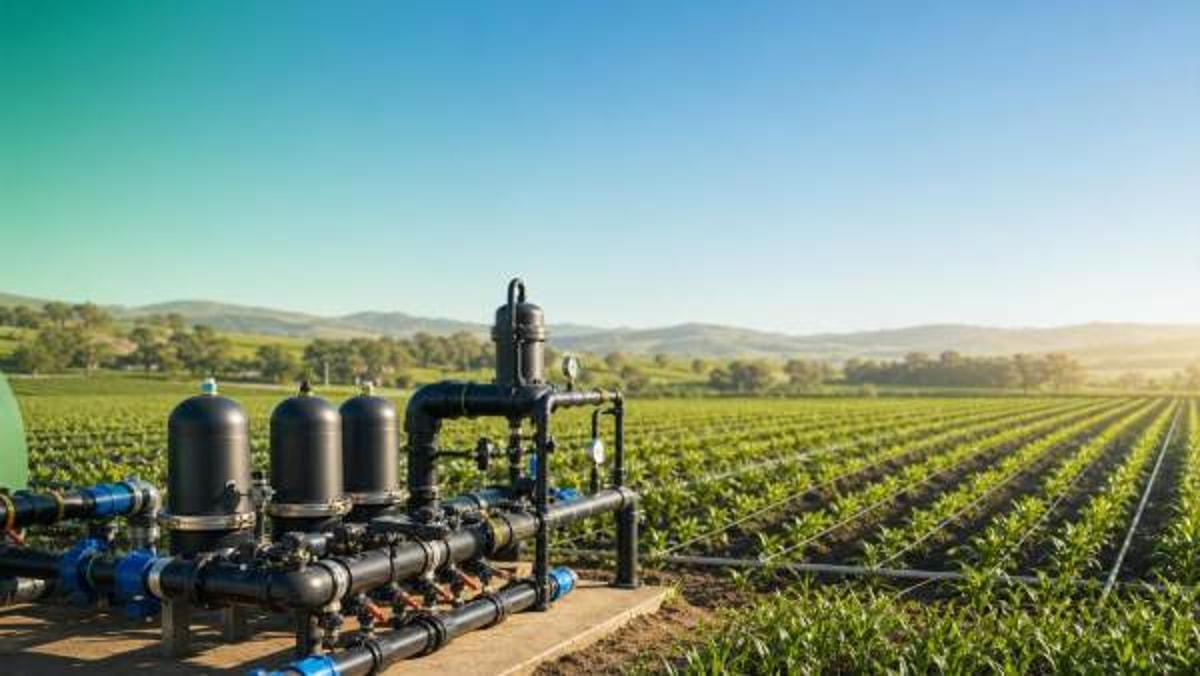
Bulk purchasing can lower project costs, but choosing drip irrigation systems bulk without technical due diligence often increases water waste, maintenance risk, and long-term operating expenses. For project managers and engineering leads, the real challenge is not price alone, but system compatibility, pressure balance, filtration design, and supplier quality control—factors that directly determine field efficiency and procurement success.
Why do drip irrigation systems bulk purchases so often underperform in the field?

In large-scale agriculture, landscaping, greenhouse expansion, and integrated primary industry projects, procurement teams are often rewarded for immediate savings. That can create a blind spot. A low unit price on drip irrigation systems bulk orders may look efficient on paper, yet the installed network can waste water if emitters, pipe wall thickness, pressure compensation, filtration grade, and fertigation compatibility were not evaluated together.
The most expensive mistake is not always a catastrophic failure. More often, it is chronic underperformance: uneven discharge, clogged lines, excessive flushing frequency, pressure losses across long laterals, and crop-zone variability that forces over-irrigation. Project managers then face rework claims, extended commissioning time, and operating teams that lose confidence in the original design.
For institutional buyers and engineering leads, bulk irrigation procurement should be treated like any other technical package: define the duty conditions, verify supplier controls, compare lifecycle costs, and validate field suitability before issuing large-volume purchase orders. This is where disciplined market intelligence matters. ACC’s cross-sector perspective is particularly relevant because irrigation equipment procurement often overlaps with regulated water use, input dosing, mechanical reliability, and traceable sourcing.
- A low-cost emitter can drive hidden water loss when discharge variation forces operators to extend irrigation duration.
- A mismatched filtration package can increase clogging frequency and labor costs far beyond the initial material savings.
- Inconsistent raw material quality in tubing can reduce pressure integrity, UV durability, and installation reliability.
The most common bulk buying mistakes that raise water waste
When teams search for drip irrigation systems bulk options, they often compare quotations by roll length, emitter spacing, or nominal flow only. That is necessary but not sufficient. Water waste is usually created by a chain of procurement errors rather than a single wrong component.
1. Buying by price per meter instead of hydraulic fit
A dripline chosen only for price may not fit field slope, lateral length, pump curve, or required distribution uniformity. On uneven terrain, non-pressure-compensating lines can over-apply at low elevations and under-apply at high points. Operators often react by increasing total run time, which wastes water in already saturated zones.
2. Ignoring source water quality
Bulk procurement without a water analysis is a recurring mistake. Sediment load, biological activity, iron content, hardness, and chemical precipitation risk determine the filtration and flushing strategy. A system designed for clean water will perform poorly on canal, pond, or mixed-source supply if that risk was not priced into the package.
3. Treating all emitters as interchangeable
Emitter labyrinth design, manufacturing tolerance, anti-siphon behavior, and clogging resistance vary significantly across suppliers. Two products with the same nominal flow rate can deliver very different field outcomes. In drip irrigation systems bulk buying, that difference becomes critical because small variation multiplies across thousands of meters.
4. Under-specifying filtration to protect initial budget
A smaller or lower-grade filter assembly may reduce the purchase value, but it can increase maintenance, flushing water loss, emitter blockage, and seasonal replacement rates. This is one of the clearest cases where capital savings convert directly into avoidable operating waste.
5. Overlooking supplier production consistency
For project-scale orders, consistency matters more than sample performance. If tubing dimensions, emitter insertion quality, or resin formulation vary across batches, field pressure behavior and installation reliability can drift. That creates uneven irrigation blocks, warranty disputes, and difficult root-cause analysis after commissioning.
What should project managers evaluate before ordering drip irrigation systems bulk?
A structured technical review helps procurement teams compare suppliers on meaningful criteria rather than list price alone. The table below summarizes the main decision points that affect water efficiency, service life, and field controllability in drip irrigation systems bulk procurement.
This framework is especially useful for engineering-led procurement because it ties commercial decisions to measurable field outcomes. Instead of asking which supplier is cheapest, the better question is which package best protects distribution uniformity under actual site conditions.
A practical review checklist
- Request source water data before freezing filtration and emitter selections.
- Match emitter spacing and flow rate to crop layout, infiltration behavior, and irrigation scheduling targets.
- Review maximum recommended lateral lengths under the intended operating pressure.
- Ask for batch consistency controls, inspection procedures, and packing traceability for bulk orders.
- Clarify commissioning support, spare parts availability, and maintenance instructions before contract award.
Comparison: low bid versus technically balanced procurement
The next table compares two common buying approaches seen in drip irrigation systems bulk projects. It shows why the apparent savings from a low-bid package can disappear once water loss, maintenance time, and seasonal performance variability are considered.
For project managers, the key lesson is simple: the lowest quote often transfers technical risk to the field team. If the system later requires longer irrigation windows or repeated maintenance interventions, the original procurement win becomes an operating loss.
How filtration, pressure control, and layout design influence water loss
Water waste in drip irrigation is rarely dramatic at the beginning. It emerges gradually when subsystems are not coordinated. A technically sound drip irrigation systems bulk package should be evaluated as an integrated network, not a collection of separate items.
Filtration design
The filtration train should reflect the actual contamination profile of the water source. Surface water often needs stronger solids management and more disciplined flushing than clean well supply. Where biological fouling or mineral precipitation is a concern, operational protocols matter just as much as hardware selection. A poorly protected dripline may still pass factory inspection but fail in service.
Pressure regulation
Stable pressure is essential to application uniformity. Over-pressurization can increase wear, fitting failures, and leakage. Under-pressurization reduces emitter performance and may create dry spots that operators compensate for with longer run times. Both conditions waste water, just in different ways.
Field layout and zoning
Long laterals, elevation changes, and oversized blocks often look efficient from a materials perspective, but they can undermine hydraulic balance. Proper zoning, flushing point placement, and manifold sizing are not optional details. They are central to whether a bulk-purchased system performs as designed.
- Use zoning to keep pressure variations manageable across the irrigation block.
- Provide flushing access that field teams can operate regularly without disrupting schedules.
- Coordinate fertigation compatibility to reduce precipitation and emitter blockage risk.
What standards and supplier controls deserve attention?
Although drip irrigation systems bulk orders are not procured under one universal certification regime, disciplined buyers still use common industrial controls to reduce quality uncertainty. In primary industries, especially where water, nutrients, and regulated inputs intersect, documented process control is more valuable than unverified marketing claims.
Project teams should look for sensible evidence such as material traceability, dimensional inspection routines, pressure testing procedures, packaging consistency, and clear operating documentation. If chemical dosing, fertigation, or environmentally sensitive discharge conditions apply, associated compliance expectations should also be reviewed at the project level.
Useful questions for supplier qualification
- How are tubing dimensions and emitter insertion quality checked during production runs?
- Can the supplier explain recommended filtration levels for different water sources?
- Is there a documented process for batch identification and shipment traceability?
- What installation, flushing, and maintenance guidance is included with the bulk order?
This is also where ACC adds value for institutional procurement teams. Because ACC covers agricultural machinery, biochemical processing, and regulated supply chains, its editorial lens is well suited to evaluating not just product claims, but the manufacturing, compliance, and documentation habits that serious buyers need to assess.
FAQ: procurement questions engineering teams ask before committing
How do we know whether pressure-compensating driplines are worth the extra cost?
They are usually more justifiable where terrain varies, lateral lengths are longer, or application consistency is critical. For flat sites with short runs and stable pressure, a non-PC option may be sufficient. The decision should follow a hydraulic review, not a generic rule. In drip irrigation systems bulk buying, spending more on the right emitter can reduce water waste enough to protect the budget over time.
What is the biggest hidden cost in a cheap bulk irrigation package?
Usually it is the combined effect of maintenance labor, flushing water, non-uniform crop performance, and premature replacement. These costs are often distributed across operations and are therefore underestimated during procurement, even though they directly affect total project economics.
How should we compare suppliers if we cannot conduct a full field trial?
Ask for technical data tied to operating conditions, not just catalog summaries. Review water source assumptions, recommended filtration practices, dimensional tolerances, batch controls, and after-sales support scope. If a trial is limited, a smaller pre-bulk validation batch can still reveal installation handling issues and basic consistency concerns.
Which projects are most vulnerable to water waste from poor bulk purchasing decisions?
Projects with uneven terrain, mixed water sources, high-value crops, long irrigation blocks, or aggressive delivery schedules are especially vulnerable. In these settings, shortcuts in design review or supplier qualification tend to surface quickly after commissioning.
Why informed buyers use market intelligence before finalizing supply decisions
The procurement of drip irrigation systems bulk is no longer a simple commodity transaction. Buyers now need to consider water stewardship, energy use, maintenance workload, traceable sourcing, and operational resilience. That is why market intelligence and technical interpretation matter. A specialist publication such as AgriChem Chronicle helps decision-makers connect supplier claims with real procurement risk, especially in sectors where agricultural performance and industrial process discipline overlap.
ACC’s value lies in its ability to frame irrigation purchasing inside a broader primary-industry context: regulated supply chains, equipment performance, processing economics, and technical credibility. For project managers, this improves internal decision-making. For suppliers, it creates a more informed buying environment where engineering fit carries appropriate weight.
Why choose us for irrigation procurement insight and next-step evaluation?
If your team is comparing drip irrigation systems bulk suppliers, ACC can support a more disciplined evaluation process through industry-focused analysis, sourcing insight, and technically grounded content that speaks to real project constraints. This is especially useful when you need to validate whether a quotation is truly fit for the site rather than merely attractive on price.
You can reach out to discuss specific procurement questions, including parameter confirmation for driplines and emitters, filtration and pressure-control assumptions, supplier comparison criteria, estimated delivery windows, support expectations for large-volume orders, documentation needs for internal approval, and scenario-based review of water quality risks. If you are building a shortlist, preparing an RFQ, or challenging a low bid that may increase water waste, a focused technical-commercial review can save significant downstream cost.
Related Intelligence
- Feeding & Watering SystemsDrip irrigation systems bulk buying mistakes that raise water wasteDrip irrigation systems bulk mistakes can quietly raise water waste and maintenance costs. Learn the key checks buyers need to compare suppliers, improve field efficiency, and avoid costly procurement errors.
- Feeding & Watering SystemsIs liquid adding machine feed worth it?Is liquid adding machine feed worth it? Explore ROI, accuracy, and line integration with feed grading sieve, double roller crumbler, feed pellet cooler, and more.
- Feeding & Watering SystemsWholesale Water Pumps for Farming: Quality Gaps to CheckWholesale water pumps for farming: learn how to spot quality gaps in solar water pumps agricultural and submersible deep well pumps before bulk orders—reduce downtime, risk, and lifetime cost.
The Morning Broadsheet
Daily chemical briefings, market shifts, and peer-reviewed summaries delivered to your terminal.
