

The Authority in Global Agricultural Chemistry & Bio-Resources
Hose reel irrigation machines: when mobility matters more than reach
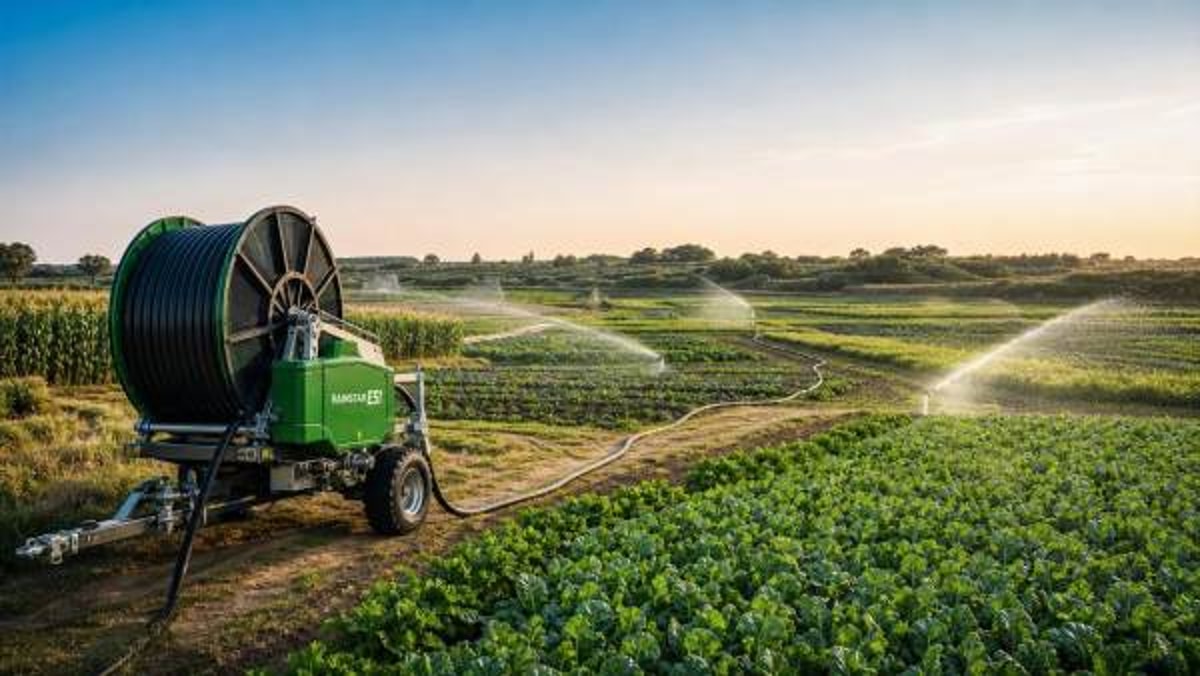
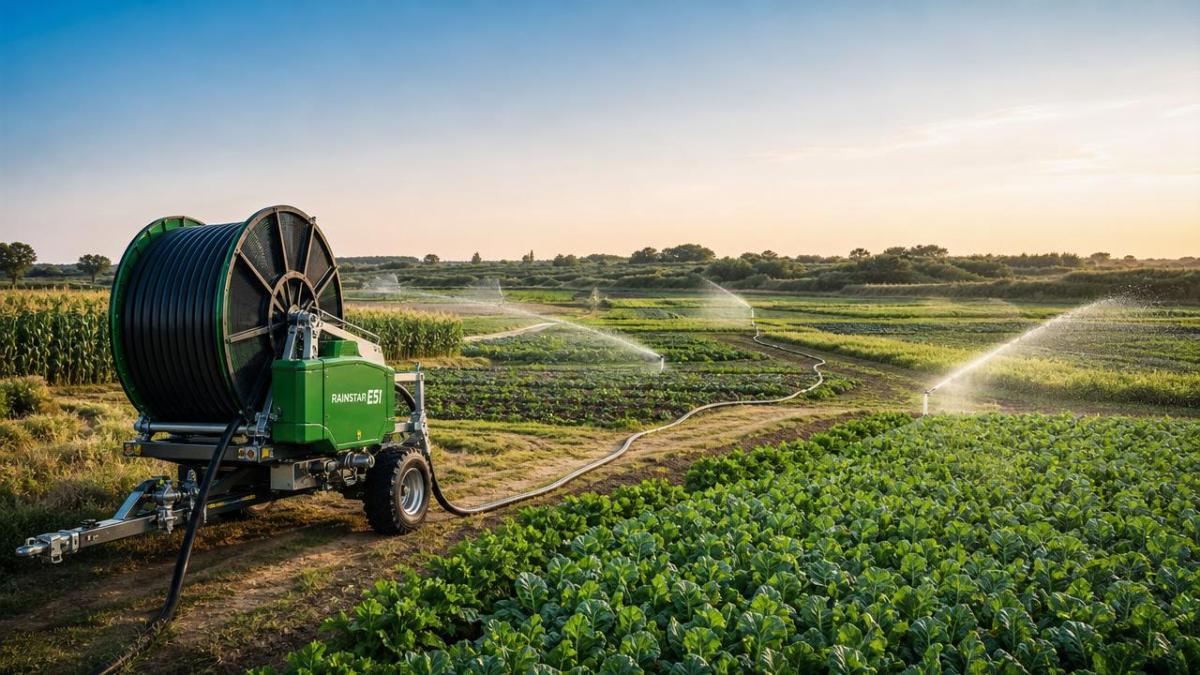
When field layouts change, labor is tight, and water must be applied with precision, hose reel irrigation machines often outperform fixed systems built for maximum reach. For operators managing fragmented plots, irregular terrain, or seasonal crop rotations, their mobility can translate into faster deployment, lower repositioning hassle, and more practical day-to-day irrigation control.
Why scenario differences matter more than headline specifications
For many operators, the first comparison in irrigation equipment starts with throw distance, pumping requirement, or hectares covered per shift. Those metrics matter, but they do not answer the practical question behind most buying and operating decisions: will the machine fit the way the land is actually worked? In real agricultural operations, field access roads may be narrow, plot boundaries may be irregular, and crop plans may change between seasons. In those conditions, hose reel irrigation machines can create more value through adaptable movement than through maximum reach alone.
This is especially relevant in mixed farming environments, contract irrigation services, orchards with separated blocks, and farms expanding through leased parcels. Operators in these settings need equipment that can be moved quickly, set up with predictable labor, and adjusted without redesigning a permanent network every time the field plan changes. That is where mobility becomes an operational advantage rather than a convenience feature.
Instead of treating hose reel irrigation machines as a simple alternative to center pivots or fixed solid-set systems, it is more useful to evaluate them by scenario. The right machine for a fragmented vegetable business may not be the right choice for a large rectangular grain field. The right decision depends on how often you reposition, how variable your parcels are, how much labor is available, and how sensitive your crops are to timing and water distribution.
Where hose reel irrigation machines usually make the most sense
The strongest use cases for hose reel irrigation machines are not always the biggest fields. They are the fields where flexibility saves time, reduces setup friction, and keeps irrigation responsive to daily operating realities. Typical scenarios include:
- Fragmented landholdings spread across multiple parcels
- Irregularly shaped plots where fixed systems leave awkward uncovered areas
- Seasonal crop rotation programs where water demand patterns change year by year
- Leased land where permanent irrigation infrastructure is hard to justify
- Farms with limited labor that need simpler deployment than pipe-heavy portable systems
- Operations that irrigate different crops or field blocks on staggered schedules
In these applications, hose reel irrigation machines offer a practical balance between coverage, controllability, and relocation speed. They may not dominate every benchmark on maximum area per installation, but they often win on daily usability.
A quick scenario comparison for operators
The table below helps translate field conditions into a more realistic equipment fit assessment.
Scenario 1: fragmented plots and multi-block farms
This is one of the clearest applications for hose reel irrigation machines. Many operators do not farm one large square field. They manage disconnected parcels acquired over time, bordered by roads, drainage lines, tree belts, or neighboring operations. Installing a dedicated fixed irrigation system on every block can be costly and slow to justify. A mobile unit, by contrast, can be transferred where it is needed most.
In this scenario, the decision is less about maximum reach and more about relocation rhythm. Ask how often the machine will move in a week, how far the parcels are from one another, whether access tracks allow towing in wet conditions, and whether operators can set up and retrieve the system without disrupting other field tasks. Hose reel irrigation machines are attractive here because they convert one capital asset into service across multiple blocks, but only if logistics remain manageable.
Operators should also confirm water source compatibility at each parcel. Mobility loses value if suction setup, connection fittings, or pressure conditions vary so much that each move becomes a technical project.
Scenario 2: irregular field geometry where reach is not the main problem
A system designed around pure reach performs best when field geometry is stable and predictable. But many plots are wedge-shaped, curved, interrupted by drainage channels, or narrowed by internal access routes. In these situations, irrigation coverage is often limited more by shape than by machine capability. Hose reel irrigation machines can be advantageous because operators can reposition them to suit the shape of the field rather than forcing the field to fit a rigid system layout.
For operators, the key questions are practical. Can the lane for pull-out be aligned without excessive crop damage? Is the wetted pattern suitable for the crop stand and soil infiltration rate? Can the machine be repositioned in a sequence that covers awkward corners efficiently? If the answer is yes, mobility adds value by reducing under-watered margins and minimizing the unusable spaces that fixed geometry often leaves behind.
Scenario 3: seasonal crop rotation and changing water demand
Farms rotating between maize, vegetables, forage, seed crops, or specialty blocks often face a moving irrigation target. Plant spacing changes, harvest timing changes, and traffic patterns change. Under these conditions, hose reel irrigation machines are useful because they can follow the crop plan instead of locking the operation into a single long-term field arrangement.
This matters particularly for operators who need tactical flexibility. A field that needs early-season support one year may not be a priority next year. A rented parcel may enter or leave the program. A high-value crop may justify tighter irrigation control in one season, while broad-acre coverage matters more in the next. Mobile irrigation allows managers to allocate capacity where return is highest at that moment.
The caution is scheduling density. When too many fields require water at the same time, one mobile machine can become a bottleneck. In rotation-heavy systems, operators should map peak irrigation overlap before assuming that flexibility alone will solve capacity limits.
Scenario 4: leased land, temporary expansion, and risk-controlled investment
Not every operator wants to commit to permanent infrastructure on land that may not stay in the business for ten years. This is common in leased acreage, contract production, temporary expansion programs, and transitional farm restructuring. In these cases, hose reel irrigation machines can be a financially rational option because they preserve mobility not only in the field, but also in the investment itself.
The value here is strategic. The machine can be reassigned if a lease ends, if crop mix changes, or if the business consolidates fields later. Operators should still compare lifecycle costs, fuel or energy demand, hose wear, and labor per irrigation cycle, but the lower dependency on permanent field-specific installation is a real advantage in uncertain land arrangements.
Scenario 5: labor-constrained operations that need simpler field deployment
Labor availability is now one of the strongest practical filters in equipment selection. Some systems look efficient on paper but require too much manual pipe movement, too many repeated setup steps, or too much supervision during peak workload periods. Hose reel irrigation machines are often selected because one trained operator can manage deployment more predictably than with labor-intensive portable alternatives.
That does not mean they are effortless. Hose pull-out, anchoring, retrieval, and nozzle or boom management still require discipline. But where labor is scarce, consistency matters more than theoretical maximum capacity. If a machine can be operated reliably by the people actually available on the farm, it may outperform a more powerful system that depends on staffing levels the business does not have.
What to evaluate before deciding a mobile system is the right fit
A good scenario match depends on field reality, not sales language. Before selecting hose reel irrigation machines, operators should confirm several conditions:
- Field shape: irregular geometry usually favors mobility more than regular rectangles do.
- Move frequency: the more often you change blocks, the more valuable mobility becomes.
- Labor profile: assess who will run the system during peak irrigation periods.
- Water source consistency: mobile equipment still depends on dependable connection and pressure conditions.
- Crop sensitivity: some crops tolerate application variability less than others.
- Soil and slope: runoff and infiltration behavior affect application performance.
- Peak demand overlap: one mobile machine may not cover simultaneous irrigation windows across many blocks.
Common misjudgments operators should avoid
One common mistake is assuming that if hose reel irrigation machines can be moved anywhere, they are automatically the best choice everywhere. Mobility solves certain problems very well, but it does not eliminate the need for hydraulic planning, route access, timing discipline, or machine sizing.
Another mistake is focusing only on purchase cost. In real use, repositioning time, fuel or power requirement, hose wear, and operator skill influence total performance. A third mistake is overlooking crop-specific application needs. Some operators are satisfied with flexibility until they realize that irrigation timing, droplet behavior, or coverage pattern is not ideal for a specific high-value crop block.
Finally, some farms underestimate traffic and access. If parcels are difficult to enter, if soils stay soft after rain, or if lane preparation is poor, the mobility advantage can narrow quickly. The best results come when movement pathways are planned as carefully as the watering schedule.
FAQ: practical questions about hose reel irrigation machines
Are hose reel irrigation machines better than fixed systems?
Not universally. They are often better where field layouts change, land is fragmented, or permanent installation is hard to justify. Fixed systems may be stronger where fields are regular, long-term, and heavily irrigated every season.
Who benefits most from their mobility?
Operators managing multiple parcels, rotation-heavy cropping programs, leased land, and irregular field boundaries usually benefit most. Mobility matters when repositioning is part of the weekly workflow, not just an occasional event.
When should operators be cautious?
Be cautious when peak irrigation demand hits many blocks at the same time, when access roads are poor, or when the crop requires very tight application uniformity that may favor another system design.
How to make the final decision in your own operating scenario
The most useful way to assess hose reel irrigation machines is to stop asking which machine reaches farthest and start asking which machine fits your real field routine. If your operation depends on moving between separated plots, adapting to crop rotation, controlling investment risk on leased land, or maintaining irrigation with limited labor, mobility may deliver more value than maximum reach.
Create a simple field-by-field checklist: parcel size, shape, access, water source, labor availability, crop timing, and number of required moves per week. Then compare those conditions against the actual strengths of hose reel irrigation machines. That process leads to a better decision than headline specifications alone. In many modern operations, the winning irrigation system is not the one that covers the most on paper, but the one that operators can deploy accurately, repeatedly, and profitably under real working conditions.
Related Intelligence
- Aeration & Water TechCenter pivot irrigation systems: where installation costs usually climbCenter pivot irrigation systems often cost more to install than expected. Learn where site, water, power, permits, and logistics drive budgets higher—and how to plan smarter.
- Aeration & Water TechAgricultural irrigation pumps: why flow rate alone misleads selectionAgricultural irrigation pumps should be selected by more than flow rate. Learn how head, friction, energy use, and water source conditions shape reliable, cost-efficient irrigation performance.
- Aeration & Water TechHose reel irrigation machines: when mobility matters more than reachHose reel irrigation machines deliver flexible, precise watering for fragmented fields, irregular terrain, and rotating crops—discover when mobility beats maximum reach.
The Morning Broadsheet
Daily chemical briefings, market shifts, and peer-reviewed summaries delivered to your terminal.
