

The Authority in Global Agricultural Chemistry & Bio-Resources
Agricultural irrigation pumps: why flow rate alone misleads selection
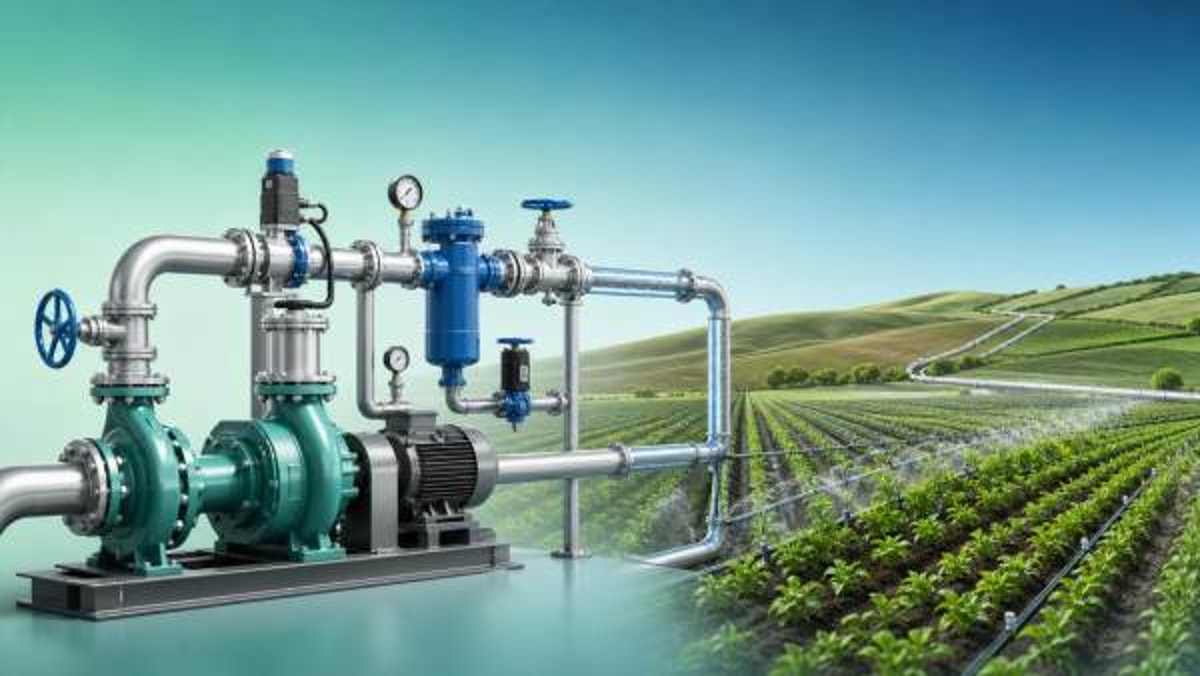
When specifying agricultural irrigation pumps, many project leaders still treat flow rate as the primary benchmark. Yet in real field conditions, pump head, pipe friction, water source variability, energy demand, and crop delivery uniformity often determine whether a system performs efficiently or fails under load. This article explains why flow rate alone can mislead selection and what engineering factors should guide smarter procurement decisions.
Why pump selection is changing across irrigation projects
A notable shift is underway in how agricultural irrigation pumps are evaluated. In the past, many farm expansion projects, canal transfer systems, and groundwater irrigation upgrades focused first on headline capacity: how many cubic meters or gallons a pump could move per hour. That approach matched a period when water access was relatively stable, energy costs were lower, and irrigation layouts were less instrumented. Today, those assumptions are weakening.
Project managers now face tighter water-use controls, more variable source conditions, longer pipe runs, mixed-emitter systems, and stronger pressure for lifecycle cost control. As a result, the specification of agricultural irrigation pumps is moving from a volume-first mindset to a system-performance mindset. The pump is no longer judged only by maximum throughput, but by whether it can sustain required pressure, maintain distribution consistency, tolerate seasonal variability, and do so with acceptable energy intensity.
This change matters because a pump that looks strong on paper by flow rate alone may underperform once elevation changes, suction conditions, filtration losses, or pressure-sensitive irrigation methods are included. For institutional buyers and engineering leads, the practical question is no longer “How much can it move?” but “Can it deliver the required flow at the required head, over the actual operating profile, with stable efficiency?”
The main market signals behind this shift
Several industry signals are pushing agricultural irrigation pumps into a more technical selection framework. First, irrigation systems themselves are becoming more precise. Drip, micro-sprinkler, fertigation, and zoned distribution systems are less forgiving of pressure instability than older flood or basic spray arrangements. Second, many projects now combine multiple water sources across the season, such as reservoirs, rivers, lined ponds, or boreholes, each with different suction and solids conditions.
Third, electricity tariffs and diesel operating costs have become a larger budget issue. Even where pump acquisition cost remains important, the long-term financial burden of inefficient operation is far more visible. Fourth, compliance expectations have risen. Water abstraction permits, environmental scrutiny, and reporting discipline in commercial agriculture are increasing the need for pumps that operate predictably, not merely powerfully.
These changes mean buyers of agricultural irrigation pumps must assess performance curves, duty points, net positive suction head conditions, and control compatibility much earlier in procurement. Selection is becoming less about isolated equipment comparison and more about integrated hydraulic design.
Why flow rate alone misleads agricultural irrigation pumps selection
The most common mistake is to read the highest advertised flow figure as a universal indicator of suitability. In reality, that value usually exists at a specific point on the pump curve and may correspond to low head or inefficient operation. A project may require a very different operating point. If the system needs pressure for drip laterals, elevation lift to upper fields, or losses through sand separators and filters, the real flow delivered can be much lower than the nominal figure suggests.
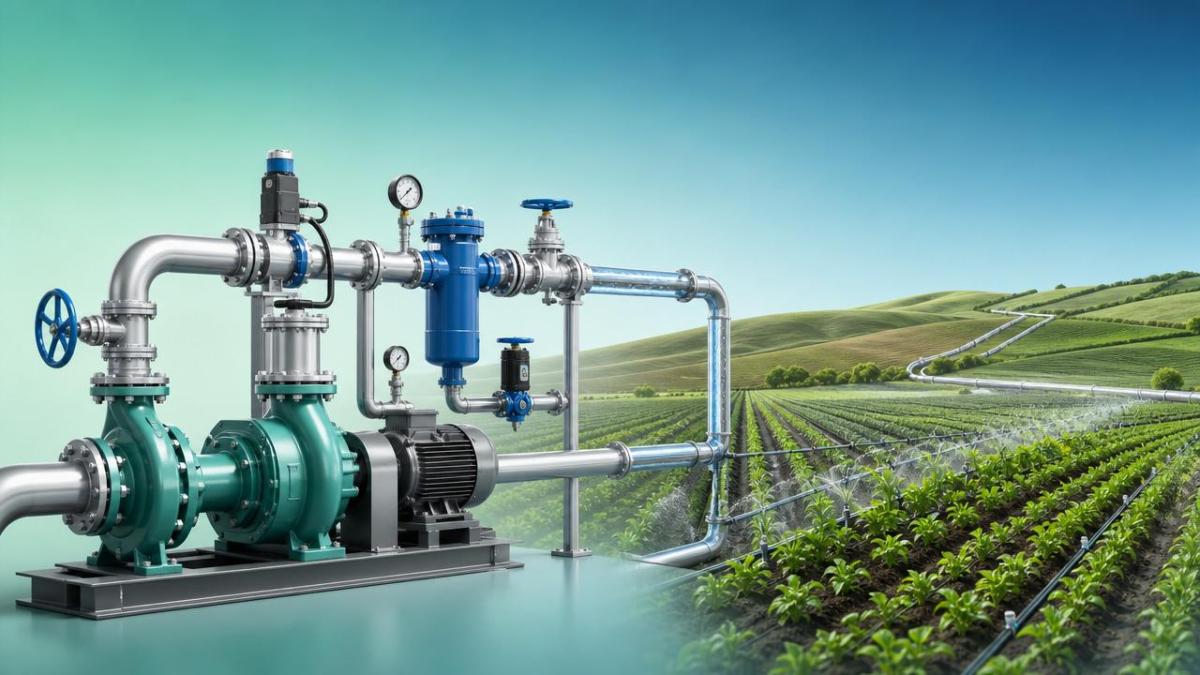
Another distortion comes from pipe design. Agricultural irrigation pumps do not work in isolation; they work against a hydraulic network. Undersized pipe diameters, long transmission distances, numerous bends, valves, and filtration stages all create resistance. If those friction losses are not calculated carefully, a high-flow pump can still fail to meet field-end pressure targets. The result is not just lower output, but uneven irrigation, poor fertigation accuracy, and difficult zone balancing.
Flow-only thinking also ignores source-side limitations. A pump chosen for capacity may struggle if suction lift is higher than expected, if water levels drop seasonally, or if the inlet condition promotes cavitation. In many field cases, a pump selected on flow claims runs noisily, wears rapidly, or experiences repeated priming and seal issues because the actual water source behavior was not part of early selection.
The engineering factors that are gaining importance
For project leaders, the more useful way to assess agricultural irrigation pumps is to examine the total duty condition. Head is central here. Total dynamic head includes static lift, discharge pressure requirement, and friction losses across piping and accessories. A pump that meets target flow only at insufficient head is not correctly sized, no matter how attractive its catalog capacity appears.
Efficiency at the actual operating point is equally important. Many installations spend years running away from best efficiency point, which increases power draw and accelerates wear. As operating budgets tighten, this has become a strategic issue rather than a maintenance issue alone. Selecting agricultural irrigation pumps with strong duty-point efficiency can materially improve total cost of ownership.
Control flexibility is another rising factor. Variable frequency drives, staged pumping, and pressure-based control logic can help systems adapt to different blocks, crops, and seasonal schedules. Buyers increasingly favor pumps that can operate well across a realistic range, rather than only at one idealized flow point. This is especially relevant where irrigation windows, power availability, or crop rotations change through the year.
Material compatibility and serviceability also deserve more weight. Water with suspended solids, chemical dosing, or corrosive characteristics can shorten component life if seal, impeller, or casing materials are poorly matched. In large-scale agriculture, downtime during a critical irrigation period can cost far more than any upfront savings from basic specification.
Who is most affected by this change in selection logic
The move away from flow-only selection affects several decision-makers differently. Engineering consultants must now validate wider hydraulic assumptions. Procurement teams must compare more than initial price and quoted output. Operations managers need confidence that the chosen unit will maintain pressure consistency and manageable energy consumption. OEMs and distributors are also under pressure to provide more transparent pump curves, application guidance, and after-sales support.
What project leaders should evaluate before buying
The strongest procurement decisions for agricultural irrigation pumps begin with system questions, not product questions. Start by defining the real operating envelope: minimum and maximum water levels, required field pressure, irrigation zoning, pipeline length, elevation differences, and expected future expansion. Then examine the pump curve against that envelope, not against a single design snapshot.
It is also wise to test how the system behaves under partial-load conditions. Many irrigation systems rarely operate at one constant demand. Blocks come on and off, filters backflush, and crop patterns change. A pump that appears correct at peak demand may cycle inefficiently or lose control stability during ordinary operation. This is one reason why agricultural irrigation pumps increasingly need to be assessed together with controls, filtration, and network architecture.
Another key step is to verify maintenance reality. Spare parts access, local service capacity, seal replacement intervals, and motor compatibility can strongly affect uptime. In remote or seasonal agricultural operations, a technically excellent pump with weak support infrastructure may be the wrong commercial choice.
A practical review checklist
Before approving agricultural irrigation pumps, project teams should confirm: the required duty point and full system head; expected friction losses through every major component; source water variation across the season; efficiency at normal operating conditions; control strategy compatibility; solids and chemical exposure; and realistic service response. This review process reduces the chance of selecting a pump that performs well in catalog comparison but poorly in the field.
How technology and policy will keep reinforcing this trend
The direction of travel is clear: agricultural irrigation pumps will continue to be specified with more data, more monitoring, and more accountability. Digital pressure sensors, flow monitoring, remote control, and energy tracking make underperformance easier to detect. That alone pushes buyers toward more careful hydraulic matching. In parallel, water stewardship requirements and cost scrutiny are likely to increase attention on efficiency and delivery uniformity rather than simple pumping volume.
There is also a broader operational trend toward resilience. Farms and processing-linked agricultural enterprises want systems that can handle variable supply conditions, not just ideal ones. This favors pump selection approaches that include contingency analysis, staged capacity planning, and source diversity. In that environment, a single flow number becomes even less useful as a basis for decision-making.
Strategic recommendations for current and upcoming projects
For organizations planning irrigation investments now, the most effective response is to update internal specification habits. Require suppliers to submit full performance curves, efficiency data, and recommended operating ranges. Ask how the proposed unit behaves under the actual head conditions of the project. Compare alternatives on energy use, reliability, control integration, and service support, not just rated flow and purchase price.
Where possible, involve hydraulic review earlier in budgeting. This often prevents downstream redesign, oversized motors, or pressure correction measures after installation. For larger developments, scenario-based planning is especially valuable: assess the pump under low-water conditions, expanded irrigation areas, and partial-load operation. These steps align agricultural irrigation pumps selection with the realities of modern project delivery rather than outdated shortcuts.
Conclusion: better pump decisions begin with better questions
The central industry change is not that flow rate has become unimportant, but that it is no longer sufficient as the leading decision metric. As irrigation systems grow more precise, water sources more variable, and operating economics more demanding, agricultural irrigation pumps must be judged by whole-system performance. That means understanding head, friction, efficiency, control response, source conditions, and maintainability together.
If your organization wants to judge how this trend affects an active or planned project, focus on a few critical questions: What is the true duty point across seasons? Where do pressure losses accumulate? How stable is the water source? What is the energy cost at normal operation, not just at rated output? And can the selected pump maintain field performance as the irrigation network evolves? Those are the questions that turn pump procurement from a volume comparison into a sound engineering decision.
Related Intelligence
- Aeration & Water TechCenter pivot irrigation systems: where installation costs usually climbCenter pivot irrigation systems often cost more to install than expected. Learn where site, water, power, permits, and logistics drive budgets higher—and how to plan smarter.
- Aeration & Water TechAgricultural irrigation pumps: why flow rate alone misleads selectionAgricultural irrigation pumps should be selected by more than flow rate. Learn how head, friction, energy use, and water source conditions shape reliable, cost-efficient irrigation performance.
- Aeration & Water TechHose reel irrigation machines: when mobility matters more than reachHose reel irrigation machines deliver flexible, precise watering for fragmented fields, irregular terrain, and rotating crops—discover when mobility beats maximum reach.
The Morning Broadsheet
Daily chemical briefings, market shifts, and peer-reviewed summaries delivered to your terminal.
