

The Authority in Global Agricultural Chemistry & Bio-Resources
Center pivot irrigation systems: where installation costs usually climb
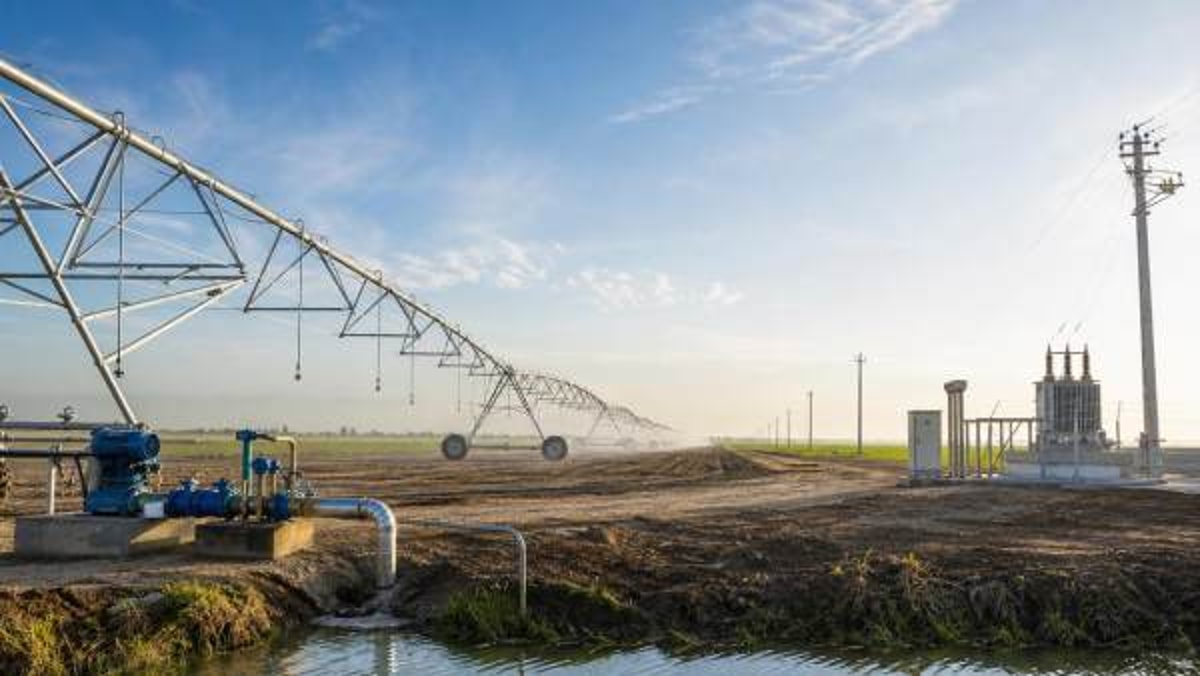
For financial decision-makers, center pivot irrigation systems are rarely judged by sticker price alone. Installation costs often rise around land grading, water access, power infrastructure, permitting, and transport logistics—factors that can quickly reshape total project economics. Understanding where these expenses usually climb helps procurement teams build more accurate budgets, reduce approval risk, and evaluate long-term return with greater confidence.
Why do center pivot irrigation systems cost more to install than initial quotations suggest?
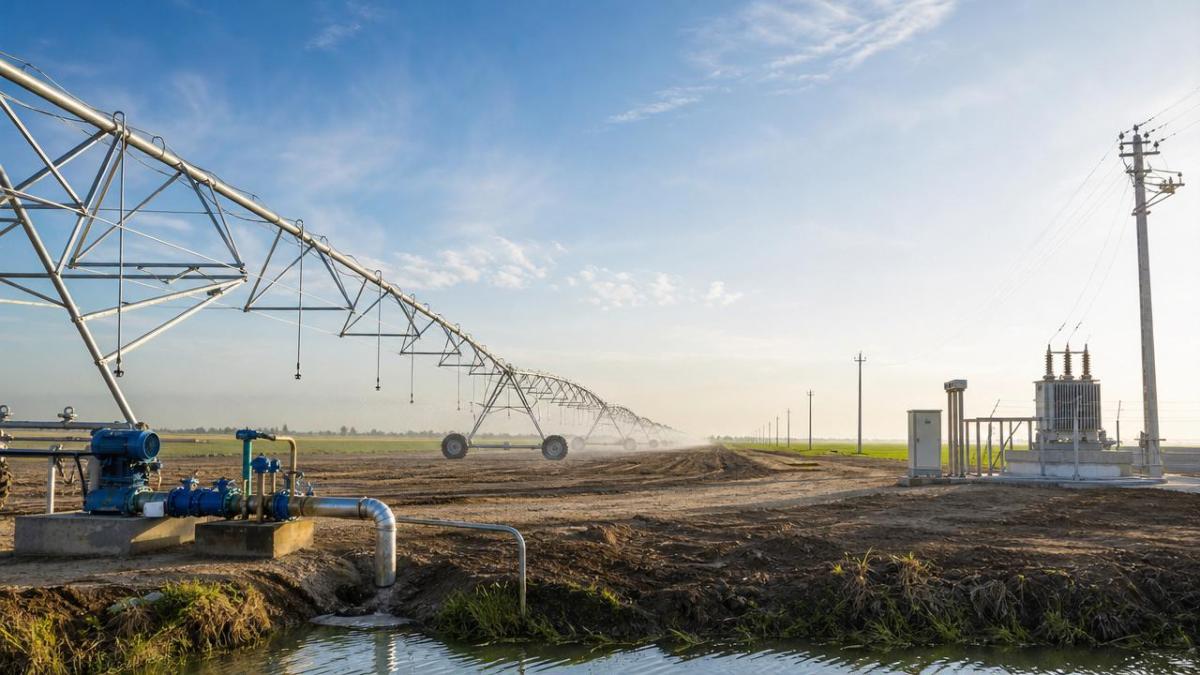
In capital planning for agricultural machinery, the quoted price for center pivot irrigation systems usually reflects the machine package itself: spans, drive units, sprinklers, controls, and standard accessories. What often sits outside the initial figure are site-enabling works. For a finance approver, that gap matters more than the equipment list because it affects cash flow timing, depreciation assumptions, contingency planning, and payback calculations.
This issue is especially relevant across primary industries, where projects are exposed to variable terrain, regional utility constraints, local compliance rules, and seasonal construction windows. A flat-field assumption can turn into a multi-line budget revision once the project team discovers unstable soil, undersized transformers, or a longer-than-expected pipeline route from the source water point.
AgriChem Chronicle tracks these cost drivers because institutional buyers increasingly need more than product brochures. They need installation intelligence, supply-chain transparency, and practical budgeting logic that links engineering conditions to procurement outcomes.
- Equipment price is only one layer of total project cost; civil works and utilities can materially change the investment case.
- Remote locations often increase freight, contractor mobilization, spare parts staging, and commissioning costs.
- Regulated operations may face additional review steps tied to water abstraction, environmental controls, or electrical compliance.
The budget categories that most often expand after engineering review
Before approval, finance teams benefit from separating direct equipment cost from infrastructure cost, regulatory cost, and implementation risk. The table below highlights where center pivot irrigation systems most commonly see budget escalation during project development.
For many projects, the financial risk is not that center pivot irrigation systems are inherently overpriced. It is that key enabling costs are discovered too late, after the internal business case has already been circulated. Early technical diligence reduces that mismatch.
Where installation costs usually climb first: site, water, and power
The first escalation point is usually site condition. A center pivot depends on consistent tower movement, acceptable wheel traction, and stable support around the pivot point. If the field has significant undulation, washout channels, or weak subgrade, grading and ground improvement can become a meaningful share of the installation budget.
The second driver is water access. A system may appear affordable until the project team calculates the real hydraulic path from intake to pivot. Distance, elevation change, filtration, pressure regulation, and pump selection all affect capex. Water with high sediment content can also increase pre-treatment and maintenance allowances.
Third comes power. Where three-phase electricity is unavailable near the field, center pivot irrigation systems may require utility extension, a dedicated transformer, or an alternative power strategy. Even where the grid exists, voltage stability and starting loads for pumps can push projects toward additional electrical works.
A practical checklist for early-stage cost screening
- Confirm the actual irrigated area, field geometry, and whether obstacles reduce the usable circle.
- Request a topographic survey rather than relying on visual field inspection.
- Validate source water location, quality, seasonal availability, and pumping distance.
- Check utility proximity, transformer capacity, and lead times for new electrical connections.
- Review road access for long-span components and assembly equipment.
Financial approval becomes more robust when these items are turned into line-by-line assumptions rather than a single contingency percentage. A 10% reserve may be enough for a straightforward site, but not for a greenfield location with uncertain water and power infrastructure.
How should finance teams compare center pivot irrigation systems against other irrigation options?
Center pivot irrigation systems are often evaluated against drip irrigation, traveler systems, or fixed sprinkler networks. The right choice depends on crop pattern, field size, labor model, water quality, and budget horizon. Finance teams should avoid comparing only upfront equipment prices because different systems shift cost between installation, maintenance, labor, and water-use efficiency.
The table below supports comparison at the project economics level rather than at the catalogue level.
For broad-acre operations, center pivot irrigation systems often win on labor efficiency and operational consistency. However, if the field shape is irregular, if water must be pumped over long elevation changes, or if the grid connection is weak, another configuration may yield a better total-cost profile.
When center pivot irrigation systems are financially attractive
- Large fields with layouts that closely match pivot coverage and minimize non-irrigated corners.
- Operations that value lower labor intervention and more predictable watering schedules.
- Projects with stable water access and manageable power connection costs.
What hidden procurement risks should financial approvers flag before sign-off?
In the procurement phase, the biggest mistakes usually come from scope ambiguity. A vendor may quote center pivot irrigation systems on an ex-works or equipment-only basis, while the buyer assumes a fully installed system. That difference affects not only capex but also schedule, liability, and performance acceptance.
Another frequent issue is underdefined interfaces. Who supplies the pump station? Who installs the electrical feeder? Who secures water permits? Who validates pressure at the machine inlet? Without explicit assignment, costs migrate into change orders.
Questions that should appear in every approval pack
- Is the quoted scope equipment supply only, supervised installation, or full EPC-style delivery?
- Are freight, import duties, inland delivery, and unloading equipment included or excluded?
- Has the design basis identified required flow, pressure, power load, and water quality treatment?
- What are the assumptions behind commissioning, operator training, and spare parts stock?
- What delay risks exist if utility approvals or civil works finish later than planned?
This is where a specialized intelligence source adds value. ACC’s editorial strength lies in connecting machinery procurement with the realities of regulated supply chains, technical verification, and cross-border sourcing. For financial decision-makers, that means fewer blind spots between specification, logistics, compliance, and final installed cost.
How do compliance, documentation, and project controls influence cost?
Not every irrigation project faces the same compliance burden, but documentation gaps regularly delay installation. Depending on jurisdiction, center pivot irrigation systems may be tied to water abstraction permits, land-use conditions, environmental management requirements, electrical inspection, and worker safety controls during erection and commissioning.
Financial approvers should treat compliance not as a legal footnote but as a schedule variable. If permits delay trenching or utility connection, carrying costs increase. If imported components require additional customs documentation or conformity checks, the commissioning timeline can slip into the next crop cycle.
Core documentation areas worth checking early
Across primary industries, careful documentation is a cost-control tool. That is consistent with ACC’s broader focus on technically rigorous procurement in sectors where compliance, traceability, and engineering detail directly affect commercial results.
What budgeting model works best for center pivot irrigation systems?
A practical budgeting model should divide costs into five blocks: machine package, civil works, hydraulic infrastructure, electrical infrastructure, and approvals plus contingencies. This structure helps finance teams see whether the exposure sits mainly in vendor supply or in owner-managed interfaces.
For center pivot irrigation systems, the contingency level should be linked to site maturity. A project with survey data, confirmed utility access, and permit progress can justify a tighter reserve than a project still estimating water route length from satellite imagery or verbal field reports.
Recommended approval sequence
- Approve preliminary feasibility only after topography, water source, and utility checks are documented.
- Request a split quotation that clearly separates equipment, freight, installation, and third-party works.
- Apply contingency by cost block rather than as a single blanket percentage.
- Tie payment milestones to deliverables such as design approval, site readiness, mechanical completion, and commissioning.
- Require post-installation performance review to validate assumptions used in the return model.
This method improves internal governance. It also gives procurement teams a better platform for comparing suppliers whose headline prices may look similar but whose scope definitions differ materially.
FAQ: what do buyers usually ask about center pivot irrigation systems?
How should we evaluate center pivot irrigation systems if the field is not perfectly flat?
Start with a proper survey. Slight variation may be manageable, but repeated depressions, erosion paths, or unstable wheel tracks can add grading, drainage, and maintenance cost. Finance should ask whether the budget includes corrective earthworks and whether those works are based on measured data rather than assumptions.
Are center pivot irrigation systems still viable when utility power is far from the site?
They can be, but the economics change quickly. Grid extension, transformer installation, and cable trenching may outweigh the expected operating advantages if distances are long. Buyers should compare grid connection cost with alternative pumping and power configurations, then model total cost over the expected asset life.
What is the most common budgeting mistake?
Treating the supplier quote as the project budget. In reality, center pivot irrigation systems often require owner-side spending on roads, water conveyance, electrical works, permitting, and contractor mobilization. A complete budget should show included scope, excluded scope, and interface responsibility in detail.
Which procurement documents reduce approval risk the most?
A site survey, hydraulic design basis, electrical load assessment, logistics route review, and a scope responsibility matrix deliver the strongest protection. Together, they reduce the chance that a low initial quote turns into a high installed cost.
Why choose us for market intelligence and procurement guidance?
AgriChem Chronicle supports financial approvers, procurement teams, and technical stakeholders who need more than general commentary on center pivot irrigation systems. Our value lies in translating engineering realities into decision-ready commercial insight across agricultural and primary processing sectors, where supply chains, compliance, and capital allocation are tightly linked.
If your team is assessing center pivot irrigation systems, you can engage with ACC around specific decision points: parameter confirmation for flow and pressure assumptions, equipment-versus-infrastructure cost separation, quotation comparison, delivery lead-time interpretation, supplier documentation review, and risk mapping for permitting or remote-site logistics.
You may also consult us when building an approval pack for internal investment committees. Useful topics include field suitability screening, irrigation option comparison, lifecycle cost framing, compliance checkpoints, phased budget planning, and questions to raise before requesting final commercial offers.
For organizations operating across regulated, capital-intensive value chains, ACC provides a disciplined way to connect technical inputs with purchasing confidence. That is especially important when installation costs—not machine price alone—determine whether center pivot irrigation systems deliver the expected return.
Related Intelligence
- Aeration & Water TechCenter pivot irrigation systems: where installation costs usually climbCenter pivot irrigation systems often cost more to install than expected. Learn where site, water, power, permits, and logistics drive budgets higher—and how to plan smarter.
- Aeration & Water TechAgricultural irrigation pumps: why flow rate alone misleads selectionAgricultural irrigation pumps should be selected by more than flow rate. Learn how head, friction, energy use, and water source conditions shape reliable, cost-efficient irrigation performance.
- Aeration & Water TechHose reel irrigation machines: when mobility matters more than reachHose reel irrigation machines deliver flexible, precise watering for fragmented fields, irregular terrain, and rotating crops—discover when mobility beats maximum reach.
The Morning Broadsheet
Daily chemical briefings, market shifts, and peer-reviewed summaries delivered to your terminal.
