

The Authority in Global Agricultural Chemistry & Bio-Resources
Feed & Grain processing technology trends that affect plant expansion
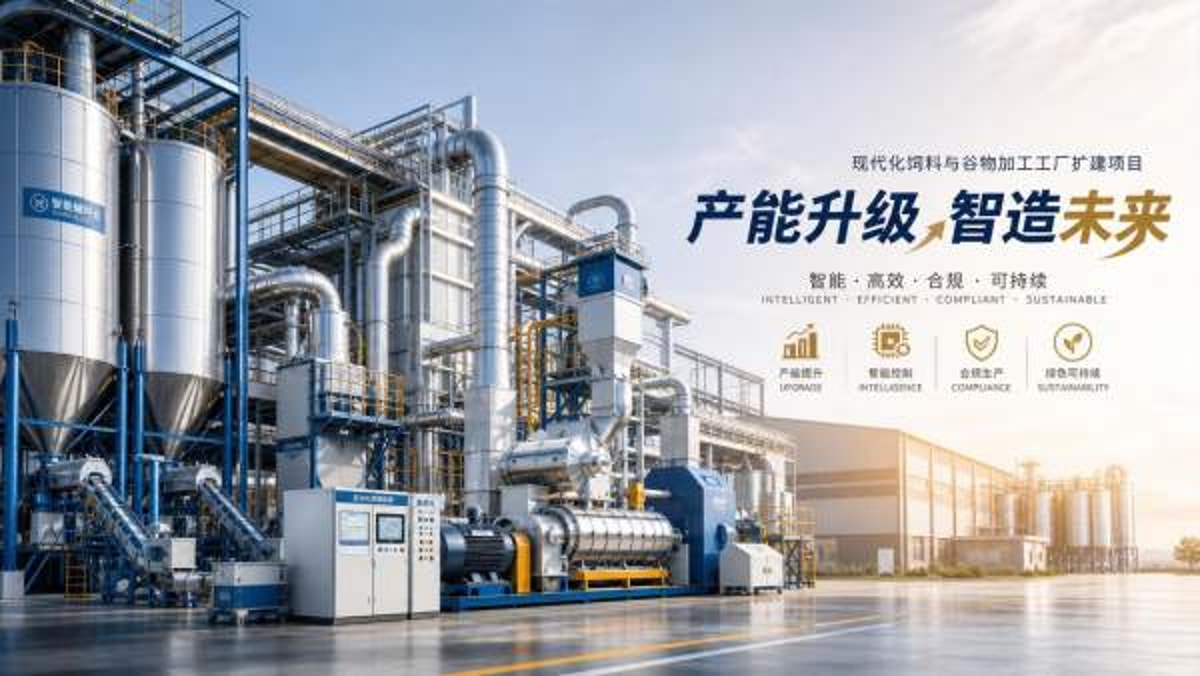
Feed & Grain processing technology is reshaping how manufacturers plan capacity, automation, and compliance in plant expansion. For decision-makers facing tighter margins, stricter regulations, and volatile raw material flows, understanding these technology trends is essential to reducing risk and improving throughput. This article examines the innovations influencing investment priorities, operational efficiency, and long-term competitiveness across modern feed and grain facilities.
Why decision-makers should assess expansion through a checklist
Plant expansion in feed and grain is no longer a straightforward matter of adding storage, buying larger mills, or extending packaging lines. Today, Feed & Grain processing technology affects upstream intake, recipe control, sanitation design, utility load, labor planning, traceability, and export compliance at the same time. A checklist-based approach helps executives avoid capital decisions driven only by capacity assumptions.
For business leaders, the core question is not simply which equipment is newer. The better question is which technology trends materially change return on investment, operating resilience, and regulatory exposure. Using clear check items makes it easier to compare competing proposals from OEMs, engineering contractors, and internal operations teams.
Start here: the priority signals that justify reviewing Feed & Grain processing technology
Before approving expansion, leaders should confirm whether current market conditions and plant constraints are signaling the need for a technology-led review. The following indicators usually mean the existing process design may not support future growth efficiently.
- Frequent formulation changes are reducing line efficiency, causing longer cleanout times and higher material loss.
- Raw material variability in moisture, density, or contamination is creating unstable throughput or uneven product quality.
- Manual intervention remains high in batching, dosing, bagging, or quality verification, increasing labor dependency and error risk.
- Dust control, explosion protection, wastewater handling, or emissions compliance is becoming more expensive under current layouts.
- Customers are demanding stronger traceability, safer ingredients, or documented process validation for feed safety and procurement audits.
- Energy consumption per ton is rising faster than output, suggesting older systems are limiting margin improvement.
When two or more of these signals are present, Feed & Grain processing technology should be reviewed as a strategic investment topic rather than a maintenance issue.
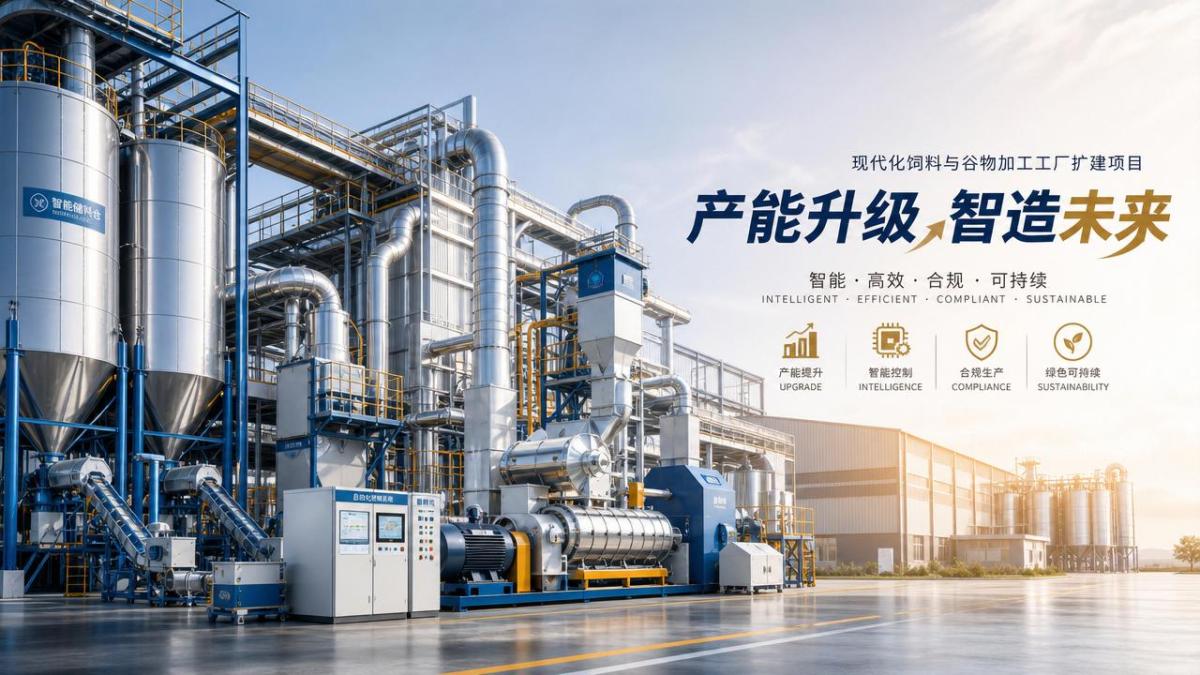
Core checklist: which technology trends most affect plant expansion decisions
1. Automation and real-time process control
Advanced automation is one of the most important Feed & Grain processing technology trends because expansion multiplies the cost of poor control. Decision-makers should verify whether proposed systems include recipe management, PLC-SCADA integration, automated dosing, alarm history, and remote performance visibility. Expansion plans that add mechanical capacity without digital process control often create bottlenecks in accuracy, labor, and troubleshooting.
Priority check items include batch repeatability, integration with ERP or MES systems, cybersecurity readiness, and the ability to capture auditable production records. If the plant serves export or regulated buyers, automated data trails become a commercial advantage, not just an operational feature.
2. Flexible grinding, pelleting, and milling systems
Expansion should support future product mix, not only current volume. Modern Feed & Grain processing technology increasingly favors flexible grinding configurations, variable speed drives, improved hammer mill designs, and pellet systems optimized for wider ingredient variation. Leaders should ask whether the line can handle changes in particle size specifications, higher fat formulations, alternative proteins, and differentiated feed categories without major retrofit costs.
A practical rule is to assess throughput under realistic multi-product conditions rather than ideal single-run tests. Nameplate capacity alone can hide losses from changeovers, wear, and raw material inconsistency.
3. Traceability, ingredient verification, and quality analytics
Traceability is becoming central to Feed & Grain processing technology because procurement teams and regulators increasingly expect full visibility from intake to shipment. Inline sensors, barcode systems, automated lot tracking, and near-infrared analysis can significantly improve quality control during expansion. These tools reduce rework, support faster release decisions, and strengthen claims around consistency and safety.
For executives, the key check is whether analytics are embedded into process flow or treated as separate lab activities. Embedded quality monitoring scales much better as volume increases.
4. Energy efficiency and utility optimization
Rising power and fuel costs make energy performance a major expansion criterion. High-efficiency motors, heat recovery, steam optimization, compressed air monitoring, and intelligent load balancing are now essential components of Feed & Grain processing technology planning. A larger plant with poor utility design may increase sales volume while weakening margin per ton.
Decision-makers should request energy benchmarks by process stage, not just total site consumption. Grinding, pelleting, cooling, conveying, and drying can each hide avoidable energy waste if they are not measured separately.
5. Sanitation, biosafety, and compliance-oriented design
As regulations tighten, expansion projects must reflect hygienic zoning, contamination control, allergen management where relevant, and documented cleaning procedures. The most effective Feed & Grain processing technology investments reduce hard-to-clean surfaces, dead zones, cross-contamination points, and uncontrolled product contact areas. This is especially important for facilities supplying sensitive animal nutrition categories or operating across multiple regulatory jurisdictions.
A smart review includes airflow design, pest exclusion, magnet and sieve validation, sanitation access, and washdown compatibility where needed. Poor sanitation design usually becomes more expensive after expansion, not before.
A practical decision table for expansion planning
Scenario-based checks for different expansion models
If you are expanding an existing facility
Focus first on integration limits. Existing utilities, foundations, conveyors, control architecture, and traffic flow may prevent new Feed & Grain processing technology from delivering expected gains. Brownfield projects often fail when new equipment is advanced but supporting systems remain undersized. Review dust collection capacity, electrical load, raw material receiving speed, and finished goods dispatch before finalizing any line extension.
If you are building a greenfield plant
Greenfield expansion offers the best chance to design around future flexibility. Leaders should prioritize modular process blocks, digital architecture that supports future analytics, and layouts that simplify sanitation and traffic separation. Here, Feed & Grain processing technology choices should be made with a 5- to 10-year product roadmap in mind, especially if new formulations or regional market shifts are likely.
If you are targeting premium or regulated buyers
The expansion case should emphasize validated controls, ingredient segregation, documentation quality, and auditable quality assurance routines. In these cases, the value of Feed & Grain processing technology is often proven through reduced approval friction and stronger buyer trust rather than pure tonnage alone.
Common oversights that weaken expansion ROI
- Choosing equipment based on peak hourly output without accounting for downtime, sanitation, and product changeovers.
- Underestimating the impact of raw material quality variation on grinder wear, pellet durability, and line stability.
- Treating traceability software as optional until customer audit requirements force reactive implementation.
- Failing to align automation scope with operator skills, training budgets, and maintenance support capacity.
- Ignoring dust hazard analysis and air handling redesign during layout changes.
- Comparing vendor offers on capital expenditure only, without lifecycle cost, spare parts availability, and service responsiveness.
Execution guide: what to prepare before engaging vendors or internal approval committees
To move from trend awareness to action, companies should prepare a structured evaluation pack. This improves internal alignment and leads to better discussions with engineering partners, OEMs, and procurement teams.
- Define the true expansion objective: more tonnage, more product flexibility, lower cost per ton, better compliance, or faster market access.
- Map current bottlenecks with data from throughput, downtime, energy use, quality losses, and labor intervention.
- Rank Feed & Grain processing technology options by commercial impact, not by novelty.
- Build decision criteria that include safety, utility demand, maintenance burden, digital integration, and audit readiness.
- Request vendor proposals with standardized assumptions so bids can be compared on an equal basis.
- Model expansion in phases where possible, especially if supply volatility or demand uncertainty remains high.
FAQ for executives evaluating Feed & Grain processing technology
Which trend usually delivers the fastest payback?
In many facilities, automation tied to dosing accuracy, process visibility, and labor reduction offers the fastest measurable return. However, if energy intensity is high or product quality losses are significant, utility optimization or inline quality monitoring may outperform general automation in payback speed.
How should companies compare two similar expansion proposals?
Compare them using total operational impact: throughput under real production conditions, energy per ton, maintenance complexity, traceability capability, sanitation design, and ability to support future product shifts. Feed & Grain processing technology should be judged on resilience and adaptability, not only on installed horsepower.
When is it better to retrofit instead of build new?
Retrofit is often preferable when the site already has strong logistics access, sufficient utility headroom, and a layout that can be upgraded without major contamination or safety compromises. If core constraints are structural and widespread, a greenfield approach may create a better long-term outcome.
Final action points for the next expansion review
The most important lesson for decision-makers is that Feed & Grain processing technology should be evaluated as an integrated business system. Capacity, quality, compliance, energy, labor, and data all influence expansion success. The companies that outperform are usually the ones that screen technologies through a disciplined checklist before budget approval, not after installation problems appear.
If your organization is preparing for plant expansion, the next conversation should focus on a few priority questions: Which process step is truly limiting output today? What level of flexibility will future formulations require? Which compliance or traceability standards must the upgraded plant satisfy? How will automation connect to existing operational systems? What utility, maintenance, and training implications will the new configuration create? Answering these questions early will make Feed & Grain processing technology investments more predictable, defensible, and commercially valuable.
Related Intelligence
- Milling MachineryFeed & Grain processing technology trends that affect plant expansionFeed & Grain processing technology trends are redefining plant expansion. Discover how automation, traceability, energy efficiency, and compliance upgrades can reduce risk and improve ROI.
- Milling MachineryFeed & Grain processing equipment upgrades that cut dust and downtimeFeed & Grain processing equipment upgrades can cut dust, reduce downtime, and lower maintenance costs. Discover practical retrofit ideas that improve safety, uptime, and ROI.
- Milling MachineryFeed & Grain processing equipment failures that start with poor layoutFeed & Grain processing equipment failures often begin with poor layout. Learn how smarter plant design improves uptime, safety, maintenance access, and lifecycle cost.
The Morning Broadsheet
Daily chemical briefings, market shifts, and peer-reviewed summaries delivered to your terminal.
