
Is liquid adding machine feed worth it?
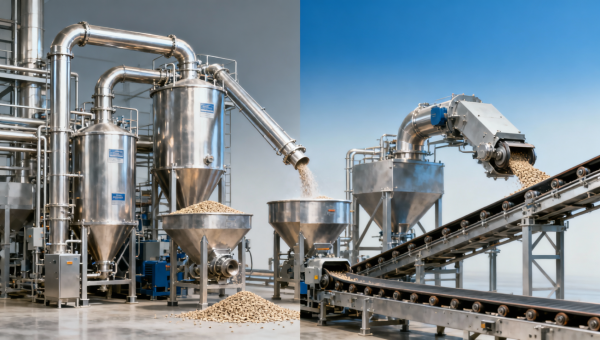
Is a liquid adding machine feed system worth the investment for modern feed plants? For buyers, operators, and project decision-makers comparing a feed grading sieve, double roller crumbler, feed pellet cooler, magnetic separator for feed, or enclosed belt conveyor, the answer depends on efficiency, formulation accuracy, and compliance. This article examines costs, performance, and integration value across complete feed and grain processing lines.
In practical terms, a liquid adding machine feed system is not an isolated accessory. It affects how fats, enzymes, molasses, acids, vitamins, and other liquids are dosed into mash or pellets, and it often determines whether a plant can maintain repeatable quality at 5 tons per hour or 40 tons per hour. For procurement teams, the real question is not just purchase price, but whether the system reduces formulation loss, improves pellet performance, and fits existing automation.
For operators and quality managers, the value is usually measured in dosing precision, sanitation, downtime, and traceability. For finance approvers, the focus shifts to payback period, maintenance burden, and production risk. For project managers building or upgrading a full line, the decision depends on how well the liquid dosing unit integrates with a feed grading sieve, pellet cooler, magnetic separator for feed, crumbler, and enclosed belt conveyor without creating bottlenecks.
What a liquid adding machine feed system actually does in a modern line
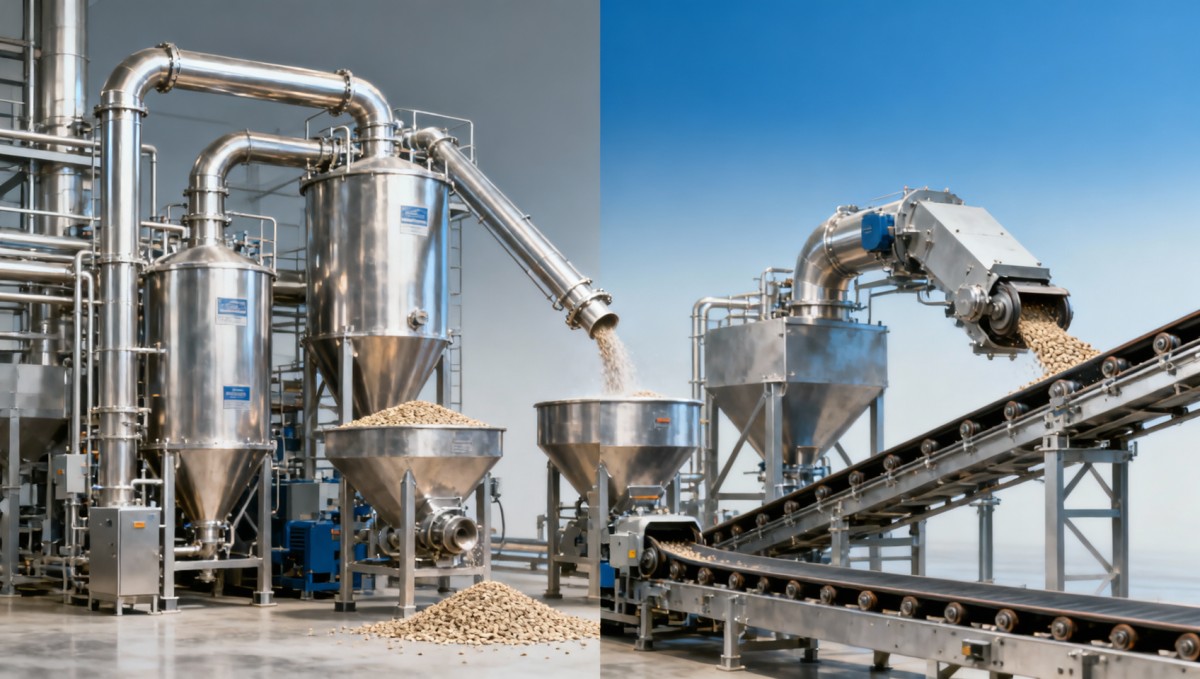
A liquid adding machine feed setup is designed to meter controlled volumes of liquid ingredients into feed during mixing, conditioning, or post-pelleting stages. Depending on formulation goals, the unit may apply 1% to 8% liquid addition by weight, although some molasses-heavy formulas can go higher with the right heating and pumping arrangement. Typical liquids include oil, lecithin, molasses, organic acids, flavor enhancers, and heat-sensitive micro-ingredients.
Its role becomes more important as formulations become more specialized. Poultry starter feed, ruminant concentrate, shrimp feed, and specialty premix products all have different viscosity, coating, and absorption requirements. A system that works well for warm vegetable oil at 35°C may struggle with dense molasses at 50–60°C unless the tank, pipework, and pump are designed for stable flow and cleaning access.
The machine also has a direct relationship with upstream and downstream equipment. If a magnetic separator for feed does not remove tramp metal before the mixer, pump wear can increase. If a feed pellet cooler does not lower product temperature sufficiently before post-pellet liquid coating, condensation or uneven absorption can affect shelf life. In other words, the return on investment depends on line balance, not just one machine specification.
Many plants first consider liquid addition when manual dosing becomes a constraint. At low capacity, manual addition may seem acceptable, but once a line exceeds 8–10 batches per hour, inconsistency often becomes visible in moisture variation, pellet appearance, and customer complaints. Automated dosing reduces this variability, especially when linked to weighers, PLC controls, and recipe management software.
Common integration points across feed and grain processing
The most common installation points are the mixer, conditioner, and post-pellet coating section. Each position has different process logic. In-mixer dosing supports even distribution, conditioner dosing can improve thermal interaction, and post-pellet coating protects heat-sensitive additives. The best choice depends on whether the plant prioritizes pellet durability, nutrient retention, or premium product differentiation.
- Before mixing: useful for base oil addition and dust control, but requires careful spray coverage.
- During conditioning: supports moisture and thermal control, often relevant to pellet quality.
- After pellet cooling: preferred for enzymes, flavors, and heat-sensitive actives that degrade above 70–85°C.
- At multiple points: common in larger lines handling more than 15 TPH and diverse SKUs.
Plants that run frequent product changes should also consider flush volume, dead zones in pipework, and CIP-style cleaning steps. Even a precise metering skid can become a contamination risk if changeover requires 45 minutes and the line changes formula 4 to 6 times per shift.
When the investment is worth it: cost, efficiency, and payback logic
A liquid adding machine feed investment is usually justified when a plant has one or more of the following conditions: high-cost liquid ingredients, strict nutrient uniformity requirements, rising labor cost, frequent production runs, or customer contracts with tighter quality tolerances. In these cases, better dosing control can reduce overuse of expensive oils, acids, or additives and lower the hidden cost of rework.
A realistic payback review should include at least 4 cost buckets: equipment purchase, installation and utilities, maintenance and cleaning, and formulation savings. Plants often focus too heavily on initial capital cost while ignoring recurring dosage drift. Even a 0.3% to 0.8% over-addition rate can become material over 12 months if the line runs 16 to 20 hours per day with high-value liquid inputs.
Labor reduction is another factor, but not always the primary one. In many facilities, the stronger financial case comes from consistency rather than headcount. If a feed mill produces 25,000 to 60,000 tons annually, preventing off-spec batches, customer claims, or nutrient adjustment losses may be more valuable than saving one manual dosing position.
The table below shows a practical comparison between manual liquid addition and automated liquid adding machine feed systems for medium-scale feed plants.
The comparison shows why the investment becomes more compelling as ingredient costs rise and quality tolerance narrows. If a plant produces commodity feed with simple formulas and low line utilization, the return may be slower. If it produces multiple SKUs, medicated lines, aquafeed, or value-added feed, the benefits are usually more immediate and easier to quantify.
Signals that justify automation
- Liquid ingredients represent more than 3% to 5% of formulation cost.
- The plant runs more than 2 shifts or more than 250 production days per year.
- Recipe changes exceed 3 to 4 times daily and require documented traceability.
- Customer specifications include moisture, coating, or nutrient uniformity checks.
- Manual handling creates safety or housekeeping problems around slippery floors and spills.
For financial decision-makers, a useful benchmark is whether the system can recover its installed cost within 12 to 24 months through lower overdosing, reduced waste, smoother audits, and better uptime. That benchmark is not universal, but it is a practical screening threshold in B2B equipment evaluation.
Technical selection criteria: what buyers should check before ordering
Selecting the right liquid adding machine feed system requires more than matching line capacity. Buyers should evaluate liquid type, viscosity, operating temperature, dosing range, control method, cleaning method, and compatibility with existing conveyors and process equipment. A line rated at 20 TPH may still experience poor performance if spray nozzles, pumps, or tank heating do not match the actual product characteristics.
One frequent mistake is specifying only maximum throughput while ignoring minimum stable flow. Many plants need to run 30% to 50% load during startup, trial batches, or seasonal demand changes. If the metering system cannot dose accurately at lower rates, the plant loses flexibility. Another common oversight is neglecting nozzle placement and droplet distribution inside the mixer or coating chamber.
Material selection also matters. Corrosive acids, sticky syrups, and oxidizing liquids may require different seal materials, stainless contact surfaces, insulated lines, or heated jackets. For hygiene-focused sectors such as aquafeed or feed with strict additive control, dead-leg reduction and drainability should be reviewed during FAT and commissioning, not after installation.
The table below summarizes key technical checkpoints that buyers, project engineers, and QA teams should align on before final approval.
A good technical review should also involve neighboring machines. The feed grading sieve influences final particle consistency, the double roller crumbler affects pellet reduction for young animal feed, and the feed pellet cooler determines whether post-pellet coating can proceed without moisture risk. If those machines are underperforming, even a well-designed liquid adding system will not deliver full value.
Practical specification checklist
Core items to confirm
- Required liquid types: oil, molasses, acid, enzyme, flavor, or multi-liquid setup.
- Production rate: batch size or continuous flow, such as 5 TPH, 12 TPH, or 25 TPH.
- Contact material: carbon steel for non-corrosive service or stainless for hygiene and chemical resistance.
- Cleaning method: manual flush, quick-drain design, or more advanced cleaning loop.
- Control architecture: standalone panel or integration with central plant SCADA and recipe management.
Distributors and agents should also ask about spare parts availability for pumps, seals, sensors, and nozzles. A technically suitable system can still become a poor commercial choice if lead time for critical parts extends beyond 2 to 6 weeks during peak production periods.
Implementation, maintenance, and compliance risks that affect real ROI
Whether a liquid adding machine feed system is worth it often depends on execution after purchase. Poor installation, weak calibration discipline, or inadequate cleaning routines can erase the expected gains. In many projects, the mechanical package is acceptable, but startup under real production conditions reveals uneven spray coverage, delayed control response, or poor tank draining.
A sound implementation plan usually has 5 stages: process review, equipment layout confirmation, utility and control hookup, dry and wet commissioning, and operator training with acceptance testing. For medium-scale projects, this may take 7 to 21 days on site, depending on whether the plant is retrofitting into an active line or building a new section with planned shutdowns.
Compliance and product safety are equally important. If the system handles acids, medicated additives, or oxidation-sensitive ingredients, the plant should define segregation, labeling, and cleanout procedures. Quality teams should establish batch verification points such as line flush confirmation, dosing calibration frequency, and residual material checks after changeover.
Maintenance should be treated as an operating routine, not an emergency response. Flow meters, pump seals, heating controls, and spray nozzles should be inspected on a daily, weekly, and monthly schedule. In dusty feed mill environments, blocked vents and contaminated sensors are common causes of false readings and unstable dosing.
Main risk areas during operation
- Nozzle fouling, especially when viscous liquids cool below target temperature.
- Inaccurate calibration after pump wear or sensor drift over 30 to 90 days.
- Cross-contamination during product change if dead zones are not flushed fully.
- Process mismatch when pellet temperature remains too high after the feed pellet cooler.
- Bottlenecks caused by poor synchronization with enclosed belt conveyor speed or batch discharge timing.
Minimum control practices
- Calibrate dosing accuracy at startup and then at scheduled intervals such as every 2 to 4 weeks.
- Record actual consumption versus recipe target every shift or every production lot.
- Inspect spray pattern and nozzle cleanliness at least once per day for high-viscosity service.
- Verify tank temperature and line heat trace where liquids become unstable below 30–40°C.
Plants that establish these controls usually gain more dependable ROI than those focusing only on machine capacity. For safety managers and quality personnel, this is where the system delivers operational confidence: cleaner audits, fewer deviations, and more predictable product behavior across shifts and seasons.
How different stakeholders should evaluate the purchase
Different decision-makers measure value differently, so a purchase proposal should be framed by stakeholder priorities rather than by machine features alone. Operators want easy cleaning, stable control, and fewer alarms. Procurement teams want comparable quotations, utility data, and realistic spare parts commitments. Executives want throughput resilience and lower quality risk. Finance teams want a clear capex-to-savings path.
The strongest procurement cases usually combine technical and commercial criteria in one decision matrix. This is especially important when comparing a liquid adding system against other line upgrades such as a new feed grading sieve, double roller crumbler, or magnetic separator for feed. Not every plant should upgrade in the same order. The right sequence depends on where losses, quality variation, and bottlenecks are most expensive.
For example, if a plant already has adequate grinding, cooling, and conveying, but struggles with premium formulas and high-cost oils, liquid addition may be the most logical next investment. If contamination risk from tramp metal is causing repeated damage upstream, a magnetic separator for feed may have higher immediate priority. Good project governance means matching spend to the most urgent operational weakness.
The framework below can help buyers score alternatives more objectively during budget review or tender evaluation.
A structured review like this helps avoid feature-based buying and supports more defensible budget approval. It also helps distributors and integrators explain why the lowest quoted machine is not always the best choice when sanitation, controls, and support quality differ significantly.
FAQ for buyers and project teams
How accurate should a liquid adding machine feed system be?
For most commercial feed lines, a practical target is within about ±0.5% to ±1.5% under stable operating conditions. Exact performance depends on liquid properties, pump type, control method, and whether the line is running at full or partial load.
Is it more useful in pellet feed than mash feed?
It can be valuable in both. Pellet plants often benefit from controlled oil or post-pellet additive application, while mash feed plants use liquid addition for dust control, palatability, and formulation precision. The economic case is usually stronger where ingredient value and recipe complexity are higher.
What is a normal delivery and startup timeline?
A common range is 4 to 10 weeks for equipment preparation plus 1 to 3 weeks for installation and commissioning, depending on customization, controls integration, and whether the project is a retrofit or a greenfield line.
Can one system handle several liquids?
Yes, but only if the design accounts for separate circuits, valve logic, cleaning requirements, and material compatibility. Multi-liquid systems are common in advanced plants, but they require more disciplined maintenance and recipe control.
A liquid adding machine feed system is worth it when the plant needs tighter dosing control, better traceability, lower formulation loss, and smoother integration across the wider feed and grain processing line. Its value becomes clearer in operations with multiple formulas, expensive liquid inputs, stricter audit requirements, or high throughput where manual variability is costly. The decision should be based on process fit, lifecycle cost, cleaning practicality, and measurable production gains rather than on purchase price alone.
If you are evaluating liquid dosing together with a feed grading sieve, double roller crumbler, feed pellet cooler, magnetic separator for feed, or enclosed belt conveyor, a line-level review will produce better results than a single-machine comparison. To discuss a tailored configuration, request technical guidance, or obtain a project-specific recommendation, contact us for a customized solution and more detailed equipment planning support.
Related Intelligence
- Feeding & Watering SystemsIs liquid adding machine feed worth it?Is liquid adding machine feed worth it? Explore ROI, accuracy, and line integration with feed grading sieve, double roller crumbler, feed pellet cooler, and more.
- Feeding & Watering SystemsWholesale Water Pumps for Farming: Quality Gaps to CheckWholesale water pumps for farming: learn how to spot quality gaps in solar water pumps agricultural and submersible deep well pumps before bulk orders—reduce downtime, risk, and lifetime cost.
- Feeding & Watering SystemsWhat Changes the Real Cost of Wholesale Farm Water PumpsWholesale water pumps for farming: learn how solar water pumps agricultural systems, submersible deep well pumps, energy, installation, and compliance shape real cost before you buy.
The Morning Broadsheet
Daily chemical briefings, market shifts, and peer-reviewed summaries delivered to your terminal.
