
What affects feed pellet cooler cost?
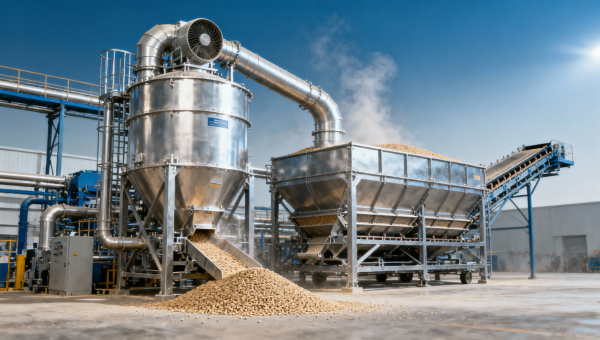
Feed pellet cooler cost depends on far more than capacity alone. For buyers comparing a feed grading sieve, double roller crumbler, liquid adding machine feed system, magnetic separator for feed, gravity separator grain unit, grain destoner machine, rotary drum sieve grain line, grain pre cleaner machine, or enclosed belt conveyor, total investment is shaped by material quality, automation level, energy efficiency, compliance, and long-term operating value.
Why does feed pellet cooler cost vary so much between suppliers?
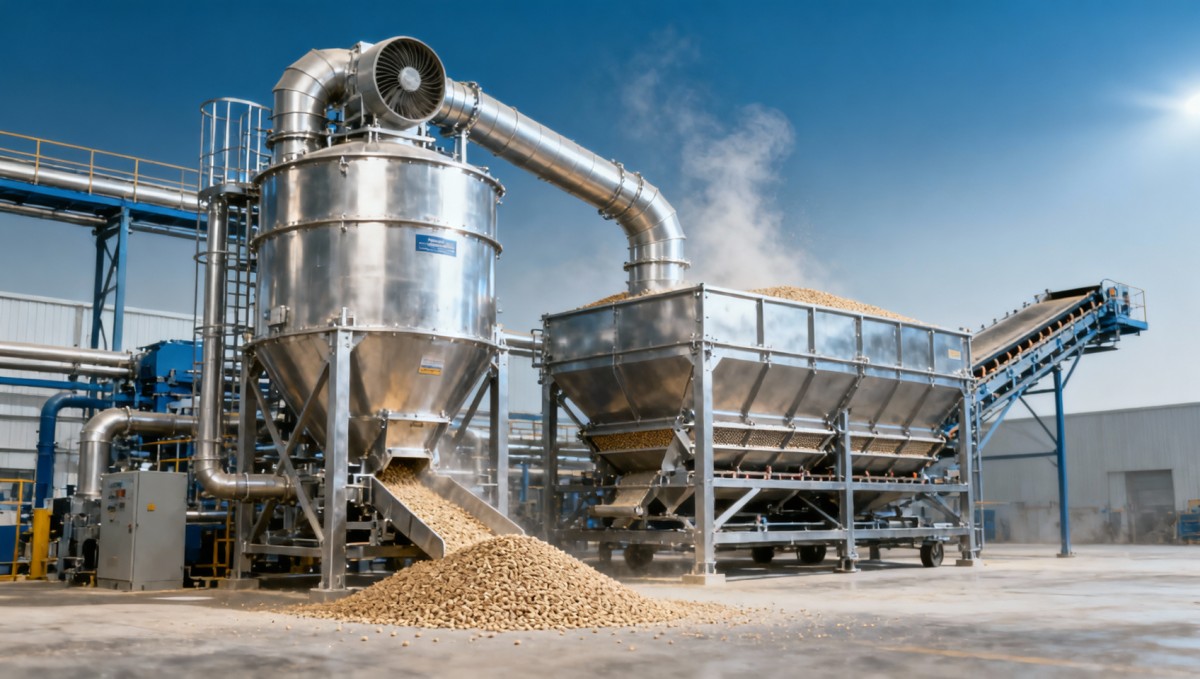
In feed and grain processing, two machines may look similar on paper yet differ significantly in price once operating conditions are defined. A feed pellet cooler designed for 1–3 t/h animal feed output is not evaluated the same way as one intended for 8–15 t/h continuous industrial production. The cost gap usually comes from internal structure, wear resistance, air handling design, discharge stability, and integration with upstream and downstream systems.
Procurement teams often focus first on rated capacity, but actual purchasing decisions are usually influenced by at least 5 core factors: cooler type, body material, fan and airflow configuration, control system level, and installation scope. If the line also includes a feed grading sieve, double roller crumbler, or enclosed belt conveyor, interface design and footprint can further affect the quotation.
For operators and quality teams, cooler cost also reflects process stability. A poorly matched cooling section may increase fines, create uneven pellet moisture, or reduce pellet hardness after 2–4 weeks of operation under full load. That means a lower initial price can translate into higher maintenance, lower yield, and more frequent shutdowns.
For decision-makers and finance approvers, the practical question is not only “How much is the feed pellet cooler cost?” but “What cost level matches production goals, compliance needs, and lifecycle value?” This is exactly where structured technical review becomes more valuable than simple price comparison.
The 4 pricing layers that most buyers overlook
- Base equipment cost: cooler body, air chamber, discharge mechanism, and standard motor configuration.
- Process integration cost: matching with pellet mill, crumbler, sieve, bucket elevator, or enclosed belt conveyor.
- Compliance and safety cost: dust control, guarding, electrical cabinet specification, and documentation for regulated export markets.
- Operating cost: energy use, spare parts consumption, cleaning frequency, and downtime risk over 12–36 months.
Which technical specifications have the biggest impact on total investment?
Technical specification is where feed pellet cooler cost becomes most sensitive. Capacity range matters, but so do pellet diameter, inlet temperature, target cooling temperature, and ambient humidity. In many feed plants, the cooler is expected to reduce pellet temperature to within about 3℃–5℃ above ambient while maintaining stable discharge. Reaching that range consistently requires stronger airflow control and better mechanical design than low-end systems usually offer.
Material selection is another major cost driver. Carbon steel may be acceptable for standard dry feed applications, while stainless contact parts are often preferred where corrosion risk, sanitation demands, or additive sensitivity is higher. If the line includes a liquid adding machine feed system, material compatibility becomes even more relevant because residual fat, molasses, or liquid supplements can increase cleaning demands.
Automation level can shift pricing quickly. A basic cooler may use local start-stop controls, while a more advanced line may include variable frequency drives, temperature feedback, interlocking with a rotary drum sieve grain line, and alarm logic connected to a central PLC. The investment is higher, but so is process visibility, especially for plants running 16–20 hours per day.
Maintenance design also matters. Inspection doors, discharge access, screen replacement time, fan cleaning convenience, and spare part standardization all influence lifecycle economics. For project managers, a machine that saves even 20–30 minutes during routine maintenance can produce measurable labor value over each quarter.
Specification checklist for quotation comparison
Before comparing supplier offers, use a common technical baseline. This helps procurement, engineering, and finance teams avoid false comparisons between entry-level and process-grade equipment.
This type of side-by-side comparison is especially useful when the cooler is being purchased as part of a broader plant package with a grain pre cleaner machine, gravity separator grain unit, magnetic separator for feed, or grain destoner machine. A lower unit price may hide missing scope in controls, ductwork, or installation interfaces.
How upstream and downstream equipment changes cooler pricing
Feed pellet coolers rarely work alone. If pellet size uniformity from the pellet mill is unstable, or if fines recovery after the feed grading sieve is high, the cooler may need stronger level control and better discharge consistency. Likewise, if a double roller crumbler follows the cooler, pellet hardness and cooling uniformity become more critical because crumb quality depends on controlled brittleness rather than random breakage.
Plants handling mixed grain and feed flows may also connect raw material cleaning equipment such as a rotary drum sieve grain line or grain destoner machine before pelleting. While these are upstream functions, their effect on impurity load, dust generation, and wear rate can indirectly influence the cooler specification chosen and therefore overall system cost.
How should buyers compare low-cost, mid-range, and high-spec feed pellet cooler options?
A practical buying decision often requires a cost-positioning model rather than a single quotation. In general, low-cost options fit simpler production environments, mid-range systems fit most commercial mills, and high-spec systems are preferred where continuous output, stricter documentation, or integrated automation is required. This framework helps distributors, plant owners, and engineering teams discuss value using the same language.
Cost comparison should also consider the total line objective. If the facility is only replacing one cooler, a standalone approach may be enough. If the project includes a liquid adding machine feed system, enclosed belt conveyor upgrades, or additional separation equipment such as a magnetic separator for feed, then installation coordination and control compatibility become part of the capital decision.
Below is a simplified decision table that procurement teams can adapt during supplier review. It does not replace engineering data, but it helps identify which quotation category is aligned with production reality and which one may create hidden operational risk.
The useful takeaway is that feed pellet cooler cost should be judged against process burden, not only budget pressure. A small producer may reasonably choose a basic model. A plant running multiple SKUs, however, often benefits from a more robust unit because changeovers, dust control, and temperature stability affect quality, waste, and labor every week.
A 6-point procurement review sequence
- Confirm hourly output, pellet size, inlet temperature, and operating hours per day.
- Check whether the cooler must connect with a crumbler, grading sieve, or conveying section.
- Define material standards for contact and non-contact parts based on sanitation and wear demands.
- Review electrical scope, sensor needs, and whether PLC integration is required.
- Clarify spare parts list, maintenance interval, and service response expectations over 12 months.
- Compare not only machine price but also transport, installation, commissioning, and training scope.
What hidden costs affect long-term operating value?
Many buyers underestimate post-purchase cost because quotations are often reviewed line by line while plant performance is experienced as a system. In practice, long-term value depends on energy consumption, wear-part replacement, cleaning labor, downtime frequency, and product loss. These items may not be obvious on day one, yet they become visible within the first 3–6 months of production.
Energy efficiency matters most where the plant runs more than one shift. Fan sizing, air path resistance, and discharge control can influence power consumption and thermal performance. A cooler that appears economical but requires unstable airflow compensation may create additional burden for adjacent equipment such as an enclosed belt conveyor or downstream screening section.
Maintenance cost is also shaped by dust and contamination behavior. If a magnetic separator for feed is poorly positioned upstream, or if raw material cleaning via a grain pre cleaner machine and gravity separator grain unit is inconsistent, metallic and mineral contamination can shorten component life across the line. For this reason, assessing cooler cost in isolation often produces incomplete financial conclusions.
For quality control and safety managers, documentation and compliance are part of total value. Equipment destined for regulated industrial environments may require clearer electrical documentation, material traceability, guarding arrangements, and operating manuals. These additions raise initial cost but can reduce approval delays during project handover.
Common hidden-cost categories in feed pellet cooling projects
- Installation adaptation costs caused by mismatched inlet and outlet heights or ducting layout.
- Additional controls needed after commissioning because manual operation cannot stabilize discharge.
- Higher spare-part consumption when wear surfaces are underspecified for abrasive formulations.
- Production loss from fines, cracked pellets, or unstable moisture after inadequate cooling.
- Longer shutdowns when cleaning access and inspection doors are not designed for routine service.
Typical project timing that influences cost
Lead time can also affect final expenditure. For standard configurations, buyers often see a manufacturing and preparation cycle of roughly 3–8 weeks, while more customized systems may need 6–12 weeks depending on control scope, material requirements, and documentation level. Tight schedules can increase freight, coordination, and installation complexity, especially if several machines must be commissioned in sequence.
This timing issue matters to project managers and distributors because an apparently lower quote may exclude urgent delivery conditions, site support, or commissioning assistance. In capital projects, schedule risk often has a real financial effect, even when it is not listed as a direct equipment line item.
What should procurement, quality, and engineering teams ask before requesting a quotation?
A strong RFQ process is one of the best ways to control feed pellet cooler cost. Instead of asking for a generic machine price, buyers should define the process duty, material expectations, operating schedule, and line integration points. This reduces the risk of receiving quotations that are difficult to compare and almost impossible to validate internally.
For industrial buyers in agriculture, biochemicals, and primary processing, cross-functional review is essential. Procurement may focus on budget, operators may care about ease of cleaning, and finance may evaluate payback over 12–24 months. When these groups use different assumptions, the cheapest quotation often wins for the wrong reason.
AgriChem Chronicle addresses this gap by framing equipment decisions in a wider industrial context. Because feed and grain processing increasingly intersects with stricter supply chain review, process traceability, and regulated production environments, technical evaluation must go beyond catalog data. A buyer who understands process risk, maintenance exposure, and documentation scope is far better positioned to evaluate price rationally.
The following table can be used as a practical pre-quotation checklist when discussing a feed pellet cooler together with a feed grading sieve, double roller crumbler, or upstream separation equipment. It helps align engineering, procurement, QA, and project management before supplier engagement.
When teams ask these questions early, quotations become more transparent and approval cycles usually move faster. This is particularly valuable for distributors and multinational buyers who need to compare several suppliers while keeping technical assumptions consistent across regions.
FAQ for practical buyers
Is the lowest feed pellet cooler cost usually the best choice for small plants?
Not always. For very small plants with simple formulations and short operating cycles, a basic model may be sufficient. However, if the plant expects future expansion from 1–3 t/h to 3–5 t/h, or plans to add a double roller crumbler and feed grading sieve later, underbuying can create replacement cost sooner than expected.
How important is automation in feed pellet cooler pricing?
Automation can materially change price, but it often improves consistency and reduces dependence on manual adjustment. For facilities operating 16 hours per day or more, interlocks, sensors, and alarm logic may support more stable temperature control and lower the risk of process disruption.
Can upstream cleaning equipment reduce long-term cooler cost?
Yes. A grain pre cleaner machine, gravity separator grain unit, grain destoner machine, and magnetic separator for feed can reduce contaminants before they affect wear, dust burden, or mechanical stress downstream. While this does not always reduce the cooler purchase price, it can improve line durability and maintenance economics.
What delivery and implementation points should be confirmed before approval?
Confirm at least 4 items: production lead time, scope of supply, commissioning support, and spare-part availability. If the project has a tight launch window, also verify whether electrical drawings, manuals, and on-site or remote training are included, because these details can affect both timeline and final cost.
Why work with AgriChem Chronicle when evaluating feed and grain processing equipment?
AgriChem Chronicle supports industrial buyers, technical reviewers, and market-facing suppliers with a more rigorous way to assess equipment value. In sectors where agricultural machinery, biochemical processing, and regulated supply chains increasingly intersect, capital equipment decisions require more than a supplier brochure. They require context, terminology alignment, and structured comparison.
Our editorial focus across feed and grain processing, agricultural machinery, aquaculture technology, and fine chemicals allows us to interpret machine cost through the broader realities of production risk, compliance pressure, and commercial scale-up. That perspective is useful whether you are a procurement specialist reviewing 3 quotations, a project manager building a new line, or a distributor preparing a technical shortlist for clients.
If you are assessing feed pellet cooler cost, we can help you clarify the points that usually slow decisions: parameter confirmation, equipment matching with a feed grading sieve or crumbler, lead-time expectations of 3–8 weeks or longer for custom scope, documentation needs, and the trade-off between initial capex and operating value. This helps internal teams move from price discussion to decision quality.
Contact us to discuss cooler specifications, process-line compatibility, quotation comparison, customization scope, compliance expectations, service coverage, and procurement planning. If your project also includes a liquid adding machine feed system, magnetic separator for feed, grain destoner machine, rotary drum sieve grain line, grain pre cleaner machine, or enclosed belt conveyor, we can help frame a more coherent evaluation path before you commit budget.
Related Intelligence
- Commercial Feed PelletHow to Pick a Poultry Feed Pellet Machine That LastsPoultry feed pellet machine buying guide: compare durability, lifecycle cost, and line fit with vertical feed mixer machine, horizontal ribbon blender feed, cattle feed processing plant, and floating fish feed plant solutions.
- Commercial Feed PelletWhen is magnetic separator for feed needed?Magnetic separator for feed: learn when it is needed, where to install it, and how it works with feed grading sieve, double roller crumbler, feed pellet cooler and grain cleaning lines.
- Commercial Feed PelletWhat affects feed pellet cooler cost?Feed pellet cooler cost depends on capacity, materials, automation, and line matching with feed grading sieve, double roller crumbler, and enclosed belt conveyor. Learn how to compare value and cut hidden costs.
The Morning Broadsheet
Daily chemical briefings, market shifts, and peer-reviewed summaries delivered to your terminal.
