
Double roller crumbler or hammer mill?
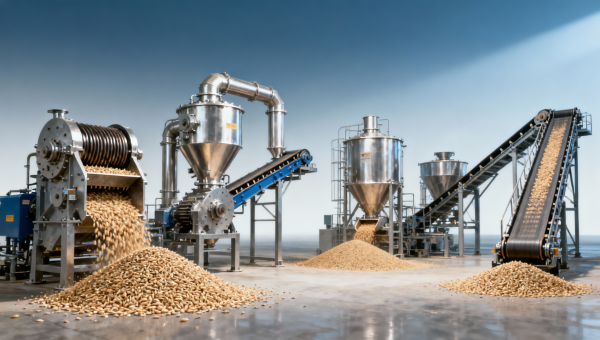
When selecting size-reduction equipment for modern feed lines, the choice between a double roller crumbler and a hammer mill affects particle uniformity, energy use, downstream cooling, and screening efficiency. For buyers and plant operators evaluating a feed grading sieve, feed pellet cooler, magnetic separator for feed, or enclosed belt conveyor, understanding these differences is essential to optimizing grain and feed processing performance.
How do a double roller crumbler and a hammer mill differ in actual feed processing?
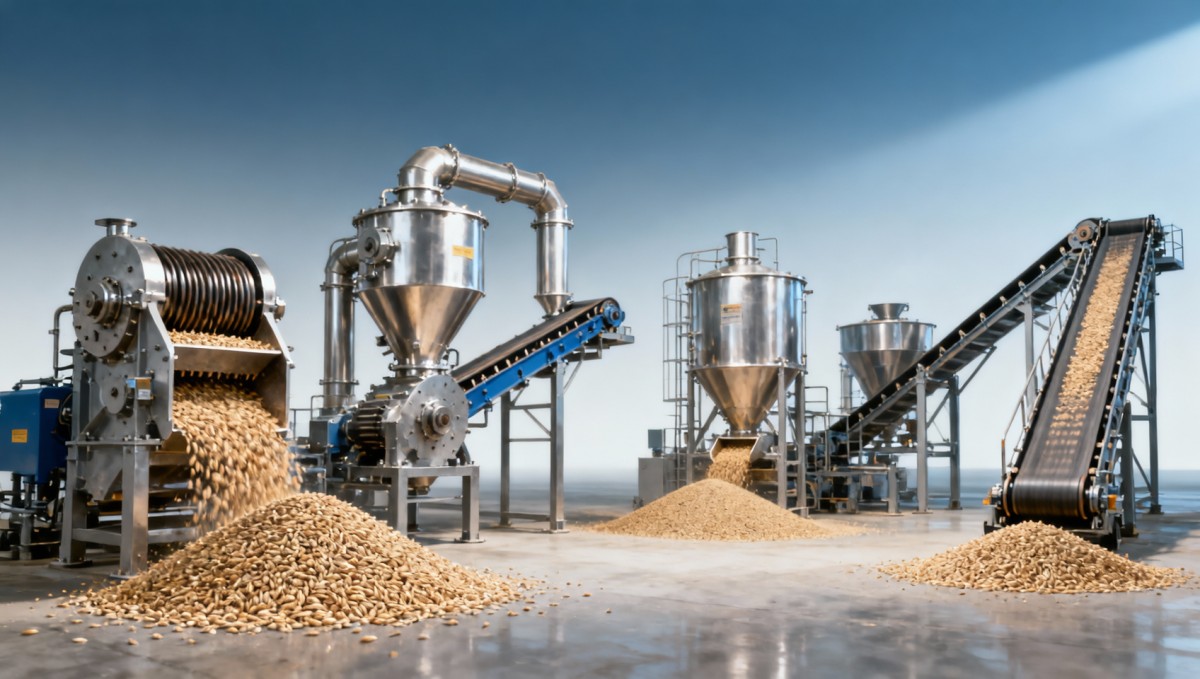
A double roller crumbler and a hammer mill both reduce particle size, but they do so in very different ways. A hammer mill uses high-speed impact to break raw materials such as maize, soybean meal, or fibrous ingredients into smaller particles. A double roller crumbler, by contrast, typically works on pellets after pelleting, using two corrugated rollers to crack them into uniform crumbs. For operators and procurement teams, this difference is not minor; it changes line layout, power demand, dust behavior, and final product grading.
In a typical feed plant, the hammer mill is positioned upstream, before mixing and pelleting, while the double roller crumbler is placed downstream of the pellet cooler and before the feed grading sieve. That means they are not always direct substitutes. However, many buyers still compare them because both influence final particle size and because budget holders often ask whether one machine can reduce the need for the other in a 2-stage or 3-stage feed preparation system.
For crumbled poultry feed, aquatic starter feed, or specialty livestock diets, the double roller crumbler is preferred when the goal is to maintain pellet integrity while producing a narrow particle band. The hammer mill is preferred when raw material size varies widely and the plant must process bulk ingredients continuously for 8-16 hours per shift. This distinction matters to project managers who need stable throughput, and to quality teams that must control fines, oversize fractions, and segregation during transfer.
In broader industrial terms, the decision should be based on process objective rather than machine category alone. If the target is pre-pellet grinding, ingredient flexibility, and coarse-to-fine adjustment through screens, the hammer mill is the practical choice. If the target is post-pellet crumb formation with tighter particle consistency and lower breakage shock, the double roller crumbler delivers more predictable downstream screening performance.
Core process difference at a glance
The most useful way to compare these systems is to look at where they sit in the line, what material state they process, and how they affect the next equipment. This is especially important when integrating a feed pellet cooler, magnetic separator for feed, and enclosed belt conveyor into one coordinated material handling sequence.
This comparison shows why a feed plant cannot evaluate either machine in isolation. A hammer mill affects conditioning and pellet quality upstream, while a double roller crumbler affects screen load, fines recovery, and product grading downstream. Buyers who map the entire line usually make better capital decisions than those comparing motor power alone.
Which machine is better for particle uniformity, energy use, and line stability?
For particle uniformity in post-pellet applications, the double roller crumbler usually has the advantage. Because the roller gap can be adjusted within a defined operating range, often in small increments depending on pellet diameter and target crumb size, it creates a narrower band than impact grinding. This is valuable in starter feed and premium formulations where a tighter particle range improves feed intake consistency and reduces waste in the feeder.
Energy use depends heavily on what is being processed. A hammer mill handling hard grains or variable moisture raw materials may require substantial installed power, especially when fine grinding is needed. Its energy draw also rises when screens become restricted or hammers wear unevenly. A double roller crumbler often uses lower power for its specific task because it is cracking cooled pellets rather than reducing raw grain from a larger initial size. That said, it cannot replace the hammer mill’s upstream grinding role in most conventional lines.
Line stability is closely linked to consistency of feed rate, magnet protection, cooling quality, and screen loading. If pellets enter the crumbler before adequate cooling, they may smear, break irregularly, or increase fines. In many plants, the best operating window is achieved when pellets have passed through a feed pellet cooler and reached a more stable condition before crumbling. For project teams, that means the crumbler decision should be reviewed together with retention time, cooler discharge condition, and sieve deck selection.
Hammer mills are more flexible across ingredient types, but they create more airborne dust and usually place a heavier burden on aspiration and housekeeping systems. In plants where safety managers are focused on dust control, spark risk, and metal contamination, the use of a magnetic separator for feed before the hammer mill is a routine protective step. For a crumbler, protection is still important, but contamination risk is often addressed earlier in the line because metal ingress can damage roller surfaces and upset gap accuracy.
Practical performance factors buyers should compare
A useful evaluation should cover at least 5 core dimensions: target size range, throughput band, installed power, maintenance interval, and downstream screening impact. The table below helps procurement teams align technical performance with plant objectives rather than comparing only purchase price.
The key takeaway is simple: if your product quality depends on consistent pellet-derived crumbs, the double roller crumbler often delivers a better quality-to-energy balance. If your business depends on processing many raw materials with changing recipes across 2-4 shifts per day, the hammer mill remains the more versatile asset.
Operational signs that your current choice may be wrong
- Your feed grading sieve is overloaded with fines or oversize fractions after crumbling, indicating poor roller setting, inadequate pellet cooling, or a mismatch between target crumb size and pellet diameter.
- Your hammer mill needs frequent screen changes to satisfy one premium formula, which slows production planning and increases labor during a weekly or even daily recipe change schedule.
- Your enclosed belt conveyor is carrying unstable product with excessive segregation, suggesting the upstream size reduction step is generating too broad a particle distribution.
- Your quality team repeatedly finds variation in starter feed texture batch to batch, even when conditioner settings remain stable, which often points back to grinding or crumbling consistency.
These symptoms are common in mixed-capacity plants where legacy equipment has been expanded without fully redesigning line balance. A better equipment decision often begins with a process audit rather than a simple machine replacement request.
What should procurement teams, operators, and decision-makers check before buying?
For procurement personnel, the first question is not price but process role. Is the machine meant to grind raw ingredients, reduce pellets into crumbs, or stabilize a specific product grade? If the use case is unclear, supplier quotations become difficult to compare, and finance teams may approve equipment that does not solve the original bottleneck. A practical review should include at least 6 checkpoints before technical comparison begins.
For operators, the focus is different. They need to know how the machine behaves over long runs, how quickly wear parts can be changed, and whether adjustment can be made safely during production windows. In many factories, planned maintenance opportunities may be limited to a 2-6 hour weekly stop, so ease of access and spare part availability directly affect uptime. This matters as much as nameplate throughput.
For enterprise decision-makers and financial approvers, the real issue is total system cost. A lower-cost hammer mill can still raise line cost if it increases dust collection demand, screen consumption, or product rework. A crumbler with stable output may improve screen efficiency and reduce recycle load, but only when pellet quality upstream is already under control. Capital allocation should therefore be linked to measurable process outcomes over 12-24 months, not only initial expenditure.
For quality and safety teams, material contamination control, cleanout accessibility, and predictable particle output matter most. The machine should fit the sanitation level required by the product category. In regulated or export-oriented operations, documented inspection routines, traceable spare part changes, and safe guarding around moving elements are often treated as standard expectations rather than optional upgrades.
A 6-point selection checklist
- Define the material state: raw grain, mash, cooled pellet, or finished crumb. This single step often eliminates the wrong machine category immediately.
- Confirm target size range and allowable fines. If the tolerance band is narrow, downstream grading and recycle rates should be modeled at the same time.
- Check line integration with feed pellet cooler, feed grading sieve, magnetic separator for feed, and enclosed belt conveyor so transfer points and surge behavior are understood.
- Review maintenance rhythm, spare part lead time, and operator skill level. A technically strong machine can still underperform if the plant cannot maintain it within a 7-15 day spare replenishment window.
- Assess contamination and safety controls, including metal removal before grinding, guarding, lockout procedures, and housekeeping load around dust-generating points.
- Ask for process-based sizing, not only equipment rating. A supplier should relate throughput claims to feed type, moisture condition, and expected duty cycle.
This checklist helps distributors, engineering teams, and plant owners speak the same language during vendor review. It also reduces the risk of buying a machine sized for nominal output but unsuited to real feed variability.
Typical procurement questions by stakeholder
Different stakeholders measure value differently. A well-structured sourcing process addresses those differences early so the technical team does not need to defend the project after quotation review. The table below can be used during tender preparation or internal approval.
When these concerns are mapped early, equipment selection becomes faster and less subjective. It also shortens the review cycle between technical recommendation and budget approval, which is especially useful when projects must be executed within one quarter or a short seasonal installation window.
What are the most common mistakes in comparing crumbler and hammer mill systems?
The first mistake is treating the double roller crumbler and hammer mill as direct one-to-one substitutes in all situations. They overlap on size reduction, but not on process role. A hammer mill cannot normally create the same post-pellet crumb profile as a well-set crumbler, and a crumbler cannot take over full raw material grinding in a standard feed production line. Buyers who ignore process position often end up paying twice: once for the wrong equipment, and again for corrective integration.
The second mistake is comparing motor power without comparing material condition. Grinding dry grain, high-fiber ingredients, or variable-moisture formulations through a hammer mill is not equivalent to cracking cooled pellets in a crumbler. Energy, wear, and fines generation cannot be interpreted fairly unless the feedstock and operating objective are clearly stated. In practice, two machines with similar installed kilowatts may have very different cost behavior over a 6-12 month operating period.
The third mistake is ignoring the equipment around the machine. A feed grading sieve that is undersized, a feed pellet cooler with insufficient retention, or an enclosed belt conveyor that allows segregation can distort performance results and lead teams to blame the wrong machine. In complex plants, equipment decisions should be made at line level, not in isolated purchasing silos.
The fourth mistake is underestimating maintenance discipline. Roller wear, hammer wear, screen condition, alignment, and bearing health all affect product quality. If a plant lacks routine inspections every shift, every week, and every month, even a correctly selected system may drift out of tolerance. For safety managers, this also intersects with guarding and lockout compliance during inspection and replacement tasks.
FAQ for researchers, buyers, and plant teams
Can a double roller crumbler replace a hammer mill?
Usually no in a standard feed line. The crumbler is generally intended for post-pellet reduction, while the hammer mill handles upstream raw material grinding. In a specialized process, one machine may reduce the burden on another, but they are rarely interchangeable as complete functional replacements. The right question is whether your line needs one, the other, or both in separate stages.
Which one produces more consistent feed for starter applications?
If the starter product is based on pellets being converted into crumbs, the double roller crumbler often produces a more controlled and repeatable size range, provided pellets are adequately cooled first. If the goal is to prepare the mash before pelleting, the hammer mill remains essential because it controls the raw material particle profile that supports pellet formation.
What supporting equipment should be checked during selection?
At minimum, review 4 connected nodes: magnetic separator for feed, feed pellet cooler, feed grading sieve, and enclosed belt conveyor. Each one changes how material enters, leaves, or is protected around the size-reduction step. A mismatch in any of these areas can cause fines, instability, contamination risk, or unexpected downtime.
How long is a typical review and implementation cycle?
For many B2B projects, technical clarification and quotation comparison may take 2-4 weeks, while delivery and installation planning can extend further depending on scope, site readiness, and whether conveyors, sieves, or cooling equipment are also being upgraded. Projects move faster when the buyer prepares material data, target output, layout limits, and utility conditions before supplier discussion.
Why consult AgriChem Chronicle when evaluating feed processing equipment choices?
For industrial buyers, the real challenge is not just understanding what a double roller crumbler or hammer mill does. The challenge is making a defensible decision across technical, financial, operational, and compliance dimensions. AgriChem Chronicle supports this process by connecting machinery analysis with broader primary processing realities, including raw material variability, regulated supply chains, and the practical integration of upstream and downstream equipment.
Because ACC serves professionals across agricultural machinery, fine chemicals, bio-extracts, and feed and grain processing, its perspective is especially useful for cross-functional teams. Procurement managers need comparable specifications. Operators need practical line guidance. Quality leaders need contamination and control logic. Executive decision-makers need a clear view of risk, cost, and implementation sequence. That is where a specialized editorial and technical intelligence platform adds value beyond a basic product brochure.
If you are comparing a double roller crumbler, hammer mill, feed grading sieve, feed pellet cooler, magnetic separator for feed, or enclosed belt conveyor, ACC can help structure the evaluation around process reality. Useful consultation topics include target particle range, line bottleneck diagnosis, equipment matching, typical delivery planning, maintenance expectations, and documentation requirements for internal approval. This is particularly valuable when distributors, OEMs, and end users must align quickly on one workable specification set.
Contact AgriChem Chronicle if you need support with parameter confirmation, equipment selection logic, line integration questions, quotation comparison, or content-led visibility for validated industrial capabilities. Whether your team is reviewing a new project, a retrofit, or a supplier shortlist, a more structured technical discussion can shorten decision time and reduce specification errors before purchase commitments are made.
Related Intelligence
- Commercial Feed PelletHow to Pick a Poultry Feed Pellet Machine That LastsPoultry feed pellet machine buying guide: compare durability, lifecycle cost, and line fit with vertical feed mixer machine, horizontal ribbon blender feed, cattle feed processing plant, and floating fish feed plant solutions.
- Commercial Feed PelletWhen is magnetic separator for feed needed?Magnetic separator for feed: learn when it is needed, where to install it, and how it works with feed grading sieve, double roller crumbler, feed pellet cooler and grain cleaning lines.
- Commercial Feed PelletWhat affects feed pellet cooler cost?Feed pellet cooler cost depends on capacity, materials, automation, and line matching with feed grading sieve, double roller crumbler, and enclosed belt conveyor. Learn how to compare value and cut hidden costs.
The Morning Broadsheet
Daily chemical briefings, market shifts, and peer-reviewed summaries delivered to your terminal.
