
What Changes the Real Cost of Wholesale Farm Water Pumps
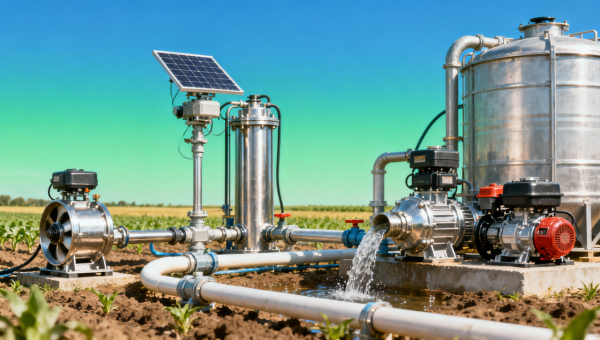
The real cost of wholesale water pumps for farming goes far beyond the quoted unit price. From solar water pumps agricultural systems and submersible deep well pumps to lifecycle energy use, compliance, installation, and spare-part risk, buyers must compare total ownership economics. For procurement teams evaluating agricultural diesel engines and related field equipment, understanding these cost drivers is essential for accurate budgeting and long-term operational efficiency.
What actually changes the real cost of wholesale farm water pumps?
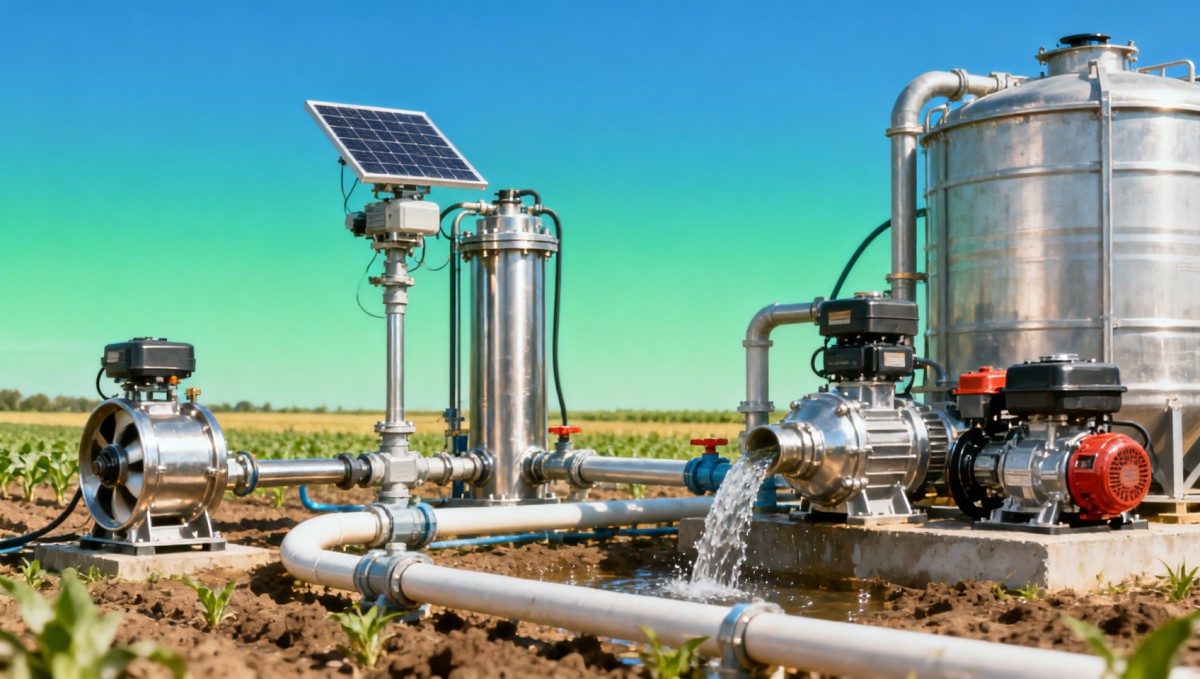
In agricultural procurement, the purchase price of a farm water pump is only the visible layer of cost. Technical evaluators, project managers, and financial approvers usually discover that the final spend is shaped by at least 6 linked factors: pump type, head and flow requirements, power source, water quality, installation complexity, and service availability over a 3–5 year operating horizon. A low initial quote can quickly become expensive if the pump is mismatched to irrigation depth, duty cycle, or site power conditions.
For wholesale farm water pumps, the cost difference between a surface centrifugal unit and a submersible deep well pump is not only about hardware. It also includes cable length, control panel protection, bore compatibility, lifting equipment during installation, and downtime exposure if retrieval is needed. In many farming operations, one unplanned replacement during a peak irrigation window can outweigh a modest upfront saving achieved during tender evaluation.
Buyers in large agricultural, aquaculture, and primary processing environments also need to examine whether the pump will support seasonal demand swings. A unit sized for 8–10 hours per day may face very different economics when actual field use stretches to 16–20 hours during dry periods. That shift affects motor temperature, wear rate, maintenance intervals, and energy consumption, all of which should be modeled before purchase approval.
This is where AgriChem Chronicle adds value for institutional buyers. ACC’s coverage of agricultural machinery, regulated supply chains, and industrial-grade sourcing helps procurement teams compare not just products, but also documentation quality, supplier transparency, compliance readiness, and lifecycle risk. In complex B2B purchasing, these factors often determine whether the “cheapest” option remains competitive after 12–24 months of field operation.
The 5 core cost drivers procurement teams should separate
- Hydraulic requirement: Flow rate and total dynamic head determine whether the pump is correctly sized or likely to run inefficiently.
- Power architecture: Grid electric, diesel-driven, and solar water pumps agricultural systems have very different operating and infrastructure costs.
- Installation scope: Pipe diameter, cable run, base frame, controller, civil works, and labor can add substantial indirect cost.
- Maintenance burden: Seal replacement, impeller wear, filter cleaning, and spare-part lead time affect long-term budget certainty.
- Compliance and documentation: Manuals, test records, material declarations, and electrical safety conformity reduce project and audit risk.
How pump type, application scenario, and energy source change total ownership cost
Not all agricultural water pumping duties have the same cost structure. Irrigating shallow surface water for row crops is fundamentally different from lifting groundwater from deep boreholes or circulating process water for aquaculture. Procurement teams should avoid evaluating wholesale water pumps as interchangeable items. In practice, application mismatch is one of the most common sources of cost inflation, especially when distributors submit attractive pricing without full site data.
Surface pumps typically suit low-to-moderate suction conditions and accessible water sources, but they may demand weather protection, priming support, and careful suction-line management. Submersible deep well pumps generally suit deeper groundwater extraction and can reduce priming issues, yet they often involve higher cable, retrieval, and repair logistics cost. Solar water pumps agricultural projects can lower operating energy spend, but only when irradiation profile, water storage design, and pumping schedule are aligned with field demand.
Diesel-driven configurations remain relevant where grid instability or remote locations limit alternatives. However, a diesel pump package can add recurring fuel handling, emissions management, noise control, and routine service needs every 250–500 running hours, depending on engine type and site conditions. For finance and operations teams, that means diesel may solve immediate reliability concerns while increasing budget exposure over each planting season.
For distributors and project owners comparing options, the most useful framework is not “Which pump is cheapest?” but “Which system delivers required water volume per day at acceptable risk over the planned operating cycle?” That question brings engineering, procurement, compliance, and after-sales planning into one practical discussion.
Application-based comparison for wholesale farm water pumps
The table below helps technical and commercial teams compare common pump categories by operating environment, cost pressure, and selection priority.
This comparison shows why two pump quotations with similar capacity labels can produce very different ownership outcomes. A buyer evaluating borehole irrigation, for example, should not compare a low-cost surface unit against a submersible deep well pump only on invoice price. The relevant benchmark is delivered water volume, acceptable downtime, and serviceability across the intended crop cycle or production season.
A practical scenario split for different buyer roles
Information researchers and technical assessors usually start with hydraulic fit: required head in meters, expected flow in cubic meters per hour, and water source condition. Procurement and commercial reviewers then add delivery terms, spare-part package options, and warranty boundaries. Financial approvers focus on the payback window, often over 12, 24, or 36 months depending on project scale and financing terms.
Quality and safety managers add another layer. They may ask whether the motor enclosure, wiring protection, grounding provisions, and operating manuals are appropriate for humid, dusty, or chemically exposed agricultural environments. For integrated farms and processing facilities, this review is essential because pump failures can disrupt not only irrigation but also water treatment, washdown, cooling, or feed processing support systems.
Which technical parameters matter most before approving a purchase?
A significant share of avoidable cost comes from incomplete technical specification. If buyers request quotes using only a rough horsepower estimate, suppliers may propose equipment that looks competitive but performs poorly in the real duty range. At minimum, tenders should define 5 core parameters: required flow, total dynamic head, water source depth, power supply condition, and fluid quality. For many projects, duty cycle and ambient environment should be added as a 6th and 7th check point.
Flow and head must be assessed together. A pump can produce attractive flow at low head or maintain pressure at reduced flow, but the target operating point is what decides efficiency and wear rate. In practical farm operations, common procurement errors include selecting for peak flow without considering pipeline friction loss, or choosing a motor sized only for nominal conditions instead of seasonal variation and longer daily operation.
Water quality is another major cost driver. Sand content, suspended solids, corrosive exposure, and biological contamination all influence impeller wear, seal life, and maintenance frequency. In feed, grain, aquaculture, and mixed agricultural settings, the same site may require separate pumping solutions for clean water transfer, nutrient mixing, and wastewater movement. Treating those duties as identical can increase maintenance spend within the first operating season.
Project teams should also account for control logic. Soft starters, overload protection, dry-run protection, and variable speed control may add to upfront capex, but they often reduce stress on the motor and pipeline. On larger systems or repeated daily cycles, that trade-off can improve cost predictability and reduce emergency repair events during critical irrigation weeks.
Technical parameters that most often change the real cost
The table below can be used by procurement teams as a pre-quotation checklist when comparing wholesale farm water pumps from multiple suppliers.
Using a structured parameter sheet reduces the risk of false price comparison. It also helps distributors and OEM-facing buyers present clearer RFQs, which can shorten technical clarification time from several rounds to one or two focused reviews. In regulated or audit-sensitive sectors, better parameter definition also strengthens documentation discipline across sourcing, engineering, and operations teams.
A 4-step evaluation sequence before issuing a final PO
- Confirm the hydraulic duty point, including seasonal high-demand conditions and pipeline loss assumptions.
- Verify installation scope, including cable length, base, suction accessories, and control components.
- Review operating cost over a defined period such as 12–36 months, not just the unit quote.
- Check service readiness, spare-part availability, and documentation completeness before PO release.
What hidden cost items are often missed in farm pump procurement?
The most common budget surprises are not usually inside the pump itself. They are found in installation, commissioning, operation, downtime, and replacement planning. In competitive tenders, suppliers may quote the pump body and motor but leave out cable, control panel, pressure switch, check valve, protective enclosure, filtration accessories, or first-year critical spares. For project managers, these omissions can distort capex comparison by a meaningful margin.
Logistics also matters. Farm water pumps for remote sites may require special transport, lifting support, or staged delivery to match civil works readiness. If the site lacks standard power quality, voltage protection or generator compatibility measures may be necessary. A delay of even 7–15 days during planting or peak heat can create operational losses that far exceed incremental equipment cost.
Another hidden issue is spare-part lead time. A low-cost imported pump without local stock support may appear attractive until a seal, impeller, coupling, or controller fails. If replacement parts take 2–6 weeks to arrive, the farm may resort to emergency rental, temporary fuel-based pumping, or partial irrigation scheduling. For high-value crops, aquaculture ponds, or integrated agro-processing operations, that delay can create serious output risk.
Commercial teams should also evaluate payment terms against risk distribution. A lower quote with vague warranty terms or limited commissioning responsibility may shift technical risk onto the buyer. In contrast, a more complete offer may include startup guidance, spare-part recommendations, and test documentation that helps reduce total exposure across procurement, quality assurance, and operational continuity.
Hidden cost checklist for technical and finance reviewers
- Installation extras: foundations, lifting, pipe fittings, filters, cable trays, and weather protection.
- Commissioning time: site testing, flow verification, electrical checks, and operator instruction.
- Operating inputs: electricity, diesel, lubrication, cleaning, and periodic inspection routines.
- Downtime exposure: crop stress, water storage depletion, pond oxygen risk, or process interruption.
- Documentation quality: wiring diagrams, maintenance instructions, exploded views, and spare-part lists.
Why documentation quality influences cost more than many buyers expect
In industrial and institutional purchasing, documentation is not paperwork for its own sake. Clear manuals, test sheets, and traceable component references help technicians diagnose failures faster, order the right spare part, and maintain safe operating conditions. This is especially relevant in cross-border sourcing, where language gaps or generic product descriptions can slow maintenance response and inflate downtime cost.
ACC’s editorial positioning is useful here because buyers in agriculture, aquaculture, biochemical processing, and machinery sourcing increasingly need trustworthy technical communication, not just promotional claims. When suppliers can support pump selection with structured data, compliance context, and maintenance clarity, procurement teams gain stronger decision confidence and more defensible approval records.
How should buyers assess compliance, supply chain transparency, and supplier readiness?
For B2B agricultural equipment procurement, compliance is not limited to one certificate. Depending on market destination and installation environment, buyers may need to review electrical safety conformity, materials suitability, emissions considerations for diesel systems, and the completeness of technical files. In operations linked to food, feed, or regulated processing environments, traceability and maintenance documentation can be just as important as the pump’s nominal performance data.
Supply chain transparency has become a major evaluation factor because long replacement cycles and uncertain component sourcing increase operational risk. Buyers should ask whether motors, controllers, seals, and wear parts are standardized or proprietary. A system built around common service parts may reduce brand lock-in and simplify stocking strategies over 1–3 irrigation seasons or longer.
Distributors and agents should be especially careful when assessing OEM offers for export or resale. A pump package that performs adequately in one region may face different documentation, voltage, or installation requirements elsewhere. Clear commercial and technical alignment before order placement reduces claim disputes and protects channel reputation.
ACC serves procurement-oriented readers by connecting market intelligence with practical compliance interpretation. In sectors where equipment, chemicals, and regulated processing increasingly overlap, that perspective helps buyers compare not only specification sheets but also supplier maturity, transparency, and readiness to support institutional audits or project handovers.
A practical supplier review framework
Before selecting a wholesale water pump supplier, teams can use the following 4-part review logic to improve decision quality.
- Technical fit: Does the offer clearly match flow, head, fluid condition, and duty cycle?
- Documentation: Are manuals, parts lists, electrical details, and test references complete and understandable?
- Service readiness: Are critical spare parts, troubleshooting support, and warranty boundaries clearly defined?
- Commercial transparency: Are delivery scope, exclusions, lead times, and payment terms explicit rather than implied?
Common misconceptions that distort farm pump cost analysis
One common misconception is that higher motor rating always means better field performance. In reality, excess motor size can increase energy use and stress related components if the hydraulic duty is not matched. Another misconception is that solar is always the least expensive option. Solar water pumps agricultural systems can be highly economical, but only where daytime pumping, storage, and seasonal resource conditions are compatible.
A third misconception is that maintenance cost is predictable once a warranty is offered. Warranty terms rarely remove the operational cost of access, labor, emergency response, and lost watering time. Procurement teams should therefore evaluate cost on a system basis, not only through a standard warranty lens.
FAQ and next-step guidance for buyers comparing wholesale farm water pumps
The final buying decision usually requires alignment between engineering, procurement, finance, and operations. The questions below address common review points that arise during supplier shortlisting, RFQ clarification, and budget approval for farm water pump projects.
How do I compare wholesale farm water pumps beyond unit price?
Use a total ownership approach over at least 12–24 months. Compare the pump price together with installation scope, expected energy or fuel use, routine service interval, critical spare-part list, and likely downtime exposure. If two suppliers quote similar flow capacity but one includes better controls, documentation, and parts support, that offer may present a lower real cost even with a higher invoice total.
When is a submersible deep well pump the better economic choice?
It is often the stronger choice when groundwater depth, suction limitations, or site layout make surface pumping inefficient or unreliable. However, buyers should budget for cable, retrieval method, and bore-specific installation. The economic advantage becomes clearer when stable deep-water access is more important than quick surface-level maintenance access.
Are solar water pumps agricultural systems always cheaper to operate?
They can reduce recurring fuel costs, but not every site benefits equally. Buyers should review solar resource profile, storage tank strategy, irrigation timing, and seasonal water demand. If nighttime pumping or high continuous pressure is required, the total system design may become more complex. Solar works best when daytime pumping and water storage can smooth demand without compromising crop or livestock needs.
What lead time should procurement teams typically plan for?
Lead times vary by pump type, motor configuration, controls, and spare-part package. For planning purposes, buyers often work with ranges such as 2–4 weeks for standard stock-linked items and longer for customized assemblies or cross-border shipments. The more important step is to confirm what is included in delivery scope and whether startup support or spare-part kits can ship together.
Why choose us for pump sourcing intelligence and supplier evaluation support?
AgriChem Chronicle supports technical and commercial decision-making with a deeper industry lens than generic equipment listings. Our strength lies in connecting machinery evaluation with supply chain transparency, compliance awareness, and documentation quality across agriculture, aquaculture, processing, and industrial procurement contexts. That helps buyers move from basic quote collection to evidence-based supplier comparison.
If you are reviewing wholesale farm water pumps, we can help you structure the comparison around the issues that actually change cost: parameter confirmation, pump type selection, delivery scope, spare-part planning, operating cost assumptions, and documentation readiness. This is particularly useful for procurement teams balancing technical accuracy with budget control and project timelines.
Contact us to discuss specific needs such as flow and head parameter confirmation, solar versus diesel pumping comparison, submersible deep well pump suitability, expected delivery cycle, spare-part strategy, compliance documentation expectations, distributor evaluation, or quotation benchmarking for multi-supplier sourcing. A clearer specification at the start usually leads to better pricing discipline and fewer surprises after deployment.
Related Intelligence
- Feeding & Watering SystemsWholesale Water Pumps for Farming: Quality Gaps to CheckWholesale water pumps for farming: learn how to spot quality gaps in solar water pumps agricultural and submersible deep well pumps before bulk orders—reduce downtime, risk, and lifetime cost.
- Feeding & Watering SystemsWhat Changes the Real Cost of Wholesale Farm Water PumpsWholesale water pumps for farming: learn how solar water pumps agricultural systems, submersible deep well pumps, energy, installation, and compliance shape real cost before you buy.
- Feeding & Watering SystemsJiangsu Egg Prices Stable but Shipments Accelerate Amid Rising Cold Chain DemandJiangsu egg prices remain stable as cold chain demand rises, accelerating shipments. Key industries like logistics and packaging must adapt to temperature-controlled solutions for fresh egg exports. Stay ahead with strategic冷链 partnerships.
The Morning Broadsheet
Daily chemical briefings, market shifts, and peer-reviewed summaries delivered to your terminal.
