
Why Some Deep Well Pumps Fail Long Before Expected
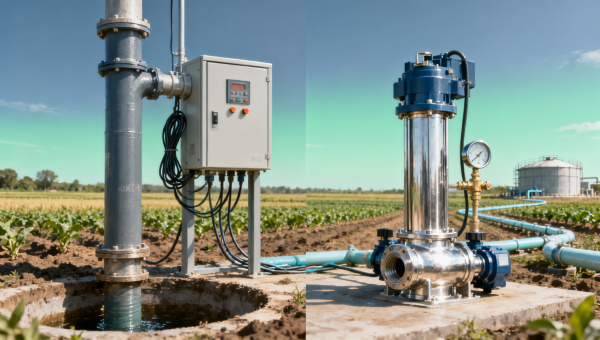
When submersible deep well pumps fail prematurely, the root cause is rarely just the pump itself. For buyers comparing solar water pumps agricultural setups, wholesale water pumps for farming, or systems paired with agricultural diesel engines, early failure often signals deeper issues in sizing, installation, water quality, or maintenance planning. This article examines why expected service life collapses and what technical evaluators, procurement teams, and project decision-makers should verify before investing.
Why do deep well pumps fail earlier than expected in real projects?
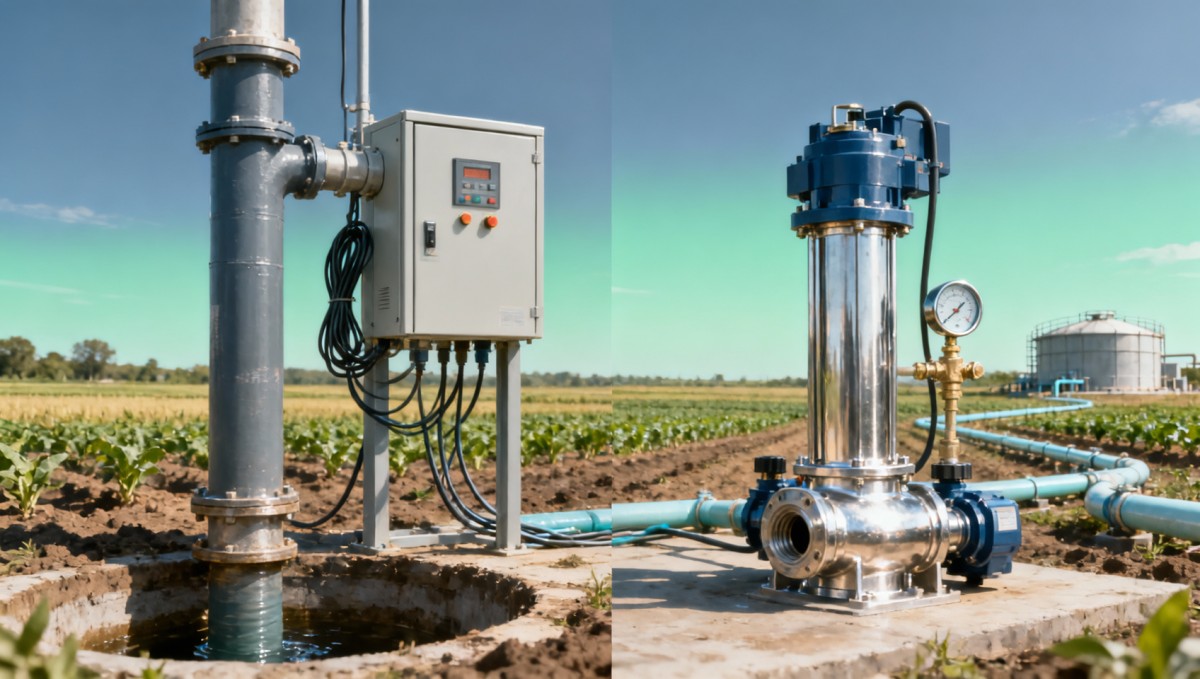
In procurement reviews, pump failure is often described as a product defect, yet field investigations usually show a chain of mismatches. A submersible deep well pump may be technically compliant on paper, but if the bore depth, static water level, drawdown, motor protection, and pipe friction were not calculated together, the unit can spend months operating outside its intended duty point. In agricultural irrigation, fishery water transfer, and rural processing plants, this mismatch is one of the most common reasons service life drops from an expected 5–10 years to only 12–24 months.
This issue matters to more than maintenance teams. Technical evaluators need to confirm hydraulic suitability, procurement managers need to avoid lifecycle cost surprises, finance teams need realistic payback assumptions, and safety or quality personnel need to reduce contamination and overheating risks. For projects comparing wholesale water pumps for farming with diesel-driven or solar-assisted systems, the failure pattern can also affect fuel planning, downtime exposure, labor cost, and seasonal water security.
Across primary industries, early pump failure usually comes from 3 broad causes: incorrect design assumptions, poor installation and commissioning, or weak maintenance discipline. Each cause can remain hidden during handover because pumps often run normally for the first few weeks. The problem becomes visible only after continuous cycling, voltage fluctuation, sand abrasion, or dry-run events accumulate. That is why a procurement decision should not focus only on pump power in kW or purchase price, but on the complete operating envelope.
For readers of AgriChem Chronicle, this is exactly where disciplined technical review creates commercial value. In regulated and capital-intensive sectors, a failed pumping system is not just a maintenance incident. It can delay crop irrigation windows, interrupt water supply to aquaculture systems, disrupt processing schedules, and trigger urgent replacement buying under poor negotiating conditions. Better pre-purchase verification reduces both operational and procurement risk.
The most common hidden failure drivers
Many project teams still assume that matching head and flow on a quotation sheet is enough. It is not. A pump selected only by nominal head may be forced to work at low efficiency if the actual drawdown is 10–20 meters deeper during peak demand than during testing. In that condition, current draw rises, motor temperature increases, and wear accelerates. The same happens when installers use undersized cables or omit proper motor protection.
- Incorrect duty point selection, where flow demand and total dynamic head were estimated without seasonal water level variation.
- Abrasive water conditions, especially sand, silt, or suspended fines that erode impellers, bearings, and diffusers over time.
- Electrical instability, including undervoltage, phase imbalance, poor grounding, and repeated start-stop cycles beyond recommended limits.
- Insufficient commissioning records, leaving no baseline for amperage, pressure, insulation resistance, or discharge performance.
These failure drivers are especially relevant when buyers compare solar water pumps agricultural systems with conventional grid or diesel-backed installations. Solar arrays may create variable operating windows, while diesel-driven systems may introduce pressure fluctuations through generator instability. Without coordinated control logic, a well pump can cycle too often or operate below minimum cooling flow, both of which shorten motor life.
Which technical factors should evaluators verify before approving a pump?
A practical technical review should start with 5 core variables: bore depth, static water level, pumping water level under load, required discharge rate, and power quality. These inputs define whether the selected deep well pump will run within a stable zone or near overload. For agricultural and industrial use, decision-makers should also review pipe length, elevation change, fitting losses, and expected daily runtime, which often ranges from 4–8 hours in seasonal irrigation to 16–20 hours in intensive water transfer operations.
Water quality is the second major factor. A pump handling clear groundwater behaves very differently from one exposed to sand content, dissolved minerals, or corrosive conditions. Even moderate abrasive loading can damage hydraulic components long before the motor fails. In feed processing, aquaculture, and chemically sensitive production environments, material compatibility also matters because corrosion or residue buildup can affect both equipment life and downstream quality control.
The third factor is control architecture. Soft starters, variable frequency drives, dry-run protection, level sensors, and overload relays are not optional extras in many installations; they are protective measures that can prevent repeated high-stress events. A low-cost pump package without proper controls may seem commercially attractive at tender stage, but over a 2–4 year operating window it can become the more expensive option.
The table below summarizes the technical checkpoints that procurement, engineering, and quality teams should align on before release of purchase orders or framework contracts.
This evaluation structure helps multidisciplinary teams speak the same language. Engineering focuses on head, flow, and controls; procurement validates package scope; finance compares lifecycle cost; and safety or quality teams assess whether water conditions and materials are suitable for the intended application. For many buyers, this alignment prevents avoidable warranty disputes because the purchase record clearly shows what operating assumptions were approved.
What to check during commissioning
Commissioning should not end with “the pump runs.” A stronger acceptance protocol includes at least 6 checks: discharge rate, actual current draw, voltage under load, insulation resistance, pressure stability, and protection response. If a system will run with a solar array or agricultural diesel engines, evaluators should also verify startup behavior across variable load conditions. A pump that passes one test at noon may still struggle under low irradiance or fluctuating generator output.
Recommended 4-step acceptance routine
- Record baseline electrical and hydraulic readings during the first stable run.
- Compare actual duty point with the supplier’s pump curve and intended operating band.
- Trigger protective devices in a controlled manner where safe and permitted by site procedure.
- Store commissioning records for later maintenance trend analysis every month or quarter.
Without this baseline, later troubleshooting becomes speculative. In large farms, fishery operations, and processing sites, a simple logbook or digital maintenance sheet can reveal whether wear is progressive, seasonal, or linked to power events. That evidence supports better replacement timing and supplier evaluation.
How should buyers compare pump system options for agriculture and primary industries?
Procurement teams often compare three broad pathways: a conventional electric deep well pump, a solar water pumps agricultural package, or a pump integrated with agricultural diesel engines for off-grid reliability. The right choice depends on runtime profile, water depth, energy availability, service access, and tolerance for maintenance complexity. None is universally superior. The stronger decision is the one aligned with actual field conditions and total cost exposure over several seasons.
A solar-driven setup may reduce fuel dependence and fit remote irrigation sites, but it requires careful matching between array output, controller logic, and pump duty. Diesel-backed systems remain relevant where water demand is concentrated into short, high-intensity windows or where weather variability makes solar-only pumping impractical. Grid-powered systems may offer the simplest control, yet they become vulnerable in regions with unstable voltage or limited rural infrastructure.
For distributors and project managers, the comparison should also include spare parts lead time, technician availability, field commissioning requirements, and operator skill level. A system with lower capital cost may still create higher operational risk if local teams cannot maintain it during peak season. This is especially important in large irrigation blocks, aquaculture installations, and integrated processing operations where water interruption has a cascading cost.
The following comparison table is useful when evaluating wholesale water pumps for farming as part of a tender, channel offering, or internal capital expenditure review.
This comparison is not only technical. It also supports commercial negotiation. Buyers can ask suppliers to clarify exactly which controls, protections, and commissioning steps are included. That prevents a frequent procurement error: comparing headline prices while the protective scope differs significantly between bids.
A practical selection checklist for project teams
- Confirm whether the required output is continuous, seasonal, or intermittent over 3–6 peak months.
- Request the pump curve and check expected operation near the best efficiency region, not at the edge.
- Review local service capability, spare parts pathway, and response time for critical failures.
- Ask for a clear list of excluded items such as cable, control panel, dry-run protection, or site commissioning.
These points are particularly useful for business evaluators and financial approvers who may not want excessive engineering detail but still need to understand where budget risk sits. In capital approval discussions, these are often the issues that decide whether the system performs over time or becomes a recurring maintenance expense.
What maintenance and compliance practices extend service life?
Maintenance begins at installation quality, not after breakdown. Cable joints, drop pipe integrity, non-return valve placement, motor cooling conditions, and correct immersion depth all influence wear rate. In many field failures, the pump was not severely underspecified; it was simply installed with weak electrical protection or poor mechanical support. A disciplined setup reduces early stress events that typically occur within the first 90–180 days.
Routine monitoring should include more than visual inspection. Monthly or quarterly checks of current draw, discharge pressure, flow trend, and unusual vibration or noise can reveal declining performance before total failure. If sand content increases after seasonal changes, operators may need to reduce output or review well condition. For food-adjacent, aquaculture, or chemical-linked environments, maintenance teams should also confirm that material condition does not create contamination or corrosion concerns.
Compliance is also relevant. While deep well pumps themselves may not always fall under a single universal certification pathway, associated electrical panels, installation practices, water handling rules, and environmental discharge obligations can intersect with local or sector-specific standards. In project planning, teams commonly review applicable electrical safety codes, environmental requirements, and any site rules linked to FDA, EPA, GMP, or equivalent operational frameworks where water quality affects regulated production.
For institutional buyers, documented maintenance and compliance records create two benefits. First, they protect operations by making failures more traceable. Second, they strengthen supplier accountability because warranty and service discussions rely on recorded evidence rather than assumptions. This record discipline is increasingly important across regulated supply chains and larger primary-industry assets.
Common misconceptions that shorten pump life
“A larger pump is safer”
Oversizing often causes unstable operation, frequent cycling, and inefficient power use. A pump that is too large for the actual well and demand profile can be as damaging as one that is too small.
“If the pump works on day one, installation is fine”
Many failures emerge only after repeated starts, seasonal drawdown, or several weeks of abrasive exposure. That is why a 30-day review and another check after 90 days are often more informative than startup alone.
“Price comparison is enough for procurement”
In practice, the biggest commercial differences may sit in controls, cable quality, protection devices, commissioning support, and spare parts readiness. Comparing only unit price can hide major lifecycle cost gaps.
FAQ for procurement teams, engineers, and distributors
How long should a deep well pump typically last?
Service life varies with water quality, duty cycle, installation accuracy, and electrical stability. In many normal applications, buyers may expect several years of operation, but the realistic outcome depends less on catalog claims than on whether the pump is operating within its designed head, flow, and cooling conditions. If sand, dry-run incidents, or severe voltage issues are present, life can shorten dramatically.
What should buyers ask suppliers before placing an order?
Ask for the pump curve, recommended operating range, motor protection requirements, cable sizing guidance, included and excluded scope, commissioning procedure, and spare parts availability. If evaluating solar water pumps agricultural packages, also ask how the controller handles low irradiance and whether water storage is needed to stabilize demand.
Are diesel-backed systems still relevant?
Yes, especially in off-grid areas, emergency backup plans, or sites with concentrated pumping demand over short periods. However, buyers should assess fuel supply reliability, engine maintenance intervals, and the quality of the power delivered to the pump system. In some projects, diesel works best as a backup rather than the primary energy source.
When is a site audit worth the extra time?
A site audit is especially valuable when the well depth is significant, seasonal water variation is known, the project budget is material, or downtime would affect production or irrigation schedules. Even a short pre-purchase review of well data, power conditions, and operating profile can prevent costly rework and replacement within the first 6–12 months.
Why consult AgriChem Chronicle before final pump selection?
For institutional buyers and technical stakeholders, the challenge is rarely finding a pump supplier. The challenge is validating the right specification in a market where equipment claims, operating assumptions, and compliance responsibilities are often fragmented. AgriChem Chronicle helps readers assess these decisions through sector-aware analysis that connects agricultural machinery, industrial water handling realities, and regulated supply chain expectations.
This perspective matters when pump selection intersects with broader primary-industry operations. A water supply error can affect irrigation timing, aquaculture conditions, process continuity, and budget control at the same time. ACC’s editorial environment is built for decision-makers who need practical intelligence, not generic product language. That includes procurement teams comparing wholesale water pumps for farming, engineers reviewing system compatibility, and distributors deciding which configurations are commercially defensible.
If you are reviewing a deep well pump project, you can use ACC as a structured reference point to clarify parameter confirmation, system selection, delivery expectations, control package scope, water quality concerns, and applicable compliance considerations. This is particularly useful before tender issuance, before final technical approval, or when a current installation is already showing early warning signs.
To move the discussion forward, contact us for support on pump parameter review, solution comparison between solar and diesel-assisted systems, procurement checklist development, likely delivery lead times, spare parts planning, and quote communication priorities. For teams managing multi-site agriculture, aquaculture, or processing operations, that early clarification can reduce both technical failure risk and commercial uncertainty.
Related Intelligence
- Aeration & Water TechHelium Price Up 35.2% MoM; Aeration Equipment Makers Test Ar/N2 SubstitutesHelium price up 35.2% MoM—Aeration equipment makers rush to validate Ar/N2 substitutes for CE/UL-compliant calibration in RAS & aquaculture systems.
- Aeration & Water TechWhy Some Deep Well Pumps Fail Long Before ExpectedSubmersible deep well pumps fail early when sizing, water quality, and controls are ignored. Learn how solar water pumps agricultural systems and agricultural diesel engines affect reliability.
- Aeration & Water TechSubmersible Deep Well Pumps and the Sand ProblemSubmersible deep well pumps in sandy wells: learn how solar water pumps agricultural systems and wholesale water pumps for farming compare, reduce wear, and improve irrigation reliability.
The Morning Broadsheet
Daily chemical briefings, market shifts, and peer-reviewed summaries delivered to your terminal.
