
Submersible Deep Well Pumps and the Sand Problem
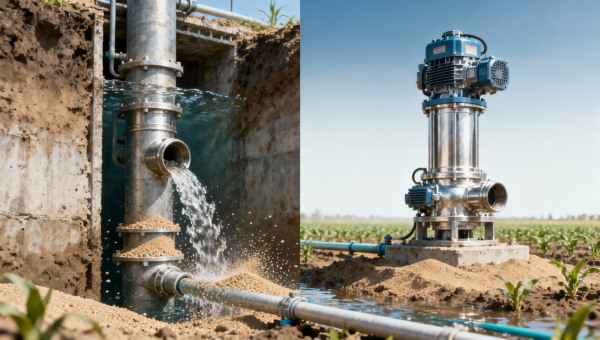
Submersible deep well pumps are essential to reliable irrigation, yet sand intrusion remains a costly threat to efficiency, service life, and water quality. For buyers comparing submersible deep well pumps, solar water pumps agricultural systems, and wholesale water pumps for farming, understanding how sand affects performance is critical. This article examines the technical causes, operational risks, and practical selection criteria that matter most to engineers, procurement teams, and project decision-makers.
Why does sand become a serious problem in submersible deep well pumps?
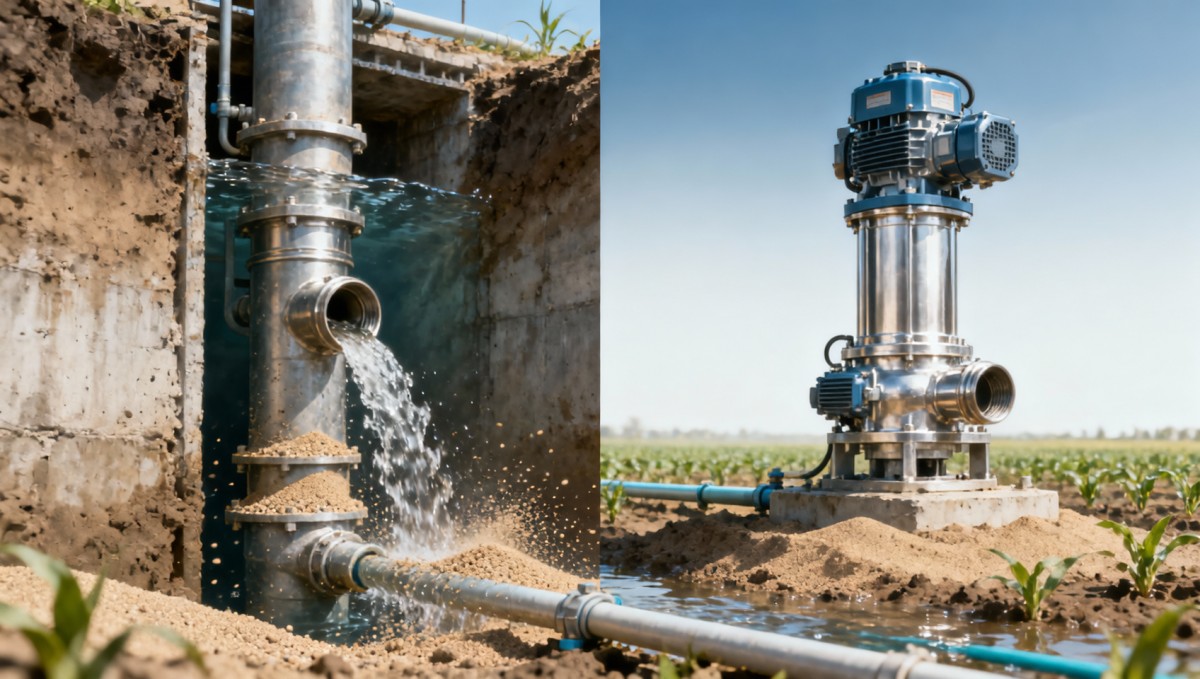
In agricultural irrigation, aquaculture support, and primary processing facilities, submersible deep well pumps often operate in wells where fine solids are unavoidable. Sand may enter because of unstable borehole development, seasonal water table changes, damaged well screens, or oversizing of the pump relative to the well yield. What begins as a small solids load can quickly become a system-wide reliability issue when a pump runs for 8–16 hours per day during peak irrigation periods.
For technical evaluators, the concern is not only abrasion. Sand affects hydraulic efficiency, bearing life, impeller clearance, seal performance, and downstream water quality. For procurement teams, the challenge is that two pumps with similar power ratings, such as 5.5 kW or 7.5 kW, may deliver very different service life if one is installed in a sandy well without proper derating, filtration, or well rehabilitation. Price comparison alone is therefore misleading.
This issue matters across the broader industrial supply chain covered by AgriChem Chronicle, where equipment selection must align with operational continuity, compliance expectations, and transparent technical documentation. Whether the end use is irrigation for field crops, raw water transfer for feed processing, or water supply for fishery support systems, sand handling capability should be treated as a risk-control parameter, not a secondary feature.
A useful starting point is to distinguish between occasional turbidity and persistent sand production. Temporary cloudiness after startup may settle within a few hours, while ongoing sand discharge indicates a well or operating mismatch. If measurable grit remains after 24–48 hours of stabilized operation, the root cause should be investigated before the pump is accepted into routine duty.
Typical causes buyers and project teams should verify
- Poor well development after drilling, leaving residual fine particles in the formation.
- Excessive pumping rate that pulls formation sand through the screen or gravel pack.
- Worn, corroded, or incorrectly sized well screens that no longer retain fine material.
- Pump intake set too low, too close to the bottom sediment zone, often within the lowest 1–3 meters.
- Seasonal drawdown or changing groundwater conditions that destabilize the aquifer interface.
How sand changes pump performance, maintenance intervals, and operating cost
When sand passes through a submersible deep well pump, it acts as an abrasive medium. Impellers, diffusers, shaft sleeves, bearings, and non-return components are all exposed. In mixed-material pump assemblies, wear rates may become uneven, increasing vibration and reducing hydraulic stability. In practice, this means the pump may still run, but head and flow drift away from the original duty point over a period of weeks or months rather than years.
The commercial consequence is often underestimated. A pumping line designed for 40–80 cubic meters per hour can lose effective output without a dramatic motor failure. Irrigation coverage becomes inconsistent, sprinkler patterns suffer, and energy cost per delivered cubic meter rises. Finance approvers should note that gradual efficiency loss is difficult to detect unless the site tracks amperage, discharge pressure, and actual flow at regular monthly or quarterly intervals.
For buyers sourcing wholesale water pumps for farming, the better question is not simply whether the unit can tolerate some sand, but how the entire pumping package manages solids risk. That includes pump stage design, motor protection, cable integrity, check valve configuration, and the installation depth relative to the well bottom. In many cases, a correctly specified lower-flow pump will outperform a larger, cheaper unit that causes aggressive drawdown.
In solar water pumps agricultural installations, the risk profile adds another layer. Variable solar input can cause more frequent starts, stops, and changing duty points, particularly without proper controllers. In sandy wells, unstable operating curves may increase sediment movement. The right control strategy, including soft start logic and dry-run protection, can reduce stress over a 1–3 year operating window.
Main operational effects of sand intrusion
The table below helps procurement, engineering, and maintenance teams connect sand exposure with practical performance outcomes. It is especially useful when comparing submersible deep well pumps for irrigation, livestock water supply, and process water transfer.
The key insight is that sand damage rarely stays inside the pump. It spreads into energy use, crop uniformity, service scheduling, spare parts demand, and water treatment workload. For distributors and project managers, this means after-sales planning should include solids-related diagnostics, not just electrical troubleshooting.
What should buyers compare when selecting pumps for sandy wells?
A strong procurement decision starts with the well, not the catalog. Before comparing submersible deep well pumps, teams should confirm at least 5 core inputs: required flow, total dynamic head, static water level, drawdown behavior, and expected solids condition. Without these, any offer can look competitive on paper while creating avoidable lifecycle cost after installation.
For business evaluators and financial approvers, a useful rule is to compare equipment in terms of total duty fit across 3 dimensions: hydraulic suitability, solids tolerance, and maintenance accessibility. A lower initial quotation may not be favorable if the pump must be pulled repeatedly from a deep borehole. Retrieval and reinstallation can consume significant labor, crane time, and irrigation downtime, especially on remote sites.
In agriculture, teams often compare conventional electric submersible systems with solar water pumps agricultural packages. Solar solutions can be highly effective for remote fields or unstable grids, but they must still be matched to borehole behavior. If solar pumping output peaks during midday drawdown, the well may become sandier at the exact period of maximum pumping demand. That interaction should be modeled early.
Distributors and resellers should also evaluate documentation quality. A credible supplier should be able to provide pump curves, material descriptions, installation recommendations, motor protection guidance, and a realistic delivery window such as 2–4 weeks for standard configurations or longer for custom voltage and control requirements. Missing technical paperwork is often a hidden risk signal.
Selection criteria for procurement and technical review
The following comparison matrix can be used during RFQ review, vendor screening, or internal approval meetings. It is designed for teams sourcing wholesale water pumps for farming and related industrial water applications.
For many projects, the most effective buying decision comes from combining pump selection with well assessment. A moderate redesign of flow target, intake level, and control settings may produce a better result than moving to a more expensive pump family without fixing the underlying sand source.
A practical 4-step review before issuing a purchase order
- Verify well data from drilling logs, test pumping, or recent operating records.
- Match the pump duty point to realistic seasonal drawdown, not only nominal design conditions.
- Request documentation for materials, controls, cable, and installation limits.
- Budget for filtration, monitoring, and maintenance access as part of the full system cost.
Which installation, monitoring, and compliance practices reduce risk?
Even a well-chosen pump can fail early if the installation standard is weak. In sandy wells, intake placement, cable support, non-return valve positioning, and commissioning method are critical. A common field approach is to maintain a clearance zone above the well bottom and avoid setting the intake where settled solids are likely to concentrate. The exact distance depends on well geometry, but the principle is universal.
Monitoring should not be limited to motor current. Project managers should define at least 4 routine checkpoints: discharge pressure, flow trend, turbidity or visible grit, and start-stop frequency. Reviewing these values every month during the first season and every quarter thereafter provides a more reliable picture than waiting for a failure event. This is especially important for distributed irrigation assets across multiple fields.
For operations connected to regulated processing environments, water handling decisions may also intersect with broader compliance expectations. While a submersible deep well pump itself is not typically governed by pharmaceutical GMP in the same way as active production equipment, buyers serving food, feed, biochemical, or sensitive process applications should still document material suitability, maintenance records, and source-water management. Environmental and local water abstraction rules may also apply.
This is where AgriChem Chronicle adds value for decision-makers. ACC’s editorial lens is built for sectors where technical precision, traceability, and procurement clarity matter. In practice, that means buyers can frame pump selection within the larger context of supply chain credibility, equipment documentation, and risk-managed sourcing rather than treating a water pump as an isolated commodity purchase.
Risk-control checklist for project teams
- Confirm whether the well has completed development and stabilization before final commissioning.
- Record baseline amperage, pressure, and flow in the first 7 days of normal operation.
- Install suitable dry-run and overload protection, especially on remote or solar-driven systems.
- Plan flushing, filtration, or sediment management if downstream irrigation devices are sensitive.
- Review local water, environmental, and site safety requirements before handover.
FAQ: what procurement and engineering teams ask most often
Can a submersible deep well pump handle some sand, or should any sand be considered unacceptable?
A small amount of residual solids may appear during startup or after well disturbance, but persistent sand is a warning sign. The practical decision is not based on a simple yes-or-no threshold. Teams should evaluate whether sand is temporary, whether performance stabilizes within 24–48 hours, and whether wear indicators begin to appear over the first few weeks. If visible grit continues, the well and operating point need review.
Are solar water pumps agricultural systems more vulnerable in sandy wells?
They are not automatically more vulnerable, but they can become more sensitive if the controller, duty cycle, and well behavior are poorly matched. Variable solar input may create unstable pumping patterns, especially on partly cloudy days or in systems without optimized control logic. A well-designed solar package with proper protections can perform reliably, but it still requires the same well assessment discipline as a grid-powered system.
What should wholesale water pumps for farming buyers include in an RFQ?
A strong RFQ should include target flow, total head, power supply details, well depth, static and pumping water levels, intended daily operating hours, water quality concerns, and any observed sand condition. It should also request pump curves, material details, control options, recommended installation depth, spare parts availability, and estimated lead time such as 2–4 weeks for standard units where applicable.
What are the most common mistakes made during approval and purchase?
The top mistakes are comparing by motor power only, ignoring the well’s real yield, setting the pump too low, skipping startup monitoring, and assuming downstream filters will solve a well problem. Another common error is approving a pump without confirming service access and replacement lead time. For deep installations, retrieval logistics can have a larger budget impact than the initial difference between two quotations.
Why consult AgriChem Chronicle before final pump selection or supplier evaluation?
For institutional buyers and industrial operators, the sand problem is rarely just a maintenance nuisance. It is a purchasing, compliance, and continuity issue that affects irrigation reliability, operating cost, and downstream process confidence. AgriChem Chronicle supports this decision environment by connecting equipment evaluation with market intelligence, technical interpretation, and supply chain transparency across agriculture, bio-based processing, and primary industries.
If your team is comparing submersible deep well pumps, reviewing solar water pumps agricultural options, or screening wholesale water pumps for farming suppliers, ACC can help structure the technical discussion around the questions that matter most. These include duty-point confirmation, sandy-well suitability, realistic maintenance assumptions, documentation quality, and vendor responsiveness during the pre-order phase.
This is especially relevant for procurement officers, quality managers, project engineers, distributors, and finance reviewers who need more than a price sheet. They need a clearer path from inquiry to specification to risk-managed approval. In many cases, a short technical review can prevent months of unstable operation, repeated pull-outs, or unnecessary overspending on the wrong configuration.
What you can contact us about
- Parameter confirmation for flow, head, power supply, and daily run-time assumptions.
- Pump selection support for sandy wells, remote irrigation projects, and solar-driven applications.
- Guidance on delivery timing, standard versus custom configurations, and documentation review.
- Discussion of material preferences, protection requirements, filtration strategy, and maintenance planning.
- Supplier evaluation, quotation comparison, and technical questions that support internal approval.
If your project involves uncertain well conditions, strict operating continuity, or high-value irrigation output, bring the available well data and duty requirements into the conversation early. A more informed review of submersible deep well pumps at the specification stage is often the fastest way to reduce sand-related risk before purchase, installation, and commissioning begin.
Related Intelligence
- Aeration & Water TechHelium Price Up 35.2% MoM; Aeration Equipment Makers Test Ar/N2 SubstitutesHelium price up 35.2% MoM—Aeration equipment makers rush to validate Ar/N2 substitutes for CE/UL-compliant calibration in RAS & aquaculture systems.
- Aeration & Water TechWhy Some Deep Well Pumps Fail Long Before ExpectedSubmersible deep well pumps fail early when sizing, water quality, and controls are ignored. Learn how solar water pumps agricultural systems and agricultural diesel engines affect reliability.
- Aeration & Water TechSubmersible Deep Well Pumps and the Sand ProblemSubmersible deep well pumps in sandy wells: learn how solar water pumps agricultural systems and wholesale water pumps for farming compare, reduce wear, and improve irrigation reliability.
The Morning Broadsheet
Daily chemical briefings, market shifts, and peer-reviewed summaries delivered to your terminal.
