
Helium Price Up 35.2% MoM; Aeration Equipment Makers Test Ar/N2 Substitutes
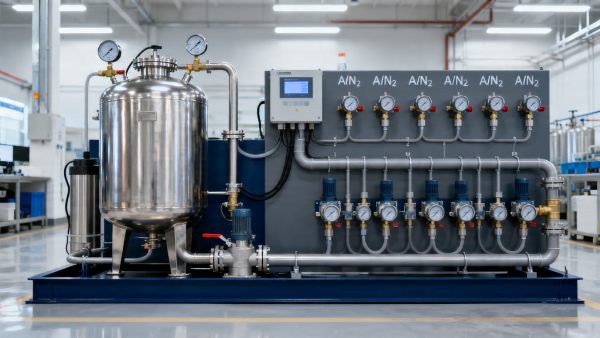
Helium prices for domestic tube-packaged helium in China rose 35.2% month-on-month in April 2024 (Lungone Information), driven by overseas supply disruptions — prompting immediate operational adjustments among manufacturers of precision aeration and water treatment equipment for recirculating aquaculture systems (RAS) and commercial fishing applications. Export-oriented Chinese aeration equipment suppliers are now validating argon/nitrogen (Ar/N2) mixed gas as a functional alternative for calibration and testing, with CE/UL compliance verification targeted for completion by end-Q2 2024.
Event Overview
In April 2024, the ex-factory price of domestically supplied tube-packaged helium in China increased by 35.2% month-on-month, according to data published by Lungone Information. This surge stems from external supply-side volatility affecting global helium availability. As a result, Chinese exporters of high-precision aeration and water technology equipment — particularly those serving RAS and commercial fishing sectors — have initiated technical validation of argon/nitrogen mixed gas as a substitute for helium in device calibration and performance testing. Certification alignment with CE and UL standards is underway, with expected completion by late Q2 2024.
Impact on Specific Industry Segments
Direct Exporters of Aeration & Water Tech Equipment
These companies rely on helium for instrument calibration and functional verification prior to shipment. The price spike directly increases test-cycle costs and risks delaying certification timelines. Impact manifests in extended lead times for EU and US-bound orders, especially for projects tied to strict regulatory or contractual delivery windows.
Manufacturers Dependent on Helium-Based Calibration Protocols
Firms whose quality assurance workflows mandate helium-specific reference standards face immediate process revalidation requirements. Any deviation from established helium-dependent calibration procedures triggers internal documentation updates, staff retraining, and potential non-conformance reviews during third-party audits.
Suppliers of Gas-Dependent Testing Infrastructure
Vendors providing helium-compatible flow meters, pressure sensors, or dissolved oxygen analyzers used in RAS commissioning may see reduced demand for helium-integrated configurations. Shifts toward Ar/N2-compatible hardware specifications could affect product roadmap prioritization and spare-part inventory planning.
What Relevant Enterprises or Practitioners Should Monitor and Do Now
Track official certification progress for Ar/N2 substitution
CE and UL approval status for Ar/N2 mixed gas use in calibration must be monitored closely — not just for compliance, but to assess whether revised test reports will be accepted by end clients (e.g., EU aquaculture integrators or USDA-certified fish farms).
Review helium-dependent QA/QC documentation and SOPs
Manufacturers should audit all standard operating procedures referencing helium usage in calibration, leak testing, or sensor drift compensation. Identify clauses requiring revision and initiate internal change-control processes ahead of formal certification.
Evaluate supply chain exposure beyond helium procurement
Assess secondary dependencies: e.g., helium-certified gas regulators, cylinder handling services, or logistics partners trained in helium-specific safety protocols. These may require requalification if Ar/N2 becomes the default test medium.
Engage early with key customers on transition timing
Proactively communicate anticipated shifts in test methodology and certification timelines to major export customers — especially those with fixed project milestones — to align expectations and avoid contractual friction.
Editorial Perspective / Industry Observation
From an industry perspective, this helium price surge is better understood as a supply-chain stress test than a permanent raw material shift. Analysis来看, the rapid pivot to Ar/N2 validation reflects both technical feasibility and commercial urgency — but does not yet indicate full replacement capability across all device classes or measurement ranges. Observation来看, the focus on CE/UL alignment signals that regulatory acceptance — rather than technical performance alone — is the current bottleneck. Current more appropriate interpretation is that this event marks the beginning of a short-to-medium-term adaptation cycle, not a structural exit from helium use in high-accuracy applications.
This development underscores how localized raw material volatility can propagate across global aquaculture infrastructure supply chains — especially where calibration traceability and regulatory conformity are non-negotiable. It highlights growing interdependence between industrial gas markets and specialized environmental engineering equipment, warranting closer cross-sector monitoring.
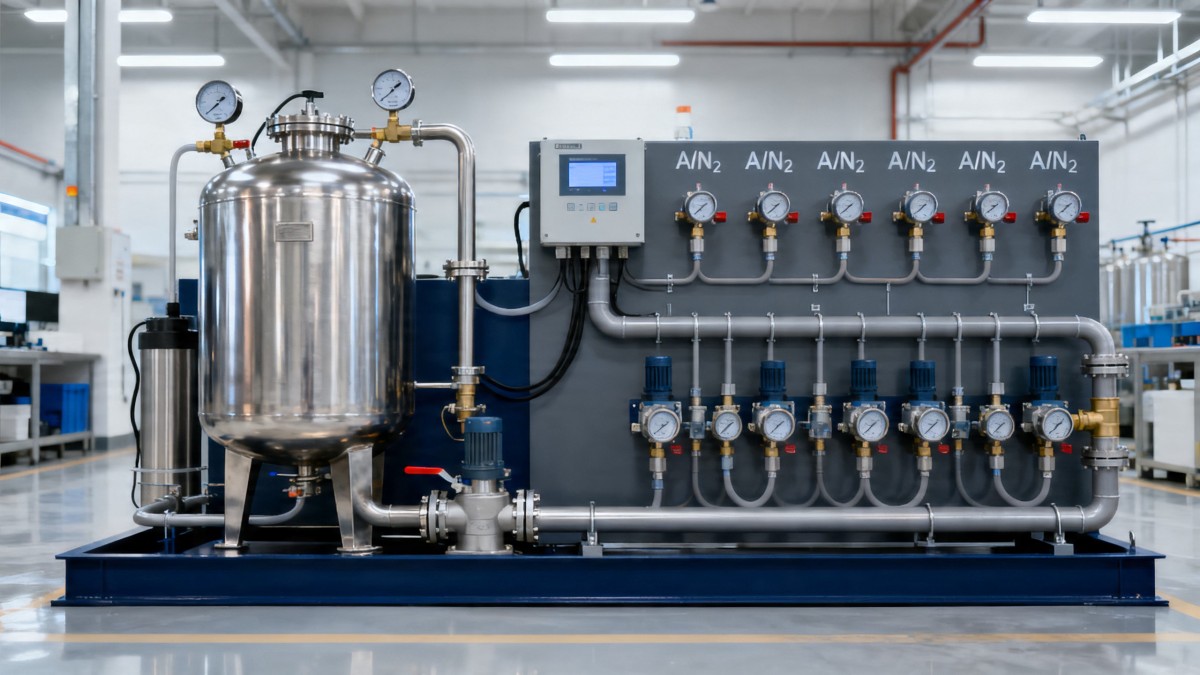
The incident serves as a reminder that helium-dependent verification steps — often treated as background operational overhead — are in fact critical path items for international market access. For stakeholders, it is less about abandoning helium entirely and more about building redundancy into metrology-critical processes.
Information Sources:
– Lungone Information (April 2024 domestic helium pricing data)
– Public statements from multiple Chinese aeration equipment exporters (verification timeline and scope, as reported in trade channels)
Note: CE/UL certification outcomes for Ar/N2 substitution remain pending and are subject to official agency confirmation.
Related Intelligence
- Aeration & Water TechHelium Price Up 35.2% MoM; Aeration Equipment Makers Test Ar/N2 SubstitutesHelium price up 35.2% MoM—Aeration equipment makers rush to validate Ar/N2 substitutes for CE/UL-compliant calibration in RAS & aquaculture systems.
- Aeration & Water TechWhy Some Deep Well Pumps Fail Long Before ExpectedSubmersible deep well pumps fail early when sizing, water quality, and controls are ignored. Learn how solar water pumps agricultural systems and agricultural diesel engines affect reliability.
- Aeration & Water TechSubmersible Deep Well Pumps and the Sand ProblemSubmersible deep well pumps in sandy wells: learn how solar water pumps agricultural systems and wholesale water pumps for farming compare, reduce wear, and improve irrigation reliability.
The Morning Broadsheet
Daily chemical briefings, market shifts, and peer-reviewed summaries delivered to your terminal.
