
Lithium Carbonate Price Rises 25%, Boosting Smart Greenhouse Energy Modules
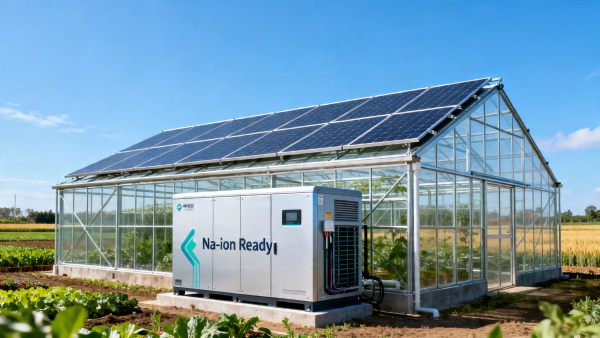
Carbonate lithium prices have risen over 25% month-on-month, accelerating adoption of sodium-ion and semi-solid batteries in agricultural energy applications — notably driving export demand for integrated photovoltaic + energy storage modules used in Chinese smart greenhouses. This shift is now affecting supply chain dynamics across multiple industrial segments, particularly for firms engaged in agricultural infrastructure exports, battery material procurement, and distributed energy system integration.
Event Overview
According to Longzhong Information data released on April 15, the average price of battery-grade lithium carbonate reached RMB 128,000 per ton, up 25.5% month-on-month. This price rebound is prompting accelerated deployment of sodium-ion and semi-solid batteries in agritech energy use cases. Orders for photovoltaic + energy storage integrated modules配套 for Chinese smart greenhouses have surged; delivery lead times for large-scale farm projects in Europe and North America have extended to 14–18 weeks, underscoring responsiveness advantages of China’s supply chain.
Industries Affected
Export-oriented agricultural infrastructure suppliers
These firms supply turnkey greenhouse systems incorporating PV and storage. Rising lithium costs are reinforcing the competitiveness of alternative battery chemistries in cost-sensitive agri-projects. The extension of delivery cycles (to 14–18 weeks) signals tightening capacity and increasing order volume — directly impacting production planning and logistics coordination.
Raw material procurement teams at battery and energy system manufacturers
Procurement functions face heightened volatility in lithium carbonate pricing. While sodium-ion and semi-solid alternatives reduce direct exposure, their adoption requires requalification of BOMs and supply agreements. The 25.5% MoM increase serves as a near-term trigger for reassessing hedging strategies and dual-sourcing plans for cathode materials and electrolytes.
Manufacturers of integrated energy modules for controlled-environment agriculture
Companies producing pre-engineered PV + storage units for greenhouses are experiencing increased inbound order flow — especially for configurations compatible with sodium-ion or hybrid battery architectures. Design validation timelines, component inventory levels, and certification readiness (e.g., CE, UL) for new battery integrations are now critical operational constraints.
Distribution and project logistics service providers
Extended delivery windows (14–18 weeks) reflect not just demand growth but also bottlenecks in module assembly, customs clearance for battery-containing shipments, and last-mile commissioning support. Logistics partners must now accommodate longer advance booking windows and tighter documentation requirements for cross-border battery transport.
What Relevant Enterprises or Practitioners Should Monitor and Do
Track official pricing updates and policy signals on battery chemistry diversification
While the April 15 data point reflects market-driven price movement, future guidance from MIIT or NDRC on sodium-ion battery standardization or subsidy eligibility could materially affect technology selection in export tenders. Current more suitable to monitor — not assume — policy alignment.
Focus on sodium-ion-compatible module configurations and EU/US certification pathways
Given delivery delays are concentrated in European and North American farm deployments, verifying compliance of new battery-integrated modules under UN 38.3, IEC 62619, and regional grid interconnection rules should be prioritized — especially where sodium-ion cells replace lithium-based ones in existing designs.
Distinguish between short-term price-driven substitution and long-term architecture shifts
The 25.5% MoM lithium carbonate increase is a near-term catalyst, but sodium-ion adoption remains constrained by energy density and cycle life trade-offs in high-cycling greenhouse applications. From industry perspective, this is better understood as a tactical portfolio adjustment — not an immediate full-scale technology transition.
Adjust procurement lead times and buffer stock levels for key power electronics components
Longer delivery cycles signal upstream capacity strain. Firms should review safety stock targets for inverters, battery management systems (BMS), and thermal management subassemblies — particularly those with long fabrication or testing lead times — to avoid cascading schedule slippage.
Editorial Perspective / Industry Observation
Analysis来看, this price rebound does not indicate a structural reversal in lithium supply-demand fundamentals, but rather reflects short-term tightening amid seasonal restocking and inventory normalization following earlier oversupply. More significantly, it acts as a real-world stress test for sodium-ion and semi-solid battery integration in non-automotive, distributed energy use cases. Observation来看, the 14–18 week delivery window extension is less about raw material scarcity and more about system-level integration capacity — suggesting that scalability hinges on manufacturing agility, not just cell availability. From industry angle, the event is currently more of a timing signal than a completed inflection point: it confirms growing commercial traction for alternative chemistries in agritech, but actual market share displacement remains incremental and application-specific.
Current more suitable to understand this development as a reinforcement of existing trends — not a rupture. It validates ongoing R&D and pilot deployments, but does not yet imply wholesale replacement of lithium-based solutions in greenhouse energy modules. Continued monitoring of quarterly pricing momentum, module-level certification progress, and farm project tender language will be essential to gauge whether this marks the start of broader architecture migration.
Conclusion
This lithium carbonate price movement is not primarily a commodity story — it is a supply chain signal highlighting how cost volatility in core battery materials is reshaping product design, export logistics, and technology roadmaps in the smart agriculture energy sector. For stakeholders, the implication is pragmatic: adaptability in system integration, responsiveness in certification execution, and disciplined differentiation between tactical procurement responses and strategic technology bets will define competitive positioning in the coming quarters.
Source Attribution
Main source: Longzhong Information (data published April 15). Note: Pricing data reflects spot market averages; battery chemistry substitution rates and regional certification status remain subject to ongoing verification and are not confirmed in the source material.
Related Intelligence
- Smart GreenhousePolysilicon Price Falls Below $550/ton, Smart Greenhouse Export Quotes Drop 8–12%Polysilicon price drops below $550/ton — Smart Greenhouse export quotes fall 8–12%. Discover ripple effects on tenders, margins & supply chains in ME/AU.
- Smart GreenhouseLithium Carbonate Price Rises 25%, Boosting Smart Greenhouse Energy ModulesLithium carbonate price rises 25% — accelerating sodium-ion & semi-solid battery adoption in smart greenhouse energy modules for global agritech exports.
- Smart GreenhousePolysilicon Price Drop Drives Smart Greenhouse PV Component Export Pricing Down 8–12%Polysilicon price drop slashes Smart Greenhouse PV component export prices by 8–12%. Faster delivery (10–12 wks) boosts ROI for agrivoltaic projects in ME & LATAM.
The Morning Broadsheet
Daily chemical briefings, market shifts, and peer-reviewed summaries delivered to your terminal.
