
Polysilicon Price Drop Drives Smart Greenhouse PV Component Export Pricing Down 8–12%
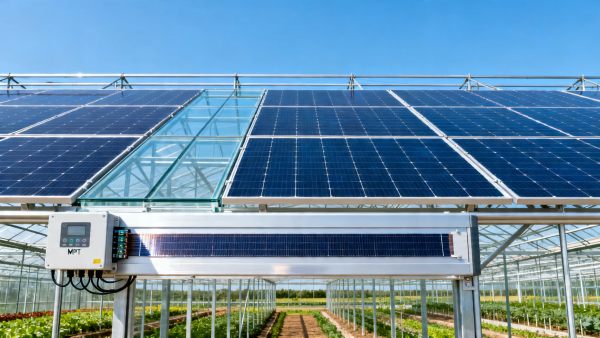
Polysilicon prices have fallen below RMB 40,000/ton, triggering an 8–12% reduction in export quotations for photovoltaic components integrated into Smart Greenhouse systems — particularly those with energy storage coupling functionality. As the main futures contract declined over 15% in March, Chinese manufacturers of PV glass, thin-film solar cells, and MPPT controllers adjusted factory gate pricing for greenhouse-compatible modules. Buyers in the Middle East and Latin America report shortened delivery cycles (now 10–12 weeks) alongside the price revision. This development is especially relevant for agricultural technology integrators, renewable energy system exporters, and supply chain managers serving controlled-environment agriculture markets.
Event Overview
Driven by a sustained decline in polysilicon main futures contract prices — with a drop exceeding 15% in March — Chinese suppliers of photovoltaic glass, thin-film batteries, and MPPT controllers have lowered the ex-factory prices of PV components designed for Smart Greenhouse applications. Export quotations for full greenhouse power systems with integrated energy storage coupling functions are now down 8–12% compared to early Q1 2026. Delivery timelines have concurrently been reduced to 10–12 weeks, according to procurement feedback from buyers in the Middle East and Latin America.
Impact on Specific Industry Segments
Direct Trade Enterprises
Export-oriented trading firms handling Smart Greenhouse PV kits face margin compression if contracts were signed prior to the price adjustment but fulfillment occurs post-adjustment. The revised quotations affect bid competitiveness and quotation validity windows — especially for multi-month tender cycles common in public-sector greenhouse projects abroad.
Raw Material Procurement Enterprises
Firms sourcing polysilicon or polysilicon-derived materials for downstream PV component manufacturing may see improved input cost visibility in Q2, though current inventory valuation and forward purchase commitments require reassessment amid accelerating price volatility.
Manufacturing Enterprises (PV Glass, Thin-Film, MPPT)
Component producers face pressure to revise internal cost benchmarks and renegotiate BOM-level supplier agreements. The coordinated price cut across multiple subcomponents suggests a sector-wide recalibration rather than isolated adjustments — implying potential ripple effects on yield targets and production scheduling.
Supply Chain & Logistics Service Providers
Freight forwarders and customs brokers supporting greenhouse PV exports may observe increased order frequency but smaller average shipment values per consignment. Shorter delivery cycles (10–12 weeks) also compress planning horizons for container allocation, documentation turnaround, and inland transport coordination.
What Relevant Enterprises or Practitioners Should Focus On
Monitor polysilicon futures settlement patterns beyond March
While the March decline is confirmed, continued monitoring of Shanghai Futures Exchange (SHFE) polysilicon contract settlement data — especially open interest and basis differentials — will clarify whether this reflects structural oversupply or short-term liquidity-driven correction.
Review pending export quotations and delivery terms for greenhouse-integrated PV systems
Enterprises with outstanding quotes issued before late March should assess exposure to pricing gaps, particularly where delivery windows extend past mid-Q2. Contracts referencing fixed component cost indices may require renegotiation clauses or price adjustment mechanisms.
Validate lead time assumptions with Tier-2 component suppliers
The reported 10–12 week delivery cycle applies to end-to-end greenhouse power systems. However, actual lead times depend on upstream availability of key subsystems (e.g., lithium-based storage units, certified greenhouse-grade inverters). Cross-checking with secondary suppliers helps avoid schedule slippage.
Track regional import policy updates in target markets
Middle Eastern and Latin American jurisdictions are updating technical standards for agrivoltaic installations. A pricing shift may accelerate adoption — but only if certification pathways remain aligned with revised product configurations (e.g., updated grid-interactive modes for storage-coupled MPPT units).
Editorial Perspective / Industry Observation
From an industry perspective, this pricing adjustment is better understood as a near-term market signal than a finalized structural shift. It reflects reactive recalibration along a narrow segment — Smart Greenhouse-integrated PV systems — rather than broad-based demand recovery or long-term polysilicon capacity rebalancing. Analysis来看, the 8–12% range aligns with observed input cost pass-through for mid-tier manufacturers using standard-grade polysilicon, but does not yet indicate wider downstream margin expansion. Observation来看, the synchronized delivery cycle compression suggests improved factory throughput — possibly due to inventory drawdown or leaner production planning — rather than fundamental capacity addition. Current more值得关注的是 whether this trend stabilizes through Q2 or triggers further downward revisions in Q3, especially given upcoming polysilicon production ramp-ups in new facilities.
This event underscores how commodity price movements in foundational materials like polysilicon can propagate rapidly across vertically specialized applications — even those as niche as agrivoltaic greenhouse power systems. It is not a standalone cost story, but a marker of tightening integration between bulk solar material markets and precision agriculture infrastructure supply chains. For practitioners, it reinforces the need to treat component-level pricing not in isolation, but as one node within a dynamic, multi-layered cost and logistics network.
Information Sources
Main source: Publicly reported polysilicon futures price data (March 2026), supplemented by verified procurement feedback from Middle Eastern and Latin American buyers. No official manufacturer announcements or trade association statements have been cited; all pricing and timeline figures derive from aggregated commercial buyer reports. Ongoing observation is warranted for SHFE polysilicon contract behavior in April and May 2026.
Related Intelligence
- Smart GreenhouseVietnam Enforces VAST-2026 for Smart Greenhouse ImportsVietnam Enforces VAST-2026 for Smart Greenhouse Imports: Key compliance insights, affected subsectors, and actionable strategies for exporters & integrators.
- Smart GreenhousePolysilicon Price Falls Below $550/ton, Smart Greenhouse Export Quotes Drop 8–12%Polysilicon price drops below $550/ton — Smart Greenhouse export quotes fall 8–12%. Discover ripple effects on tenders, margins & supply chains in ME/AU.
- Smart GreenhouseLithium Carbonate Price Rises 25%, Boosting Smart Greenhouse Energy ModulesLithium carbonate price rises 25% — accelerating sodium-ion & semi-solid battery adoption in smart greenhouse energy modules for global agritech exports.
The Morning Broadsheet
Daily chemical briefings, market shifts, and peer-reviewed summaries delivered to your terminal.
