
Vietnam Enforces VAST-2026 for Smart Greenhouse Imports
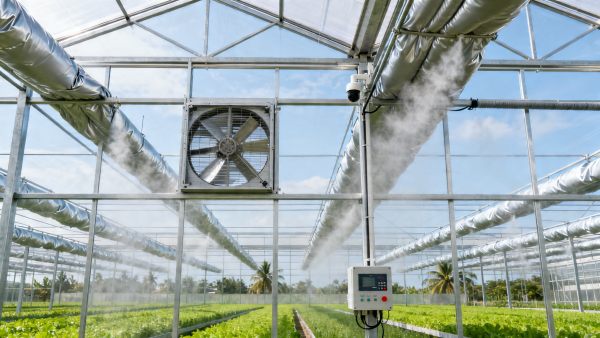
Effective April 15, 2026, Vietnam’s General Department of Standards, Metrology and Quality (STAMEQ) implemented the VAST-2026 standard, mandating climate adaptation testing for all imported smart greenhouse systems—including climate control & ventilation and feeding & watering systems. This requirement directly affects agricultural technology exporters, importers, and supply chain operators serving Vietnam’s rapidly expanding controlled-environment agriculture sector.
Event Overview
On April 15, 2026, STAMEQ officially enforced VAST-2026. Under this standard, all imported smart greenhouse equipment must undergo a 72-hour continuous operational test under high-temperature, high-humidity conditions (35°C / 90% RH) at the VAST laboratory in Ho Chi Minh City. Successful completion is required to obtain an official certification label. The rule applies to all goods cleared through Vietnamese customs starting from Q2 2026. Chinese manufacturers are advised to allocate an additional 3–4 weeks for certification as part of their export timeline.
Which Subsectors Are Affected
Direct Trade Enterprises (Exporters & Importers)
These entities face direct compliance obligations: shipments without the VAST-2026 label will not clear customs. Impact includes delayed delivery schedules, potential storage costs at port, and renegotiation of Incoterms to clarify responsibility for testing timelines and fees.
Manufacturing & System Integrators
Producers—especially those in China supplying turnkey smart greenhouse solutions—must now factor in pre-shipment validation cycles. Equipment configured for temperate or arid climates may fail the 35°C/90%RH test without design adjustments (e.g., condensation management, motor thermal tolerance), triggering redesign or component substitution.
Supply Chain & Logistics Service Providers
Fulfillment partners handling documentation, customs brokerage, and lab coordination must update internal workflows to include VAST-2026 test scheduling, result verification, and label affixation tracking. Delays in lab capacity or documentation errors may cascade across shipment batches.
What Relevant Enterprises or Practitioners Should Focus On — And How to Respond
Monitor official updates from STAMEQ and VAST laboratory
While VAST-2026 is active, STAMEQ has not yet published detailed test protocols, fee schedules, or accepted documentation formats. Companies should subscribe to STAMEQ’s official notices and verify whether third-party pre-testing (outside VAST) is recognized for preliminary screening.
Map affected product categories against current Vietnam-bound shipments
Not all greenhouse-related hardware falls under VAST-2026’s scope—only integrated systems classified as ‘smart greenhouse’ with climate control or automated irrigation functions. Firms should audit SKUs by function (not form) to avoid over-compliance or inadvertent non-compliance.
Distinguish between regulatory signal and enforceable requirement
VAST-2026 is enforceable as of April 15, 2026, but enforcement rigor—such as random post-clearance audits or penalties for label omission—remains unconfirmed. Early adopters may encounter procedural inconsistencies; documenting all test submissions and approvals is strongly advised.
Adjust lead times and buffer inventory for Q2 2026 onward
Given the mandatory 3–4 week certification window, exporters should revise production-to-shipment calendars, align order intake with lab availability, and consider holding certified units in regional hubs (e.g., Singapore or Bangkok) to reduce time-to-market for urgent orders.
Editorial Perspective / Industry Observation
From industry perspective, VAST-2026 is less a sudden barrier and more a formalization of long-observed local performance expectations. Vietnam’s tropical climate has historically caused premature failure of imported ventilation motors and sensor modules—this standard codifies that reality into compliance infrastructure. Analysis来看, it signals a shift toward outcome-based regulation (i.e., real-world resilience over paper specifications), which may foreshadow similar requirements in other ASEAN markets with comparable agri-tech growth trajectories. Current more appropriate understanding is that VAST-2026 represents an operational checkpoint—not a market access restriction—provided testing capacity and guidance stabilize in the coming months.
Conclusion
This regulation underscores Vietnam’s maturing approach to agricultural technology standards: prioritizing functional reliability over nominal compliance. For stakeholders, its significance lies not in exclusionary intent, but in recalibrating product development, supply planning, and cross-border coordination around localized environmental validation. It is best understood today as a procedural milestone—one that reflects growing domestic technical capacity and rising quality expectations in Vietnam’s controlled-environment agriculture ecosystem.
Information Sources
Primary source: General Department of Standards, Metrology and Quality (STAMEQ), Vietnam — Official announcement of VAST-2026 effective April 15, 2026.
Note: Details on test protocol revisions, fee structure, and enforcement frequency remain pending official publication and are subject to ongoing observation.
Related Intelligence
- Smart GreenhouseVietnam Enforces VAST-2026 for Smart Greenhouse ImportsVietnam Enforces VAST-2026 for Smart Greenhouse Imports: Key compliance insights, affected subsectors, and actionable strategies for exporters & integrators.
- Smart GreenhousePolysilicon Price Falls Below $550/ton, Smart Greenhouse Export Quotes Drop 8–12%Polysilicon price drops below $550/ton — Smart Greenhouse export quotes fall 8–12%. Discover ripple effects on tenders, margins & supply chains in ME/AU.
- Smart GreenhouseLithium Carbonate Price Rises 25%, Boosting Smart Greenhouse Energy ModulesLithium carbonate price rises 25% — accelerating sodium-ion & semi-solid battery adoption in smart greenhouse energy modules for global agritech exports.
The Morning Broadsheet
Daily chemical briefings, market shifts, and peer-reviewed summaries delivered to your terminal.
