
India Removes Import Tariff on RAS Systems for Aquaculture
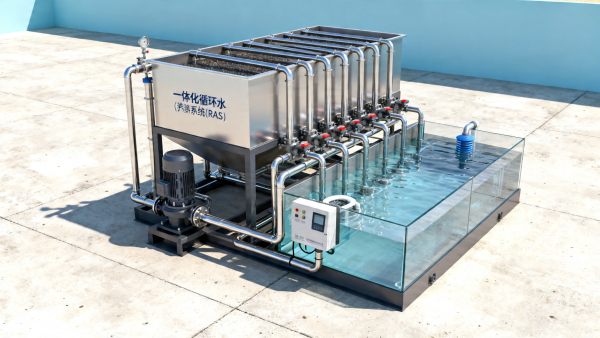
India’s removal of import tariffs on land-based Recirculating Aquaculture Systems (RAS) — effective April 16, 2026 — marks a targeted policy shift to accelerate industrial aquaculture development. This move directly affects exporters and service providers in aquaculture equipment manufacturing, technical documentation, and after-sales support, particularly those with capabilities in Chinese-made RAS systems targeting the Indian market.
Event Overview
On April 16, 2026, India’s Ministry of Commerce announced the immediate imposition of zero import duty on goods classified under HS code 8436.80 — specifically land-based Recirculating Aquaculture Systems (RAS). The tariff exemption is valid until March 31, 2027. According to official statements, the measure aims to support domestic aquaculture industrialization. Publicly reported estimates suggest over RMB 1.2 billion in RAS equipment procurement demand may be unlocked in India during 2026. Leading Chinese manufacturers have begun developing Hindi-language technical white papers and building local service partner networks.
Industries Affected by This Policy Change
Export-oriented aquaculture equipment manufacturers: As the tariff barrier for HS 8436.80 is removed, Chinese RAS system suppliers gain improved price competitiveness in India. Impact manifests primarily in export quotation structuring, customs classification verification, and post-shipment technical support readiness.
Technical documentation and localization service providers: With Chinese firms initiating Hindi-language white paper development, demand is rising for bilingual (English–Hindi) technical writing, regulatory translation, and compliance-aligned documentation services — especially for performance specifications, installation guidelines, and maintenance protocols.
After-sales service and channel partners in India: The policy incentivizes localized service infrastructure. Firms already operating or planning entry into India’s aquaculture equipment support segment face increased pressure to formalize partnerships, train technicians, and align spare parts logistics with incoming RAS deployments.
What Enterprises and Practitioners Should Monitor and Do Now
Track official implementation notices and potential extensions
The current tariff exemption expires on March 31, 2027. Stakeholders should monitor updates from India’s Directorate General of Foreign Trade (DGFT) and Central Board of Indirect Taxes and Customs (CBIC) for any extension, scope revision (e.g., inclusion/exclusion of subsystems), or conditions tied to local value addition.
Verify HS code alignment for specific RAS components
HS 8436.80 covers complete RAS units. Subcomponents — such as biofilters (HS 8421), oxygenation systems (HS 8413), or control panels (HS 8537) — remain subject to standard duties unless explicitly covered. Exporters must confirm full-system classification and avoid misdeclaration risks.
Distinguish between policy signal and near-term procurement reality
While the tariff cut signals intent, actual RAS adoption in India depends on financing models, farm-level operational capacity, and water quality infrastructure. Enterprises should treat the policy as an enabler — not a guaranteed sales trigger — and prioritize engagements with early-adopter farms, state aquaculture departments, and integrated shrimp/fish producers.
Prepare localized technical and service readiness ahead of volume shipment
Given that leading Chinese firms are already launching Hindi documentation and service network development, companies entering this space should allocate resources now for bilingual staff recruitment, spare parts warehousing in key states (e.g., Andhra Pradesh, Gujarat), and alignment with India’s Bureau of Indian Standards (BIS) for relevant electrical or safety certifications.
Editorial Observation / Industry Perspective
From industry perspective, this tariff removal is best understood as a demand-enabling policy lever — not an immediate market opening. It lowers one cost barrier but does not resolve systemic constraints like skilled labor shortages, energy reliability, or hatchery-to-growout integration in Indian aquaculture. Analysis来看, its significance lies less in near-term revenue uplift and more in validating India’s strategic pivot toward controlled-environment aquaculture. Current more appropriate interpretation is that it marks the start of a 12–18 month window for capability-building — not a sudden surge in orders.
Observation来看, the coordinated response from Chinese manufacturers (Hindi white papers + local service mapping) suggests growing maturity in cross-border aquaculture equipment commercialization. However, success will hinge less on tariff arbitrage and more on operational adaptability — including modular system design for variable grid stability and training programs co-delivered with Indian technical institutions.
Current more appropriate framing is that this is a structural signal: India is treating RAS not as niche technology, but as foundational infrastructure for food security and export diversification. That makes sustained monitoring — beyond the tariff window — essential for stakeholders across equipment supply, finance, and technical advisory roles.
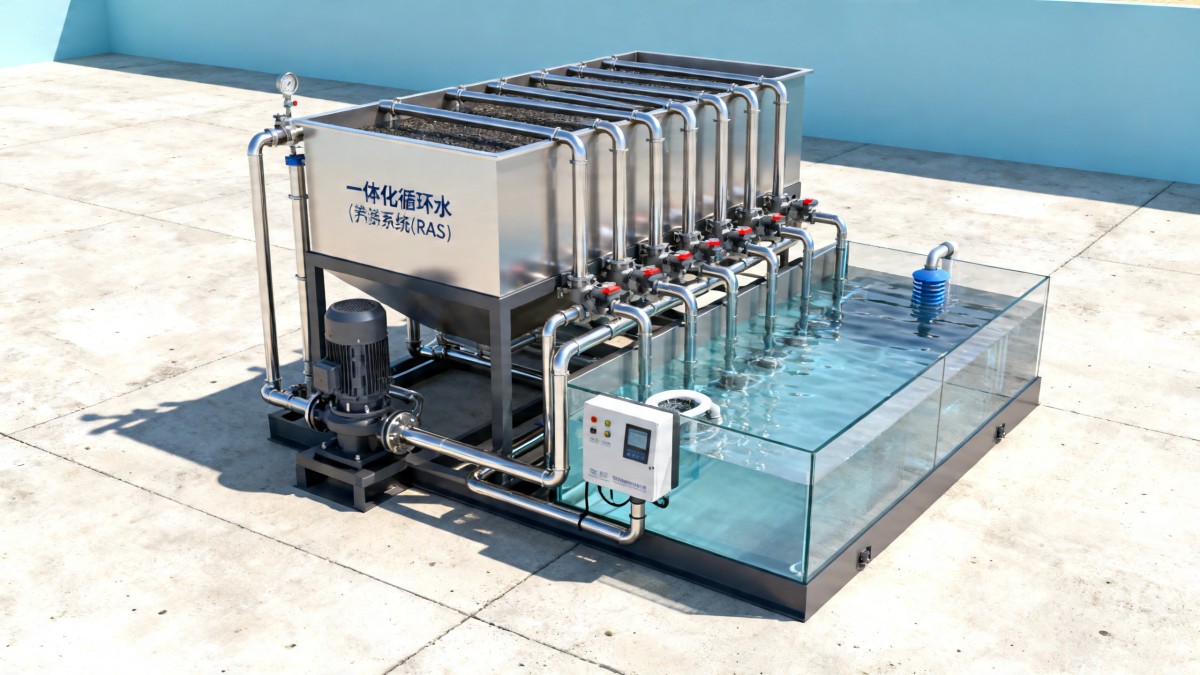
India’s decision reflects a broader trend where aquaculture-intensive economies are selectively liberalizing access to high-efficiency production technologies — while retaining regulatory oversight on environmental performance and food safety outcomes. For global RAS suppliers, this underscores the growing importance of dual-capability: competitive hardware delivery paired with context-aware operational support.
This policy change does not guarantee rapid scale-up of RAS in India, nor does it eliminate non-tariff barriers. Rather, it resets the baseline for engagement — shifting focus from ‘can we enter?’ to ‘how sustainably can we support?’
Source: India Ministry of Commerce announcement (April 16, 2026); publicly disclosed statements from Chinese RAS equipment manufacturers regarding Hindi white paper development and local service initiatives. Note: Procurement demand estimate (RMB 1.2 billion) is cited from official Indian government projections and remains subject to revision based on fiscal year budget execution and state-level implementation pace.
Related Intelligence
- RAS SystemsIndia Removes Import Tariff on RAS Systems for AquacultureIndia removes import tariffs on RAS systems for aquaculture—unlocking $170M+ equipment demand. Key opportunity for exporters, technical documentation & after-sales providers.
- RAS SystemsLFP Battery Recycling Enters Deep Water: RAS & Feed Pellet Firms Tap Regenerated PhosphateLFP Battery Recycling breakthrough: Regenerated phosphate now powers RAS systems & feed pellets—EU/US-compliant, 20% cheaper, live since April 2026.
- RAS SystemsIntel Launches World’s Thinnest GaN Chip, Boosts RAS Power ModulesIntel's world’s thinnest GaN chip (19μm) boosts RAS power modules—40% smaller, 22% more efficient. Key for aquaculture exporters, equipment makers & supply chain partners.
The Morning Broadsheet
Daily chemical briefings, market shifts, and peer-reviewed summaries delivered to your terminal.
