
Intel Launches World’s Thinnest GaN Chip, Boosts RAS Power Modules
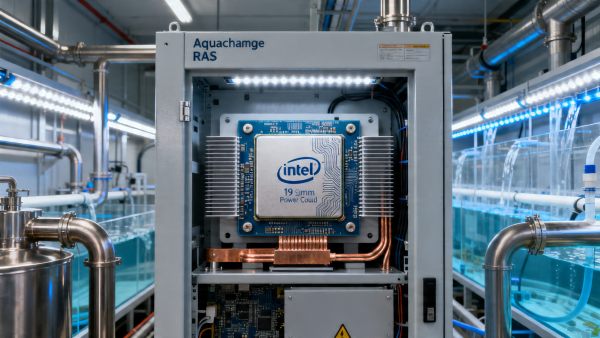
On April 14, 2026, Intel announced mass production of a 19μm-thick gallium nitride (GaN) power chip featuring monolithic integration of GaN transistors with silicon-based digital logic. This advancement is now being rapidly adopted in China’s RAS (Recirculating Aquaculture Systems) power modules — directly impacting aquaculture equipment manufacturers, export-focused seafood producers, and global supply chain stakeholders serving high-efficiency aquatic farming infrastructure.
Event Overview
On April 14, 2026, Intel confirmed the start of volume production for its 19μm-thick GaN power chip, incorporating monolithic integration of GaN transistors and silicon digital logic circuits. The technology is currently being integrated into power modules for China’s RAS systems. Verified outcomes include a 40% reduction in module volume and a 22% improvement in energy efficiency. Confirmed second-phase orders have been received from SalMar (Norway) and Multiexport Foods (Chile), with deliveries scheduled through Q4 2026.
Impact on Specific Industry Segments
Equipment Manufacturers (RAS System Integrators & Power Module Suppliers)
These firms are directly affected because the new GaN chip enables smaller, more efficient power modules — a critical subsystem in land-based aquaculture systems. Impact manifests as accelerated redesign cycles for control cabinets, thermal management units, and modular power distribution units; tighter PCB layout constraints; and revised qualification timelines for CE/UL certification due to higher switching frequencies.
Aquaculture Exporters (Especially Salmon & Whitefish Producers)
Exporters relying on RAS infrastructure — particularly those targeting EU and North American markets with strict energy reporting or carbon footprint requirements — face indirect but material impacts. Higher system efficiency improves compliance readiness for sustainability certifications (e.g., ASC, GlobalG.A.P.), while reduced physical footprint supports faster deployment in space-constrained facilities (e.g., urban farms, repurposed industrial sites).
Power Electronics Supply Chain Service Providers (Contract Manufacturers, Test Labs, Logistics Partners)
Service providers supporting RAS hardware OEMs must adapt to shorter lead times for GaN-integrated modules and revised thermal validation protocols. Impact includes increased demand for high-frequency EMI testing, updated logistics handling guidelines for ultra-thin GaN wafers, and earlier engagement in design-for-manufacturability (DFM) reviews during module co-development phases.
What Relevant Companies or Practitioners Should Monitor and Do Now
Track official technical documentation releases from Intel and Chinese RAS module vendors
Current public information confirms integration and performance metrics, but detailed thermal derating curves, gate-drive voltage tolerances, and long-term reliability data under continuous aquaculture operating conditions remain pending. These will inform final BOM selection and field-service planning.
Assess exposure to EU Energy-related Products Regulation (ErP) updates scheduled for Q3 2026
Analysis来看, the 22% efficiency gain aligns closely with anticipated tightening of minimum efficiency requirements for variable-speed drives in aquatic pumping systems. Firms exporting to the EU should prioritize verification of ErP compliance pathways for next-generation RAS controllers before mid-2026.
Evaluate current power module sourcing contracts for renegotiation triggers tied to GaN adoption
From industry角度看, many existing agreements with Chinese suppliers include clauses referencing ‘next-generation semiconductor upgrades’. Early review of contract language — especially around cost-sharing for requalification, minimum order volumes post-transition, and IP ownership of GaN-optimized firmware — is advisable ahead of Q3 2026.
Prepare for accelerated qualification timelines in pilot deployments
Observation shows that early adopters in Norway and Chile are compressing commissioning windows by 3–4 weeks per system due to simplified cooling and reduced cabinet count. Project managers should adjust internal installation checklists and spare-part stocking levels accordingly — particularly for GaN-specific gate drivers and low-inductance busbars.
Editorial Perspective / Industry Observation
This announcement is best understood not as a standalone product launch, but as an inflection point in the convergence of semiconductor innovation and sustainable aquaculture infrastructure. From industry角度, the rapid adoption in RAS — a relatively niche but highly regulated and energy-sensitive application — signals growing confidence in GaN’s reliability beyond consumer electronics and EVs. It is currently more of a signal than a fully scaled outcome: while volume production has started and two major export orders are confirmed, broad-based replacement of silicon-based modules across China’s RAS vendor base remains in early rollout phase. Continued monitoring of delivery cadence through Q4 2026 — and whether additional Tier-1 aquaculture integrators follow SalMar and Multiexport — will clarify whether this represents a structural shift or a targeted upgrade cycle.
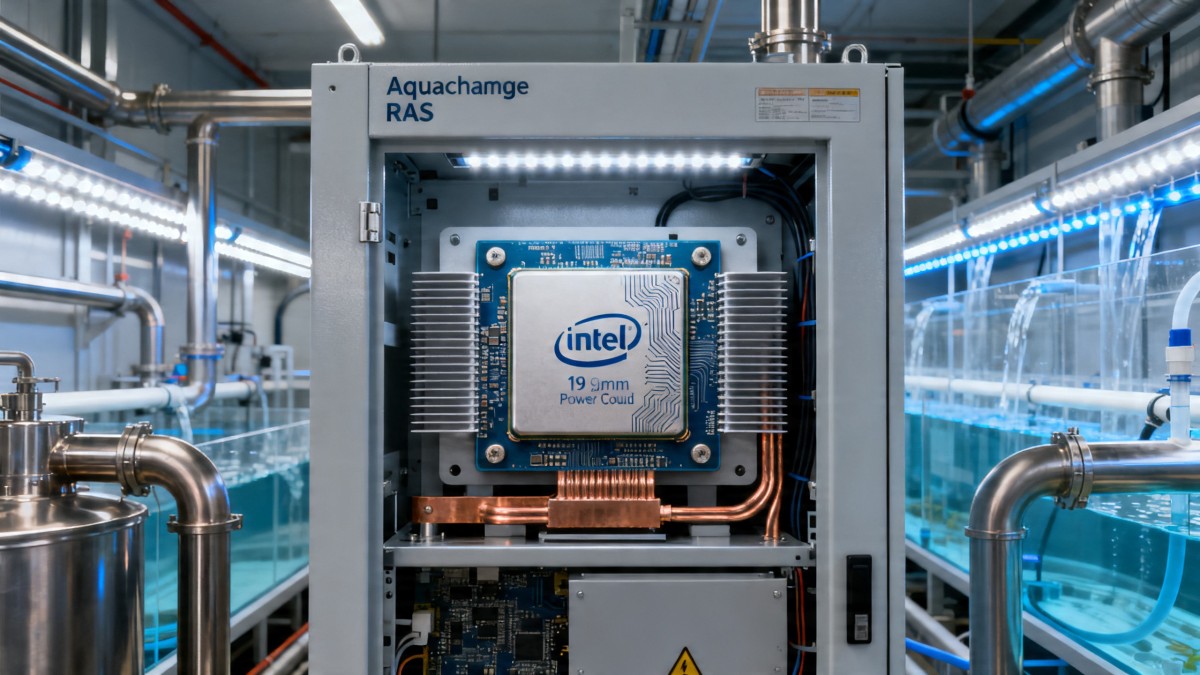
Conclusion: Intel’s GaN chip introduction marks a measurable step toward higher-efficiency, space-constrained RAS deployments — particularly relevant for exporters navigating tightening energy and sustainability regulations in key Western markets. It does not yet signify a wholesale technology transition across the aquaculture hardware value chain, but rather a focused capability upgrade with clear near-term implications for system integrators, certifiers, and export-focused producers. Current evidence better supports viewing this as an enabling component milestone — not a market-wide pivot.
Source: Intel official announcement (April 14, 2026); confirmed order status disclosed by SalMar AS and Multiexport Foods S.A. in respective investor communications dated April 15, 2026. Ongoing delivery schedule and broader vendor adoption rate remain subject to observation beyond Q4 2026.
Related Intelligence
- RAS SystemsLFP Battery Recycling Enters Deep Water: RAS & Feed Pellet Firms Tap Regenerated PhosphateLFP Battery Recycling breakthrough: Regenerated phosphate now powers RAS systems & feed pellets—EU/US-compliant, 20% cheaper, live since April 2026.
- RAS SystemsIntel Launches World’s Thinnest GaN Chip, Boosts RAS Power ModulesIntel's world’s thinnest GaN chip (19μm) boosts RAS power modules—40% smaller, 22% more efficient. Key for aquaculture exporters, equipment makers & supply chain partners.
- RAS SystemsIntel Launches World’s Thinnest GaN Chip for RAS Power ModulesIntel's world's thinnest GaN chip (19μm) powers next-gen RAS modules—enabling 78V operation, 300GHz RF performance, and NSF/ANSI 2 & CE-EMC compliance for North America and Northern Europe.
The Morning Broadsheet
Daily chemical briefings, market shifts, and peer-reviewed summaries delivered to your terminal.
