
ANVISA Tightens Import Rules for Food-Grade Enzymes in Brazil
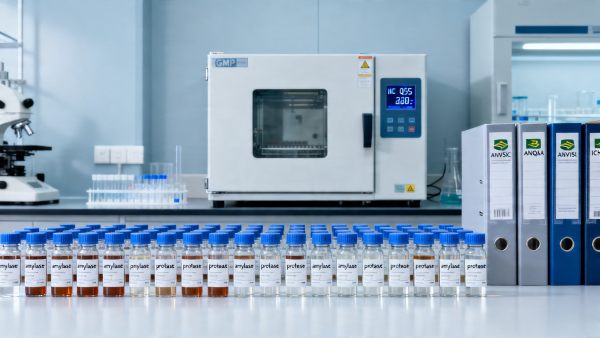
On April 14, 2026, Brazil’s National Health Surveillance Agency (ANVISA) revised RDC No. 217/2026, mandating that all imported food-grade enzymes—including amylases and proteases—submit a minimum 36-month accelerated stability study report aligned with ICH Q5C guidelines to obtain Sanitary Registration. The requirement takes effect on October 1, 2026, and directly impacts exporters, importers, and supply chain stakeholders serving the Brazilian food and beverage processing sector.
Event Overview
On April 14, 2026, ANVISA published an amendment to RDC No. 217/2026, specifying that import applications for food-grade enzyme preparations must include an accelerated stability report covering at least 36 months, conducted per ICH Q5C standards. Without this documentation, ANVISA will not issue Sanitary Registration—the mandatory market access authorization for food ingredients in Brazil. The regulation enters into force on October 1, 2026. No transitional grace period or alternative data pathways are stated in the official revision.
Industries Affected by This Regulation
Direct Exporters (e.g., Chinese Enzyme Manufacturers)
Exporters supplying food-grade enzymes to Brazil will face immediate eligibility constraints: failure to provide compliant stability data will result in registration rejection. Since stability testing typically requires 6–12 months to complete—even under accelerated conditions—exporters initiating validation only after April 2026 risk missing the October 2026 deadline.
Importers & Local Distributors in Brazil
Brazilian importers holding existing registrations must revalidate products under the new requirement before renewal or new application submission. Inventory planning, labeling updates, and technical dossier revisions may be triggered—not only for new entries but also for currently registered items undergoing re-registration cycles.
Food & Beverage Processors Using Imported Enzymes
End-user manufacturers relying on imported enzymes (e.g., for starch hydrolysis, dairy fermentation, or meat tenderization) may experience supply delays or reformulation pressure if suppliers cannot meet the deadline. Contract manufacturing arrangements involving enzyme-sourced raw materials may require updated quality agreements referencing the new stability evidence obligation.
Third-Party Testing & Regulatory Support Providers
Laboratories accredited to conduct ICH Q5C-compliant accelerated stability studies—and consultants supporting ANVISA submissions—will see increased demand. However, capacity constraints and geographic limitations (e.g., limited labs in China with ICH Q5C validation history recognized by ANVISA) may create bottlenecks for timely compliance.
What Stakeholders Should Monitor and Do Now
Track Official Implementation Guidance from ANVISA
While RDC No. 217/2026 sets the core requirement, ANVISA has not yet published supplementary guidance on acceptable test protocols, storage conditions for acceleration, or data format expectations. Stakeholders should monitor ANVISA’s official portal and consultancies with active regulatory monitoring in Brazil for clarifications issued ahead of October 2026.
Prioritize High-Volume or High-Risk Enzyme Categories
Not all enzyme types carry equal risk. Amylases and proteases—explicitly cited in the regulation—are widely used in Brazilian food production and likely subject to early scrutiny. Exporters should prioritize stability validation for these categories first, especially for SKUs with upcoming registration renewals or pending import declarations.
Distinguish Between Policy Signal and Operational Readiness
The April 2026 issuance is a formal regulatory update—not a draft or consultation. It reflects finalized policy intent. However, enforcement rigor (e.g., whether partial data submissions trigger provisional review or outright rejection) remains unconfirmed. Companies should prepare for full compliance while documenting internal validation timelines and third-party lab engagement dates.
Initiate Third-Party Lab Engagement Immediately
Given the 36-month data requirement and typical lead times for method qualification, sample logistics, and reporting, initiating laboratory partnerships now is operationally necessary—not precautionary. Exporters should confirm lab capability to issue reports explicitly referencing ICH Q5C and acceptable for ANVISA evaluation, rather than generic stability summaries.
Editorial Perspective / Industry Observation
From an industry perspective, this amendment signals ANVISA’s increasing alignment with international pharmaceutical-grade stability expectations for biologically active food ingredients. It is less a sudden shift and more a formalization of de facto quality expectations that have been tightening since ANVISA’s 2022 harmonization roadmap. Analysis来看, the rule does not introduce novel safety requirements—but significantly raises the evidentiary bar for consistency and shelf-life predictability. Current enforcement appears focused on registration gatekeeping rather than post-market surveillance; therefore, the immediate impact is procedural and pre-market, not reactive. Observation来看, this development reflects broader Latin American regulatory convergence trends—where stability data once considered optional for food enzymes is now treated as foundational for regulatory acceptance.
Conclusion
This regulation marks a material change in market access conditions for food-grade enzymes entering Brazil—not merely an administrative update. Its significance lies in the binding linkage between documented long-term stability performance and legal eligibility to trade. For stakeholders, it is best understood not as a temporary hurdle, but as a permanent elevation of baseline technical documentation expectations for enzyme-based food ingredients in the Brazilian market.
Information Sources
Primary source: ANVISA Resolution RDC No. 217/2026, published April 14, 2026.
Note: Implementation details—including accepted lab accreditation frameworks, data submission templates, and potential exemptions for legacy registrations—remain under observation and are not yet publicly confirmed.
Related Intelligence
- Food Grade EnzymesANVISA Tightens Import Rules for Food-Grade Enzymes in BrazilANVISA tightens food-grade enzymes import rules in Brazil: 36-month ICH Q5C stability data now mandatory for Sanitary Registration by Oct 2026.
- Food Grade EnzymesWhat Sets a Reliable Food Grade Enzymes Manufacturer Apart?Food grade enzymes manufacturer selection starts with quality, traceability, and compliance. Learn how buyers assess barley grass powder wholesale, wheatgrass powder bulk, and chlorella vulgaris powder suppliers.
- Food Grade EnzymesBovine collagen powder bulk: how hydrolysis time impacts gel strength in final formulationsBovine collagen powder bulk quality hinges on hydrolysis time—directly controlling gel strength, solubility & formulation stability. Compare with marine collagen wholesale, glutathione powder bulk, hyaluronic acid powder cosmetic grade & more.
The Morning Broadsheet
Daily chemical briefings, market shifts, and peer-reviewed summaries delivered to your terminal.
