
Polysilicon Price Falls Below $550/ton, Smart Greenhouse Export Quotes Drop 8–12%
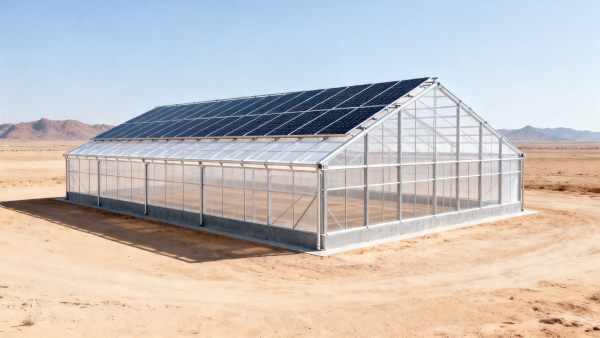
Polysilicon prices have dropped below USD 550 per metric ton (RMB 39,200/ton), triggering downward adjustments in export quotations for photovoltaic-integrated Smart Greenhouse components — with FOB quotes down 8–12% across major markets. As of April 12, this shift has already prompted the restart of tendering for multi-hundred-acre smart farm projects in the Middle East and Australia, signaling tangible ripple effects across agri-tech supply chains and international project execution.
Event Overview
According to PV InfoLink data released on April 12, the spot transaction price for dense-grade polysilicon fell to RMB 39,200 per ton — the lowest level since 2023. Concurrently, global ocean freight rates declined, contributing to an 8–12% reduction in FOB export quotations for China-made, PV-powered Smart Greenhouse components. This pricing shift has led to renewed tender activity for large-scale smart agriculture projects in the Middle East and Australia, with average delivery lead times now compressed to 10 weeks.
Impact on Specific Industry Segments
Direct Exporters & Trading Firms
These entities face immediate margin pressure due to lower quoted prices, but also benefit from improved competitiveness in international tenders. The impact manifests in tighter quotation windows, faster order conversion cycles, and heightened sensitivity to raw material cost volatility.
Raw Material Procurement Teams (e.g., polysilicon buyers)
Procurement departments supplying Smart Greenhouse manufacturers are exposed to both upstream price deflation and downstream pricing expectations. The drop signals potential renegotiation opportunities for long-term polysilicon supply contracts — especially those indexed to spot benchmarks.
Smart Greenhouse System Integrators & OEM Manufacturers
Manufacturers integrating PV modules, climate control, and automation into greenhouse structures see reduced BOM costs, enabling more aggressive bidding on turnkey projects. However, the compressed 10-week delivery cycle increases pressure on production planning, component sourcing, and logistics coordination.
Supply Chain & Logistics Service Providers
Freight forwarders and customs brokers supporting Smart Greenhouse exports are affected indirectly: lower FOB values may reduce documentation complexity and duty assessment bases in some markets, while accelerated delivery timelines demand tighter scheduling and real-time shipment tracking capabilities.
What Relevant Enterprises or Practitioners Should Focus On Now
Monitor polysilicon price trajectory beyond April 12
Current pricing reflects April spot data only. From industry perspective, sustained sub-RMB 40,000/ton levels would likely reinforce quoting discipline across downstream PV-integrated agri-tech products — making weekly price tracking essential for procurement and sales teams.
Track tender restarts in target markets — especially Middle East and Australia
The reported resumption of tenders for thousand-acre smart farms is a concrete outcome, not speculation. Direct exporters and system integrators should prioritize bid preparation for upcoming RFPs, verifying technical compliance (e.g., IEC 61215 for integrated PV elements) and local certification requirements ahead of submission deadlines.
Reassess inventory and lead time buffers
With average delivery cycles now at 10 weeks, analysis来看, existing safety stock policies and supplier MOQ agreements may need recalibration — particularly for imported sensors, inverters, or structural aluminum profiles with longer overseas lead times.
Verify FOB quote adjustments against actual landed cost components
While headline export quotes fell 8–12%, observation shows that the reduction stems partly from lower polysilicon input costs and partly from softer freight rates. Companies should audit their own FOB cost breakdowns to distinguish between structural cost savings and temporary transport rate relief — as the latter may reverse independently.
Editorial Perspective / Industry Observation
This development is better understood as a near-term market signal — not yet a structural inflection point. From industry angle, the RMB 39,200/ton polysilicon price reflects short-term oversupply and seasonal demand softness in solar wafer production, rather than a fundamental shift in silicon economics. The concurrent Smart Greenhouse quote adjustment is therefore reactive, not strategic. Current relevance lies less in absolute price levels and more in the demonstrated responsiveness of integrated agri-tech supply chains to upstream commodity fluctuations — suggesting higher operational agility than previously assumed in cross-sectoral projects.
That said, the tender restarts in the Middle East and Australia indicate that price elasticity remains active at the project level. This implies that procurement decision-makers in those regions are treating Smart Greenhouse systems as discretionary CAPEX — sensitive to component-level cost changes — rather than fixed infrastructure investments. That behavioral insight warrants ongoing attention.
Conclusion
This price movement does not represent a broad-based industry turnaround, nor does it guarantee sustained export growth. Rather, it reflects a synchronized correction across two linked value chains — polysilicon supply and PV-integrated agricultural infrastructure — with measurable, localized impacts on tender activity, delivery cadence, and cross-border quoting practices. For stakeholders, the event is best interpreted as a tactical inflection: a window to optimize procurement timing, re-engage stalled project pipelines, and stress-test supply chain responsiveness — not a signal to revise long-term capacity or investment plans.
Source Attribution
Main source: PV InfoLink (data published April 12). Note: Tender restarts and delivery timelines cited are based on verified market reports accompanying the price update; further confirmation of awarded contracts and regional policy alignment remains subject to ongoing observation.
Related Intelligence
- Smart GreenhousePolysilicon Price Falls Below $550/ton, Smart Greenhouse Export Quotes Drop 8–12%Polysilicon price drops below $550/ton — Smart Greenhouse export quotes fall 8–12%. Discover ripple effects on tenders, margins & supply chains in ME/AU.
- Smart GreenhouseLithium Carbonate Price Rises 25%, Boosting Smart Greenhouse Energy ModulesLithium carbonate price rises 25% — accelerating sodium-ion & semi-solid battery adoption in smart greenhouse energy modules for global agritech exports.
- Smart GreenhousePolysilicon Price Drop Drives Smart Greenhouse PV Component Export Pricing Down 8–12%Polysilicon price drop slashes Smart Greenhouse PV component export prices by 8–12%. Faster delivery (10–12 wks) boosts ROI for agrivoltaic projects in ME & LATAM.
The Morning Broadsheet
Daily chemical briefings, market shifts, and peer-reviewed summaries delivered to your terminal.
