
Gaode Launches First Quadruped Robot, ABot-M0 Open-Source Model for Aquaculture & Poultry Inspection
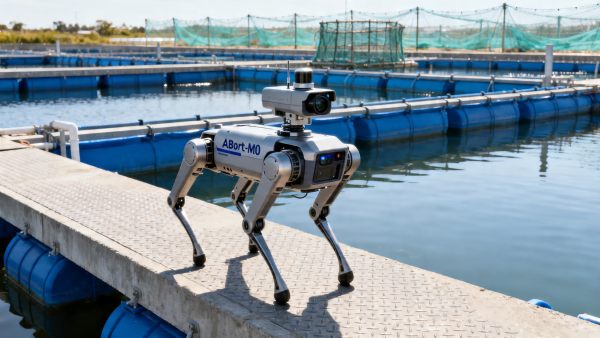
On April 14, 2026, Gaode Map’s Embodied Intelligence Division unveiled its first quadruped robot and fully open-sourced the embodied operation foundation model ABot-M0 — a development with immediate relevance for commercial fishing equipment integrators and poultry housing automation providers, particularly those engaged in autonomous on-site inspection tasks.
Event Overview
Gaode Map’s Embodied Intelligence Division officially launched its first quadruped robot on April 14, 2026, and released the ABot-M0 model as open-source. The model achieved an 80.5% task success rate on the Libero-Plus benchmark. It is currently being integrated by Chinese commercial fishing equipment manufacturers into deck inspection systems and by poultry housing solution providers for fully automated barn environment monitoring. Initial prototype units have been shipped to partner farms in Brazil and Vietnam for field testing.
Industries Affected
Commercial Fishing Equipment Integrators
These firms are directly incorporating ABot-M0 into robotic deck inspection systems. The model’s open-source nature lowers integration barriers but introduces new requirements around hardware-software co-design, real-time sensor fusion, and maritime environmental robustness (e.g., corrosion resistance, motion compensation on rolling decks). Impact manifests in R&D timelines, validation protocols, and technical documentation expectations for edge-deployed embodied AI.
Poultry Housing Automation Providers
Vendors building smart barn management platforms are adopting ABot-M0 to enable autonomous巡舍 (environmental scanning, anomaly detection, feed/water line monitoring). The shift implies revised system architecture priorities — including low-light navigation, dust-tolerant perception stacks, and interoperability with existing farm IoT infrastructure (e.g., climate controllers, ventilation logs). Deployment readiness now hinges less on pure locomotion and more on context-aware task execution under variable bio-environmental conditions.
Global Agricultural Technology Distributors
Distributors operating in emerging markets — especially those with active partnerships in Brazil and Vietnam — face evolving customer demand for certified, locally validated robotic inspection packages. The dispatch of prototypes to farms in these countries signals early-stage market feedback collection, not full commercial rollout. Distributors should monitor validation outcomes closely, as they may shape future certification pathways (e.g., IP ratings, battery safety standards) and after-sales service models (e.g., remote firmware updates vs. on-site calibration).
What Relevant Enterprises or Practitioners Should Focus On Now
Track official documentation and benchmark updates for ABot-M0
The model is open-source, but its real-world performance depends on documented hardware compatibility lists, inference latency benchmarks under constrained compute (e.g., Jetson Orin Nano), and supported sensor modalities (LiDAR vs. stereo vision vs. thermal). Firms planning integration should prioritize reviewing the GitHub repository’s release notes and community issue logs over promotional summaries.
Monitor field test results from Brazil and Vietnam — not just technical metrics, but operational constraints
Early deployments focus on practical viability: uptime per shift, false-positive rates for ammonia or temperature anomalies, battery endurance across multi-hour barn circuits, and ease of recharging in non-dedicated infrastructure. These metrics — not just the 80.5% Libero-Plus score — will determine near-term scalability. Companies should treat these tests as de facto pilot studies for their own regional adaptation plans.
Distinguish between model capability and system-level readiness
ABot-M0 is a foundation model, not a turnkey product. Its integration requires domain-specific fine-tuning, safety layering (e.g., emergency stop logic, obstacle avoidance thresholds), and compliance alignment (e.g., local electrical safety regulations for livestock environments). Procurement teams should avoid conflating open-model availability with plug-and-play deployment feasibility.
Prepare for cross-functional coordination between robotics, agronomy, and maintenance teams
Successful adoption depends less on AI performance alone and more on how well robotic inspection outputs feed into existing farm decision workflows — e.g., linking detected ventilation faults to maintenance ticketing systems or correlating floor moisture readings with litter management schedules. Operations managers should initiate internal alignment sessions now, rather than waiting for hardware delivery.
Editorial Perspective / Industry Observation
From an industry perspective, this launch is best understood not as a finished product milestone, but as a signal of maturing embodied AI infrastructure for unstructured agricultural environments. The open-sourcing of ABot-M0 lowers entry barriers for specialized hardware vendors — yet raises the bar for domain-specific validation rigor. Analysis来看, the choice to deploy initial units in Brazil and Vietnam reflects strategic prioritization of high-growth, labor-constrained markets where ROI for autonomous inspection is most tangible — not technological readiness alone. Observation来看, the absence of mention of cloud dependency or proprietary middleware suggests a deliberate design toward offline, edge-native operation — a critical requirement for remote aquaculture vessels and rural poultry farms with limited connectivity. Current impact remains confined to early adopters and integrators; broad industry adoption hinges on reproducible field performance, not benchmark scores.
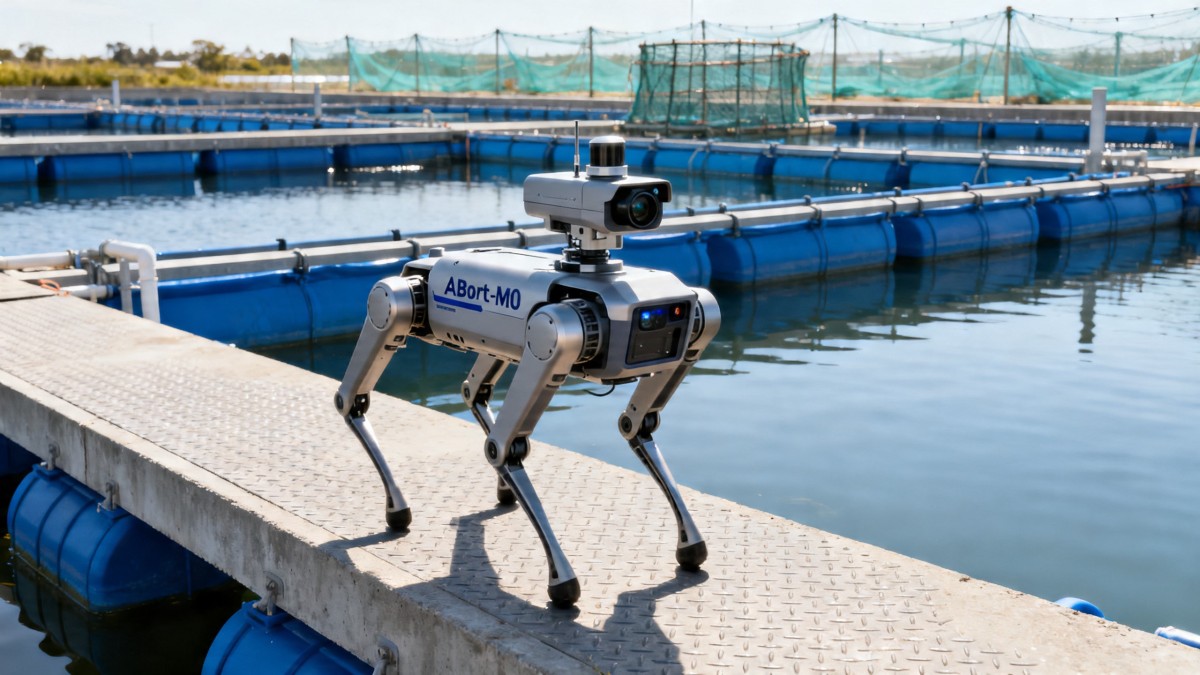
In summary, Gaode’s ABot-M0 release marks a functional inflection point: embodied AI is transitioning from lab benchmarks to real-world agri-aquacultural inspection use cases. However, its current significance lies primarily in enabling integrators — not replacing them. It is more accurately interpreted as a foundational tool for vertical solution builders, rather than a standalone commercial offering. For stakeholders, the priority is not adoption speed, but disciplined validation against operational KPIs — uptime, actionable output rate, and integration cost — rather than model accuracy alone.
Source: Official announcement by Gaode Map’s Embodied Intelligence Division, April 14, 2026. Note: Field test outcomes from Brazil and Vietnam remain pending; ongoing observation is recommended.
Related Intelligence
- Commercial FishingGaode Launches First Quadruped Robot, ABot-M0 Open-Source Model for Aquaculture & Poultry InspectionABot-M0: Gaode's open-source quadruped robot for aquaculture & poultry inspection—80.5% task success, field-tested in Brazil & Vietnam. Discover how it transforms autonomous farm inspections.
- Commercial FishingGaode Launches First Quadruped Robot, Open-Sources ABot-M0 for Aquaculture & PoultryGaode launches first quadruped robot & open-sources ABot-M0 — an embodied AI model for aquaculture and poultry automation, with 80.5% Libero-Plus task success.
- Commercial FishingWhy commercial fishing floats fail sooner in rough waterCommercial fishing floats fail faster in rough water due to impact, fatigue, and poor specs. Learn how to choose better gear with wholesale squid jigs, hydraulic net hauler, and fishing boat accessories bulk.
The Morning Broadsheet
Daily chemical briefings, market shifts, and peer-reviewed summaries delivered to your terminal.
