
Solar Water Pumps for Agriculture in Low-Sun Seasons
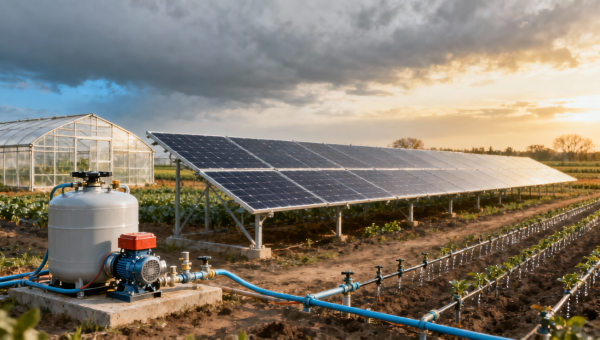
In low-sun seasons, selecting reliable solar water pumps agricultural systems demands a sharper evaluation of pumping depth, storage design, and backup integration. For buyers comparing submersible deep well pumps and wholesale water pumps for farming, the real question is not only energy savings, but whether seasonal performance, compliance, and lifecycle cost can support stable irrigation across demanding agricultural operations.
Why low-sun season performance changes the buying criteria
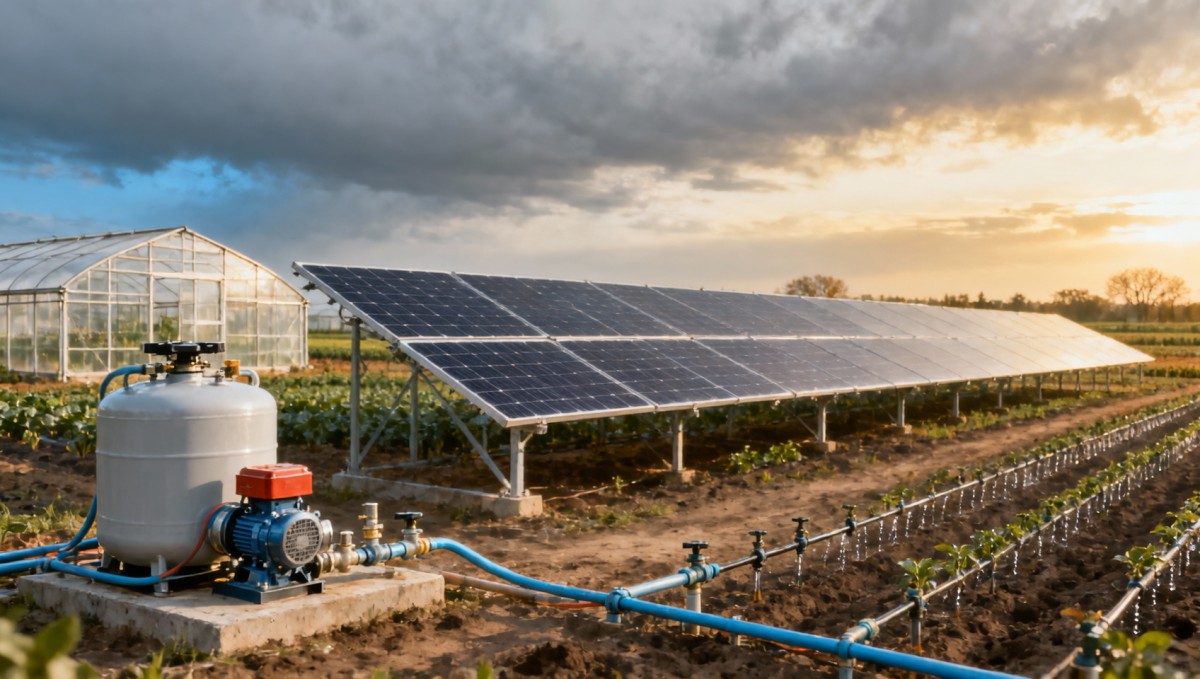
During high-radiation months, many solar irrigation systems appear adequate on paper. The problem emerges in cloudy periods, winter production cycles, monsoon transitions, or short-day regions where solar input can fall for several hours per day across 2–4 months. Under these conditions, pump selection moves away from headline wattage and toward system resilience, hydraulic matching, and water availability planning.
For agricultural operators, the operational risk is not simply slower pumping. It can mean missed irrigation windows, unstable pressure at drip lines, reduced greenhouse humidity control, or insufficient water transfer to storage tanks before peak demand. Technical evaluators therefore need to assess not only solar water pumps for agriculture, but the full relationship among solar array size, pump curve, bore depth, seasonal flow, and backup options.
This is especially relevant for mixed primary industries covered by AgriChem Chronicle, where machinery selection increasingly intersects with compliance, supply chain transparency, and multi-site procurement control. A buyer comparing low-sun season performance across vendors often needs 3 layers of evidence: hydraulic data, component traceability, and realistic operating assumptions for low irradiance rather than ideal laboratory conditions.
In practice, procurement teams should separate seasonal viability from annual marketing claims. A solar pumping package that performs well at midday in dry season may underperform at 8–10 a.m. or under partial cloud cover. That distinction matters to farm managers, financial approvers, and distributors who need dependable return on investment over a service life commonly evaluated in 5–10 year planning cycles.
Who is most affected by weak low-sun design?
- Procurement managers handling borehole, surface intake, and storage systems across several farms where one undersized pump can disrupt an entire irrigation block.
- Project engineers responsible for matching daily water demand with variable pumping hours, especially when useful solar production may shrink to 4–6 hours in difficult seasons.
- Quality and safety teams checking electrical protection, dry-run prevention, water contact materials, and installation practices in remote agricultural environments.
- Distributors and agents who must avoid warranty disputes caused by unrealistic expectations about low-sun output and seasonal drawdown depth.
A sound decision starts with the question: what must the system still deliver during the weakest operating month? That single shift in evaluation helps buyers avoid the common mistake of selecting for average sunshine instead of critical-season irrigation reliability.
How to assess technical performance beyond nominal power
When comparing solar water pumps agricultural solutions, technical performance should be reviewed through hydraulic realities rather than motor nameplate alone. The most relevant parameters usually include total dynamic head, static water level, seasonal water level fluctuation, target daily volume, pipe losses, and the actual time window available for pumping. For many farm installations, the practical evaluation starts with 3 numbers: depth, volume per day, and delivery pressure.
Submersible deep well pumps are often favored where bore depth is significant and water levels vary seasonally. Surface pumps may be more suitable for canals, reservoirs, or shallow lift duties. However, in low-sun seasons, starting behavior at reduced voltage, controller efficiency, and tolerance to intermittent cloud cover become equally important. A technically acceptable system should perform stably across partial-load conditions, not only at full irradiance.
For engineering teams, one useful way to compare offers is to request pump curves under more than one operating condition. Ask vendors for expected flow at representative head levels, such as 20 m, 50 m, and 80 m where relevant. Also request expected output during weaker sun windows, rather than only peak noon performance. This reduces the risk of selecting a unit that cannot fill storage within the required irrigation interval.
The table below summarizes key technical checks that help buyers compare wholesale water pumps for farming in a disciplined way. These are not fixed universal values, but practical assessment dimensions widely used in agricultural equipment reviews.
For finance and commercial reviewers, the takeaway is clear: a lower upfront offer is not automatically lower cost if the system requires overscheduled irrigation labor, emergency diesel backup, or premature controller replacement. Low-sun performance must be judged as a productivity variable, not only a hardware feature.
Technical red flags buyers should not ignore
Missing seasonal water level assumptions
If a proposal does not identify dry-season drawdown or low-sun season pumping hours, the quoted flow may be overly optimistic. Deep well systems can see substantial head changes between wet and dry periods.
No storage or backup logic
A pump-only quotation may look economical, but many agricultural operations require 1–3 days of storage buffering or a backup generator/grid input path for critical crops and livestock water supply.
Unclear component compatibility
Solar modules, controllers, cables, and motors must be electrically matched. Mismatched strings or underspecified protection can reduce output and increase service calls during unstable weather.
Which pump configuration fits different agricultural scenarios?
Not every farm needs the same solar pumping architecture. The right choice depends on source type, irrigation method, crop sensitivity, labor availability, and tolerance for water delivery interruptions. In low-sun seasons, the best-performing systems often combine a correctly sized pump with storage-first design rather than attempting direct real-time pumping for every duty.
For orchards, open-field irrigation, greenhouse clusters, fish ponds, and livestock water distribution, operating priorities differ. Some users need continuous refill to elevated tanks. Others need short but higher-flow transfer windows. This means procurement teams should compare pump type and system layout against use-case requirements, not against generalized marketing categories.
The following comparison table helps project managers and distributors align typical scenarios with practical pump choices. It is especially useful when evaluating solar water pumps for agriculture across multiple customer profiles or regional dealers.
A useful procurement principle is to separate water extraction from water delivery timing. In other words, pump when solar conditions allow, then irrigate from storage when agronomy requires. This approach is often more robust than trying to force direct pumping to follow field demand minute by minute.
Scenario-based selection checklist
- Define source conditions: bore depth, static level, dry-season drawdown, solids risk, and intake stability.
- Define demand profile: m³/day, pressure need, irrigation hours, and whether 1-day storage is enough or 2–3 days are safer.
- Define operating constraints: remote maintenance access, theft risk, labor skill, and backup power availability.
- Define business constraints: target payback window, procurement lot size, delivery schedule, and distributor support obligations.
These checks help technical and commercial teams avoid one of the most common mistakes in wholesale water pumps for farming: selecting by pump category alone without mapping the agricultural duty cycle.
What should procurement and finance teams verify before approval?
For B2B buyers, approval should not depend only on the equipment quotation. It should also include supply chain clarity, delivery scope, spare parts logic, and realistic installation assumptions. In regulated and cross-border sectors, this discipline is already standard practice for chemicals, process equipment, and aquaculture systems. Agricultural pumping deserves the same rigor because a specification gap can become an operational loss within one season.
At minimum, buyers should request a documented bill of major components, performance basis, warranty scope, and service response expectations. If the project involves multiple sites, it is useful to standardize 5 key review points: pump type, head basis, storage volume, controller protection functions, and replacement part availability. This makes financial comparison more accurate than comparing total price alone.
Lead times also matter. Depending on configuration complexity, a practical supply window can range from 2–6 weeks for standard pump packages, with longer schedules where custom skids, hybrid controls, or export documentation are required. Project managers should align procurement timing with drilling, civil works, pipe installation, and irrigation commissioning rather than treating the pump as a last-minute purchase.
The table below provides a structured procurement review model that is useful for information researchers, technical evaluators, and financial approvers handling solar water pumps agricultural projects.
This framework is particularly valuable for distributor networks and multi-stakeholder approvals. It allows each department to evaluate the same proposal from its own angle without losing alignment on technical reality.
Compliance and documentation points worth checking
Requirements vary by market, but buyers often review electrical safety documentation, material suitability for water contact, controller protection features, and export packing details. Where the wider project touches regulated agricultural processing, environmental management, or institutional procurement, traceable technical documentation becomes more important than brochure claims.
AgriChem Chronicle’s advantage in this context is editorial rigor across machinery, biochemical supply chains, and trade compliance. For institutional buyers, that matters because equipment decisions are increasingly tied to documentation quality, audit readiness, and supplier transparency rather than simple unit cost comparisons.
Common mistakes, practical fixes, and what informed buyers ask
A recurring mistake in solar water pumps for agriculture is assuming that a larger solar array alone solves low-sun season risk. In reality, poor pipe sizing, inadequate tank storage, excessive head, or unsuitable pump type can still limit output. Another frequent problem is comparing diesel displacement savings without quantifying irrigation reliability. Crops respond to timing, not only energy accounting.
Well-informed buyers usually ask more targeted questions. How much water will the system deliver in the weakest month? What happens during 2–3 consecutive cloudy days? How quickly can key parts be replaced? Is the controller designed to recover smoothly from fluctuating irradiance? These questions are more useful than asking only for “best price” because they expose whether the supplier understands agricultural duty conditions.
The most practical fix for seasonal instability is often hybrid system logic: right-sized solar pumping combined with storage and, where justified, secondary backup. That backup may be grid, generator, or an operational contingency rather than full duplicate capacity. The goal is not overengineering. It is protecting the farm from high-cost water interruptions during the 10–20 percent of time when conditions are weakest.
For teams still in the research phase, the FAQ below addresses common evaluation points that often shape final procurement decisions.
How do I choose between a submersible deep well pump and a surface pump?
Choose based first on water source geometry. A submersible deep well pump is generally more appropriate for boreholes and significant lift, while a surface pump suits shallow sources, canals, or reservoirs with controlled suction conditions. In low-sun seasons, the deep well option often provides more reliable extraction where suction limitations would otherwise reduce performance.
How much storage should a seasonal solar irrigation system include?
There is no single rule, but many farms evaluate storage against 1–3 days of essential water demand, depending on crop sensitivity and backup availability. High-value horticulture and livestock operations often justify larger reserves than non-critical transfer duties.
What affects delivery time for wholesale water pumps for farming?
Lead time depends on whether the package is standard or engineered. Standard systems may move in 2–6 weeks, while customized kits involving controller programming, export compliance files, or integrated storage and monitoring can take longer. Buyers should also account for site preparation and commissioning time.
What is the biggest procurement mistake in low-sun seasons?
The biggest mistake is buying from peak-condition performance only. Always ask for seasonal assumptions, operating head, and expected daily output under weaker sunlight. Without that, price comparisons are often misleading.
Why work with us when evaluating agricultural pumping projects?
AgriChem Chronicle supports institutional buyers, project teams, and industrial distributors with a more rigorous evaluation environment than generic product listings. Because our editorial focus spans agricultural and forestry machinery, aquaculture technology, biochemical industries, and supply chain compliance, we help decision-makers connect equipment selection with the broader realities of operational risk, documentation quality, and procurement accountability.
If you are reviewing solar water pumps agricultural systems for low-sun seasons, we can help you structure the right questions before budget approval or vendor shortlist finalization. That includes parameter confirmation for pumping head and daily volume, comparison of submersible deep well pumps versus surface alternatives, review of storage and backup logic, and guidance on what documentation should accompany technical quotations.
We also support commercial discussions around delivery cycle expectations, customization scope, distributor suitability, and practical evaluation of lifecycle cost. For teams handling cross-border sourcing or regulated procurement, we can help clarify which compliance references, traceability details, and technical files should be requested early to reduce downstream delays.
Contact us if you need a structured content-backed review of product selection, specification comparison, certification questions, sample documentation expectations, or quotation alignment for agricultural water pumping projects. For serious buyers, the best next step is not a generic inquiry. It is a parameter-based discussion built around source depth, target flow, seasonal sunlight conditions, storage capacity, and implementation timeline.
Related Intelligence
- Aeration & Water TechHelium Price Up 35.2% MoM; Aeration Equipment Makers Test Ar/N2 SubstitutesHelium price up 35.2% MoM—Aeration equipment makers rush to validate Ar/N2 substitutes for CE/UL-compliant calibration in RAS & aquaculture systems.
- Aeration & Water TechWhy Some Deep Well Pumps Fail Long Before ExpectedSubmersible deep well pumps fail early when sizing, water quality, and controls are ignored. Learn how solar water pumps agricultural systems and agricultural diesel engines affect reliability.
- Aeration & Water TechSubmersible Deep Well Pumps and the Sand ProblemSubmersible deep well pumps in sandy wells: learn how solar water pumps agricultural systems and wholesale water pumps for farming compare, reduce wear, and improve irrigation reliability.
The Morning Broadsheet
Daily chemical briefings, market shifts, and peer-reviewed summaries delivered to your terminal.
