
When Solar Water Pumps for Agriculture Stop Paying Off
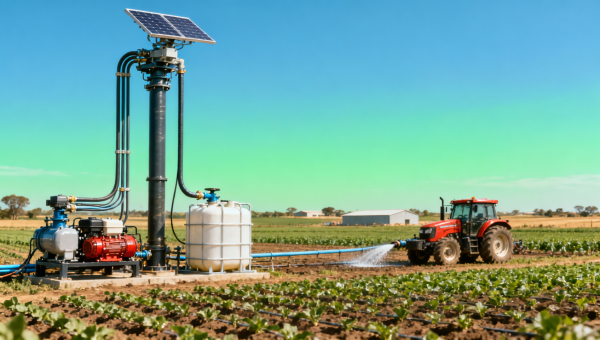
Solar water pumps agricultural projects can look highly profitable at first, but rising maintenance, falling water tables, and mismatched system sizing often change the economics. For buyers comparing submersible deep well pumps, wholesale water pumps for farming, and even agricultural diesel engines as backup options, knowing exactly when solar stops delivering acceptable ROI is critical.
Why does a solar water pump for agriculture stop making financial sense?
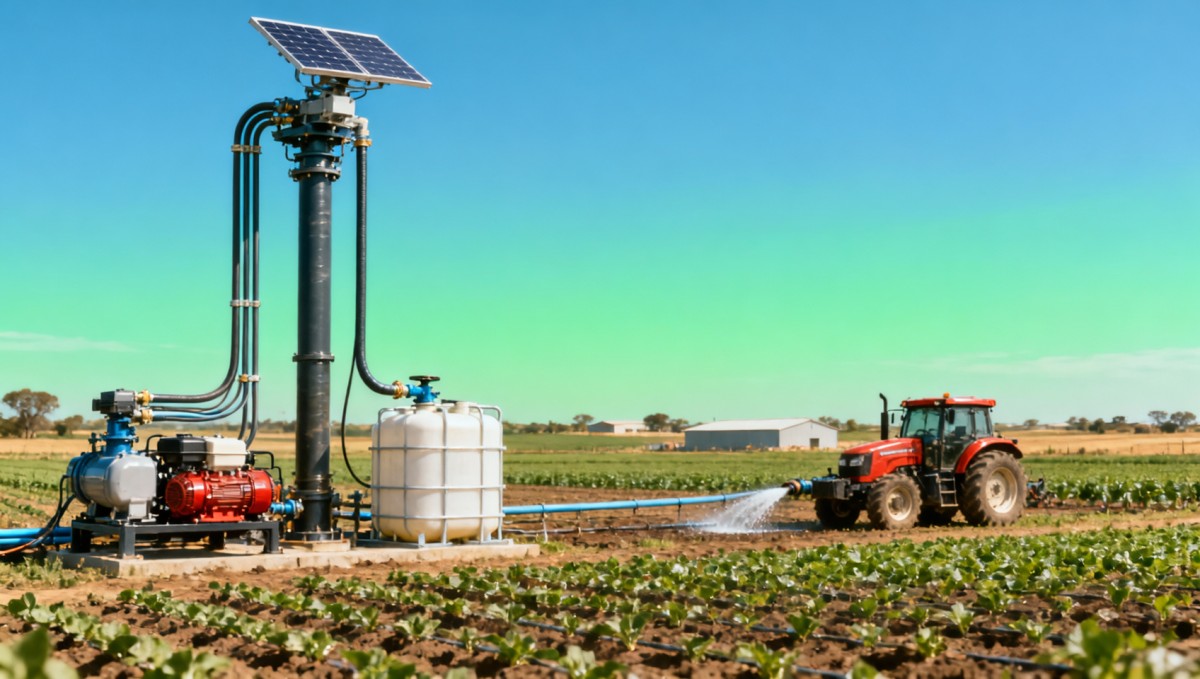
A solar water pump for agriculture usually performs best when daily irrigation demand is stable, static water level remains within the design window, and solar radiation is predictable for most of the growing season. In many projects, the initial business case assumes 5–8 years of service with limited downtime and low operating cost. That assumption can hold, but only if water conditions, duty cycle, and system sizing remain aligned.
The economics begin to deteriorate when bore depth increases by 10–30 meters over the project life, pump efficiency falls due to abrasive water, or farms need more flow during cloudy periods or at night. Under those conditions, the system may still operate, but liters delivered per invested dollar decline sharply. That is the point at which a procurement team should stop treating solar pumping as a default low-cost solution and start reviewing alternatives.
For technical evaluators and project managers, the key question is not whether solar is good or bad. The real question is whether the installed system still matches the hydraulic requirement. A pump designed for a 40-meter total dynamic head may become uneconomic when actual operating head moves into the 55–70 meter range, especially if array expansion, controller replacement, and more frequent service are required.
For financial approvers and business reviewers, ROI should be recalculated at least once every 12 months in water-stressed regions. A project that looked attractive in year 1 can underperform by year 3 if crop intensity rises, water access becomes more regulated, or hidden support costs are added. AgriChem Chronicle closely tracks these cross-sector shifts because irrigation equipment economics are increasingly tied to supply chain volatility, compliance pressure, and asset utilization discipline.
Four early warning signs that ROI is weakening
- Water drawdown is increasing each season, pushing the pump farther from its best efficiency point and reducing delivered volume during critical irrigation windows.
- Maintenance intervals shorten from annual inspection to every 3–6 months because of sand ingress, scaling, cable wear, or controller faults.
- The farm begins to depend on tanker supply, diesel backup, or load shifting because solar pumping no longer covers peak daily demand.
- The expected payback period extends beyond the acceptable internal threshold, often moving from 3–5 years to 6–8 years after retrofits and production losses are included.
These warning signs matter across the broader primary industries supply chain. Distributors need them for product positioning, procurement teams need them for replacement planning, and quality or safety staff need them to anticipate dry-run risk, electrical instability, and unplanned field intervention.
Which operating conditions usually push solar pumping beyond its useful ROI range?
In agricultural pumping, poor economics rarely come from one issue alone. More often, a combination of well depth, seasonal duty pattern, water chemistry, and crop timing undermines performance. A solar water pump for agriculture can still be technically functional while becoming commercially inefficient. That distinction is important for buyers comparing capex against long-term water delivery certainty.
Projects supplying open-field irrigation, orchards, livestock water, and remote boreholes often face very different load profiles. A drip-irrigated orchard with 6–8 pumping hours per day may suit solar well. A mixed farm requiring early-morning and evening pumping, fertilizer injection, and emergency reserve supply may not. If the pump must meet demand across 10–14 hours with fluctuating head and seasonal drawdown, solar alone can become restrictive.
Water quality also changes economics. Fine sand, dissolved minerals, and biofouling can reduce hydraulic efficiency and increase service frequency. For procurement and safety teams, this means lifecycle cost cannot be judged by motor power alone. A 5 kW system in abrasive water may require more intervention than a 7.5 kW system operating in cleaner conditions, even if the smaller system looked cheaper on the quotation sheet.
The following table helps teams identify where solar pumping often remains cost-effective and where decision-makers should investigate hybrid or non-solar alternatives more seriously.
The table shows a practical threshold logic rather than a rigid rule. If two or more factors move into the right-hand column, buyers should model a hybrid solution, larger storage, or a backup agricultural diesel engine. For many farms, the break point is not the panel technology itself but the rising cost of trying to force solar into a duty profile it was never sized to handle.
What technical reviewers should verify first
Hydraulic match
Confirm total dynamic head, target flow rate, friction loss in delivery piping, and actual seasonal drawdown. Without these four values, any ROI discussion is incomplete.
Electrical and control stability
Review inverter behavior, cable losses, motor start profile, and dry-run protection. Repeated nuisance trips or unstable voltage can quietly reduce output over a 6–12 month period.
Water availability versus crop calendar
Compare actual pumping window with the irrigation demand curve. If the system cannot support critical periods during flowering, fruit set, or heat peaks, low running cost alone does not justify the asset.
Solar pump, deep well pump, or diesel backup: how should procurement teams compare options?
A common procurement mistake is to compare only equipment price. In reality, the correct framework includes water delivered, resilience, maintenance burden, and compliance needs. For example, a submersible deep well pump paired with solar can work efficiently where aquifer depth is moderate and storage is adequate. The same deep well pump may need diesel or grid support where output certainty matters more than fuel savings.
Wholesale water pumps for farming are often screened on motor rating, discharge diameter, and lead time. That is necessary, but not sufficient. Procurement and engineering teams should also check duty point efficiency, serviceability in the local market, spare part availability over 24–36 months, and whether the supplier can document compatibility between pump, controller, and power source.
For business evaluators and distributors, the best option depends on how much variability the user can tolerate. If a farm can store 1–3 days of water, solar may remain competitive. If the farm cannot afford irrigation interruption during a 7–10 day weather fluctuation, a hybrid design often protects revenue better than a lowest-opex strategy.
The comparison below is intended for practical selection, especially when teams are reviewing solar-only proposals against deep well pumping packages and agricultural diesel engines used as backup or primary power.
This comparison usually helps non-technical decision-makers see that the lowest operating cost is not always the lowest cost of water delivered. In regulated or export-oriented production chains, irrigation failure can also create quality and supply risks that extend beyond the pump itself. ACC emphasizes this wider procurement context because machinery decisions increasingly affect compliance, crop consistency, and upstream contract performance.
A 5-point procurement checklist for mixed-farm pumping projects
- Define the minimum daily water volume required in peak season, not just average annual use.
- Verify actual well depth, expected seasonal drawdown, and delivery line losses before requesting quotations.
- Ask suppliers to state the service interval, consumables, and spare parts likely needed over 12, 24, and 36 months.
- Review backup planning for 2–5 consecutive low-sun days, emergency irrigation, and controller failure.
- Check whether the offered package aligns with local electrical, environmental, and water abstraction requirements.
A checklist like this is especially valuable for dealers, agents, and resellers who need to reduce return risk. It also helps finance teams compare proposals on a like-for-like basis instead of accepting broad claims about savings.
What cost items are often missed when evaluating solar pumping projects?
The most underestimated cost is performance drift. Buyers usually model capex, basic maintenance, and energy savings, but they often miss the cost of lower water output over time. If the same irrigation target starts taking 20% longer to meet, labor, crop risk, and scheduling pressure all rise. That hidden cost can outweigh the benefit of low daytime energy expense.
A second blind spot is retrofit cost. When a solar water pump for agriculture no longer meets demand, the fix is rarely one component. The site may need a larger array, a different controller, new cabling, increased storage capacity, and revised pipework. In some cases, teams discover that the original pump hydraulic range was too narrow, making the upgrade path more expensive than expected.
Third, there is the cost of uncertainty. Procurement teams serving export farms, integrated livestock operations, or contract growers cannot value pumping only in fuel or electricity terms. If water interruption affects feed production, chemical application timing, or harvest quality, the financial impact spreads across the operation. This systems view is central to ACC’s editorial coverage of machinery and processing sectors.
The table below summarizes lifecycle cost items that should be reviewed before approving a solar-only pumping strategy.
Once these cost items are visible, many projects shift from a simple solar-versus-diesel question to a reliability-weighted sourcing decision. That is usually where technical assessment, commercial review, and financial approval should come together rather than operating in separate silos.
Common decision errors in B2B farm pumping purchases
- Approving a pump on peak power alone without checking actual liters delivered at the required head.
- Ignoring seasonal water table movement during quotation comparison.
- Treating storage tanks as optional when they are essential to stabilize a solar pumping strategy.
- Assuming all wholesale water pumps for farming have equal service support and spare part traceability.
Avoiding these errors can shorten approval cycles by 2–4 weeks because fewer revisions are needed after technical clarification. It also reduces the risk of disputes between engineering, procurement, and finance once the project is underway.
How should compliance, risk control, and implementation be handled?
Although a farm pump is not a pharmaceutical process asset, the same discipline applied in regulated industrial procurement is increasingly relevant. Buyers should request clear technical documentation, material suitability for water chemistry, installation and operating guidance, and evidence that electrical components are matched to intended conditions. For multinational buyers, environmental and safety review may also include local abstraction rules, noise constraints for engine backup, and safe fuel handling procedures.
Implementation should follow a defined 4-step process: site data collection, hydraulic validation, equipment matching, and commissioning review. This sequence sounds basic, yet many underperforming systems skip one of these steps. When that happens, the project team often discovers too late that the pumping window, storage design, or backup requirement was underestimated.
For project managers, acceptance criteria should include at least 6 items: measured flow rate, operating current, controller protection test, dry-run behavior, discharge stability, and operator handover. A signed commissioning sheet is not enough if field performance under real head conditions has not been checked. The deeper the well and the tighter the irrigation schedule, the more important this becomes.
ACC’s value to industrial readers lies in translating technical detail into decision-ready guidance. Across machinery, biochemical inputs, and primary processing, the same principle applies: credible sourcing depends on transparent specifications, realistic operating assumptions, and cross-functional review. That is especially true when a pump decision affects farm output, distribution planning, and contract compliance simultaneously.
Implementation checklist before final approval
- Collect bore depth, water level trend, pipe route, and required daily volume for both average and peak months.
- Validate pump curve against actual total dynamic head rather than nominal depth alone.
- Define whether the site needs 0, 1, or 2 backup layers such as storage, grid input, or diesel support.
- Confirm spare parts access and service response expectations over the first 12–24 months.
- Document operator training, shutdown procedure, and safety controls before handover.
A disciplined implementation plan does not guarantee that solar will be the right answer, but it does ensure the decision is based on field reality rather than assumptions embedded in a sales brochure.
FAQ for buyers comparing solar agricultural pumping systems
The questions below reflect common search intent from information researchers, procurement teams, technical reviewers, and distributors who need clear evaluation criteria before moving to quotation or replacement planning.
How do I know if a solar water pump for agriculture is undersized?
If the system only meets demand on ideal sunny days, requires extended pumping hours beyond the planned schedule, or fails during peak season when head is highest, it is likely undersized. Compare actual delivered volume against required daily volume over at least 2–4 weeks, not just one commissioning test.
When should a farm add an agricultural diesel engine as backup?
Backup becomes reasonable when irrigation interruption creates material crop loss risk, when the site faces multi-day low irradiance periods, or when the farm cannot build enough storage for 1–3 days of demand. Diesel is also useful for emergency pumping during repairs or seasonal peak loading.
Are submersible deep well pumps always better for falling water tables?
Not always. They are often better suited for deeper and more variable lifting conditions, but performance still depends on proper pump curve selection, motor matching, cable design, and power source stability. A deep well pump chosen without realistic head and drawdown data can still underperform.
What should wholesale water pumps for farming buyers ask suppliers?
Ask for the duty point, service interval, spare parts list, expected lead time, controller compatibility, water quality limitations, and recommended backup approach. For B2B sourcing, also ask how long the supplier can support the package after delivery, typically over 12–36 months.
Why work with us when evaluating irrigation pumping economics?
AgriChem Chronicle supports industrial buyers and sector decision-makers with analysis that goes beyond product claims. Our coverage connects agricultural and forestry machinery with broader supply chain realities, compliance expectations, and procurement risk. That matters when a solar water pump for agriculture is no longer just a farm tool, but a factor in operational continuity, contract performance, and capital efficiency.
If your team is comparing solar pumping, submersible deep well pumps, wholesale water pumps for farming, or agricultural diesel engines, we can help frame the right questions before budget approval. Typical consultation topics include parameter confirmation, duty cycle review, sourcing comparison, delivery window expectations, backup planning, and specification alignment for distributors or OEM-linked projects.
We also help readers and partners structure decision content for technical and commercial audiences at the same time. That includes translating pump selection issues into procurement-ready criteria, highlighting compliance-sensitive risks, and identifying where a hybrid solution may outperform a solar-only design in real operating conditions.
Contact us if you need support with system sizing logic, pump option comparison, lifecycle cost review, lead-time planning, documentation expectations, or quotation-stage risk screening. Clearer technical assumptions at the start usually lead to faster approvals, fewer change orders, and more reliable water delivery in the field.
Related Intelligence
- Aeration & Water TechHelium Price Up 35.2% MoM; Aeration Equipment Makers Test Ar/N2 SubstitutesHelium price up 35.2% MoM—Aeration equipment makers rush to validate Ar/N2 substitutes for CE/UL-compliant calibration in RAS & aquaculture systems.
- Aeration & Water TechWhy Some Deep Well Pumps Fail Long Before ExpectedSubmersible deep well pumps fail early when sizing, water quality, and controls are ignored. Learn how solar water pumps agricultural systems and agricultural diesel engines affect reliability.
- Aeration & Water TechSubmersible Deep Well Pumps and the Sand ProblemSubmersible deep well pumps in sandy wells: learn how solar water pumps agricultural systems and wholesale water pumps for farming compare, reduce wear, and improve irrigation reliability.
The Morning Broadsheet
Daily chemical briefings, market shifts, and peer-reviewed summaries delivered to your terminal.
