
Corn Thresher Machines: What Affects Grain Damage Most?
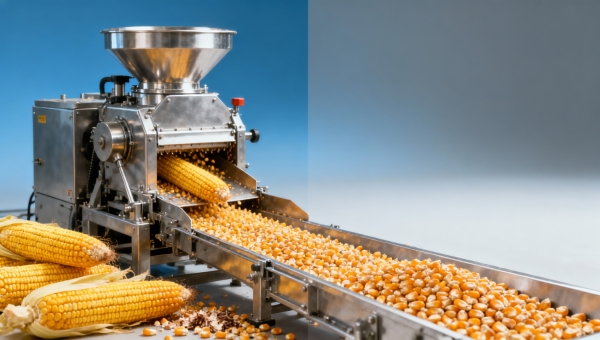
For buyers and operators comparing corn thresher machines, grain damage is a critical performance metric that directly affects yield, storage quality, and downstream processing. From drum speed and feed rate to crop moisture and machine setup, several factors determine results. This article explains what matters most while helping technical and commercial readers benchmark corn thresher machines against broader grain and oil processing equipment decisions.
In practical procurement, grain damage is not only an operator concern. It also influences storage losses, grading outcomes, feed conversion value, milling behavior, and total saleable output. A machine with high throughput but poor grain integrity can create avoidable losses across the supply chain, especially when corn is destined for seed handling, food processing, or premium feed applications.
For technical evaluators, the right question is not simply how fast a corn thresher machine runs, but under which conditions it can maintain acceptable cracked grain, broken kernel, and impurity levels. For commercial teams and decision-makers, that means looking beyond brochure capacity and comparing machine configuration, crop condition tolerance, maintenance needs, and setup consistency.
Why Grain Damage Matters More Than Rated Capacity
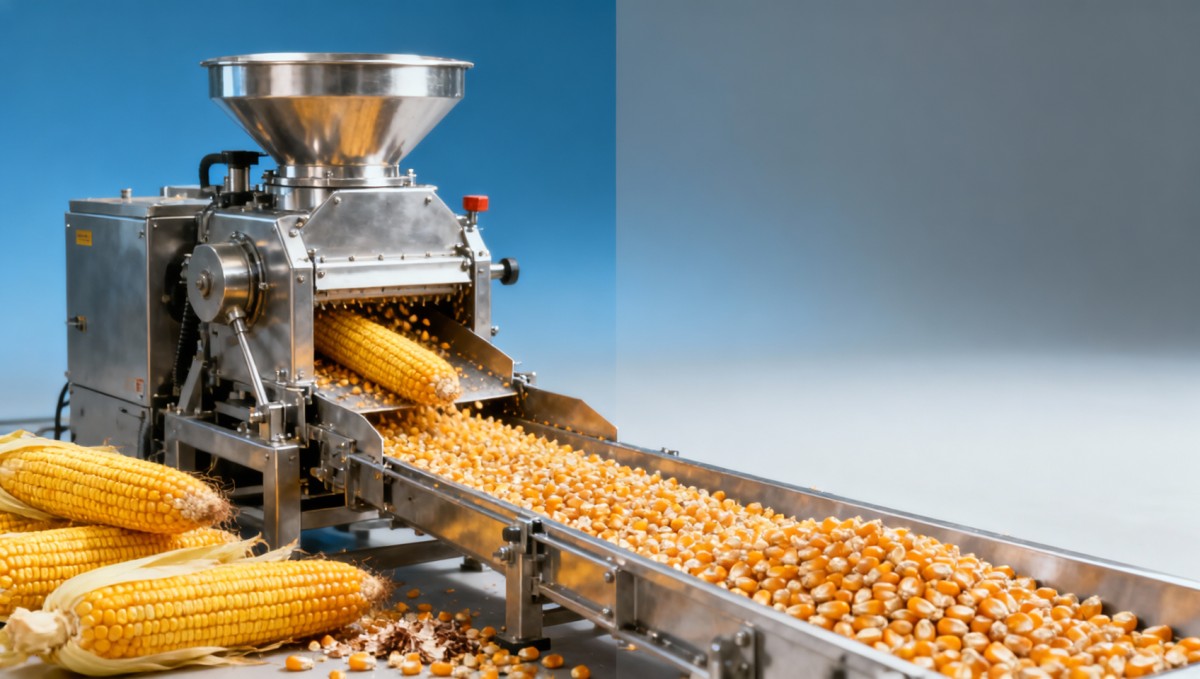
Many buyers initially compare corn thresher machines by hourly output, often focusing on ranges such as 3–5 tons per hour, 8–12 tons per hour, or 15 tons per hour and above. Capacity is important, but grain damage often becomes the hidden cost center. Even a 2%–4% increase in broken kernels can materially reduce storage stability and market value, particularly when grain is sold into quality-sensitive channels.
Damaged kernels are more vulnerable to moisture migration, insect activity, and fungal development during storage. In operations where corn remains in silos or warehouses for 30–180 days, excess breakage can raise the risk of spoilage hot spots. That means downstream cleaning, drying, and sorting costs may rise even if threshing throughput appears efficient at first glance.
For feed and grain processors, kernel integrity also affects subsequent handling stages. Broken grain behaves differently in conveying, screening, and grinding systems. In oil and grain processing lines, inconsistent particle size can reduce process stability and lead to less predictable conditioning performance. As a result, threshing quality should be evaluated as part of the full material flow, not as an isolated machine function.
Operationally, grain damage is also a strong indicator of setup quality. If two machines of similar size produce different breakage rates under the same crop conditions, the difference usually comes from drum configuration, concave adjustment, feeding uniformity, and operator control. This is why plant managers and project teams should ask for performance data across at least 2–3 crop moisture scenarios rather than one ideal test condition.
Common quality indicators used in evaluation
In field and processing assessments, buyers often track a small group of metrics to compare machines on a like-for-like basis. These indicators help align technical quality with procurement decisions and final application requirements.
- Broken kernel percentage, often monitored within a target band such as less than 3%, 5%, or 8% depending on end use.
- Unthreshed loss, commonly expected to remain under 1%–2% in stable operating conditions.
- Impurity carryover, including husk, cob fragments, and fine trash that affect cleaning load.
- Throughput stability over continuous runs of 2–6 hours rather than short demonstrations.
- Power consumption per ton processed, especially relevant for diesel and electric operating cost comparisons.
The priority of each metric depends on the business model. A distributor serving smallholder markets may emphasize ease of use and tolerance to variable crop conditions. A commercial grain processor may place more weight on repeatable kernel quality, maintenance intervals, and integration with pre-cleaning or drying stages.
The Main Mechanical Factors That Drive Grain Damage
Among all variables, drum speed is usually the first factor to review. When rotational speed is too high, impact energy rises and kernels are more likely to crack. When speed is too low, threshing may become incomplete, forcing operators to recirculate material or tighten concave settings, which can also raise damage indirectly. In many practical setups, the correct speed window depends on variety, moisture, and cob condition rather than a single fixed number.
Concave clearance is equally important. A narrow clearance may improve threshing aggressiveness, but it can also increase rubbing and crushing forces. A wider clearance may protect grain integrity but leave more kernels attached. The most effective corn thresher machines allow adjustment in controlled increments so operators can respond to crop variability during the day instead of using a one-position setting for all loads.
Feed rate is another major variable. Overfeeding tends to create uneven material flow, localized overload, and sudden impact peaks inside the threshing chamber. Underfeeding can also reduce performance because the crop mat becomes unstable and threshing contact becomes inconsistent. In medium-scale systems, stable feeding often delivers better quality than chasing maximum nameplate output.
The design of threshing elements matters as well. Pegs, rasp bars, and tooth profiles influence how force is transferred to the cob and kernel. More aggressive designs may suit wet or tough material, while gentler contact surfaces often reduce breakage in drier corn. Buyers comparing machines should ask how the threshing element geometry affects both corn and other grain handling scenarios if the equipment is intended for multi-crop use.
Mechanical settings and their likely impact
The table below summarizes the most common machine-side variables and the operational effect they have on damaged grain risk. It is a useful reference during factory visits, commissioning reviews, or pre-purchase technical discussions.
The key takeaway is that no single setting works for every lot. Machines that support fine adjustment, clear operator feedback, and consistent feeding usually outperform systems that rely on aggressive threshing to compensate for weak setup control.
A frequent procurement mistake
A common error is accepting a supplier test based only on maximum throughput. A better acceptance method is to request a 3-point test: one run at nominal throughput, one at reduced load, and one with slightly different moisture content. This exposes whether the corn thresher machine maintains quality under realistic operating variation.
Crop Condition Often Has the Strongest Real-World Effect
Even a well-designed machine will damage more grain if the crop enters in the wrong condition. Moisture content is usually the most influential external variable. Corn that is too dry becomes brittle and more likely to crack under impact. Corn that is too wet can thresh poorly, increasing rehandling and pressure inside the machine. In practice, many operators find that a moderate and uniform moisture range produces the best balance between separation efficiency and kernel protection.
Uniformity matters almost as much as average moisture. A batch combining very dry ears and wetter ears forces operators into compromise settings. If the machine is adjusted to protect dry kernels, some wetter cobs may remain incompletely threshed. If adjusted aggressively for the wetter fraction, the dry kernels may fracture. This is why pre-sorting by field lot, harvest time, or storage condition can materially improve threshing results.
Cob size, variety, maturity, and field damage also influence outcomes. Harder kernel types often resist abrasion but may crack under sharp impact. Lodged or weather-stressed corn may enter with more structural weakness, making it less tolerant of high drum speeds. For operators and procurement teams, the machine should therefore be evaluated on the actual corn profile expected across the season, not just on ideal sample material.
Pre-cleaning is another underused control point. If ears enter with excess stalk fragments, soil, or foreign matter, threshing quality can deteriorate because abrasive contaminants increase friction and reduce smooth flow. In larger operations, even a simple pre-cleaning stage can lower impurity loading and help stabilize grain damage rates over long runs.
Typical crop-side variables to review before setup
Before adjusting the machine, operators should review a short checklist. This reduces trial-and-error changes and helps technical teams document the reason for any quality shift.
- Measure moisture from at least 3 sampling points in the incoming lot rather than relying on a single handful sample.
- Check whether ear size and kernel maturity are broadly uniform or highly mixed.
- Record visible field defects such as mold, insect damage, or brittle weathered kernels.
- Estimate trash content to determine whether pre-cleaning should be added or intensified.
- Adjust feed rate first, then speed and concave gap, instead of changing all settings at once.
Where lot variability is high, the best operating strategy is often to accept a modest reduction in hourly throughput, such as 10%–15%, in exchange for lower breakage and lower total downstream loss. For many commercial users, that tradeoff improves net value more than pursuing the maximum tonnage figure.
How to Benchmark Corn Thresher Machines for Procurement
A reliable procurement decision should combine machine quality, cost efficiency, serviceability, and compatibility with the rest of the processing line. Corn thresher machines are frequently compared only on purchase price and nominal output, but serious buyers also review spare part availability, operator training requirements, cleaning access, power demand, and installation constraints. For larger projects, these factors often influence total cost of ownership more than the purchase invoice alone.
The right benchmark depends on business scale. A dealer serving distributed farm users may prioritize robustness, easy maintenance, and tolerance of variable feeding. A grain center or feed mill may place higher value on stable kernel quality, dust control, and compatibility with conveyors, dryers, or bagging systems. A project manager planning a new processing line should assess the thresher as one step inside a 4–6 stage flow rather than as a stand-alone machine.
Technical and commercial teams also benefit from using acceptance criteria instead of general claims. These may include maximum broken grain percentage, target impurity level after threshing, expected output under a defined moisture range, and maintenance interval targets after a set number of operating hours. Clear criteria reduce disputes and improve supplier comparison.
For financial approvers, the key question is whether a higher-quality machine reduces hidden losses enough to justify the premium. If lower grain damage cuts sorting loss, storage shrink, and rejected lots over one or two harvest cycles, the payback can be stronger than a lower upfront price with weaker product quality.
Procurement comparison framework
The following framework helps buyers compare offers using technical and commercial factors together rather than reviewing capacity alone.
This comparison method helps both engineering teams and commercial stakeholders speak the same language. It links machine-side settings to business outcomes such as recoverable yield, operating cost, downtime exposure, and suitability for expansion.
A practical supplier discussion checklist
- Ask for recommended operating windows for at least 2 moisture bands.
- Request details on the first maintenance interval, such as after 100 or 250 hours.
- Confirm what wear parts are stocked locally and typical lead times, often 7–21 days.
- Review commissioning scope, operator training hours, and documentation quality.
- Clarify whether performance tests include actual customer material or only standard samples.
Setup, Maintenance, and Operator Practice: The Overlooked Performance Multiplier
A well-selected machine can still underperform if setup discipline is weak. In many installations, grain damage rises not because the design is fundamentally poor, but because operators change multiple variables at once, skip moisture checks, or run for long periods after wear parts have passed their useful condition. That is why training and standard operating procedures are often as important as hardware selection.
Routine inspection should include threshing elements, concave condition, bearing health, belt tension, and feed consistency. Wear changes the way force is applied to the cob, and the effect may appear gradually over 50–200 operating hours. Without scheduled checks, the breakage trend can go unnoticed until storage or grading issues emerge downstream.
Cleaning also affects quality. Residual fines, dust buildup, and lodged fragments inside the chamber can increase abrasion and disturb crop flow. In continuous operations, short cleaning stops every shift or every 6–8 hours may improve stability more than waiting for a full shutdown. This is especially relevant when processing lots with variable trash content.
From a safety and quality control standpoint, documentation matters. Recording moisture, settings, hourly output, and observed grain damage gives project managers and QC teams a basis for corrective action. Over one harvest season, these records can identify whether performance problems stem from crop variability, operator practice, or component wear.
Recommended operating discipline for lower grain damage
The following practices are widely useful in commercial threshing and grain handling environments.
- Use a fixed startup checklist covering moisture check, drum speed, concave gap, and feed uniformity.
- Change one parameter at a time and observe results over 10–15 minutes instead of making rapid multiple adjustments.
- Sample output grain at regular intervals, such as every 30–60 minutes during steady operation.
- Inspect wear components on a defined schedule and replace before severe geometry change occurs.
- Train at least 2 operators per shift to avoid quality drift caused by inconsistent manual judgment.
FAQ for technical and commercial readers
Below are several common questions raised during equipment selection and operating review.
How much grain damage is acceptable?
There is no universal number because acceptable damage depends on whether the corn is used for feed, storage, milling, or higher-value processing. However, buyers should define a target range before purchase and test the machine under realistic crop conditions rather than relying on generic claims.
Is the fastest machine always the best investment?
Not necessarily. If higher speed leads to more breakage, higher fines, and more downstream cleaning, the total value recovered per ton may fall. A slightly slower but more stable corn thresher machine can produce a stronger economic result over a full season.
Should buyers request on-site trials?
Yes, especially for medium and large projects. A trial using actual crop material, measured over a meaningful run time, gives better evidence than a short showroom test. It also allows QC and maintenance teams to evaluate cleaning, access, noise, dust, and adjustment convenience.
For most buyers, the biggest driver of grain damage is not one single factor but the interaction between crop condition, drum speed, concave clearance, and feeding stability. The best corn thresher machines are those that maintain acceptable grain quality across variable field inputs while supporting practical adjustment, repeatable operation, and manageable maintenance.
When corn threshing is evaluated alongside broader grain and oil processing decisions, quality consistency becomes just as important as throughput. That makes careful benchmarking essential for operators, technical reviewers, procurement teams, and financial approvers alike. To discuss equipment fit, performance criteria, or a tailored evaluation framework for your processing scenario, contact us to get a customized solution and explore more grain handling and primary processing insights.
Related Intelligence
- Heavy Agri MachinerySilage Bale Wrapper Machine Issues in Hot WeatherSilage bale wrapper machine issues in hot weather: compare round baler machine and square baler machine setups, reduce film failure, and improve forage quality with smarter buying decisions.
- Heavy Agri MachinerySilage Bale Wrapper Machine Film Waste Comes from SetupSilage bale wrapper machine film waste often starts with setup, not film. Compare round baler machine and square baler machine risks, calibration, and agricultural plastic mulch film compatibility.
- Heavy Agri MachineryHay Balers Wholesale Pricing Is Not the Full PictureHay balers wholesale pricing is only the start. Compare square baler machine and round baler machine value, lifecycle cost, system fit, and service support before you buy.
The Morning Broadsheet
Daily chemical briefings, market shifts, and peer-reviewed summaries delivered to your terminal.
