
Hay Balers Wholesale Pricing Is Not the Full Picture
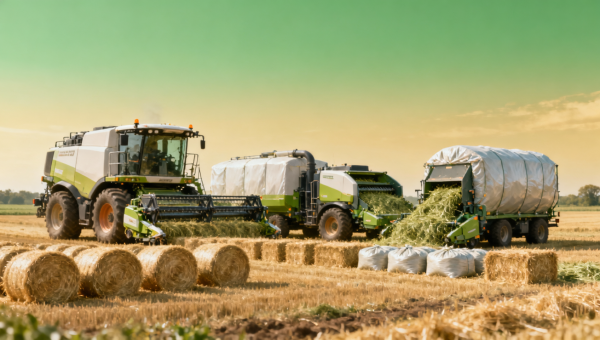
Hay balers wholesale pricing may look attractive at first glance, but smart buyers know the real cost extends far beyond the quote. From square baler machine and round baler machine performance to maintenance, parts availability, and compatibility with grass forage chopper or silage bale wrapper machine systems, every factor affects ROI. For procurement teams and technical evaluators, understanding total value is essential before making a reliable agricultural machinery investment.
Why a Low Hay Baler Wholesale Price Can Become a High-Cost Decision
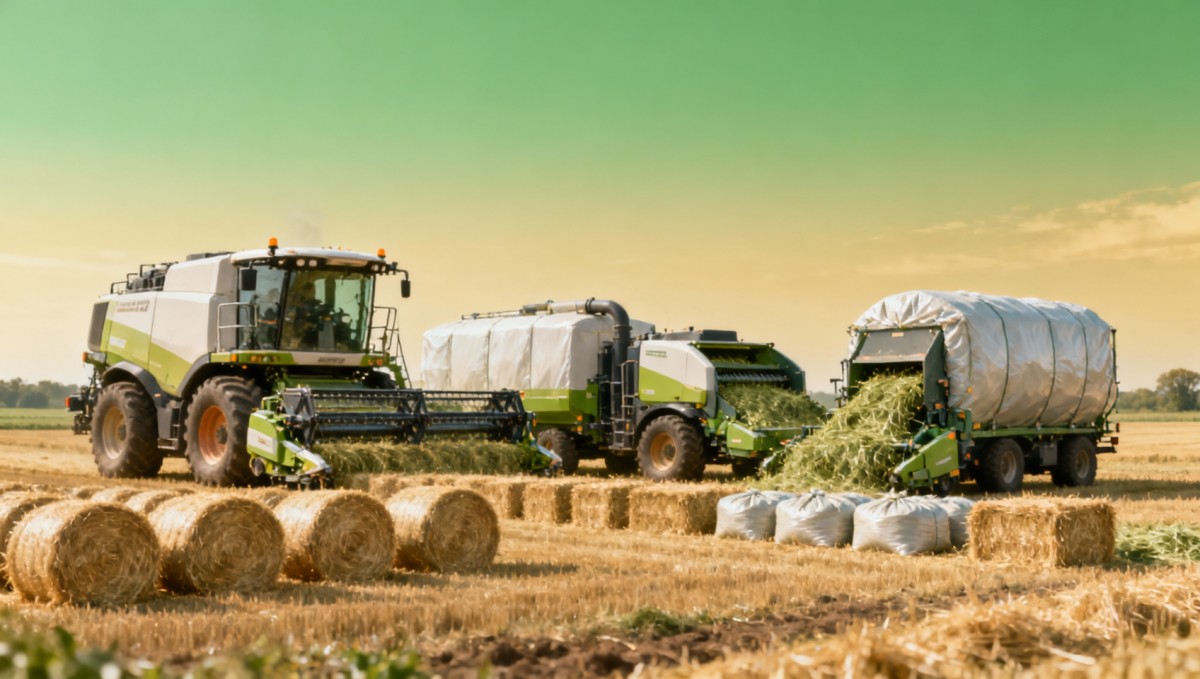
In agricultural machinery procurement, the initial hay balers wholesale price is only one layer of the decision. A low quotation can hide higher fuel consumption, shorter wear-part life, unstable bale density, or weak after-sales support. For farms, contractors, distributors, and project buyers, these issues often appear within the first 1–2 harvesting cycles, not on the quotation sheet.
This matters even more when the baler is part of a broader forage handling line. A round baler machine that cannot maintain stable output speed may create bottlenecks for a silage bale wrapper machine. A square baler machine with poor pickup tolerance may also reduce the efficiency of upstream grass forage chopper operations. In integrated field systems, one weak machine can reduce the value of the whole investment.
Technical evaluators usually look at 3 core dimensions: throughput stability, maintenance burden, and system compatibility. Procurement teams add 3 more: delivery time, spare parts continuity, and supplier responsiveness. Finance approvers then compare capital expense with 3–5 year operating cost. When these layers are reviewed together, the cheapest quote is often not the most economical option.
For ACC readers across agricultural and primary processing sectors, this is a familiar pattern. Complex procurement decisions require more than brochure claims. They require verified technical context, realistic service assumptions, and a structured comparison model that helps buyers reduce commercial, operational, and compliance risk before issuing purchase orders.
The hidden costs buyers most often underestimate
- Downtime during peak harvest windows, where even a 24–48 hour parts delay can affect forage quality and field scheduling.
- Consumable replacement frequency for belts, bearings, chains, knives, pickup tines, and twine or net systems.
- Labor inefficiency caused by difficult adjustment, inconsistent bale formation, or frequent manual intervention.
- Mismatch with tractor power ranges, moisture conditions, bale handling logistics, or wrapping equipment interfaces.
A disciplined sourcing process should therefore compare price with operational resilience. In practice, a machine with a 5%–12% higher purchase price may offer lower lifecycle cost if it reduces stoppages, maintains denser bale consistency, and shortens seasonal service intervention. That is the practical lens institutional buyers increasingly adopt.
What Should Procurement Teams Compare Beyond the Quote?
When evaluating hay balers wholesale pricing, procurement teams should move from unit price to total procurement architecture. A quote should be read together with technical specifications, included accessories, commissioning scope, training support, spare parts package, warranty terms, and delivery commitments. Without that full picture, suppliers can appear comparable when they are not.
One practical method is to divide assessment into 4 stages: pre-qualification, technical review, commercial review, and risk review. This is useful for information researchers, project managers, and distributors who must align field needs with internal approval procedures. It also creates a clearer basis for supplier negotiation and contract language.
The table below shows a buyer-oriented comparison framework for square baler machine and round baler machine procurement. It helps separate visible price from hidden value drivers in a way that finance and engineering teams can review together.
This framework helps buyers ask better questions. For example, a supplier offering a 2–4 week faster lead time but no local parts plan may still create higher risk than a supplier with a slightly longer schedule and a defined spare-parts availability commitment. Procurement quality improves when price is reviewed with operations, not in isolation.
A practical 5-point pre-order checklist
- Confirm crop type, moisture range, and seasonal volume before comparing machine formats.
- Verify tractor power range, PTO requirements, and field transport constraints.
- Request a wear-parts list for the first 12 months of operation.
- Check whether the baler must feed a silage bale wrapper machine or fit a mixed forage line.
- Align warranty response time and service channels with peak harvesting periods.
ACC’s value in this process is not limited to product visibility. It supports buyers with technical framing, supply-chain awareness, and cross-functional procurement logic that reflects how industrial machinery is actually approved inside farms, agribusiness groups, and dealer networks.
Square Baler Machine vs Round Baler Machine: Which One Fits Your Operation?
The choice between a square baler machine and a round baler machine should not start with list price. It should start with output goals, storage logistics, transport constraints, downstream handling, and labor capacity. Each machine type serves distinct operational priorities, and the wrong choice can lock buyers into avoidable handling costs over multiple seasons.
Square balers are often favored where bale stacking efficiency, transport density, and warehouse organization matter most. Round balers are frequently chosen for flexible field work and simpler bale formation under variable forage conditions. However, these broad tendencies must be tested against local crop density, operator skill, and the need for wrapping or chopping integration.
The comparison below gives a structured view for technical evaluators, distributors, and financial reviewers. It is especially useful when the same sourcing team is considering both standalone baling and integrated forage handling systems.
In practical terms, the right answer often depends on 4 operational questions: How many hectares must be covered within a harvest window? Will bales be stored indoors or outdoors? Is transport distance short or regional? Will wrapping occur immediately or later? These questions affect machine selection more than a headline wholesale price ever can.
Where integration changes the decision
If the baler works with a grass forage chopper
When a baler follows a grass forage chopper in mixed forage operations, throughput coordination becomes critical. If the chopper handles high-volume output but the baler runs below expected feed stability, the field team may face idle time, forage exposure, or repeated passes. That can raise labor and fuel cost across a 7–15 day harvest schedule.
If the baler feeds a silage bale wrapper machine
In silage applications, the interval between baling and wrapping affects forage preservation. Buyers should confirm bale size consistency, discharge speed, and wrapper compatibility before signing contracts. Even small variation in bale formation can complicate film usage, wrapping rhythm, and handling efficiency during continuous field operation.
How to Evaluate Technical Performance, Service Risk, and Compliance Readiness
Technical performance should be assessed in relation to the actual operating environment, not just brochure output. Buyers should ask about typical crop conditions, recommended moisture range, bale size consistency, pickup width options, lubrication intervals, and operator adjustment points. For many projects, service access in the first 6–12 months matters as much as rated machine capability.
For quality and safety managers, procurement should also consider guarding, operator manuals, maintenance procedures, and component traceability where relevant. While hay balers are not governed by pharmaceutical frameworks such as GMP, institutional buyers still expect disciplined documentation, safety labeling, and transparent manufacturing information, especially in cross-border transactions.
In regulated and export-facing procurement environments, the supplier’s documentation quality can influence customs handling, installation planning, and warranty resolution. Clear packing lists, parts identification, pre-delivery inspection records, and operating instructions reduce ambiguity. These are practical trust indicators for global buyers, dealers, and project coordinators.
ACC’s editorial advantage is especially relevant here. Because its coverage spans agricultural machinery, processing systems, and tightly regulated industrial sectors, it helps decision-makers compare machinery sourcing with the same disciplined mindset applied in other high-accountability procurement categories: traceability, technical validity, and downstream usability.
Technical and commercial signals worth verifying
- Recommended maintenance intervals and whether daily, weekly, or seasonal service points are clearly defined.
- Availability of commissioning guidance and operator training during the first installation phase.
- Spare parts response expectations, especially for fast-moving items needed during peak harvest windows.
- Documentation supporting safe operation, transport preparation, and storage recommendations between seasons.
A simple risk screen for approval teams
If two suppliers offer similar hay balers wholesale pricing, approval teams can rank them using 4 weighted areas: 30% technical suitability, 25% parts continuity, 25% service responsiveness, and 20% commercial clarity. The exact weighting can change by project, but this approach creates a more reliable basis for internal sign-off than price-led selection alone.
Common Misconceptions, FAQ, and the Questions Buyers Should Ask Earlier
Many sourcing delays come from assumptions made too early in the process. Buyers may assume all balers in the same category deliver similar bale quality, or that a lower ex-factory quote automatically means better procurement performance. In reality, field fit, service readiness, and lifecycle cost usually determine whether the investment supports operations or disrupts them.
The FAQ below is designed for information researchers, technical reviewers, and commercial teams who want clearer decision signals before moving into supplier shortlisting or price negotiation.
How should buyers compare hay balers wholesale pricing fairly?
Compare the total package, not only the machine base price. Ask whether the quote includes setup parts, operating tools, manuals, training, first-year spare parts recommendations, and warranty support. A fair comparison should also normalize delivery terms, payment stages, and any accessories required for immediate field use.
Which is better for silage operations: square baler machine or round baler machine?
The answer depends on the handling system. Many silage workflows favor a round baler machine when rapid transfer to a silage bale wrapper machine is required. However, if storage, transport density, and standardized stack management are stronger priorities, a square baler machine may still be preferred. The decision should be made around workflow timing, not general preference.
What delivery period is common for baler procurement?
Common lead times vary by season, customization level, and export process. For standard configurations, buyers often see a 4–10 week planning window, while custom integration or peak-season demand may extend schedules further. It is wise to confirm production timing, inland transport, port handling, and installation readiness as separate milestones.
What do distributors and dealers need to evaluate beyond machine performance?
They should review parts stocking practicality, training support, documentation quality, packaging condition, and the supplier’s ability to support repeated orders. For channel partners, margin protection depends not only on buying price but also on how reliably the equipment can be supported after sale over a 12-month cycle.
What is the most common procurement mistake?
The most common mistake is selecting a machine before defining the operating system. If crop type, moisture conditions, tractor match, bale handling method, and wrapping requirements are not clarified first, even a competitively priced baler may underperform. Procurement should follow system logic, then machine logic, then price logic.
Why Work With ACC When Evaluating Agricultural Machinery Investments?
For institutional buyers, OEM partners, and distributors, reliable information is part of the procurement asset itself. ACC supports this need with sector-focused analysis that connects agricultural machinery sourcing to the broader realities of industrial supply chains, technical documentation, and compliance-sensitive purchasing. That perspective is especially valuable when buyers must justify decisions across technical, financial, and operational teams.
Because ACC operates at the intersection of agricultural systems, biochemical industries, and primary processing, it understands how serious buyers evaluate risk: specification integrity, supplier transparency, downstream compatibility, and implementation clarity. This is why its content is relevant not only to farmers and dealers, but also to project managers, procurement directors, and quality-focused reviewers.
If you are comparing hay balers wholesale pricing, a square baler machine, a round baler machine, or related equipment such as a grass forage chopper or silage bale wrapper machine, the most useful next step is a structured technical-commercial review. That means confirming 5 practical areas: configuration fit, operating scenario, delivery schedule, parts plan, and documentation requirements.
You can contact ACC for support around parameter confirmation, product selection logic, delivery-cycle evaluation, integration planning, certification-related documentation expectations, and quotation comparison frameworks. For manufacturers and equipment suppliers, ACC also provides an authoritative publishing environment to present validated capabilities, technical papers, and production strengths to global industrial procurement audiences.
Related Intelligence
- Heavy Agri MachinerySilage Bale Wrapper Machine Issues in Hot WeatherSilage bale wrapper machine issues in hot weather: compare round baler machine and square baler machine setups, reduce film failure, and improve forage quality with smarter buying decisions.
- Heavy Agri MachinerySilage Bale Wrapper Machine Film Waste Comes from SetupSilage bale wrapper machine film waste often starts with setup, not film. Compare round baler machine and square baler machine risks, calibration, and agricultural plastic mulch film compatibility.
- Heavy Agri MachineryHay Balers Wholesale Pricing Is Not the Full PictureHay balers wholesale pricing is only the start. Compare square baler machine and round baler machine value, lifecycle cost, system fit, and service support before you buy.
The Morning Broadsheet
Daily chemical briefings, market shifts, and peer-reviewed summaries delivered to your terminal.
