
Peanut Shelling Machines That Reduce Breakage Without Slowing Output
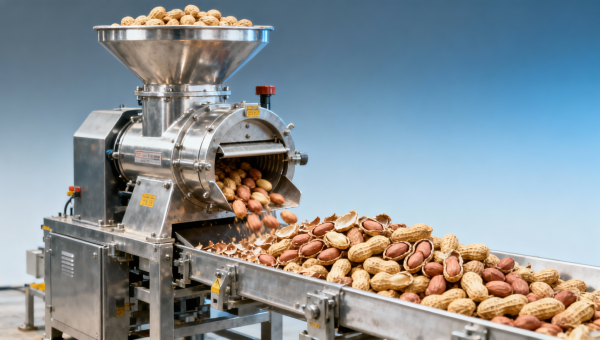
In modern nut processing, peanut shelling machines must strike a careful balance between throughput, kernel integrity, and operating reliability. For processors comparing grain and oilseed equipment—from corn thresher machines to sunflower oil press machine systems—reducing breakage without slowing output is now a key performance benchmark. This article examines the engineering factors, evaluation criteria, and commercial implications behind high-efficiency shelling solutions for today’s industrial buyers.
For research teams, plant operators, technical evaluators, procurement managers, and financial approvers, the key question is no longer whether a peanut shelling machine can process volume. The real issue is whether it can sustain commercial output while protecting kernel value, limiting dust, and reducing downstream sorting losses. In many facilities, even a 2% to 5% reduction in breakage can materially improve grade recovery and finished-product margins.
This matters across the broader primary processing landscape covered by AgriChem Chronicle, where machinery decisions are judged not just by nameplate capacity, but by total production economics, maintenance intervals, safety compliance, and line integration. A sheller that appears fast on paper may still underperform if it generates excess fines, unstable feed behavior, or frequent stoppages every 3 to 4 operating hours.
Why Low-Breakage Shelling Has Become a Commercial Priority
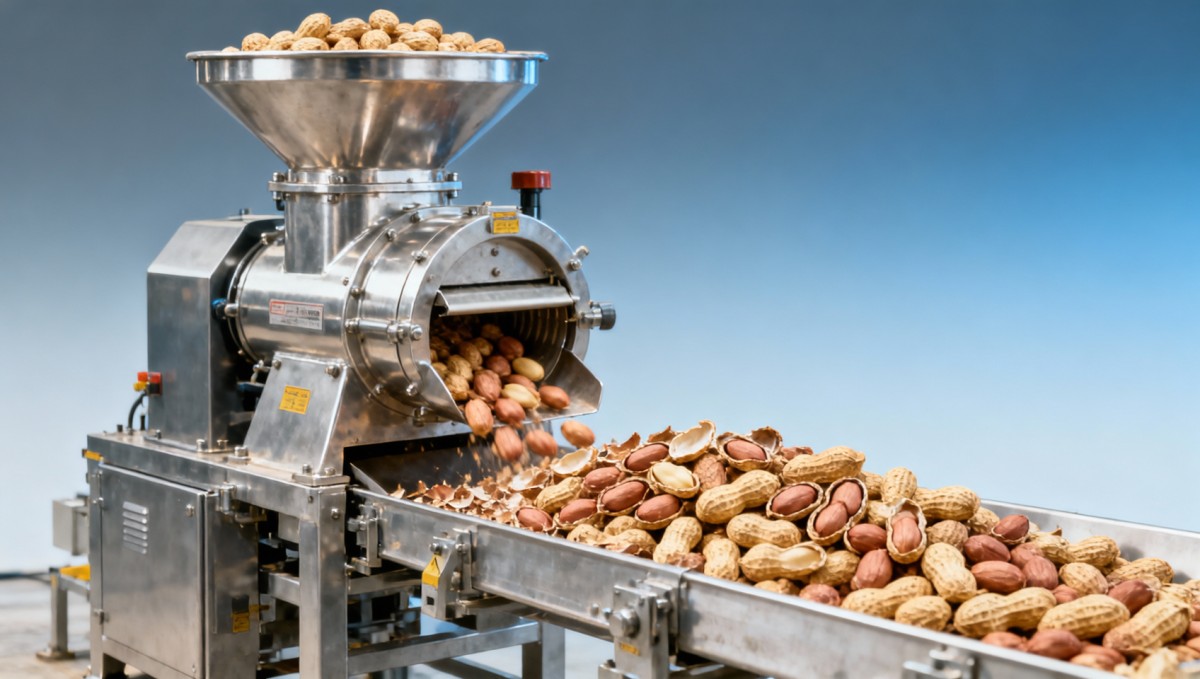
Peanut processors increasingly sell into differentiated channels: roasting, snack manufacturing, peanut butter production, seed preparation, and oil extraction. Each application values kernel integrity differently, but all are affected by uncontrolled breakage. Whole-kernel channels often command stronger pricing, while broken material can lower recovery value or increase secondary handling requirements by 1 to 2 additional sorting stages.
The challenge is that breakage is rarely caused by one factor alone. It usually results from a combination of moisture variation, shelling gap mismatch, rotor speed, feed surges, and poor separation settings. A machine rated at 800 kg/h to 3 t/h may still deliver inconsistent results if it is configured for speed rather than crop condition. For plant managers, this makes engineering flexibility more important than headline throughput alone.
Low-breakage performance also influences labor and quality control. When shelling damage rises, operators spend more time adjusting settings, quality teams see larger variance in finished lots, and downstream graders must remove more damaged kernels. In practical terms, this can increase rework, raise dust accumulation, and create more sanitation pressure over a 1-shift or 2-shift production cycle.
For distributors and project leaders, the market shift is clear: buyers are asking for evidence of stable output under variable crop conditions. That means shelling systems must be assessed not only for speed, but for controllability, wear behavior, and consistency over 8 to 12 hours of operation. Machines that reduce breakage without sacrificing line speed now have stronger value in both mature and emerging processing markets.
Core business impacts of kernel breakage
- Lower whole-kernel recovery can reduce value in edible peanut channels.
- Higher fines and fragments increase sorting, aspiration, and cleaning loads.
- Inconsistent shelling performance complicates production planning and batch quality control.
- Excessive damage may raise maintenance frequency if operators repeatedly over-tighten settings to compensate.
The table below summarizes how shelling performance metrics affect commercial outcomes across common peanut processing scenarios.
The key takeaway is that a peanut shelling machine should be evaluated as a yield-preservation asset, not merely as a bulk handling device. A slightly slower but more stable sheller can outperform a high-speed alternative if it reduces damaged kernels, lowers recirculation, and supports cleaner grading downstream.
Engineering Features That Reduce Breakage Without Limiting Output
The most effective peanut shelling machines control impact energy rather than simply increasing force. In practical machine design, this often means optimized rotor geometry, calibrated shelling clearances, and feed systems that avoid sudden load spikes. When pods enter the shelling chamber evenly, the machine can maintain high throughput with less crushing pressure on the kernel.
Adjustable shelling clearance is one of the most important features. Peanut varieties differ in pod size, shell thickness, and moisture condition. A fixed setting may work acceptably for one lot but create elevated breakage in the next. Systems that allow fine adjustment in small increments, supported by quick test runs of 50 kg to 100 kg, give operators better control over the shelling-to-damage ratio.
Speed management is equally important. Excessive rotor speed can increase throughput briefly, but it often raises impact stress and dust formation. More advanced lines use variable frequency drives so operators can tune performance based on feed condition, usually within a controlled operational window rather than one fixed maximum speed. This approach is especially useful where incoming moisture varies by season or storage age.
Separation design also affects breakage indirectly. Efficient air separation, graded screens, and controlled recirculation reduce the need for repeated aggressive shelling. If the machine can quickly separate kernels, shells, and partially opened pods, it prevents already-shelled kernels from being exposed to unnecessary second-pass damage.
Key design points to check during technical evaluation
Feed and shelling control
- Metered feeding to reduce surges that overload the shelling chamber.
- Adjustable shelling gap for different pod sizes and crop lots.
- Variable speed options to balance productivity and kernel protection.
Material handling and wear management
- Wear-resistant contact surfaces that maintain stable performance over long runs.
- Easy-access inspection points for screen cleaning and clearance checks.
- Recirculation paths designed to isolate un-shelled pods from clean kernels.
The comparison below outlines how common engineering choices influence breakage, output stability, and operating suitability.
From a technical assessment standpoint, the best shelling solutions are those that maintain a controlled process window. Buyers should request trial data under realistic feed conditions rather than accepting only nominal output claims. In many cases, the machine that performs consistently at 85% to 90% of peak speed generates better annual economics than one that only reaches its target rate under ideal crop conditions.
How to Evaluate a Peanut Shelling Machine for Procurement and Plant Use
A robust procurement review should combine technical, operational, financial, and compliance perspectives. Operators may focus on ease of adjustment, while finance teams examine power use, labor savings, and service life. Quality managers look at breakage, foreign matter carryover, and cleanliness. A good purchasing process aligns these priorities before the machine reaches the final approval stage.
The first step is to define the application. A processor handling 1 t/h of raw peanuts for edible kernels has different needs from a facility supplying oil extraction or animal feed. Buyers should specify at least four baseline conditions: desired throughput, target breakage range, moisture condition of incoming pods, and whether the machine will run as a stand-alone unit or as part of a continuous cleaning and grading line.
The second step is to validate operating stability. A machine should be observed over enough runtime to reveal feeding inconsistencies, separator performance, and wear behavior. Short demonstrations can hide practical issues. For commercial evaluation, a test duration of 2 to 4 hours is often more useful than a brief start-up run, especially when comparing machines with similar nominal capacities.
The third step is lifecycle analysis. A lower upfront price may not produce the best result if spare parts need replacement every few months, or if downtime disrupts a tightly scheduled harvest period. For many buyers, the decision should consider a 3-year to 5-year operating horizon, including maintenance labor, replacement components, and probable throughput losses from unscheduled stoppages.
A practical six-point evaluation framework
- Confirm real working capacity in kg/h or t/h under your crop condition, not only catalog output.
- Measure kernel breakage, un-shelled pods, and shell separation after at least one stable production run.
- Check motor power, energy consumption pattern, and electrical compatibility with plant infrastructure.
- Inspect changeover and cleaning time, especially if multiple varieties are processed weekly.
- Review spare parts accessibility, service response expectations, and operator training requirements.
- Assess guarding, dust control points, and alignment with internal safety management practices.
The procurement matrix below helps multidisciplinary teams compare machines in a structured way.
A structured review prevents a common procurement error: selecting a machine based only on capacity and price. In practice, value comes from stable shelling performance, predictable maintenance, and compatibility with the plant’s wider processing line.
Implementation, Maintenance, and Risk Control in Daily Operation
Even a well-designed peanut shelling machine can underperform if commissioning is rushed or operating discipline is weak. During installation, plants should verify feed consistency, machine alignment, vibration behavior, and separator tuning. A staged commissioning process over 3 phases—dry inspection, low-load trial, and full-load validation—usually provides a safer path to stable production than immediate continuous operation.
Moisture management is one of the most overlooked variables. Pods that are too dry may crack more easily, while damp material may shell incompletely and overload the recirculation loop. Operators should monitor incoming lots and avoid assuming one setting suits every batch. In many facilities, a simple pre-run check on sample condition can prevent several hours of poor-quality output later in the shift.
Preventive maintenance should focus on components that influence shelling precision: screens, shelling surfaces, bearings, drive systems, and feed controls. Inspection frequency depends on throughput and crop abrasiveness, but a basic routine of daily visual checks, weekly cleaning review, and periodic replacement planning is more effective than waiting for quality drift to reveal wear. This is especially important during harvest peaks when downtime has a high opportunity cost.
Safety and cleanliness should also be treated as production variables. Dust accumulation, unguarded moving parts, and poor housekeeping can affect both compliance and machine life. Quality and safety managers should verify that access panels, shutdown procedures, and cleaning methods support routine inspection without exposing personnel to unnecessary risk.
Common operating risks and how to reduce them
- Overfeeding the machine to chase output can sharply increase breakage and shell carryover.
- Running with worn shelling components may gradually degrade quality before obvious failure occurs.
- Skipping lot-by-lot adjustment can create avoidable losses when raw material size distribution changes.
- Poor dust management may affect sanitation, visibility, and longer-term equipment reliability.
Suggested maintenance rhythm
A practical maintenance schedule often includes operator inspection at the start of each shift, a deeper cleaning and fastener review every 40 to 60 operating hours, and a more detailed wear assessment after each major production block. The exact timing depends on material condition and machine duty, but regular trend tracking is more useful than reactive service alone.
For project managers and engineering leads, documentation matters as much as hardware. Record shelling settings, observed breakage, lot condition, and maintenance actions. Over a season, these records help identify the best operating window and support stronger purchasing decisions for future line expansion.
FAQ for Buyers, Operators, and Technical Review Teams
How do I choose the right capacity for a peanut shelling machine?
Start with required hourly throughput, then add a practical buffer rather than buying only by peak capacity. If your line needs 1.5 t/h continuously, a machine rated slightly above that level under real operating conditions is usually more useful than one with a much higher nominal rating but unstable feed behavior. Also account for pre-cleaning, sorting, and downstream packaging so the sheller does not become the line bottleneck.
Which indicators matter most during a machine trial?
Focus on at least five indicators: actual throughput, broken kernel percentage, un-shelled pod percentage, shell separation quality, and operating stability over time. A 2-hour to 4-hour test is often more informative than a short demonstration. Ask for results under feed conditions similar to your own raw material profile.
Are low-breakage shellers only relevant for large industrial plants?
No. The economics differ by scale, but low-breakage performance matters in small and medium facilities as well. Smaller processors may feel the impact even more because each percentage point of yield loss can affect unit profitability and labor efficiency. Machines in the 500 kg/h to 1 t/h range should be evaluated with the same discipline as larger industrial systems.
What is a common mistake during procurement?
A frequent mistake is prioritizing purchase price without evaluating maintenance burden, quality variability, and recirculation losses. Another is accepting generic test claims without confirming how the machine handles your peanut variety, moisture range, and intended end use. Procurement teams should involve operators and quality personnel early, not only at installation.
Peanut shelling machines that reduce breakage without slowing output create value across the full decision chain—from operators seeking stable settings to executives reviewing yield, uptime, and return on equipment investment. The strongest solutions combine controlled shelling mechanics, adaptable settings, effective separation, and disciplined maintenance. For processors, OEM partners, and industrial buyers evaluating next-step upgrades, a careful technical review can prevent costly compromises between speed and kernel quality.
If you are assessing peanut shelling systems, integrated feed and grain processing equipment, or broader primary industry machinery options, now is the right time to compare real operating data, maintenance demands, and application fit. Contact us to discuss your processing goals, request a tailored equipment evaluation framework, or explore more solution-focused insights through AgriChem Chronicle.
Related Intelligence
- Heavy Agri MachinerySilage Bale Wrapper Machine Issues in Hot WeatherSilage bale wrapper machine issues in hot weather: compare round baler machine and square baler machine setups, reduce film failure, and improve forage quality with smarter buying decisions.
- Heavy Agri MachinerySilage Bale Wrapper Machine Film Waste Comes from SetupSilage bale wrapper machine film waste often starts with setup, not film. Compare round baler machine and square baler machine risks, calibration, and agricultural plastic mulch film compatibility.
- Heavy Agri MachineryHay Balers Wholesale Pricing Is Not the Full PictureHay balers wholesale pricing is only the start. Compare square baler machine and round baler machine value, lifecycle cost, system fit, and service support before you buy.
The Morning Broadsheet
Daily chemical briefings, market shifts, and peer-reviewed summaries delivered to your terminal.
