
Why Dust Control Matters More Than Expected in Peanut Shelling Machines
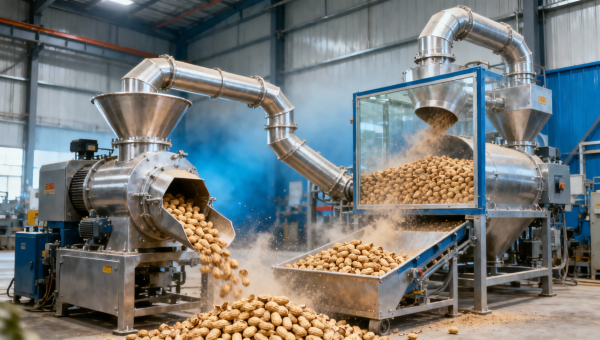
Dust control in peanut shelling machines is often underestimated, yet it directly affects operator safety, product quality, equipment lifespan, and compliance performance. For buyers comparing corn thresher machines, rice milling machines wholesale options, or a wheat flour milling plant, understanding airborne residue risks is essential. This article explains why effective dust management should be a core evaluation factor, not an afterthought, in modern processing equipment.
In peanut processing, dust is not a cosmetic issue. Fine shell fragments, kernel powder, soil particles, and fiber residues can accumulate within minutes in a busy production line. For operators, that means reduced visibility and respiratory exposure. For quality teams, it means a higher risk of cross-contamination and unstable finished product grades. For procurement and plant managers, it means more unplanned cleaning, shorter wear-part life, and higher total operating cost.
This matters across the wider primary processing sector. Whether a facility handles peanuts, maize, rice, grain, or feed materials, airborne residues influence line efficiency, compliance readiness, and downstream packaging performance. In B2B purchasing decisions, dust control should therefore be assessed with the same seriousness as throughput, shelling rate, motor power, and maintenance access.
How Dust Is Generated in Peanut Shelling Operations
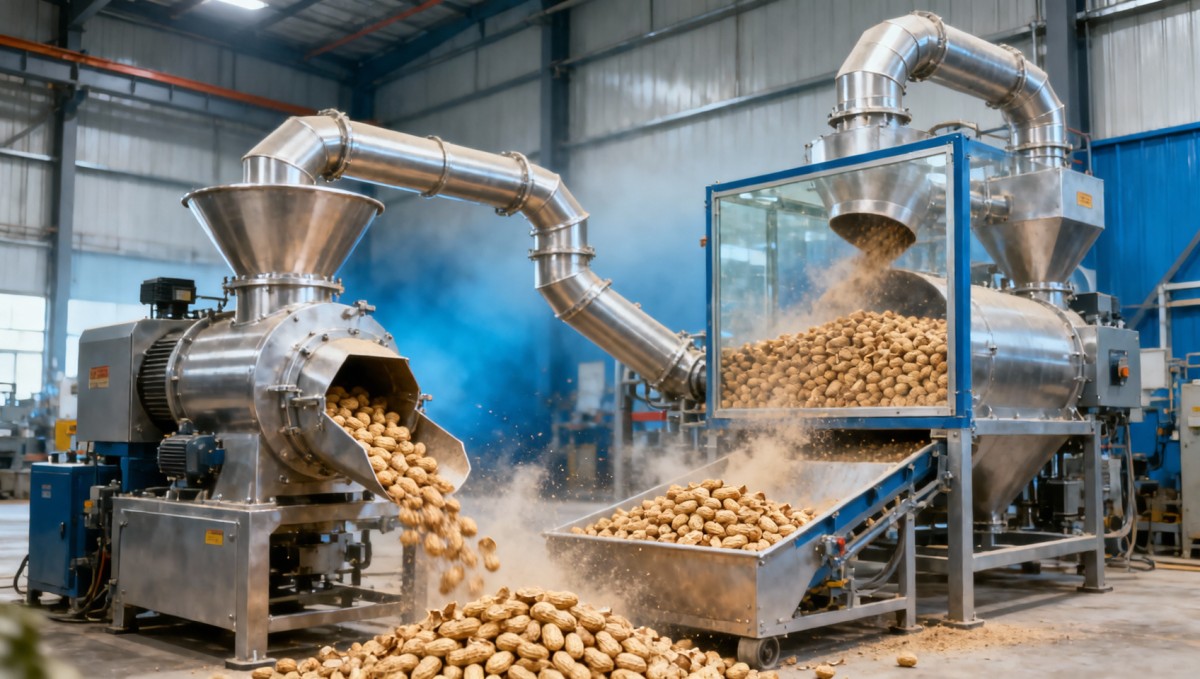
A peanut shelling machine creates dust at several stages. The first is mechanical impact, when pods enter the shelling chamber and break under friction, compression, or roller action. The second is separation, when lightweight shell particles are lifted by airflow or vibration. The third is material transfer, especially at discharge points, elevators, and open conveyors. Even a line rated at 500 kg/h to 2,000 kg/h can release a surprisingly large amount of suspended particulate if enclosure design is weak.
Dust characteristics vary by raw material condition. Peanuts with 8% to 10% moisture usually shell differently from lots above 12%, and over-dried pods often create more fines. If incoming material contains field soil, stalk fragments, or broken pods, airborne residue can increase further. In practical terms, two machines with the same nominal capacity may produce very different dust loads depending on feed consistency and pre-cleaning quality.
Another overlooked factor is machine layout. Open-frame designs, poorly sealed covers, and long exposed transfer paths allow dust to disperse into the workshop instead of being contained at the source. This is why equipment comparisons should not focus only on shelling efficiency percentages. Dust capture points, fan balancing, air routing, and the quality of seals around hoppers and outlets deserve equal attention during technical evaluation.
For mixed-processing plants, the issue becomes even more relevant. A site that also evaluates a corn thresher machine, rice milling machines wholesale systems, or a wheat flour milling plant already understands that each stage can amplify particulate movement. Peanut shelling lines should be assessed with the same systems thinking, because airborne residue rarely stays confined to one machine.
Common Sources of Airborne Residue
- Pod feeding zones where uneven loading causes impact bursts and shell breakage.
- Shelling chambers with high rotational speed but limited internal containment.
- Vibrating screens and aspirators that separate light fractions into open air.
- Discharge chutes and bagging points where drop height exceeds 300 mm to 800 mm.
- Insufficient housekeeping around floor-level residue, which is re-entrained by airflow and traffic.
Why feed condition changes dust behavior
Feed uniformity directly affects how stable the shelling process remains over a 6-hour to 12-hour shift. When pod size distribution is too wide, the machine may crack some kernels while under-shelling larger pods. That inconsistency often increases rework and creates extra fines. Plants that standardize feed grading and moisture before shelling usually find it easier to keep dust levels predictable and easier to manage.
Why Dust Control Directly Affects Safety, Quality, and Equipment Life
From a safety perspective, dust control is a frontline operational issue. Fine organic particles can irritate eyes and airways, especially in enclosed workshops with limited ventilation. Facilities running 8-hour, 16-hour, or continuous multi-shift production should pay close attention to operator exposure, cleaning intervals, and local exhaust effectiveness. Even when dust does not reach a severe hazard threshold, chronic accumulation still creates slippery floors, obscured surfaces, and higher daily cleaning demands.
Product quality is equally affected. Peanut processors selling into food, feed, or ingredient channels need stable visual cleanliness and low foreign matter carryover. Excess dust can settle back onto kernels after separation, reducing appearance quality and complicating grading. In export-oriented supply chains, poor dust management may also interfere with packaging cleanliness, weighing accuracy, and final inspection readiness. For quality control teams, dust is often a root cause behind avoidable re-sorting.
Machine lifespan is another major cost center. Dust infiltrates bearings, pulleys, electrical cabinets, fan housings, and sensor surfaces. Over time, this can raise motor temperature, accelerate belt wear, and affect sensor reliability. A machine that requires deep cleaning every 2 to 3 days instead of every 7 to 10 days will usually consume more labor hours and experience higher downtime across a quarter or fiscal year.
For compliance-minded buyers, dust also influences audit preparedness. Plants supplying regulated or specification-sensitive industries increasingly need demonstrable housekeeping routines, contamination control measures, and documented preventive maintenance. While the exact requirement depends on market and product category, equipment that supports cleaner operation is easier to integrate into structured QA and EHS programs.
Operational impact by business function
Different stakeholders experience the same dust problem in different ways. The table below shows why this topic matters beyond the machine operator alone.
The key conclusion is that dust control has cross-functional value. It reduces direct operational friction while also supporting cleaner audits, better product presentation, and more accurate total-cost analysis. In capital approval discussions, this gives technical teams a stronger case for selecting better-contained equipment even when the upfront price is moderately higher.
What Buyers Should Evaluate Before Purchasing a Peanut Shelling Machine
A smart purchasing review should move beyond nameplate capacity. Buyers should ask where dust is generated, how it is captured, and how easy the system is to clean without opening multiple exposed points. A machine rated at 1 t/h may appear attractive on throughput, but if it lacks sealed covers, negative-pressure extraction ports, or practical dust collection interfaces, the true operating cost may be higher over 12 to 24 months.
Technical evaluators should also inspect airflow design. Is there a dedicated aspiration section? Are shell and dust streams separated effectively? Can the machine connect to a cyclone, pulse filter, or central collection line? These details influence whether dust is controlled at the source or simply dispersed and cleaned later. Source control is usually the more efficient approach in medium- and large-scale facilities.
Commercial teams should translate these design details into measurable procurement criteria. Cleaning labor per shift, spare-part replacement frequency, expected downtime, and workshop sanitation effort are all cost items. In some plants, reducing 20 to 30 minutes of cleaning per shift can create meaningful annual savings, especially when 2 or 3 operators are assigned to a line.
Distributors and dealers should pay special attention to dust control because end users increasingly compare machines on maintainability and compliance support, not only purchase price. A model that is easier to commission into a cleaner line can strengthen after-sales performance and reduce complaint rates during the first 3 to 6 months of operation.
Practical decision checklist
- Confirm whether the shelling chamber is enclosed and whether inspection covers seal properly.
- Check for extraction ports and compatibility with cyclone separators, bag filters, or plant ducting.
- Review drop points, conveyor transitions, and discharge height to limit secondary dust release.
- Ask for cleaning access details, including tools required and average shutdown time per cleaning cycle.
- Compare wear-part protection around bearings, motors, and control components exposed to dust.
Evaluation factors that should be compared side by side
The table below can be used in procurement reviews when comparing peanut shelling machines with related grain and seed processing equipment.
When these factors are reviewed together, dust control becomes a procurement metric rather than an afterthought. That shift is especially valuable for enterprise buyers who need equipment that remains manageable under real operating conditions, not only during a factory demonstration.
Effective Dust Management Methods in Modern Processing Lines
The most effective strategy is layered control. First, reduce dust generation through stable feed preparation and properly adjusted shelling parameters. Second, contain emissions using sealed covers, short transfer paths, and controlled discharge points. Third, capture what remains with localized extraction connected to a cyclone, filter unit, or central dust collection system. In many facilities, the best outcome comes from combining all 3 layers rather than relying on a single correction.
Pre-cleaning is often underestimated. Removing soil, stems, and undersized debris before shelling can significantly reduce airborne residue and improve separation consistency. For lines above 1 t/h, even a modest pre-cleaning step may ease the load on aspiration and reduce cleaning time downstream. This logic also applies in facilities that operate rice milling machines wholesale systems or a wheat flour milling plant, where pre-cleaning supports cleaner core processing.
Maintenance discipline is equally important. Filters, ducts, seals, and collection bins should be checked on a defined schedule such as daily visual inspection, weekly cleaning verification, and monthly wear review. Without this routine, even a well-designed dust control system gradually loses effectiveness. Plants should also document who is responsible for cleaning and how long a full maintenance cycle should take, often 15 to 45 minutes depending on machine size.
Engineering teams should also plan air movement in the room, not just inside the machine. Poor cross-ventilation or badly positioned fans can spread settled dust back into the process area. For new projects, workshop layout should consider machine spacing, extraction routing, and bagging area isolation during the design stage rather than after installation.
A practical 5-step control model
- Screen and clean raw peanuts before shelling to remove excess field residue.
- Adjust feed rate and shelling parameters to limit unnecessary impact and fines generation.
- Seal major dust escape points around the chamber, screens, and discharge transitions.
- Install localized extraction with a collection unit matched to expected material volume.
- Verify performance through routine cleaning records, visual checks, and maintenance logs.
Typical control options by plant size
Control methods should match processing scale, labor availability, and downstream quality needs. The table below outlines common approaches.
The table makes one point clear: dust management should scale with throughput and process complexity. As facilities expand into broader grain, feed, or ingredient processing, integrated collection becomes more economical than repeated manual intervention.
Common Mistakes, FAQ, and Final Procurement Guidance
One common mistake is assuming that visible cleanliness equals effective dust control. In reality, a workshop may look acceptable at one moment while fine residues are still entering bearings, cabinets, and product contact zones. Another mistake is treating dust collection as an accessory that can always be added later without layout changes. Retrofitting often costs more and may require duct rework, extra shutdown time, and compromises in operator access.
A second mistake is evaluating machines only at no-load or short demonstration conditions. Buyers should request observation under realistic feed conditions for at least 30 to 60 minutes, with typical raw material variability. This reveals whether dust release increases as the chamber warms up, screens load, or transfer points begin to accumulate fines. Project teams should also ask how long it takes to restore the machine to clean operating condition after a normal shift.
For enterprise decision-makers, the strongest purchasing approach is to link dust control with 4 business outcomes: safer operation, better product presentation, lower maintenance burden, and easier compliance management. That framework helps technical, commercial, and financial reviewers discuss the same investment logic using different internal metrics.
In the broader processing market, buyers comparing peanut shelling machines with a corn thresher machine, rice milling machines wholesale systems, or a wheat flour milling plant should keep a consistent rule: the cleaner machine is often the more controllable machine. Cleaner operation usually supports steadier output, easier maintenance planning, and fewer downstream quality surprises.
FAQ: How do I know if a peanut shelling machine has adequate dust control?
Look for enclosed processing zones, practical extraction ports, limited open transfer points, and a clear cleaning routine. During operation, observe whether visible residue escapes around covers, screens, and discharge points after 20 to 30 minutes of running. Ask the supplier for maintenance access details and expected cleaning frequency under standard raw material conditions.
FAQ: Is dust control only important for large factories?
No. Small and medium plants can feel the impact even more because labor teams are smaller and cleaning interruptions are harder to absorb. On a compact line, saving 15 minutes per shift and reducing spillover dust in a limited workshop area can materially improve usable production time and working conditions.
FAQ: Which teams should be involved in evaluation?
The best review group includes operators, maintenance staff, a quality or safety representative, procurement, and the project or engineering lead. This 5-party view helps balance throughput expectations with workshop realities such as cleaning labor, spare-part exposure, and compliance documentation.
FAQ: What should distributors highlight to customers?
They should explain how dust control affects ownership cost, not just cleanliness. Useful talking points include fewer stoppages, simpler cleaning, better workshop conditions, and easier integration with existing collection systems. These are concrete commercial advantages that resonate with both technical evaluators and financial approvers.
Dust control in peanut shelling machines deserves a central place in equipment selection because it influences safety, quality, maintenance, and long-term operating economics at the same time. For processors, OEM partners, distributors, and project teams, the most reliable investment is a machine designed for contained, maintainable, and scalable production. If you are reviewing new processing equipment or upgrading an existing line, now is the right time to request a dust-control-focused technical comparison, get a tailored solution, and consult product details that match your throughput, compliance, and workshop requirements.
Related Intelligence
- Heavy Agri MachinerySilage Bale Wrapper Machine Issues in Hot WeatherSilage bale wrapper machine issues in hot weather: compare round baler machine and square baler machine setups, reduce film failure, and improve forage quality with smarter buying decisions.
- Heavy Agri MachinerySilage Bale Wrapper Machine Film Waste Comes from SetupSilage bale wrapper machine film waste often starts with setup, not film. Compare round baler machine and square baler machine risks, calibration, and agricultural plastic mulch film compatibility.
- Heavy Agri MachineryHay Balers Wholesale Pricing Is Not the Full PictureHay balers wholesale pricing is only the start. Compare square baler machine and round baler machine value, lifecycle cost, system fit, and service support before you buy.
The Morning Broadsheet
Daily chemical briefings, market shifts, and peer-reviewed summaries delivered to your terminal.
