
How Moisture Levels Change Results in Corn Thresher Machines
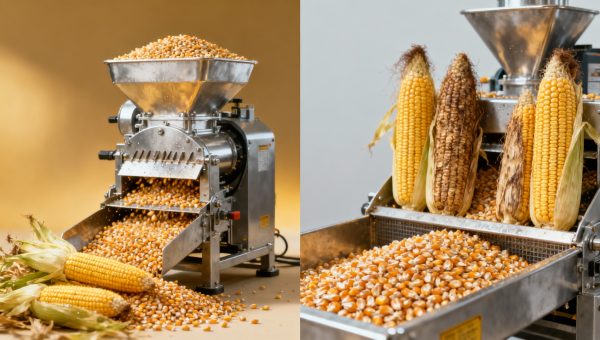
In corn thresher machines, moisture level is one of the most decisive factors affecting throughput, grain damage, separation efficiency, and storage quality. For operators, buyers, and technical evaluators comparing feed and grain equipment alongside peanut shelling machines, parboiled rice mill plant systems, or commercial flour mill machinery, understanding how wet or dry corn behaves during threshing is essential for selecting the right setup and reducing operational losses.
In practical grain handling, a difference of only 2% to 4% in kernel moisture can shift machine load, cleaning quality, and post-processing losses. That is why moisture management is not only an operating issue, but also a procurement, maintenance, and quality-control issue for feed mills, grain processors, farm operators, and industrial buyers.
For B2B decision-makers, the topic matters across the full value chain: equipment sizing, power selection, wear-part planning, storage safety, and commercial grain acceptance. A corn thresher machine that performs well at 16% moisture may show very different results at 22% or 11%, especially when daily throughput targets exceed 3 tons to 10 tons per hour.
Why Moisture Content Has Such a Strong Impact on Corn Thresher Performance
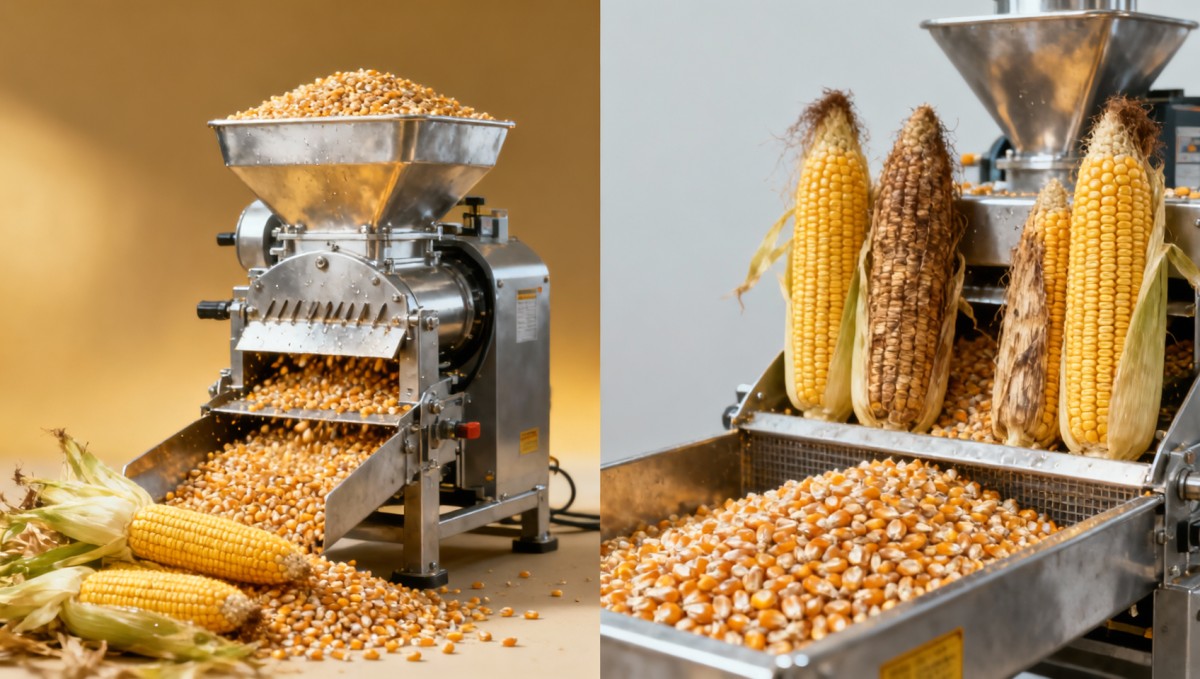
Corn kernels and cobs respond mechanically to threshing forces according to their moisture level. When corn is too wet, the kernels tend to adhere more strongly to the cob, while husk and plant residues become softer and harder to separate cleanly. When corn is too dry, kernels detach more easily, but they also become more vulnerable to cracking, splitting, and fines generation.
Most operators in feed and grain processing treat a moderate moisture range as the practical operating window. In many field and stationary threshing setups, roughly 14% to 18% moisture is often more manageable than extremes. Below that range, visible grain breakage can increase. Above 20%, separation efficiency and cleaning consistency often begin to decline unless the machine is configured specifically for wet material.
Moisture also changes friction, impact resistance, and airflow behavior inside the corn thresher machine. A wetter sample can raise power demand, increase rotor drag, and create more residue carryover into sieving and cleaning sections. A drier sample can improve throughput but may require lower drum speed or wider concave settings to avoid excessive kernel damage.
Key physical effects seen during threshing
From a technical evaluation perspective, moisture affects at least 4 measurable results: detachment force, kernel brittleness, residue separation, and safe storage condition after processing. These four variables influence not only machine output, but also downstream drying cost, transport acceptance, and product grading.
- Wet corn often needs more aggressive threshing action, which can reduce output stability over long shifts of 6 to 10 hours.
- Dry corn can produce more cracked kernels if rotor speed, feed rate, or concave clearance are not adjusted.
- Mixed-moisture batches are especially problematic because one setting may under-thresh one portion and over-thresh another.
The table below outlines how typical moisture conditions influence core performance indicators in a corn thresher machine.
For procurement teams, the main conclusion is clear: the “best” corn thresher machine is not defined by headline output alone. It must match the moisture range of the actual crop stream, seasonal harvest conditions, and the tolerance limits required by storage or resale channels.
How Wet and Dry Corn Change Throughput, Grain Damage, and Cleaning Results
In operating terms, moisture level directly influences three outcomes that buyers usually compare first: tons per hour, damaged grain percentage, and impurity carryover. These metrics are interconnected. If an operator pushes for maximum throughput on high-moisture corn, the machine may leave more unthreshed ears or send excess residue into the cleaning section. If the operator tightens settings to compensate, kernel damage may rise.
A common field reality is that high-moisture corn, especially around 20% to 25%, can lower effective throughput by 10% to 30% compared with the same machine processing moderately dried material. The exact reduction depends on feeding uniformity, drum design, sieve configuration, and whether the unit includes pre-cleaning or adjustable airflow control.
Low-moisture corn, often below 13%, can move quickly through the threshing chamber, but quality teams may see a rise in broken kernels. In feed applications, some breakage may be tolerated. In grain trading, seed handling, or premium food-grade channels, even a few additional percentage points of cracked grain can reduce product value or require extra screening.
Typical operating trade-offs
Technical evaluators should assess performance under realistic moisture bands rather than a single demonstration sample. A machine tested at 15% moisture may not deliver the same separation quality when harvest weather pushes material to 22% moisture for 2 to 3 weeks during peak season.
What operators usually observe
- Wet corn increases residue adhesion, which can reduce cleaning screen efficiency and raise recirculation needs.
- Dry corn increases brittleness, making aggressive drum speed settings more risky for grain integrity.
- Variable moisture in the same lot often causes unstable feed behavior and uneven threshing quality.
The comparison below is useful for operators, plant managers, and distributors explaining performance expectations to buyers.
The practical lesson is not to chase a single maximum output number. Instead, buyers should define acceptable ranges, such as broken grain below a target threshold, stable feed over an 8-hour shift, and cleaning losses within plant-specific limits. That approach supports more reliable commercial evaluation than headline capacity alone.
Machine Settings and Design Features That Compensate for Moisture Variability
A corn thresher machine can only handle moisture variation effectively if it offers meaningful adjustability. For mixed sourcing regions or unpredictable harvest windows, buyers should prioritize machines with controllable drum speed, adjustable concave clearance, adaptable sieve settings, and stable feeding systems. Without these controls, the machine may perform well only in a narrow moisture band.
For example, when corn arrives at 18% to 22% moisture, operators often need lower feed surges, stronger residue evacuation, and careful drum-to-concave balance to avoid plugging. When the crop is closer to 12% to 14%, the priority shifts toward reducing excessive impact and minimizing kernel cracking. The same machine can produce very different results depending on whether these adjustments are accessible and repeatable.
This is especially important for multi-product processors comparing corn equipment with peanut shelling machines, parboiled rice mill plant sections, or commercial flour mill machinery. In all these systems, raw-material condition determines how mechanical force should be applied. Corn threshing is no exception; moisture-sensitive configuration is a core selection criterion, not a minor feature.
Recommended adjustment priorities
- Match drum speed to grain brittleness and detachment resistance instead of keeping one fixed speed year-round.
- Adjust concave clearance to balance complete threshing with acceptable grain damage, especially when moisture shifts by more than 3%.
- Tune airflow and screen cleaning when wetter residue increases fine trash and adhesive material load.
- Control feed uniformity, because surges amplify the negative effects of both high moisture and low moisture conditions.
Features worth checking during procurement
Commercial buyers and project managers should ask suppliers whether settings can be changed quickly within 10 to 20 minutes, whether operators need special tools, and whether wear parts are readily available. The machine should also be evaluated for cleaning access, because sticky residue from wetter corn can increase downtime if inspection doors and discharge points are poorly designed.
Another important point is motor and transmission reserve. If a plant expects seasonal operation on corn above 20% moisture, selecting a unit with inadequate power reserve may result in unstable load, overheating risk, and reduced service life. A machine that appears economical at purchase may become more costly over 2 to 3 harvest cycles if its operating window is too narrow.
For distributors and engineering evaluators, moisture adaptability should be presented as a lifecycle value issue. Better adjustment capability can reduce grain loss, lower rework, improve storage readiness, and shorten training time for operators who handle variable crop conditions across different regions.
Procurement Criteria: What Buyers Should Ask Before Selecting a Corn Thresher Machine
Moisture-related performance should be built into the RFQ or technical review process. Too many purchases still focus mainly on nominal capacity, motor size, or price. Those factors matter, but they do not answer the main business question: how well will the corn thresher machine perform across the moisture conditions your operation actually receives for 30, 60, or 90 days per year?
For business evaluators and finance approvers, the better approach is to define measurable acceptance criteria before comparing quotations. These may include target throughput at 16%, 20%, and 23% moisture; acceptable broken grain range; ease of cleaning; estimated wear-part replacement interval; and whether the machine integrates with dryers, conveyors, or post-cleaning systems.
Quality and safety teams should also consider sanitation and residue control. Wet corn residue left inside a machine for even 12 to 24 hours can accelerate odor, contamination, or mold risk in humid environments. Therefore, access panels, cleaning procedures, and shutdown protocols deserve as much attention as headline output capacity.
Buyer checklist for technical and commercial review
The table below can be used as a practical framework during supplier discussions, pilot testing, or internal approval meetings.
This table shows that moisture handling is not a minor technical note. It is a central procurement variable that affects energy use, labor hours, machine longevity, and final grain value. For larger projects, requesting trial data across at least 2 moisture points can significantly improve selection confidence.
Common procurement mistakes
- Assuming rated capacity applies equally to wet and dry material.
- Ignoring downstream drying or storage constraints when evaluating threshing output.
- Comparing prices without comparing adjustment range, residue discharge behavior, and cleaning downtime.
A stronger purchasing decision links threshing performance to the entire process flow, from harvest intake to post-thresh drying, storage, and saleable grain grading.
Operational Best Practices, Risk Control, and FAQ for Moisture-Sensitive Threshing
Even the right corn thresher machine needs disciplined operating practice. Plants handling variable harvest material should measure incoming moisture by batch, not by assumption. A simple intake routine with regular checks every 20 to 40 tons can help operators adjust speed, feed rate, and cleaning settings before losses accumulate across a full shift.
Maintenance planning also changes with moisture condition. Wet corn generally increases residue buildup and demands more frequent cleaning of screens, chutes, and separation chambers. In busy periods, inspection intervals may need to move from once per shift to every 3 to 4 hours, especially where ambient humidity is high and residue compaction is common.
For quality-control personnel, the best monitoring indicators are usually unthreshed ear percentage, broken kernel rate, visible impurity level, and discharge consistency. These are easier to verify in real time than waiting for downstream complaints or storage problems. Operational discipline often delivers more value than chasing maximum mechanical aggression.
Best-practice routine for operators
- Measure or confirm moisture before each production batch or field section change.
- Start with conservative settings and increase threshing intensity gradually.
- Inspect broken grain and residue carryover after the first 15 to 30 minutes.
- Clean critical areas more often when moisture exceeds 20%.
- Record settings by moisture band for future harvest cycles.
FAQ: Does higher moisture always mean worse threshing?
Not always. Higher moisture usually means heavier separation work, but a properly configured machine can still perform acceptably within a defined range. The issue is whether the machine and settings are suitable for the crop condition. Problems rise when operators apply dry-corn settings to wet material or when the machine lacks enough adjustment flexibility.
FAQ: What moisture range is often easiest to handle?
Many operations find a mid-range around 14% to 18% easier to process because it balances detachment and kernel integrity. However, the ideal range still depends on corn variety, intended end use, threshing design, and whether drying follows immediately after processing.
FAQ: Should buyers request moisture-specific test results?
Yes. If your sourcing profile includes significant variation, ask for performance discussion or trial evidence at more than one moisture point. Even a comparison at 15% and 22% can reveal whether the corn thresher machine is robust enough for real operating conditions.
Moisture level changes nearly every key result in corn threshing, from capacity and breakage to cleaning labor and storage readiness. For operators, engineers, distributors, and decision-makers, the most reliable strategy is to evaluate the machine as part of a full grain-processing system rather than as a stand-alone capacity number.
If you are comparing corn thresher machines for feed and grain processing, or assessing related equipment such as peanut shelling machines, parboiled rice mill plant lines, or commercial flour mill machinery, a moisture-focused review will reduce selection risk and improve total operating value. Contact us to discuss application details, request a tailored equipment evaluation, or explore a solution matched to your crop condition and production targets.
Related Intelligence
- Heavy Agri MachinerySilage Bale Wrapper Machine Issues in Hot WeatherSilage bale wrapper machine issues in hot weather: compare round baler machine and square baler machine setups, reduce film failure, and improve forage quality with smarter buying decisions.
- Heavy Agri MachinerySilage Bale Wrapper Machine Film Waste Comes from SetupSilage bale wrapper machine film waste often starts with setup, not film. Compare round baler machine and square baler machine risks, calibration, and agricultural plastic mulch film compatibility.
- Heavy Agri MachineryHay Balers Wholesale Pricing Is Not the Full PictureHay balers wholesale pricing is only the start. Compare square baler machine and round baler machine value, lifecycle cost, system fit, and service support before you buy.
The Morning Broadsheet
Daily chemical briefings, market shifts, and peer-reviewed summaries delivered to your terminal.
