
Wholesale Water Pumps for Farming: Quality Gaps to Check
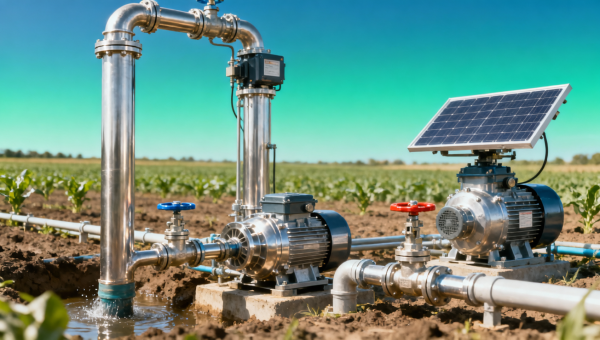
For buyers comparing wholesale water pumps for farming, the real risk often lies in hidden quality gaps that affect uptime, safety, and lifetime cost. From solar water pumps agricultural projects to submersible deep well pumps, technical due diligence matters as much as price. This guide outlines the critical checks procurement teams, engineers, and distributors should use before committing to volume orders.
What quality gaps matter most when sourcing wholesale water pumps for farming?
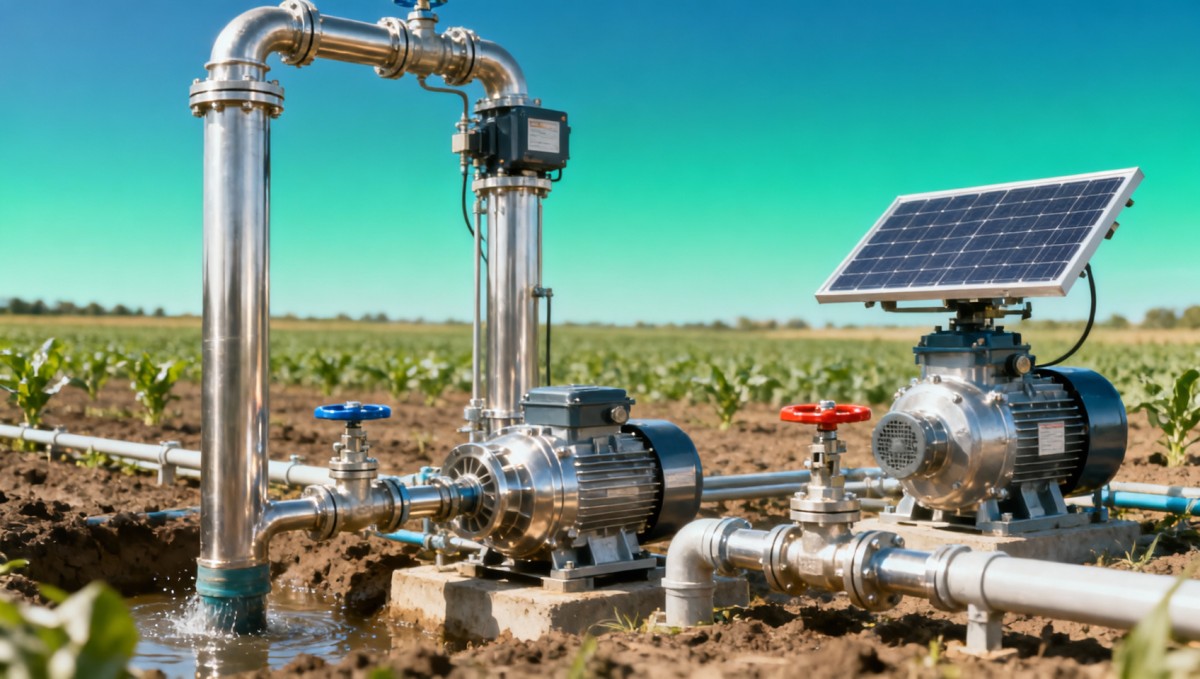
In agricultural pumping, the biggest procurement mistake is to compare only flow rate and unit price. A pump may match a 20m³/h or 50m³/h target on paper, yet still fail early because of weak sealing, unstable motor winding quality, poor casting consistency, or incomplete test records. For wholesale water pumps for farming, these gaps become more expensive at scale because downtime affects irrigation windows, livestock water access, and field labor scheduling.
Technical evaluators usually separate risk into 3 layers: hydraulic performance, electrical reliability, and material durability. Procurement teams often focus on delivered cost and lead time, while finance reviewers look at replacement frequency over 2–5 years. Quality control and safety managers, however, need evidence that each batch is traceable, testable, and aligned with the duty cycle of real farm conditions rather than ideal factory conditions.
This is especially important across mixed-use environments such as bore wells, canal transfer, fertigation systems, and solar-powered remote irrigation. A pump selected for clean water at a stable voltage may underperform in sites with silt, fluctuating power supply, long cable runs, or daily starts of 6–20 cycles. Hidden quality gaps usually appear first in seals, bearings, impellers, cable joints, and thermal protection design.
For ACC readers across agricultural machinery, aquaculture infrastructure, and regulated industrial supply chains, the practical question is simple: can the supplier prove repeatable quality under field conditions? The answer should come from documentation, inspection discipline, and application fit, not from catalog claims alone.
Five checkpoints that often expose hidden pump quality risk
- Material verification: Ask whether the impeller, shaft, and pump casing use specified grades suitable for groundwater minerals, mild corrosion, or suspended particles. Stainless steel, cast iron, and engineered polymers behave differently over 12–36 months.
- Motor build consistency: Check winding insulation class, thermal cut-off design, and voltage tolerance. In rural installations with unstable supply, motor protection can be more important than nominal power rating.
- Seal and bearing quality: Mechanical seal brand level, bearing source, lubrication design, and shaft alignment strongly influence maintenance intervals and dry-run resistance.
- Batch test evidence: Require routine test records for head, flow, current draw, and leakage checks. A supplier that cannot show serial or batch-level records creates avoidable risk for distributors and project managers.
- Spare parts continuity: Confirm whether key components can be supplied for at least 2–3 agricultural seasons, especially for large distributor orders and public-sector irrigation projects.
These checkpoints help different stakeholders make faster decisions. Engineers can validate technical suitability, procurement can compare suppliers on a common basis, and commercial teams can reduce after-sales exposure. For distributors, a consistent spare parts plan often matters as much as the initial wholesale discount.
How should buyers compare pump types for different farming applications?
Not every water pump for agriculture should be judged by the same criteria. A submersible deep well pump, a centrifugal surface pump, and a solar water pump agricultural setup each solve different field problems. Application fit should be reviewed using 4 dimensions: water source, lift requirement, power availability, and daily operating hours. A mismatch in any one dimension can erase apparent savings from a lower purchase price.
Surface pumps are often easier to inspect and service, but they can struggle with suction limitations and priming issues. Submersible deep well pumps are better for deeper groundwater extraction, yet installation quality, cable integrity, and motor sealing become critical. Solar-driven systems reduce fuel or grid dependence, though they require a more disciplined review of controller design, array matching, and irrigation timing.
Project managers should also consider usage profile. A pump operating 2–4 hours per day for orchard irrigation has a different stress pattern than one running 8–14 hours during peak seasonal demand. Aquaculture and mixed agricultural users may need more stable flow control and cleaner motor protection than open-field irrigation buyers. This is why side-by-side comparison is more useful than generic specification sheets.
The table below helps procurement teams screen common pump options before requesting quotations or technical clarification from manufacturers and distributors.
The comparison shows why a like-for-like quote review is essential. If one supplier prices only the wet end while another includes cable, control box, and protection devices, the lower number is not a real comparison. Buyers should standardize RFQ scope before negotiating unit cost, freight, or distributor margins.
Questions to ask before finalizing pump type
Application questions that prevent mismatch
- What is the actual total dynamic head, including pipe friction, elevation change, and outlet pressure requirement?
- Will the pump handle clean water only, or does the source contain sand, algae, mineral scale, or seasonal sediment?
- Is power stable, generator-based, or solar-dependent, and how many starts per day are expected in the irrigation cycle?
- Will maintenance staff be available on site, or must the pump run with limited intervention for weeks at a time?
These questions narrow the field quickly. They also help finance and commercial reviewers distinguish between low first cost and low ownership risk. In farming operations, the cheaper pump is often the more expensive asset once emergency replacement, crop stress, and technician travel are added.
Which technical parameters deserve closer scrutiny than the catalog headline?
Many wholesale pump listings highlight only horsepower, rated flow, and maximum head. Those figures matter, but they are not enough for technical assessment. Buyers should review at least 6 performance areas: operating curve range, motor efficiency behavior, material compatibility, start-stop tolerance, ingress protection, and serviceability. This is particularly relevant in agricultural machinery supply chains, where field conditions are variable and after-sales support may be decentralized.
A pump should be selected near its stable operating zone, not merely at the edge of its maximum capability. If the system requires 35m head most of the season, a pump marketed for 60m maximum head may still be a poor fit if its efficient operating window sits elsewhere. Continuous operation outside the best efficiency region can increase wear, heat, and energy use over one irrigation season.
For quality control teams, test documentation should cover electrical current, insulation integrity, leakage checks, and hydraulic verification. For safety managers, cable rating, grounding provisions, overload protection, and dry-run protection deserve special attention. In solar water pump agricultural systems, controller functionality and low-water protection should be verified as a system-level issue, not as separate components.
The following table can be used as a practical parameter checklist during supplier qualification, pre-shipment review, or distributor onboarding.
A good parameter review makes quotations easier to compare and reduces dispute risk after installation. It also supports structured approval inside organizations where engineers, procurement, finance, and compliance teams all need different decision evidence before releasing an order.
A practical 4-step technical review workflow
- Confirm field duty: define source water condition, required flow, head, daily runtime, and power supply profile.
- Match operating curve: review rated duty point, efficiency zone, and protection features against site reality.
- Check quality evidence: request routine test records, inspection photos, packaging standard, and spare parts list.
- Review after-sales risk: validate installation guidance, warranty boundaries, and critical replacement lead time, often 7–21 days depending on market and stock model.
This workflow is useful for OEM buyers, distributors, and project-based agricultural contractors. It also supports ACC’s decision-oriented editorial approach, where technical validation and supply transparency are treated as part of one procurement process rather than separate tasks.
How do procurement, compliance, and total cost connect in farm pump orders?
For many buyers, the procurement challenge is not finding a pump but defending the purchase decision across departments. Procurement may prioritize quote competitiveness, finance may focus on capital control, and project managers may need delivery in 2–6 weeks before a planting or irrigation deadline. Meanwhile, quality and safety teams want documentation covering electrical protection, material suitability, and installation risk. A workable sourcing decision must satisfy all of these concerns.
Total cost should include at least 5 elements: initial equipment cost, freight and packaging, installation accessories, energy or power-system cost, and maintenance or replacement exposure over time. In a solar water pump agricultural project, the pump price alone may represent only one portion of system value. In a deep well setup, retrieval and reinstallation costs can exceed the savings from choosing a lower-grade motor or seal arrangement.
Compliance is also a practical issue, not a paperwork issue. Buyers should verify whether the pump and accessories meet relevant destination market expectations for electrical safety, documentation clarity, labeling, and environmental handling. If pumps are bundled with controllers, cables, or switchgear, the compliance review should extend to the full delivered package. For cross-border orders, poor documentation can delay customs clearance even when the equipment itself is usable.
ACC’s strength in regulated and technically demanding sectors is especially valuable here. Readers in agriculture, primary processing, and fine-chemical supply chains are used to structured qualification, traceability review, and standard-based decision making. That same discipline improves outcomes in farm pump procurement.
Typical cost and approval risks buyers should flag early
- Unclear quotation scope: cable length, control box, non-return valve, connectors, and installation kits may be excluded from the base price.
- Seasonal lead-time pressure: during peak agricultural demand, standard models may ship in 7–15 days while customized voltage or material variants can require 3–6 weeks.
- Warranty misunderstanding: some failures are linked to dry run, sand loading, or poor electrical protection, and these conditions should be clarified before order placement.
- Distributor exposure: after-sales disputes often arise when batch quality records, installation guidance, or spare parts commitments were not defined in the sales agreement.
A balanced purchase file should include
A strong internal approval package usually contains 6 core items: application data sheet, pump curve confirmation, quotation scope list, inspection or test document, expected lead time, and after-sales/spare parts statement. This documentation helps finance reviewers understand why one supplier may not be directly comparable to another, even when nameplate power appears similar.
Where multiple farms or dealers are involved, standardizing this purchase file can shorten review cycles and reduce inconsistent buying decisions across regions. It also gives distributors a clearer basis for technical communication with end users and resellers.
FAQ: What do buyers and distributors ask most often about agricultural water pumps?
The questions below reflect common search intent from information researchers, engineers, procurement teams, and channel partners evaluating wholesale water pumps for farming. They are also useful for pre-RFQ screening and distributor training.
How do I choose between a solar water pump agricultural system and an electric submersible pump?
Start with power reliability and water source depth. If the site is off-grid or diesel cost is a long-term burden, a solar water pump agricultural setup may be attractive. If the bore depth is significant and stable electrical infrastructure exists, an electric submersible deep well pump may be easier to size precisely. In both cases, review full system fit, not only pump power.
A practical rule is to compare expected runtime, seasonal irrigation pattern, and service access. If maintenance visits are difficult and sunlight conditions vary, controller quality and protection logic become as important as the pump itself.
What should procurement teams ask for before approving a wholesale order?
Ask for duty-point confirmation, material list, routine test evidence, quotation scope details, lead time, and spare parts availability. For a first order, requesting photos of packaging, nameplate details, and basic inspection procedure is also useful. For larger orders, a pre-shipment check covering 5–8 items can reduce downstream claims.
If the supplier cannot explain how the pump performs under the intended head and daily runtime, the quote is incomplete regardless of price competitiveness.
Which failures usually indicate a hidden quality gap rather than normal wear?
Early seal leakage, repeated overheating, unstable current draw, fast impeller wear, and cable joint failure within the first months of operation often indicate quality or application mismatch. Normal wear tends to follow expected operating conditions over time, while hidden quality gaps appear disproportionately early or repeatedly across the same batch.
This is why batch consistency and test traceability matter for distributors and project contractors. A single defective unit can be isolated; a weak batch can damage the economics of the whole order.
How long is a typical delivery cycle for farming pumps?
Delivery depends on configuration, market, and season. Common stocked units may move in 7–15 days, while customized voltage, material, or controller-integrated systems may require 2–6 weeks. International shipment and documentation review can add more time, especially if the package includes electrical accessories subject to added compliance checks.
For seasonal agriculture, buyers should lock specification and accessories early rather than waiting until field demand peaks. Late changes to cable length, outlet standard, or control components can affect both lead time and landed cost.
Why consult ACC when evaluating suppliers, specifications, and procurement risk?
AgriChem Chronicle serves professional readers who do not buy on brochure language alone. Across primary industries and fine-chemical-adjacent supply chains, the same principle applies: decisions improve when technical detail, compliance awareness, and sourcing transparency are examined together. That makes ACC a practical intelligence partner for buyers assessing wholesale water pumps for farming, not just a publishing platform.
If your team is comparing agricultural water pump suppliers, ACC can help frame the evaluation around the questions that matter to engineering, procurement, finance, and channel development at the same time. This includes parameter confirmation, pump type comparison, review of application fit, documentation quality, delivery planning, and commercial risk points that are often missed in early quotation stages.
For manufacturers, OEMs, and distributors looking to reach institutional buyers, ACC also provides a high-trust environment for presenting validated manufacturing capabilities, technical documentation, whitepaper-backed product positioning, and supply-chain clarity. That is especially useful when selling into markets where irrigation equipment is reviewed by both technical and commercial decision makers.
If you are preparing a sourcing round, distributor expansion plan, or project specification review, contact ACC to discuss concrete topics such as duty-point validation, pump selection by application, lead-time expectations, documentation requirements, controller and accessory scope, spare parts planning, sample evaluation, and quotation comparison. A focused discussion at this stage can reduce rework, warranty disputes, and avoidable procurement delays later.
Related Intelligence
- Feeding & Watering SystemsWholesale Water Pumps for Farming: Quality Gaps to CheckWholesale water pumps for farming: learn how to spot quality gaps in solar water pumps agricultural and submersible deep well pumps before bulk orders—reduce downtime, risk, and lifetime cost.
- Feeding & Watering SystemsWhat Changes the Real Cost of Wholesale Farm Water PumpsWholesale water pumps for farming: learn how solar water pumps agricultural systems, submersible deep well pumps, energy, installation, and compliance shape real cost before you buy.
- Feeding & Watering SystemsJiangsu Egg Prices Stable but Shipments Accelerate Amid Rising Cold Chain DemandJiangsu egg prices remain stable as cold chain demand rises, accelerating shipments. Key industries like logistics and packaging must adapt to temperature-controlled solutions for fresh egg exports. Stay ahead with strategic冷链 partnerships.
The Morning Broadsheet
Daily chemical briefings, market shifts, and peer-reviewed summaries delivered to your terminal.
