
Agricultural Diesel Engines: Fuel Savings vs Repair Risk
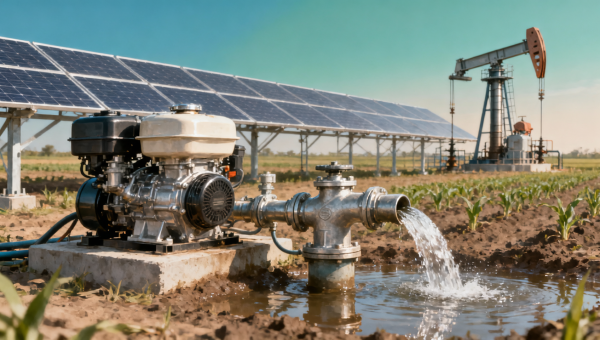
For farms weighing agricultural diesel engines against newer systems, the real question is not only fuel economy but long-term repair exposure, uptime, and compliance. This analysis compares cost efficiency with maintenance risk while placing diesel options beside solar water pumps agricultural setups, submersible deep well pumps, and wholesale water pumps for farming to help technical evaluators, procurement teams, and project decision-makers identify the most reliable investment path.
Why fuel savings alone can mislead agricultural equipment decisions
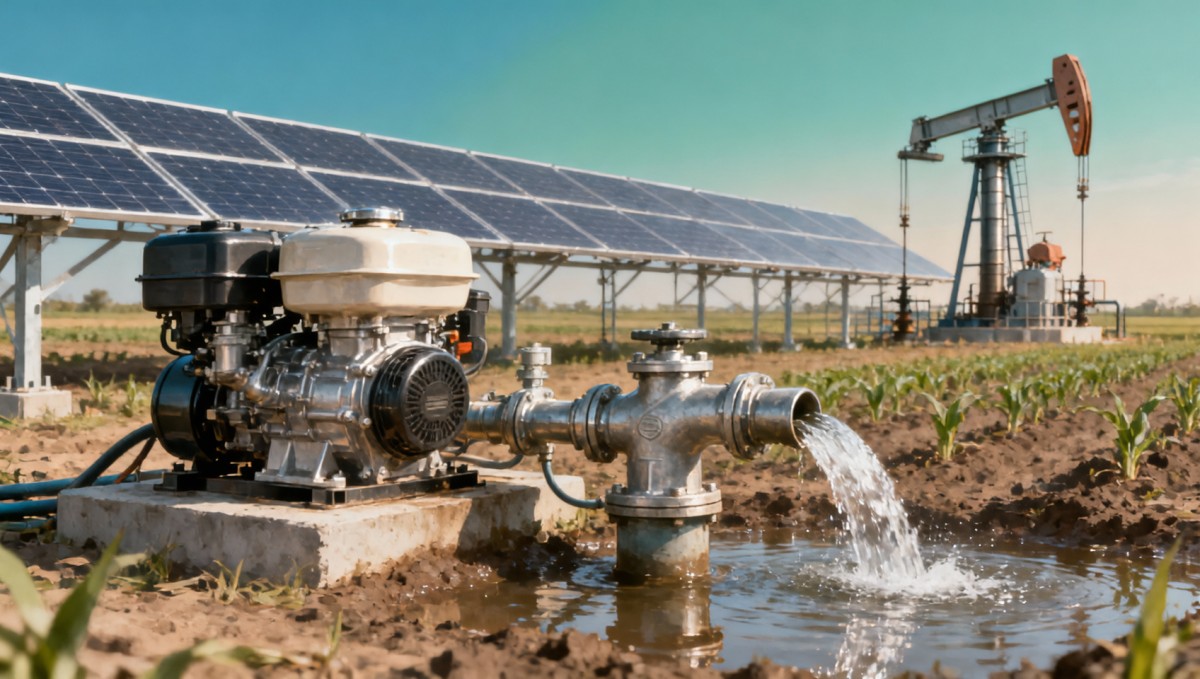
Agricultural diesel engines remain a practical power source in irrigation, field machinery, and mobile pumping because they deliver high torque, broad service familiarity, and dependable operation in remote areas. Yet for procurement teams, the real comparison cannot stop at liters per hour. A lower fuel bill during the first 6–12 months may be offset by injector wear, filtration neglect, heat-related failures, and unplanned downtime during peak irrigation or harvest windows.
This is especially important for mixed primary-industry operations that must align technical selection with budget approval, safety review, environmental controls, and supply chain transparency. In many farms and agri-processing sites, the decision is not simply diesel versus electric. It is a broader system question: engine-driven pumping, solar water pumps agricultural systems, grid-powered pump stations, or submersible deep well pumps sized for specific groundwater conditions.
AgriChem Chronicle evaluates such choices through the lens used by industrial buyers: operating continuity, repair intervals, service access, compliance exposure, and lifecycle economics. That editorial approach matters when a purchase must satisfy 5 or more stakeholders, from engineering teams and dealers to finance controllers and quality or safety managers.
For many buyers, the hidden risk appears after installation. A diesel unit may be easy to deploy within 7–15 days, but its long-term stability depends on fuel cleanliness, load profile, ambient temperature, and maintenance discipline. If the engine is paired with an oversized or poorly matched pump, the apparent savings can erode quickly through excess wear, unstable pressure, and more frequent field service visits.
The 4 decision lenses used by serious buyers
- Fuel efficiency under real load, not just nominal specifications at ideal test points.
- Repair risk across injectors, cooling systems, seals, lubrication, and starter systems over 2–5 operating seasons.
- Downtime cost during irrigation cycles, livestock support, crop establishment, or post-harvest processing.
- Compliance and site constraints, including emissions expectations, fuel storage controls, and water extraction design.
Agricultural diesel engines vs alternative farm pumping systems
When technical evaluators compare agricultural diesel engines with alternatives, the best answer depends on duty cycle, water source depth, mobility requirements, and local energy access. Diesel remains strong where farms need portable, high-torque power and cannot rely on stable grid supply. However, solar water pumps agricultural systems can reduce recurring fuel spend in predictable daytime irrigation patterns, while submersible deep well pumps often outperform surface-mounted systems in deep groundwater extraction.
The comparison below is useful for teams reviewing not only machine price, but also installation complexity, repair patterns, and operating suitability. It also helps distributors and project managers explain why wholesale water pumps for farming should be selected as part of a complete operating system rather than as a standalone catalog item.
The table shows why agricultural diesel engines still hold value, but only in the right operating envelope. If the site demands 8–14 hours of daytime pumping with little mobility, solar or grid-linked options may produce a lower total running cost. If the project requires portability, emergency response, or operation across multiple plots, diesel can still be commercially sensible despite higher maintenance attention.
Where diesel continues to make operational sense
Diesel systems remain relevant in farms that rotate equipment between plots, manage seasonal flood drainage, or operate in regions with weak electrical infrastructure. They are also useful when project schedules do not allow extended civil works or electrical connection lead times of 2–6 weeks. In those cases, the value of immediate deployment can outweigh higher future repair exposure.
The mistake is treating diesel as the default choice for every water movement application. A fixed deep-bore irrigation project, for example, often needs a different logic than a mobile dewatering project. The engine, pump, suction design, and maintenance plan should be reviewed together. That is where a technical publication with cross-sector machinery and process insight can support more disciplined decision-making.
Key scenario split
- Choose diesel first when mobility, fast commissioning, and off-grid resilience are top priorities.
- Prioritize solar water pumps agricultural systems when predictable daytime irrigation and low recurring energy cost matter most.
- Use submersible deep well pumps when water source depth and stable borehole production are the deciding factors.
What drives repair risk in agricultural diesel engines?
Repair risk in agricultural diesel engines is rarely caused by a single component. It usually emerges from a chain of operational stresses: poor filtration, irregular oil changes, overheating under heavy load, contaminated fuel, and mismatch between engine speed and pump demand. In field conditions, these small issues accumulate over 500–1,500 operating hours and then appear as costly downtime at the worst possible moment.
For procurement officers and finance approvers, this means the cheapest quotation is not always the cheapest project. A package with weak filtration, incomplete service documentation, or no local parts plan may produce a lower upfront number but a higher 24-month ownership burden. Dealers and distributors also face reputational risk when after-sales support is not aligned with the engine’s actual use profile.
From a quality and safety perspective, diesel installations require attention to storage practices, ventilation, hot surfaces, spill prevention, and periodic inspection routines. Sites handling chemicals, grain dust, or sensitive process materials must be particularly careful about ignition sources, housekeeping, and operator training. Compliance is not identical across regions, but safe handling expectations are rising in most regulated markets.
The practical result is simple: agricultural diesel engines deliver value when the repair model is understood in advance. That includes service interval planning, spare parts availability, technician access, and operator discipline. Without those controls, nominal fuel savings can quickly become a false economy.
The 5 most common causes of avoidable diesel repair events
- Fuel contamination from water, particulates, or poorly managed storage tanks, leading to injector and pump wear.
- Cooling system neglect, especially in hot climates where blocked radiators or low coolant trigger temperature spikes.
- Extended low-load or overload operation, which can increase carbon buildup or mechanical strain.
- Late oil and filter service beyond planned intervals such as every 250–500 hours, depending on duty and manufacturer guidance.
- Poor pump matching, causing unstable operating points, vibration, seal wear, and excess fuel consumption.
For teams building an internal business case, these risk factors should be translated into three measurable categories: planned maintenance labor, expected parts replacement frequency, and cost of unplanned stoppage. That framework allows a clearer comparison against electric or solar alternatives, especially when irrigation timing is commercially critical.
How to compare lifecycle cost, not just purchase price
A credible farm equipment evaluation should separate capital expenditure from operating expenditure and then test both against expected duty. For example, an engine-driven pump with a lower initial price may still lose its advantage if fuel, routine service, and unplanned repair costs rise sharply over 18–36 months. This is the stage where many project reviews become too narrow and focus only on acquisition cost.
The next table offers a structured way to compare agricultural diesel engines with alternatives. It is not a universal financial model, but it helps project owners, commercial evaluators, and distributors build more realistic procurement discussions around cost bands, maintenance intensity, and uptime dependence.
The main insight is that lifecycle cost depends on operating pattern. A diesel package working intermittently for emergency transfer may remain cost-effective. The same package running daily for long irrigation cycles may become less attractive than solar water pumps agricultural systems or fixed electric pumping. Procurement teams should model the first 12 months, then extend to a 24–36 month view before approval.
A 6-point lifecycle cost checklist
- Estimate annual operating hours by season rather than averaging the whole year.
- Separate routine service cost from unplanned repair contingency.
- Check local fuel delivery reliability and storage handling controls.
- Quantify downtime cost for 1 day, 3 days, and 7 days of interruption.
- Review spare parts lead time, especially for injectors, seals, filters, and controllers.
- Confirm whether the proposed pump curve actually matches the water source and head requirement.
Why finance teams should care about technical matching
A mismatched pump-and-engine set can increase fuel use and maintenance frequency at the same time. That means technical review is not separate from financial approval; it is part of it. For institutional buyers and large operators, independent technical interpretation is often the missing step between vendor quotation and sound capital allocation.
Procurement guide: what technical and compliance teams should verify
In regulated and export-facing agricultural operations, procurement needs more than a price list. Technical documents, maintenance instructions, parts transparency, and site safety requirements should be checked before a purchase order is released. This is especially true where fuel-powered machinery is installed near chemical storage, feed handling, or water systems tied to environmental permits.
AgriChem Chronicle supports decision-makers by connecting equipment analysis with broader primary-industry realities: supplier validation, documentation quality, standards awareness, and operational traceability. For buyers working across machinery, biochemical production, or process sectors, this integrated view reduces the risk of siloed decisions that look efficient on paper but fail in execution.
Although exact requirements vary by jurisdiction, buyers should expect to review at least 5 categories of information before final selection: performance data, installation conditions, service intervals, operator safety controls, and environmental or site compliance implications. If a supplier cannot clearly explain these points, the offer deserves additional scrutiny.
Wholesale water pumps for farming, diesel power packs, and borehole systems should also be reviewed for logistics support. Typical concerns include spare parts lead times of 1–4 weeks, availability of field technicians, and whether startup support is included. For remote projects, service accessibility can be as important as the machine specification itself.
Procurement checks before approval
- Request the operating envelope: flow, head, expected duty cycle, ambient conditions, and fuel or power assumptions.
- Verify service intervals and parts list for the first 12 months, including filters, belts, seals, and lubricants where applicable.
- Ask for installation scope boundaries so civil, electrical, or pipework gaps do not appear after order confirmation.
- Review safety provisions such as guards, shutdown methods, ventilation needs, and spill prevention requirements.
- Confirm whether the proposal addresses local standards expectations related to emissions, water use, electrical safety, or industrial hygiene.
FAQ for buyers evaluating diesel and alternative pumping options
How do I know if agricultural diesel engines are still the right choice?
They are often still the right choice when the project needs mobility, rapid deployment, and independence from unstable power supply. They are less attractive when the site has predictable irrigation cycles, fixed infrastructure, and strong potential for solar or electric pumping over 2–3 seasons.
Are solar water pumps agricultural systems always cheaper?
Not always. They usually reduce recurring energy cost, but the commercial outcome depends on water demand timing, storage design, pumping head, and whether backup power is required. For intermittent emergency duties, diesel may still be financially reasonable despite higher fuel exposure.
When are submersible deep well pumps the better option?
They are usually preferred when water must be lifted from significant depth and the project is a fixed installation. They can improve hydraulic performance in deep boreholes, but maintenance planning must account for pulling and reinstalling the pump if service is needed.
What do distributors and dealers often overlook?
They sometimes focus on engine rating or pump price without validating the actual site duty. This creates avoidable claims, disappointed end users, and margin erosion through service callbacks. Clear application matching is the most reliable way to protect both customer results and channel reputation.
Why informed buyers use AgriChem Chronicle for evaluation and supplier discussions
In primary industries, purchasing decisions increasingly require cross-disciplinary judgment. A diesel engine or pump package is no longer assessed only by mechanics. It intersects with environmental management, documentation quality, supply chain transparency, service capability, and the commercial logic of long-term operation. That is where AgriChem Chronicle adds value for information researchers, engineering reviewers, procurement teams, and approval stakeholders.
Our editorial focus across agricultural machinery, biochemical sectors, aquaculture technology, and primary processing allows us to interpret equipment choices in a broader industrial context. Instead of isolated product claims, buyers need structured analysis that helps them compare risk, compliance exposure, and practical implementation. That is especially useful when evaluating agricultural diesel engines against solar water pumps agricultural systems, submersible deep well pumps, and wholesale water pumps for farming in one decision framework.
If your team is preparing a purchase review, distributor portfolio update, or project budget submission, contact us for support around parameter confirmation, pumping scenario comparison, expected service intervals, delivery timelines, documentation requirements, and quotation evaluation. We can also help frame supplier discussions around lifecycle cost, installation assumptions, and risk points that are often missed in early-stage procurement.
This approach is designed for decision quality. Whether you need guidance on selecting the right engine-pump configuration, comparing alternatives for a 2–4 week project rollout, reviewing compliance-sensitive site conditions, or clarifying what technical data to request before approval, AgriChem Chronicle provides a credible basis for more confident and commercially grounded decisions.
Related Intelligence
- Heavy Agri MachinerySilage Bale Wrapper Machine Issues in Hot WeatherSilage bale wrapper machine issues in hot weather: compare round baler machine and square baler machine setups, reduce film failure, and improve forage quality with smarter buying decisions.
- Heavy Agri MachinerySilage Bale Wrapper Machine Film Waste Comes from SetupSilage bale wrapper machine film waste often starts with setup, not film. Compare round baler machine and square baler machine risks, calibration, and agricultural plastic mulch film compatibility.
- Heavy Agri MachineryHay Balers Wholesale Pricing Is Not the Full PictureHay balers wholesale pricing is only the start. Compare square baler machine and round baler machine value, lifecycle cost, system fit, and service support before you buy.
The Morning Broadsheet
Daily chemical briefings, market shifts, and peer-reviewed summaries delivered to your terminal.
