
Cold Starts, Load Shifts, and Agricultural Diesel Engines
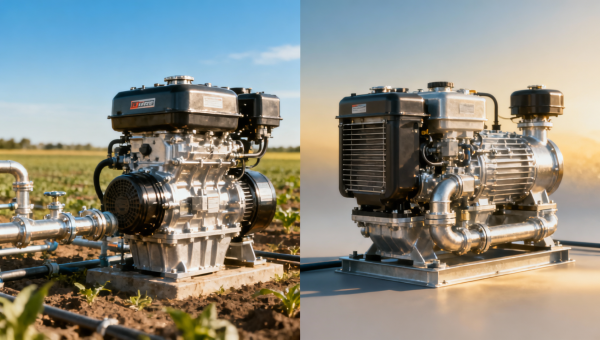
From cold starts at dawn to sudden load shifts in the field, agricultural diesel engines remain critical to reliable farm operations. For buyers comparing agricultural diesel engines with solar water pumps agricultural systems, submersible deep well pumps, or wholesale water pumps for farming, understanding durability, fuel efficiency, and application fit is essential before investing in broader equipment lines.
Why do cold starts and load shifts matter so much in agricultural diesel engines?
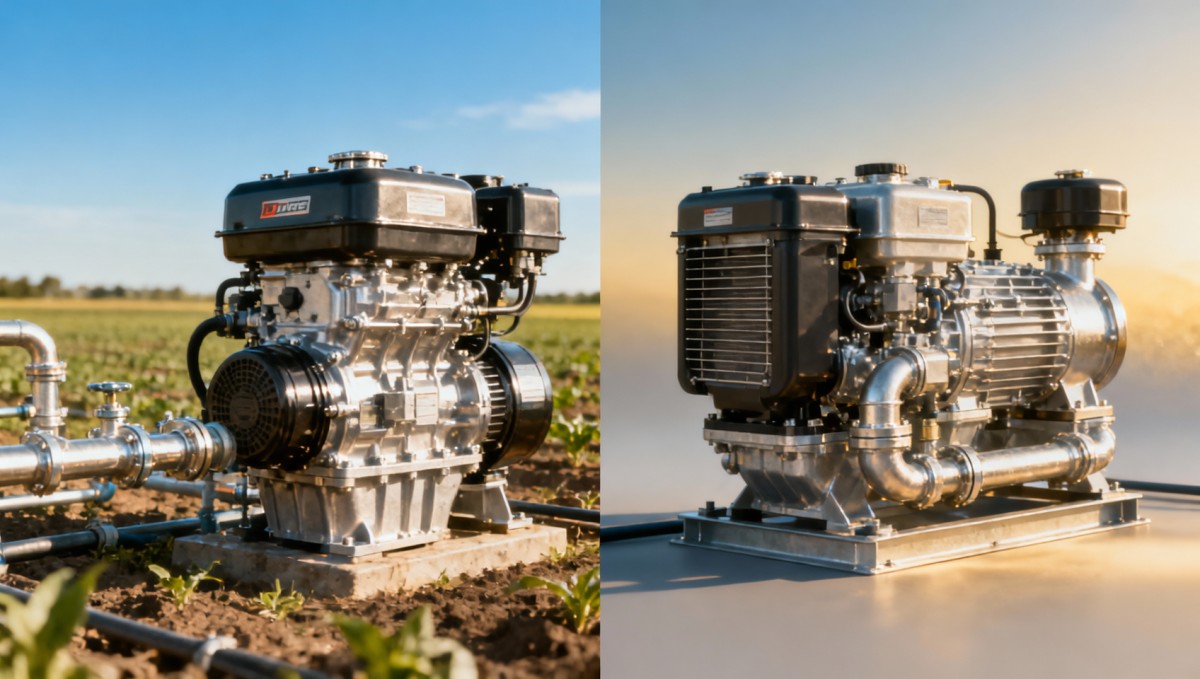
Agricultural diesel engines operate in conditions that are far less predictable than many industrial prime movers. A tractor, irrigation power unit, grain handling system, or mobile field generator may start in low morning temperatures, idle briefly, and then move to heavy torque demand within minutes. That pattern creates stress on lubrication, combustion stability, battery systems, injectors, and cooling circuits. For technical evaluators and project managers, the issue is not only whether an engine starts, but whether it starts cleanly, responds under load, and protects service life over a full planting or harvest cycle.
Cold starts usually expose weaknesses in fuel atomization and compression performance. In practical field conditions, engines may need to start reliably after 8–12 hours of overnight standstill and then reach useful operating output in a short warm-up window of 3–10 minutes, depending on ambient temperature, engine size, and accessory load. If the engine struggles at ignition, operators often compensate with longer idling, repeated cranking, or improvised heating methods, all of which increase wear and fuel consumption.
Load shifts are equally important. A diesel engine on a sprayer or field pump may face gradual load ramps, but a unit driving a threshing system, compressor, or PTO-linked machinery may see abrupt changes in torque demand. When load changes occur too quickly for the governor and fuel system to stabilize, buyers may notice black smoke, speed drop, vibration, or overheating. For procurement teams, these are not minor operating issues; they affect labor efficiency, fuel budget, maintenance scheduling, and the risk of downtime during narrow seasonal windows.
This is where informed technical publishing has value. AgriChem Chronicle supports buyers and industrial decision-makers by translating complex machinery performance into procurement logic: how an engine behaves in cold starts, how it handles fluctuating field duty, which support documents matter, and how those findings fit into a larger equipment line that may also include solar water pumps agricultural solutions, deep-well pump systems, and hybrid farm utilities.
Three operational stress points buyers should examine
- Start-up reliability after overnight shutdown, especially in seasonal temperature swings from about 0°C to 15°C in temperate farming regions.
- Transient load recovery when field equipment shifts from light duty to heavy duty in less than 5–15 seconds.
- Continuous-duty thermal control during irrigation, grain transport, or processing runs that may extend 4–10 hours per day.
How do agricultural diesel engines compare with farm pumping alternatives?
Many buyers are no longer evaluating agricultural diesel engines in isolation. They compare them against solar water pumps agricultural packages, submersible deep well pumps, and wholesale water pumps for farming because capital planning increasingly covers the whole farm utility network rather than a single power source. The right choice depends on duty cycle, mobility, water depth, available sunlight, fuel logistics, maintenance skill, and how often the operation needs portable or multi-purpose power.
Diesel engines remain strong where torque reserve, portability, and rapid load response are required. They are often preferred for mobile pumping, mixed-duty farm machinery, emergency backup, and locations where the same engine platform may support transport, processing, and field operations. In contrast, solar water pumps agricultural systems can offer lower routine energy costs for predictable daytime irrigation. Submersible deep well pumps are effective where static water level, bore depth, and fixed-site pumping dominate the decision.
Procurement teams should avoid simplistic replacement thinking. A solar system is not always a substitute for an agricultural diesel engine, just as a diesel-driven surface pump is not always the correct answer for a deep well. In many cases, the most economical choice over 2–5 years is a mixed portfolio: diesel for peak and emergency duty, and electric or solar pumping for stable daily water transfer. This comparison becomes especially relevant for distributors and engineering project leaders building complete farm infrastructure offers.
The table below highlights where each option typically fits best. It is not a brand ranking. Instead, it is a procurement-oriented view designed to reduce mismatch risk before RFQ issuance or pilot deployment.
For business evaluators and finance approvers, the core lesson is straightforward: compare technologies by duty profile, not by headline price alone. A lower-energy pumping system may still require backup assets, while a diesel engine with higher running cost can protect uptime in critical 2–6 week harvest or irrigation windows. Good sourcing decisions balance capex, operability, and risk exposure.
Where diesel engines still hold a clear advantage
- Sites with weak grid access and irregular water demand.
- Operations needing one engine platform for multiple attachments or seasonal tasks.
- Projects where emergency response within the same day matters more than lowest routine energy cost.
What technical performance indicators should buyers review before purchase?
Technical review should begin with the actual work profile, not the brochure maximum. For agricultural diesel engines, buyers usually need to check at least 5 core indicators: starting system robustness, power output range, torque behavior under transient load, fuel consumption under partial and rated load, and maintenance interval planning. For many farming and primary processing applications, common engine selection discussions begin around small utility bands and move upward depending on pump duty, PTO demand, and stationary process loads.
In practical procurement, power range matters because over-sizing creates unnecessary fuel use and under-sizing causes constant overload. Typical agricultural applications may evaluate compact utility engines in lower output bands for portable pumps and auxiliary drives, while heavier machines require higher torque reserves. What matters is whether the engine can absorb a 20%–40% step increase in load without unacceptable speed drop or smoke under normal field conditions.
Cold-start support components are often undervalued during RFQ comparison. Battery capacity, starter motor quality, glow or intake heating arrangement, fuel filtration, and lubricant grade compatibility all influence real-world start performance. For safety managers and quality personnel, serviceability is equally important. Easy access to filters, drains, belts, and inspection points can reduce routine maintenance time from several hours of disruptive intervention to a shorter scheduled window.
Below is a practical assessment table that can be adapted for vendor comparison. It is especially useful when a project includes agricultural diesel engines alongside wholesale water pumps for farming or hybrid pumping assets and the engineering team needs a shared evaluation language.
A disciplined technical review helps every stakeholder. Engineers validate fit. Procurement compares vendors on measurable grounds. Finance can model operating cost with fewer surprises. Dealers and distributors can standardize stock around platforms that simplify spare parts management across 2–4 adjacent equipment categories.
A four-step review sequence for technical teams
- Define the duty cycle: daily hours, ambient temperature, mobility, and typical load swing.
- Confirm the engine-to-application match: pump, tractor, generator, or processing drive.
- Review maintenance access and parts availability over a 12-month operating horizon.
- Check whether the engine platform integrates well with the wider farm utility portfolio.
How should procurement teams assess cost, compliance, and implementation risk?
A sound purchase decision for agricultural diesel engines is rarely driven by acquisition price alone. Buyers in farming, aquaculture, feed processing, and primary industry operations must also consider fuel logistics, expected maintenance burden, operator skill requirements, spare parts access, emissions obligations where applicable, and delivery timing. In many cross-border sourcing cases, the commercial decision also includes document quality, shipment packaging, country-of-origin transparency, and after-sales support pathways.
Compliance should be approached pragmatically. Requirements vary by market and application, but buyers commonly review manufacturer documentation, serial traceability, safety labeling, operating manuals, and any applicable emissions or environmental declarations for the target destination. If an agricultural diesel engine is bundled with pumping or processing equipment, the project team should also check whether the electrical, fuel, and guarding arrangements meet the receiving site’s safety expectations before commissioning.
Lead time is another overlooked cost variable. A standard platform may move in a conventional 2–6 week window depending on stock, destination, and customization. However, projects requiring enclosure changes, coupling adaptation, controller integration, or special documentation can extend that timeline. For project managers and distributors, delay in one engine component can hold up an entire irrigation or farm utility package. That is why implementation risk should be scored before PO release, not after shipment booking.
AgriChem Chronicle adds value here by connecting technical criteria with supply-chain intelligence. Our editorial framework is built for industrial buyers who need more than generic advice. By aligning machinery analysis with regulated supply-chain thinking common in chemicals, APIs, feed processing, and environmental review, ACC helps procurement teams ask sharper questions about traceability, document completeness, and long-term operational exposure.
Five procurement checks before final approval
- Verify rated duty versus actual duty cycle, including start-stop frequency and seasonal peak demand.
- Request maintenance schedules, consumable lists, and recommended service intervals.
- Confirm documentation needed for import, installation, and operator training in the target market.
- Check spare parts support for at least the first 6–12 months of operation.
- Model total ownership cost against alternatives such as solar water pumps agricultural systems or fixed electric pumping.
Common mistakes that increase ownership cost
The most common error is buying by nominal power only. This leads to engines that look acceptable on paper but run inefficiently in real duty cycles. Another frequent issue is failing to plan for fuel cleanliness, storage, and filter replacement. In dusty agricultural environments, intake and filtration service frequency can increase materially, especially during dry-season harvesting or feed handling operations.
A second mistake is treating backup systems as interchangeable. A diesel engine intended for emergency irrigation support may have very different requirements from one powering a daily grain conveyor or fish farm aeration support package. The difference affects cooling margin, run-time expectations, and maintenance cadence. Buyers who separate these use cases early usually avoid the most expensive mismatches.
FAQ: what do buyers, engineers, and distributors ask most often?
The questions below reflect common search intent among information researchers, technical reviewers, procurement officers, and channel partners comparing agricultural diesel engines with pump-based farm utility solutions. They are also useful when building an internal decision memo for finance or operational approval.
How do I know whether an agricultural diesel engine is suitable for my application?
Start with the duty profile. Define the daily run time, load variability, ambient temperature range, and whether the engine must be mobile or stationary. If your operation requires frequent relocation, emergency backup, or mixed use across pumping and machinery, an agricultural diesel engine is often a strong candidate. If your load is fixed, daylight-driven, and mainly irrigation-based, a solar water pumps agricultural package or a dedicated submersible deep well pump may deserve equal evaluation.
What should I prioritize when comparing quotations?
Compare at least 4 dimensions: actual usable output, fuel consumption under realistic load, maintenance interval support, and documentation package. A lower upfront quote may hide weaker service access, shorter consumable life, or slower spare parts response. For distributors and project integrators, compatibility with existing pump sets, couplings, and mounting arrangements can be just as important as the engine price itself.
Are agricultural diesel engines still relevant when solar and electric systems are expanding?
Yes, especially in hybrid strategies. Solar and electric systems are increasingly attractive for predictable, fixed-site loads, but agricultural diesel engines remain valuable for mobile operations, remote sites, peak load periods, and resilience planning. Many farms and industrial agricultural sites do not replace one technology with another; they combine them so that each asset covers a different operating window or risk scenario.
What is a reasonable planning horizon for maintenance and parts?
A practical approach is to budget the first 6–12 months of consumables and routine service from the beginning, then review actual field hours after the first season. Daily visual checks, weekly fluid or filter review in dusty environments, and periodic service around the manufacturer’s standard hour interval are common planning anchors. This reduces the chance that a relatively small maintenance item causes a high-cost production interruption.
Why work with AgriChem Chronicle when evaluating engines, pumps, and industrial farm systems?
AgriChem Chronicle is structured for serious industrial decision-making, not generic product browsing. Our audience includes agronomic leaders, procurement directors, industrial farming operators, and cross-border sourcing teams who need technically credible, commercially useful information. That is why our coverage does not stop at simple product descriptions. We connect machinery behavior, supply-chain transparency, regulated market expectations, and operational economics in one editorial environment.
For manufacturers, OEMs, and solution providers in agricultural machinery, feed processing, aquaculture technology, fine chemicals, and related sectors, ACC provides a credible publishing framework for technical whitepapers, validated capability narratives, and market-facing expertise. For buyers, that means faster access to more decision-ready information. For sellers, it means visibility in front of institutional purchasers who care about document quality, technical precision, and long-term operating fit.
If you are reviewing agricultural diesel engines, solar water pumps agricultural solutions, submersible deep well pumps, or wholesale water pumps for farming, ACC can help you narrow the shortlist more efficiently. You can consult on parameter confirmation, application matching, project documentation, delivery windows, compliance expectations, and content-backed supplier positioning. This is especially useful when your team includes engineering, procurement, finance, and safety stakeholders who need one aligned decision basis.
Contact AgriChem Chronicle to discuss technical selection criteria, comparative solution planning, expected lead times, certification-related questions, channel cooperation, or quotation communication support. If your organization needs a clearer framework for evaluating diesel engines alongside broader agricultural utility systems, ACC can help turn scattered technical data into a more confident purchasing decision.
Related Intelligence
- Heavy Agri MachinerySilage Bale Wrapper Machine Issues in Hot WeatherSilage bale wrapper machine issues in hot weather: compare round baler machine and square baler machine setups, reduce film failure, and improve forage quality with smarter buying decisions.
- Heavy Agri MachinerySilage Bale Wrapper Machine Film Waste Comes from SetupSilage bale wrapper machine film waste often starts with setup, not film. Compare round baler machine and square baler machine risks, calibration, and agricultural plastic mulch film compatibility.
- Heavy Agri MachineryHay Balers Wholesale Pricing Is Not the Full PictureHay balers wholesale pricing is only the start. Compare square baler machine and round baler machine value, lifecycle cost, system fit, and service support before you buy.
The Morning Broadsheet
Daily chemical briefings, market shifts, and peer-reviewed summaries delivered to your terminal.
