
Why Use a Grain Dampener Machine Before Milling?
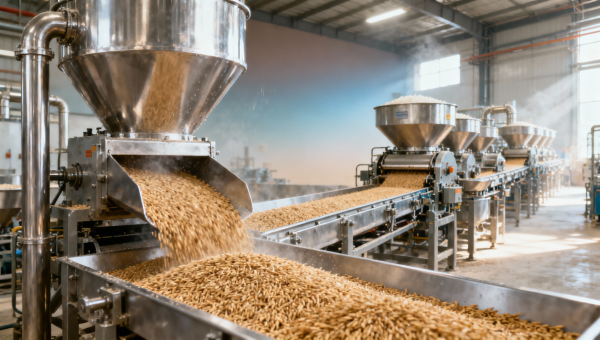
Before milling, a grain dampener machine is used to bring grain moisture closer to the optimal processing range. In practical terms, that means fewer cracked kernels, more stable husking and whitening performance, better finished product consistency, and lower avoidable loss across the line. For operators and buyers evaluating a commercial rice mill plant, this is not a minor pre-treatment detail—it directly affects yield, quality, energy use, and the performance of downstream equipment such as the paddy separator machine, paddy husker machine, rice whitener machine, rotary rice grader, rice color sorter machine, and bran finisher machine.
For most industrial users, the real question is not simply “what does a grain dampener do?” but “when does it justify the investment, what problems does it prevent, and how should it be integrated into the milling flow?” The short answer: if your incoming grain moisture is variable, kernel breakage is hurting margins, or downstream machines are delivering inconsistent results, a grain dampener machine is often one of the most practical upgrades you can make before milling.
Why a Grain Dampener Machine Matters Before Milling
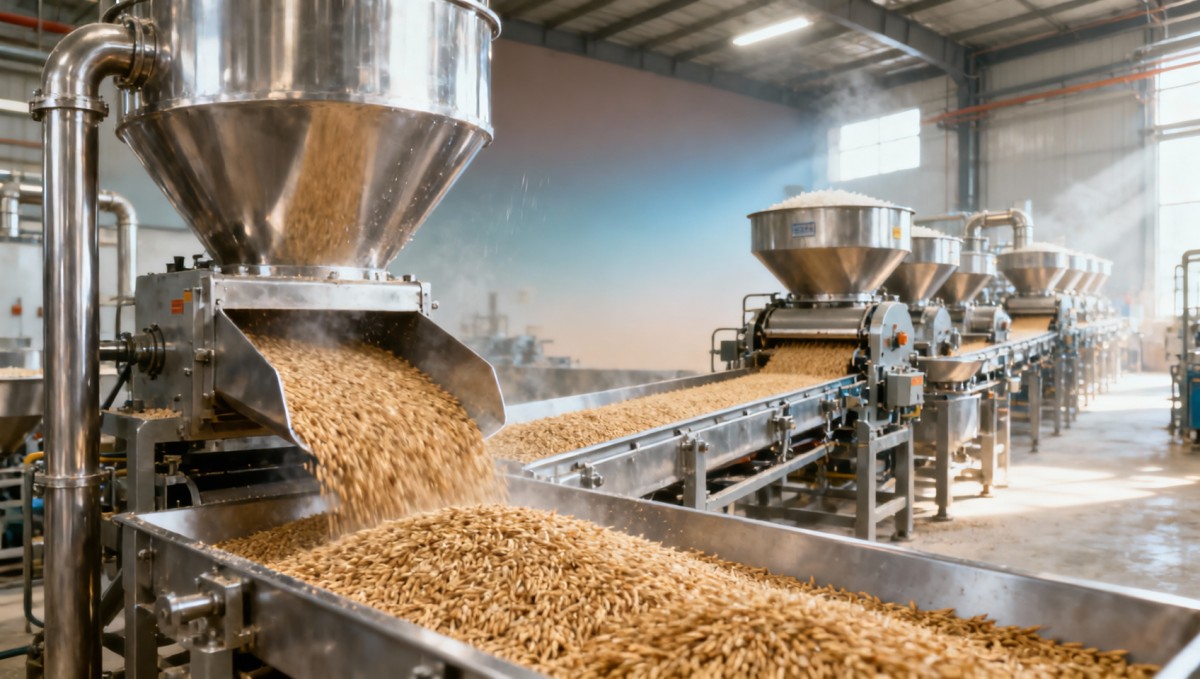
A grain dampener machine adds a controlled amount of water to the grain surface and allows moisture to distribute more evenly before mechanical processing begins. This is especially important in rice and other grain milling systems where kernel condition strongly influences how the grain responds to pressure, friction, and separation.
Without proper moisture conditioning, dry grain tends to become brittle. Brittle kernels are more likely to crack during husking, whitening, and polishing. Excessively uneven moisture can also cause unstable machine behavior, inconsistent bran removal, and reduced grading efficiency. By dampening grain before milling, processors can improve kernel resilience and create more predictable operating conditions across the plant.
In a commercial rice mill plant, that translates into measurable production advantages:
- Higher head rice yield due to reduced kernel breakage
- More consistent performance from the paddy husker machine and rice whitener machine
- Better separation and grading accuracy downstream
- Lower dust generation and reduced unnecessary product loss
- Improved process stability when raw material moisture varies by lot or season
What Problems Does It Solve for Plant Operators and Decision-Makers?
Most buyers do not invest in a grain dampener machine for theoretical reasons. They do it because certain plant problems keep recurring:
- High broken grain rate: If finished output contains too many broken kernels, the value of sellable premium product declines.
- Inconsistent raw material intake: Paddy from different suppliers, storage conditions, or harvest periods often enters the plant with uneven moisture.
- Unstable milling performance: When the grain condition changes, machine settings that worked yesterday may no longer give the same result today.
- Higher operating cost: Poor grain conditioning can raise reprocessing needs, increase waste, and reduce effective throughput.
- Quality control difficulty: Plants targeting tighter quality specifications need more control before grain reaches the main milling stages.
For technical evaluators, the key value is process control. For business evaluators and financial approvers, the key value is margin protection. For quality and safety teams, the benefit is greater consistency and reduced variability in the finished product. For project managers, a grain dampener machine can help balance the full line rather than forcing downstream machines to compensate for poor upstream grain condition.
How Moisture Conditioning Improves the Performance of Downstream Rice Mill Equipment
A grain dampener machine should not be viewed as a standalone add-on. Its real value comes from how it supports the rest of the rice milling line.
Paddy separator machine: More uniform grain condition can improve separation stability, especially where mixed feed behavior affects process consistency.
Paddy husker machine: Husking depends heavily on grain condition. Overly dry kernels are more prone to damage under mechanical action, while conditioned grain generally responds more predictably.
Rice whitener machine: Whitening is one of the stages where poor moisture balance often shows up as higher breakage, irregular surface finish, or uneven bran removal. Dampened grain usually tolerates this stage better.
Rotary rice grader: If upstream breakage is reduced, grading becomes more effective because the line is handling a more uniform output with a stronger proportion of whole kernels.
Rice color sorter machine: Better upstream conditioning cannot replace optical sorting, but it can reduce the burden caused by preventable breakage and inconsistent surface appearance.
Bran finisher machine: More stable milling behavior supports cleaner by-product handling and can improve the efficiency of bran recovery and finishing.
For procurement teams comparing complete line configurations, this is an important point: investing only in high-performance downstream machines while ignoring pre-milling conditioning can limit the return on the entire system.
When Is a Grain Dampener Machine Worth the Investment?
Not every plant needs the same level of moisture conditioning. The investment becomes easier to justify in the following situations:
- Incoming grain moisture varies significantly by supplier or season
- The plant processes large volumes where small yield improvements create major financial gains
- Broken grain is already a known profitability issue
- The line includes precision equipment that performs best under stable feed conditions
- The plant serves premium markets where product appearance and whole-kernel rate matter
- Management is trying to reduce waste, rework, or inconsistent quality claims
For enterprise decision-makers, the value case usually depends on a combination of yield recovery, throughput stability, reduced rejects, and quality premium preservation. Even a modest improvement in head rice recovery can materially change operating economics at scale.
For smaller or simpler mills, the decision may depend on how variable the raw material is and whether current losses are already acceptable. If incoming grain is consistently within an optimal moisture band and breakage is low, the urgency may be lower. But in most commercial environments with fluctuating supply quality, dampening often pays for itself through process improvement.
What Should Buyers Evaluate Before Choosing a Grain Dampener Machine?
Choosing the right grain dampener machine is less about buying the most complex unit and more about matching the machine to the plant’s process requirements.
Key evaluation factors include:
- Capacity compatibility: The dampener must match the throughput of the commercial rice mill plant to avoid creating a bottleneck.
- Moisture control accuracy: Precise and repeatable water addition matters more than nominal machine size alone.
- Mixing uniformity: Uneven dampening can create new problems rather than solving old ones.
- Residence time and conditioning design: Some plants need not only water addition but also sufficient tempering time before milling.
- Material compatibility and hygiene: Surfaces, cleanability, and corrosion resistance are important for long-term reliability and quality management.
- Automation and integration: The machine should fit with plant controls, moisture monitoring practices, and upstream/downstream equipment logic.
- Maintenance requirements: Easy inspection, cleaning, and spare parts support reduce downtime risk.
Technical teams should also ask suppliers practical questions: What inlet moisture range can the machine handle effectively? How is moisture addition controlled? What level of uniformity can be demonstrated? Is there performance data from similar grain types and plant capacities? Can the supplier support commissioning and process optimization?
Operational Best Practices: How to Get Real Results from Grain Dampening
Installing a grain dampener machine is only the first step. The actual outcome depends on operating discipline and process management.
Best practices include:
- Measure incoming grain moisture by batch or continuously where possible
- Set target moisture based on grain variety, intended product grade, and downstream process characteristics
- Allow adequate time for moisture equilibration before milling
- Monitor broken grain rate before and after implementation to verify gains
- Adjust husking and whitening parameters after dampening rather than keeping old settings unchanged
- Maintain nozzles, mixing components, and sensors to preserve consistency
One common mistake is to expect dampening alone to solve all milling quality issues. In reality, it works best as part of a controlled system that includes raw material inspection, moisture measurement, machine calibration, and feedback from finished product quality data.
Common Misconceptions About Grain Dampening Before Milling
“Adding water always slows production.” Not necessarily. Poorly controlled conditioning can create delays, but properly integrated dampening often improves total line efficiency by reducing instability and waste.
“It only matters for premium mills.” Premium mills may see the clearest value, but any operation affected by breakage, inconsistency, or variable raw material can benefit.
“Better downstream machines eliminate the need for dampening.” Advanced equipment helps, but it cannot fully compensate for grain entering the process in poor condition.
“If grain looks fine, moisture is fine.” Visual inspection alone is not enough. Moisture variation can exist even when grain appears acceptable.
Conclusion: A Small Upstream Step That Can Improve the Entire Milling Line
Using a grain dampener machine before milling is fundamentally about control. It helps prepare grain for mechanical processing, reduces avoidable kernel damage, supports more stable performance from core equipment, and improves the economics of a commercial rice mill plant. For operators, it can make daily production more predictable. For quality teams, it supports consistency. For buyers and decision-makers, it can protect yield, product value, and downstream equipment performance.
If your plant is evaluating upgrades across the paddy separator machine, paddy husker machine, rice whitener machine, rotary rice grader, rice color sorter machine, and bran finisher machine, do not overlook the condition of the grain before it reaches those assets. In many cases, the best downstream result starts with better upstream moisture conditioning.
Related Intelligence
- Milling MachineryHow to Choose a Horizontal Ribbon Blender for FeedHorizontal ribbon blender feed buying guide: compare vertical feed mixer machine options, animal feed mixers wholesale offers, and line fit for poultry, cattle, and floating fish feed plant projects.
- Milling MachineryWhy use a rotary drum sieve grain line?Why use a rotary drum sieve grain line? Discover how rotary drum sieve grain, grain pre cleaner machine, gravity separator grain, and magnetic separator for feed improve efficiency and quality.
- Milling MachineryHow to avoid grain destoner machine issues?Grain destoner machine issues explained: learn how gravity separator grain, grain pre cleaner machine, and rotary drum sieve grain setup affect performance, reduce downtime, and improve line efficiency.
The Morning Broadsheet
Daily chemical briefings, market shifts, and peer-reviewed summaries delivered to your terminal.
