
How Clean Should a Wheat Washing Machine Run Daily?
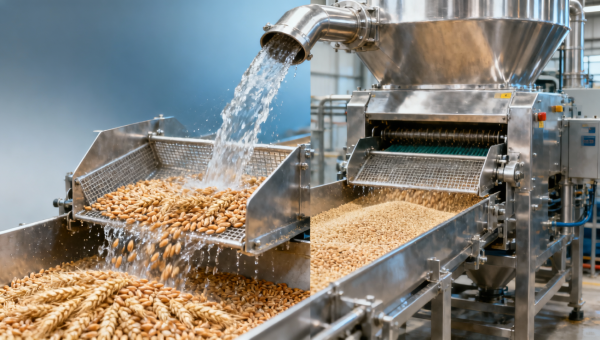
For mill operators and technical buyers, the short answer is this: a wheat washing machine should run visibly clean every day, with no persistent sludge buildup, no sour or musty odor, no standing dirty water, and no carryover that can re-contaminate washed grain. In practical terms, “clean enough” means the machine can consistently remove surface dust, mud, stones, pesticide residues on the grain exterior, and light organic contamination without becoming a contamination source itself. In processing lines that also include a paddy separator machine, rotary rice grader, rice color sorter machine, and grain dampener machine, daily sanitation is not just a housekeeping issue—it directly affects flour safety, downstream machine stability, moisture control, and operating cost.
For most commercial plants, the right standard is not sterile operation, but controlled hygienic operation: daily washdown and inspection, removal of accumulated solids, routine water management, and scheduled deeper cleaning based on throughput, wheat condition, and regulatory requirements. If the machine is leaving residue, producing off-odors, showing slime formation, or causing variable cleaning performance by the end of the shift, it is not running clean enough.
What does “clean enough” actually mean in daily wheat washing operations?
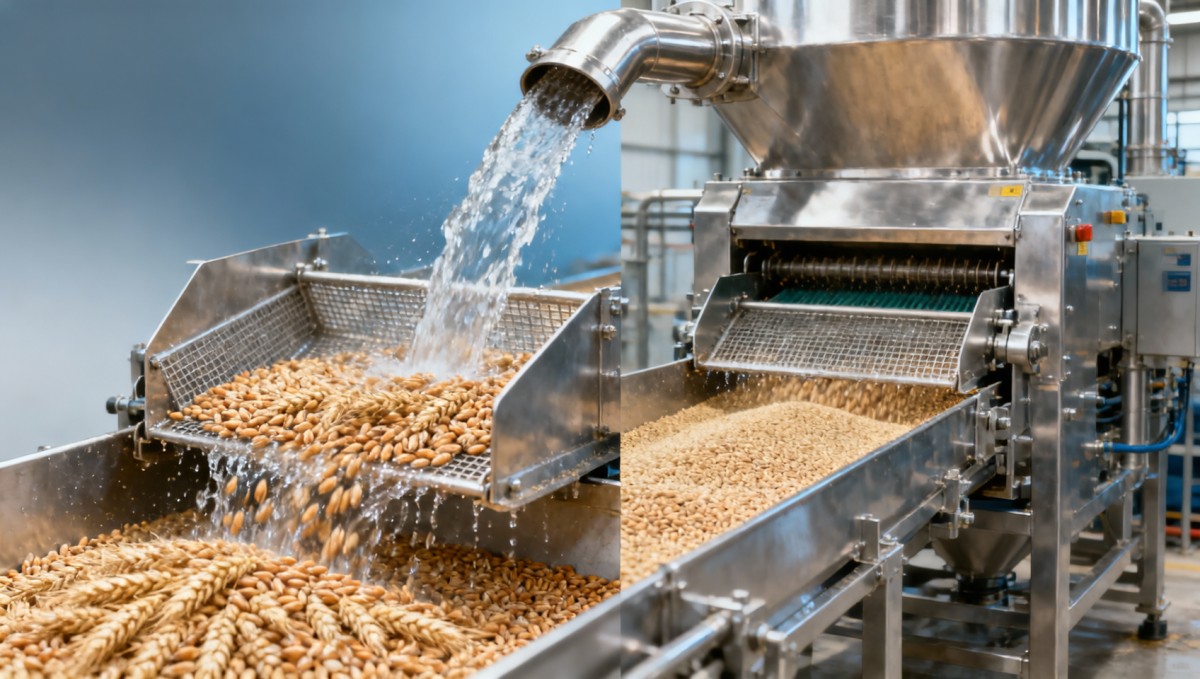
For operators, QC managers, and decision-makers, the most useful benchmark is performance-based cleanliness rather than cosmetic appearance alone. A wheat washing machine is clean enough daily when it meets five practical conditions:
- No visible buildup of mud, husk residue, organic matter, or slime on contact surfaces, augers, screens, chambers, and discharge zones.
- Wash water is controlled and does not remain excessively turbid, foul-smelling, or stagnant beyond acceptable operating conditions.
- No cross-batch carryover from previous lots, especially when grain origin, moisture, contamination level, or treatment history changes.
- Washed wheat quality remains consistent across the shift, without a drop in cleaning efficiency.
- Downstream equipment remains stable, including grain dampener machine performance, tempering consistency, and reduced fouling before milling.
In other words, the machine should finish each production day in a condition that supports safe startup the next day without hidden contamination risks. For high-throughput plants or facilities processing variable raw wheat quality, this may require more than one cleaning intervention per day.
Why daily cleanliness matters more than many plants assume
A wheat washing machine operates in one of the most contamination-sensitive points of the grain processing line: it combines raw agricultural material, water, loosened surface contaminants, and warm operating conditions that can encourage microbial growth if residues remain in the machine.
If daily cleaning is inadequate, the risks extend far beyond the washer itself:
- Food safety risk: retained organic material and dirty water can support microbial activity and contribute to sanitation failures.
- Quality variation: inconsistent washing can affect flour color, ash control, odor profile, and downstream process stability.
- Moisture management problems: if washing and draining are inconsistent, the grain dampener machine and tempering stages must compensate for uneven incoming conditions.
- Higher maintenance cost: sludge, grit, and abrasive solids accelerate wear on impellers, screens, seals, bearings, and discharge components.
- Reduced line efficiency: dirty machines clog faster, need more stoppages, and can become a bottleneck for the entire grain preparation section.
For integrated plants handling multiple grain-cleaning and grading stages, poor hygiene in the washing step can undermine the value of upstream and downstream equipment, whether that includes a paddy separator machine, rotary rice grader, or rice color sorter machine in multi-product facilities.
How often should a wheat washing machine be cleaned during the day?
The correct answer depends on throughput, raw wheat condition, water quality, plant hygiene standard, and production schedule. However, most facilities can use the following practical framework:
- Continuous visual monitoring during operation: operators should watch for foam, sludge, abnormal odor, poor drainage, or reduced washing effect.
- Light cleaning during shift changes or planned pauses: remove loose solids, flush dirty zones, and check drains and water inlets.
- Full daily cleaning after production: this is the minimum expectation for most commercial operations.
- Deeper scheduled sanitation weekly or as needed: especially if processing dirty wheat, high-moisture grain, or imported lots with variable contamination.
Plants processing exceptionally dusty or mud-heavy wheat may need intermediate cleanouts within the same day. A machine that only gets cleaned at the end of the day but visibly degrades in performance midway through production is under-cleaned.
What should operators check to judge whether the machine is still running clean?
Daily sanitation decisions should not rely on guesswork. Operators and QC personnel should use simple, repeatable checks:
- Water appearance: Is the water excessively dark, thick, or loaded with suspended solids beyond normal process conditions?
- Odor: Any sour, fermented, or musty smell is a warning sign.
- Surface condition: Check for sticky films, sediment pockets, or slime in low-flow areas.
- Drainage performance: Slow discharge often indicates residue accumulation.
- Wheat output quality: Is the grain visibly clean and consistent, or is dirt carryover increasing later in the shift?
- Downstream response: Are tempering, dampening, or milling settings becoming harder to control?
For technical evaluation teams, this is where a documented sanitation checklist adds real value. It creates traceability, supports audits, and helps correlate cleaning frequency with machine uptime, product quality, and maintenance trends.
What are the main signs that a wheat washing machine is not clean enough?
If any of the following conditions are recurring, the machine is likely operating below an acceptable daily hygiene standard:
- Residue visible on internal surfaces after normal production
- Accumulated sludge in corners, troughs, or under guards
- Persistent dirty water even after flushing
- Unpleasant odor around the washer
- Higher microbial counts or sanitation non-conformities
- Increased flour quality complaints or process variability
- Frequent clogging, accelerated wear, or abnormal power draw
- Need for operators to manually clear deposits too often
From a business perspective, these are not minor housekeeping symptoms. They usually indicate either inadequate cleaning design, insufficient cleaning frequency, poor water management, or a mismatch between machine capacity and actual raw material load.
How should plants set a realistic daily cleaning standard?
The most effective plants define cleanliness using standard operating criteria rather than vague expectations like “clean when needed.” A practical standard should include:
- Cleaning frequency by production condition — for example, normal wheat, dirty wheat, wet-weather wheat, or lot changes.
- Specific cleaning points — infeed zone, wash chamber, screens, paddles, water tank, drain path, discharge section.
- Accept/reject conditions — no visible residue, no slime, no odor, free drainage, and acceptable startup condition.
- Responsibility assignment — operator cleaning, sanitation crew cleaning, maintenance inspection, and QC verification.
- Verification records — checklist sign-off, photos where needed, and issue escalation process.
For management and financial approvers, this matters because a defined standard reduces unplanned downtime, improves audit readiness, and lowers the total cost of sanitation compared with reactive maintenance or product loss.
What should technical buyers evaluate when comparing wheat washing machines?
If the search intent behind this topic is partly procurement-driven, the key question is not only how clean the machine should run, but how easily it can be kept clean every day. That is a major ownership-cost issue.
Technical and commercial evaluators should look at:
- Cleanability of internal structure: Are there dead zones, hard-to-reach areas, or residue traps?
- Material selection: Corrosion resistance, hygiene suitability, and durability under wet abrasive conditions.
- Drainage design: Fast emptying and minimal standing water are essential.
- Access for inspection and washdown: Easy-open covers and safe cleaning access reduce labor time.
- Water control system: Stable flow, manageable consumption, and easy flushing improve sanitation outcomes.
- Integration with the full line: The washer should support consistent operation with dampening, separation, grading, and sorting equipment.
- Maintenance burden: Wear parts, cleaning downtime, and service intervals directly affect ROI.
A lower-priced machine that is difficult to clean can become more expensive over time than a better-designed unit with higher upfront cost but lower sanitation labor, lower contamination risk, and better uptime.
How clean is clean enough from a compliance and risk-management perspective?
Most grain processors are not aiming for pharmaceutical sterility, but they are expected to maintain hygienic process control, documented sanitation, and equipment conditions that do not compromise food safety. The acceptable daily standard should satisfy three tests:
- Operational test: the machine performs consistently through the shift.
- Sanitary test: no conditions likely to support contamination or recontamination.
- Audit test: the plant can show that cleaning frequency, inspection, and corrective action are defined and followed.
For quality and safety managers, this means the target is not simply “looks clean.” It is “clean enough to control risk, protect product, and demonstrate due diligence.”
Conclusion: the right daily standard is hygienic, consistent, and verifiable
A wheat washing machine should run clean enough each day to avoid becoming a contamination point, maintain stable washing performance, and protect downstream processing quality. In practice, that means no persistent residue, no foul odor, no stagnant dirty water, no excessive carryover, and no decline in cleaning effectiveness across the shift.
For operators, the priority is routine inspection and disciplined daily cleaning. For technical evaluators and buyers, the bigger question is whether the machine’s design makes that standard easy to maintain. For managers, the real value lies in lower risk, better flour consistency, stronger compliance posture, and more predictable operating cost.
If a wheat washing machine cannot stay hygienic between scheduled cleanings, or if performance visibly drops before the day ends, it is not running clean enough—regardless of whether the line also includes a paddy separator machine, rotary rice grader, rice color sorter machine, or grain dampener machine. The correct benchmark is simple: daily cleanliness should be measurable, repeatable, and sufficient to support safe, efficient grain processing.
Related Intelligence
- Milling MachineryHow to Choose a Horizontal Ribbon Blender for FeedHorizontal ribbon blender feed buying guide: compare vertical feed mixer machine options, animal feed mixers wholesale offers, and line fit for poultry, cattle, and floating fish feed plant projects.
- Milling MachineryWhy use a rotary drum sieve grain line?Why use a rotary drum sieve grain line? Discover how rotary drum sieve grain, grain pre cleaner machine, gravity separator grain, and magnetic separator for feed improve efficiency and quality.
- Milling MachineryHow to avoid grain destoner machine issues?Grain destoner machine issues explained: learn how gravity separator grain, grain pre cleaner machine, and rotary drum sieve grain setup affect performance, reduce downtime, and improve line efficiency.
The Morning Broadsheet
Daily chemical briefings, market shifts, and peer-reviewed summaries delivered to your terminal.
