
What Does a Bran Finisher Machine Improve in Processing?
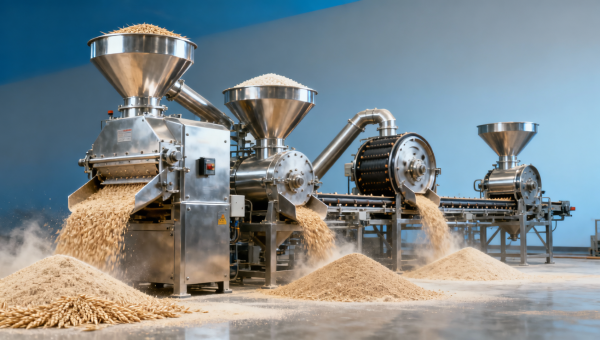
In modern grain processing, a bran finisher machine plays a vital role in improving bran recovery, reducing residue loss, and enhancing overall milling efficiency. Whether integrated into a commercial rice mill plant or paired with equipment such as a paddy separator machine, rice whitener machine, and rotary rice grader, it helps processors achieve cleaner output, better by-product value, and more consistent production performance.
For plant operators, technical evaluators, procurement teams, and project managers, the value of a bran finisher machine goes far beyond a simple polishing or residue-separation step. In a modern feed and grain processing line, even a 1% to 3% gain in bran recovery can influence by-product revenue, housekeeping workload, downstream cleanliness, and the predictability of machine utilization across an 8-hour or 24-hour operating cycle.
This matters especially in facilities where bran, broken grain, and fine flour fractions must be separated with tighter control for resale, feed use, or further processing. A well-selected bran finisher machine supports lower waste, steadier material flow, and better value capture from side streams that are often underestimated during plant design.
For business decision-makers and financial approvers, the central question is practical: what exactly does this machine improve, and how should those improvements be measured in technical and commercial terms? The answer involves recovery rate, cleanliness, particle separation efficiency, maintenance intervals, and compatibility with upstream and downstream equipment.
Core Processing Improvements Delivered by a Bran Finisher Machine
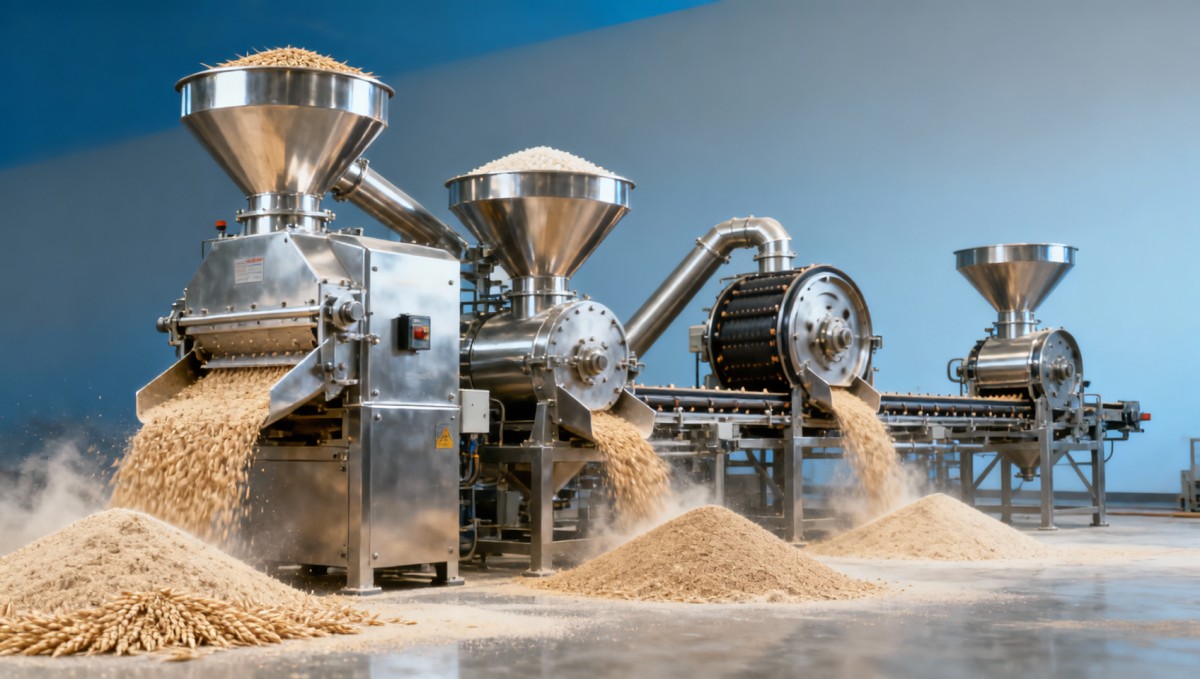
A bran finisher machine is primarily used to recover edible or usable fine particles that remain attached to bran after milling or whitening. In rice and grain processing plants, this means improving the extraction of fine endosperm residue from bran layers before the by-product is discharged, sold, or sent to feed applications. In practical terms, it improves both material utilization and output cleanliness in one step.
The first major improvement is bran recovery. Depending on raw material condition, milling intensity, and screen configuration, processors often look for incremental recovery in the range of 0.5% to 2.5%. That percentage may appear small, but on a line handling 3 to 10 tons per hour, the annual value can become significant when measured against by-product loss and finished product yield.
The second improvement is residue reduction. Bran discharged without finishing may still contain recoverable starch or floury particles, increasing loss and lowering the resale grade of separated fractions. A properly tuned bran finisher machine reduces this inefficiency by improving detachment and screening action, which helps operators maintain a cleaner separation between bran and valuable fines.
The third improvement is line stability. When material exits upstream equipment with variable moisture, inconsistent particle size, or fluctuating feed rate, the bran finisher acts as a balancing stage. It helps reduce downstream contamination, supports more stable grading performance, and decreases manual rework. In plants with continuous operation, even a 10% to 15% reduction in rehandling can ease labor pressure and improve housekeeping standards.
Where the Improvement Shows Up in Daily Operations
Operators usually notice the effect in four visible areas: lighter residue discharge, cleaner collected bran, lower volume of recoverable fines left in waste streams, and more consistent product flow into sifters or graders. These operational changes also support quality control because sampling becomes more predictable when side-stream composition fluctuates less over time.
From an engineering standpoint, the machine also reduces pressure on manual sorting and secondary recovery steps. If the bran stream contains fewer valuable particles after finishing, plants can simplify handling logic and reduce the amount of recirculation needed during busy production windows.
Typical processing metrics to monitor
- Bran recovery gain, often tracked over 7-day or 30-day production averages.
- Residue purity after finishing, checked by sieve test or visual sampling every 2 to 4 hours.
- Feed rate consistency, commonly measured in tons per hour across each shift.
- Power consumption per ton processed, used by finance and operations teams for cost review.
The table below summarizes the most relevant processing improvements that buyers and plant teams normally evaluate before adopting or upgrading a bran finisher machine.
The key conclusion is that a bran finisher machine improves both yield economics and process discipline. For high-throughput plants, small recovery gains combine with cleaner fraction control to create measurable commercial value over a full month, quarter, or harvest season.
How It Supports the Full Milling Line, Not Just the Bran Stream
A common purchasing mistake is to evaluate a bran finisher machine as a standalone unit rather than as part of a linked processing system. In reality, its performance depends heavily on what happens before and after it. Feed condition from the rice whitener machine, separator accuracy, and grading stability all influence how much usable material can be recovered and how clean the output remains.
When upstream whitening is too aggressive, bran streams may carry excessive fines, causing overload or uneven separation. When feed moisture rises beyond a practical operating band, often around 12% to 14.5% depending on grain condition, adhesion can increase and lower the machine’s finishing efficiency. That is why process teams should examine the bran finisher together with feed control, aspiration, and grading logic.
For project leaders planning a commercial rice mill plant, integration also affects layout and service access. The machine should be positioned where it can receive steady bran flow, discharge finished material without bottlenecking, and allow inspection within normal maintenance intervals. If the operator needs 20 to 30 minutes for routine cleaning but access panels are blocked, real-world efficiency will drop regardless of rated capacity.
This systems perspective matters to quality and safety teams as well. Cleaner separation reduces the amount of mixed dust and residual fines moving unpredictably through conveyors or collection points. That can support better housekeeping, lower cross-contamination risk, and more consistent sampling in regulated or specification-sensitive production environments.
Best-fit equipment combinations
In many grain and rice processing lines, the bran finisher works best when matched with stable upstream separation and downstream grading equipment. The objective is not simply to add another machine, but to create a coordinated sequence where each stage improves the next one.
- A paddy separator machine improves raw stream uniformity before whitening and reduces uneven feed conditions.
- A rice whitener machine influences how much recoverable fine material remains attached to bran.
- A rotary rice grader benefits from cleaner fraction separation and lower contamination from bran carryover.
- Dust collection and aspiration systems help maintain stable airflow and cleaner equipment surfaces.
The next table shows how the bran finisher interacts with adjacent equipment from a technical and purchasing perspective.
For procurement and engineering teams, the main takeaway is that the bran finisher machine should be specified as part of a line-performance package. Its commercial value becomes strongest when integrated with upstream conditioning, controlled feed rates, and downstream fraction handling.
Selection Criteria for Technical, Commercial, and Quality Evaluation
Selecting the right bran finisher machine requires more than comparing motor size or asking for a nominal capacity figure. Technical assessors should look at throughput range, screen design, rotor balance, vibration control, access for cleaning, and wear-part replacement frequency. Commercial teams should then connect those technical details to cost per ton, expected service intervals, and the value of recovered material.
Capacity matching is especially important. If a plant runs 4 tons per hour and buys a machine sized far above the practical bran load, separation may become unstable at partial load. If the unit is undersized, it can become a restriction point during peak operation. A realistic sizing review should consider average throughput, peak throughput, and a 10% to 20% safety margin for seasonal variability.
Quality and safety personnel should evaluate material contact surfaces, sealing, dust escape points, and ease of routine inspection. In primary processing facilities, cleaning time affects not only labor cost but also contamination control. If a machine requires frequent shutdowns longer than 30 to 45 minutes for inspection or screen clearing, total line efficiency may suffer even if recovery looks acceptable on paper.
Decision-makers should also request a clear list of consumables and service points. Bearings, screens, beaters, and balancing components all influence lifecycle cost. A lower purchase price may not be attractive if replacement parts wear quickly or delivery takes 3 to 6 weeks during harvest or export peak periods.
Practical evaluation checklist
- Confirm the effective throughput range under real material conditions, not only rated maximum capacity.
- Check whether screen opening, rotor speed, and feed characteristics can be adjusted for different grain lots.
- Review cleaning access, inspection points, and average routine maintenance time per shift or per week.
- Ask for the standard spare parts list and expected replacement cycle for wear components.
- Compare power consumption per ton and expected recovery gain to estimate payback logic.
Common purchasing misconceptions
One misconception is assuming that higher rotor intensity always means better finishing. In reality, excessive mechanical action may increase fines instability, screen wear, or unwanted particle breakdown. Another is focusing only on immediate recovery without considering dust control, maintenance downtime, and consistency across different crop batches.
A third misconception is neglecting operator skill. Even a well-designed bran finisher machine needs practical adjustment based on moisture, feed uniformity, and bran characteristics. Plants should plan for initial commissioning support and operator training over the first 3 to 7 days of routine use, not just installation.
Implementation, Maintenance, and Risk Control in Commercial Plants
Once a bran finisher machine is selected, implementation quality determines whether expected improvements are achieved. The installation stage should verify feed direction, anchoring stability, aspiration coordination, and discharge alignment with downstream conveyors or bins. Even small alignment errors can create vibration, uneven loading, or product leakage that reduces efficiency over time.
Commissioning should include at least three validation steps: dry mechanical inspection, trial run without load, and loaded operation under normal throughput. During the first 24 to 72 hours, operators should check bearing temperature, abnormal noise, residue composition, and screen condition. This early review helps identify whether the machine is recovering value efficiently or simply redistributing fines without real gain.
Preventive maintenance is equally important. In many plants, a daily visual inspection, weekly cleaning review, and monthly wear-part check provide a workable baseline. Facilities with higher dust concentration or 20-hour to 24-hour operation may need more frequent inspection. The objective is to prevent gradual performance decline, which often appears first as inconsistent residue quality rather than sudden machine failure.
Risk control should also include spare parts planning and operator accountability. If a critical screen or bearing set is not available locally, downtime can stretch far beyond the actual repair time. For busy grain processors, keeping essential wear parts on-site and documenting maintenance intervals can reduce unplanned stoppage and simplify budget forecasting.
Recommended maintenance schedule
The following schedule is a practical reference for plants aiming to protect recovery performance while controlling maintenance cost.
This schedule highlights a practical point: sustained improvement depends on disciplined upkeep. A bran finisher machine that is not cleaned, inspected, and benchmarked regularly may still run, but it will not necessarily keep delivering the recovery and residue-control benefits expected during procurement.
Risk signals that should trigger review
- Residue appears heavier or contains visibly recoverable flour after stable operation.
- Power draw rises unexpectedly over 2 to 3 consecutive shifts.
- Screen blockage frequency increases beyond normal cleaning intervals.
- Downstream grading shows more contamination or unstable fraction distribution.
FAQ for Buyers, Engineers, and Plant Teams
Because bran finishing sits between production efficiency and by-product value, it often involves cross-functional questions from operations, engineering, quality, and finance. The answers below reflect common evaluation points in commercial grain and rice processing environments.
How do I know whether my plant needs a bran finisher machine?
A plant should investigate bran finishing when residue still contains visible recoverable fines, bran resale value is lower than expected, or downstream handling frequently deals with mixed fractions. If your line processes several tons per hour and operates across multiple shifts, even small recovery losses can justify technical review. Sampling bran discharge over 5 to 7 days is a practical first step.
What performance indicators matter most during procurement?
The most useful indicators are actual recovery improvement, residue cleanliness, power use per ton, maintenance time, and wear-part replacement interval. Buyers should also assess how easily the machine integrates with the paddy separator machine, rice whitener machine, and rotary rice grader already installed. A technically sound purchase should improve the line as a whole, not just one isolated discharge stream.
How long does installation and commissioning usually take?
For a standard plant retrofit, mechanical installation may take 1 to 3 days if civil work and electrical access are already prepared. Commissioning and operator adjustment can require another 1 to 3 days depending on feed variability and system integration. More complex line modifications may extend the schedule to 1 to 2 weeks.
What are the most common operating mistakes?
The most common issues are unstable feed rate, neglected cleaning, poor moisture control, and assuming factory settings will suit every crop batch. Another frequent mistake is ignoring small performance drift until recoverable material is visibly lost. Monthly benchmarking against a baseline sample can help prevent this problem.
Is a bran finisher only useful for large industrial facilities?
No. While the financial impact becomes more visible in larger plants, medium-scale processors can also benefit if they sell bran, optimize by-product value, or need tighter control over cleanliness and separation. The decision should be based on throughput, material loss, labor impact, and product handling strategy rather than plant size alone.
A bran finisher machine improves more than bran treatment alone. It strengthens recovery, reduces avoidable residue loss, supports cleaner fraction control, and helps commercial milling lines operate with better consistency from upstream whitening to downstream grading. For technical reviewers, it is a process-efficiency tool. For financial and business teams, it is a yield-protection and value-capture asset when properly selected and maintained.
If you are evaluating upgrades for a rice mill plant or a broader feed and grain processing line, a structured review of your bran stream can uncover practical opportunities for efficiency and by-product value improvement. Contact us to discuss your processing goals, request a tailored equipment assessment, or explore more solutions for integrated grain processing performance.
Related Intelligence
- Milling MachineryHow to Choose a Horizontal Ribbon Blender for FeedHorizontal ribbon blender feed buying guide: compare vertical feed mixer machine options, animal feed mixers wholesale offers, and line fit for poultry, cattle, and floating fish feed plant projects.
- Milling MachineryWhy use a rotary drum sieve grain line?Why use a rotary drum sieve grain line? Discover how rotary drum sieve grain, grain pre cleaner machine, gravity separator grain, and magnetic separator for feed improve efficiency and quality.
- Milling MachineryHow to avoid grain destoner machine issues?Grain destoner machine issues explained: learn how gravity separator grain, grain pre cleaner machine, and rotary drum sieve grain setup affect performance, reduce downtime, and improve line efficiency.
The Morning Broadsheet
Daily chemical briefings, market shifts, and peer-reviewed summaries delivered to your terminal.
