
How to avoid grain destoner machine issues?
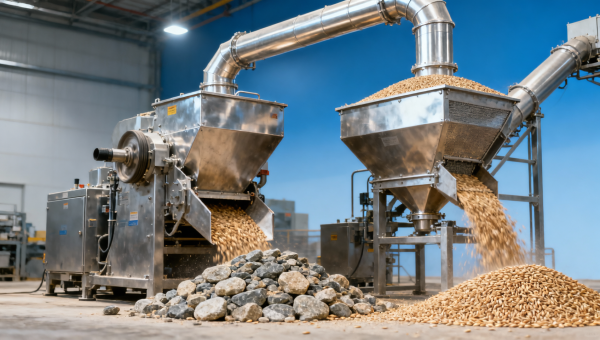
Grain destoner machine issues can disrupt throughput, reduce separation accuracy, and raise maintenance costs across modern feed and grain lines. Whether you also run a gravity separator grain system, rotary drum sieve grain unit, or grain pre cleaner machine, understanding the root causes of failure is essential for operators, buyers, and project decision-makers seeking safer, more efficient, and more reliable processing performance.
Why do grain destoner machine problems happen so often in real processing lines?
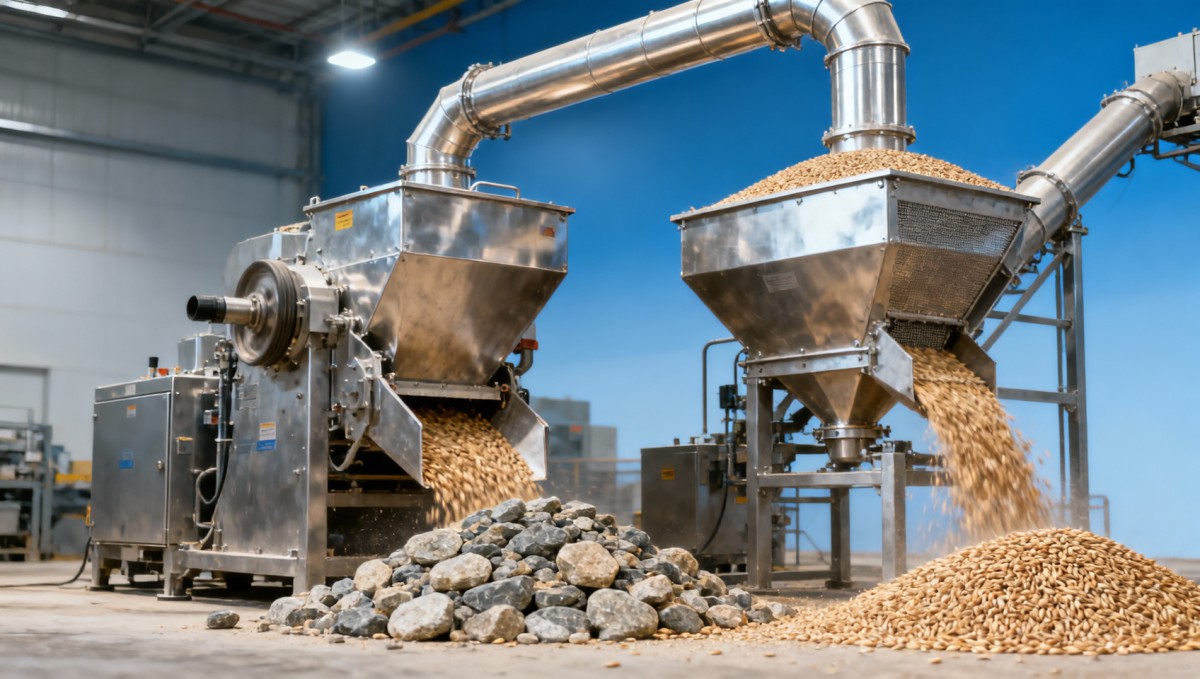
A grain destoner machine works on a simple principle: it separates stones and other high-density impurities from grain by combining air flow, vibration, deck inclination, and material distribution. In practice, however, the machine rarely operates in isolation. It is affected by upstream feed consistency, moisture variation, pre-cleaning quality, and downstream flow balance. That is why even a technically sound unit can develop recurring performance issues within 2–4 weeks of unstable plant operation.
For operators, the first visible sign is usually reduced separation accuracy. Stones begin appearing in clean grain discharge, or good grain starts leaking into the reject outlet. For procurement teams, the problem appears differently: more spare part requests, more downtime, and unclear claims about whether the issue comes from machine quality, line design, or operating conditions. For finance and project stakeholders, the concern is measurable in labor hours, yield loss, and unplanned maintenance expense.
In feed and grain processing, the most common failure drivers typically fall into 4 categories: feed instability, mechanical wear, airflow imbalance, and poor maintenance discipline. A grain destoner machine can tolerate some variation, but not unlimited variation. When feed rate shifts beyond the practical operating window, when deck mesh becomes blocked, or when suction pressure drifts outside the normal adjustment range, separation quality declines quickly.
This is where structured technical assessment matters. At AgriChem Chronicle, machinery coverage is built for industrial buyers and operational teams that need more than generic advice. In regulated and cost-sensitive supply chains, ACC focuses on technical clarity, equipment context, and decision-ready analysis so that equipment OEMs, plant managers, and sourcing teams can identify whether the root cause is process-related, configuration-related, or procurement-related before the issue scales.
The 5 most common root causes behind unstable destoning performance
- Uneven feed distribution across the deck, which creates overloaded zones and dead zones, reducing the density separation effect.
- Incorrect airflow setting, either too low to lift grain stratification or too high, causing product carryover and unstable bed formation.
- Deck wear, torn screen surfaces, or blocked perforations that interfere with vibration response and air passage after continuous use.
- Improper installation level, weak foundation, or loose fasteners, which can distort vibration behavior within a few production cycles.
- Unsuitable raw material conditions, especially when moisture, particle size, and impurity load fluctuate beyond the intended machine range.
If a line processes maize, wheat, rice, pulses, or seed lots with changing density profiles, the same machine setting may not remain valid for all batches. That is why many apparent equipment failures are in fact process-control failures. A good troubleshooting plan starts with the material itself, not only with the motor or vibration assembly.
Which symptoms indicate a setup problem, a component problem, or a raw material problem?
A useful way to avoid prolonged grain destoner machine issues is to classify symptoms correctly. Not every defect requires immediate part replacement, and not every decline in performance comes from operator error. Plants that separate diagnosis into 3 layers—setup, component condition, and material condition—usually restore stable output faster and with lower service cost.
Setup problems often appear right after commissioning, line modification, or capacity ramp-up. Typical signs include unstable bed movement, reject discharge inconsistency, and repeated adjustments that do not hold for more than 1–2 shifts. Component problems usually emerge after longer operating cycles and may involve bearing noise, vibration drift, cracked suspension parts, or abnormal fan loading. Material problems are more batch-dependent and often correlate with seasonal moisture or impurity changes.
For quality control personnel and safety managers, symptom-based diagnosis also reduces risk. If stones remain in finished grain, downstream damage can occur in grinders, pellet lines, polishers, or packaging equipment. If the machine overloads mechanically, poor maintenance response can lead to belt failure, dust leakage, and unsafe cleaning practices. Early identification prevents both product quality deviation and safety incidents.
The table below summarizes practical fault signals that buyers, operators, and project engineers can use during line audits, factory acceptance checks, or routine plant troubleshooting.
This type of fault mapping is especially useful in multi-equipment lines where a gravity separator grain system or grain pre cleaner machine may influence the destoner’s incoming material profile. A destoner cannot compensate for every upstream inconsistency. If a rotary drum sieve grain unit allows oversized trash or under-screen fines to pass irregularly, downstream separation quality will fluctuate even when the destoner itself is mechanically sound.
A practical 4-step troubleshooting sequence
- Confirm raw material condition: check moisture trend, visible impurity ratio, and particle uniformity over at least 2–3 batches.
- Verify operating settings: feed rate, fan air volume, deck inclination, and vibration behavior during live production.
- Inspect wear points: deck surface, seals, bearings, fasteners, and air ducts during scheduled downtime.
- Review line integration: assess whether upstream pre-cleaning and downstream transfer equipment are creating instability.
Following a sequence matters because random adjustment often creates secondary problems. A plant may reduce air to stop good grain loss, only to increase stone carryover in the next shift. Stable troubleshooting requires one variable at a time and a clear record of changes.
What should buyers and project teams check before selecting or replacing a grain destoner machine?
Many grain destoner machine issues are avoidable at the procurement stage. A machine can be well manufactured yet still unsuitable for the plant if the buyer focuses only on nominal capacity. In industrial feed and grain projects, capacity should be matched with material type, impurity density, moisture window, upstream cleaning level, and planned operating hours per day. A line running 8 hours with one grain type has different needs from a line running 16–20 hours across multiple crops.
Procurement teams should also evaluate maintenance accessibility, spare part standardization, and commissioning support. For project managers, delivery is not just about machine arrival in 3–8 weeks; it includes installation readiness, electrical compatibility, dust control integration, and operating documentation. For distributors and agents, serviceability matters because post-sale complaints often concentrate on setup support rather than hardware defects alone.
Financial approvers tend to compare quote totals, but lifecycle cost is usually shaped by 5 practical items: throughput stability, reject loss, wear part frequency, energy demand, and downtime hours. A lower purchase price can become more expensive if the machine needs frequent stoppage for deck cleaning or repeated recalibration. That is why technical-commercial evaluation should happen before purchase order release.
The following procurement matrix can help different stakeholders align on the same selection criteria rather than evaluating the machine from isolated perspectives.
For industrial buyers following strict internal approval workflows, these criteria also make vendor comparison more defensible. Instead of asking only “Which quote is lower?”, teams can ask, “Which solution better fits our material profile, maintenance resources, and operating schedule over the next 12–24 months?” That question usually leads to a more resilient purchasing decision.
3 selection mistakes that create future operating issues
Choosing by nominal capacity alone
Quoted capacity is often based on favorable feed conditions. If the plant handles mixed lots or higher impurity content, real operating throughput may need a safety margin rather than a theoretical maximum.
Ignoring upstream and downstream equipment influence
A grain destoner machine should be selected as part of a system. If your line includes a rotary drum sieve grain unit, bucket conveyors, aspiration channels, and a gravity separator grain setup, integration matters as much as the machine itself.
Underestimating service access and spare part planning
When plants do not keep critical wear items or lack clear maintenance intervals, minor performance drift can turn into a multi-day stoppage. Spare part planning for the first 6–12 months is usually more economical than reactive ordering.
How can operators reduce downtime, quality risk, and maintenance cost during daily use?
Daily operating discipline remains the most direct defense against grain destoner machine issues. Even a well-selected machine can underperform if startup checks are skipped or if adjustments are made without reference points. In many plants, 10–15 minutes of pre-shift inspection prevents hours of unstable running later in the day. This is especially important where the line processes changing crop lots or experiences seasonal ambient fluctuations.
Operators should maintain a stable feed curtain, not an irregular surge. Uneven loading changes bed depth and weakens density stratification. A machine that is starved or flooded will both perform poorly, just in different ways. Dust extraction should also remain balanced. Excessive suction can pull usable grain, while insufficient suction can flatten stratification and increase stone carryover.
From a quality and safety perspective, maintenance should follow fixed intervals rather than only “fix when failure appears.” A weekly visual inspection, monthly fastener check, and scheduled review of wear components after defined operating hours create a far more predictable maintenance profile. In plants with continuous or near-continuous production, these checks may need to be tightened according to duty cycle.
Operational records also matter. When a plant logs 4 basic variables—feed rate trend, air setting, material type, and fault symptom—it becomes much easier to identify patterns. This is valuable not only for operators, but also for procurement, distributors, and OEM service teams trying to determine whether a complaint is process-based or machine-based.
A practical routine for everyday operation
- Before startup, inspect the deck surface, feed gate, and reject outlet for blockage or residue from the previous shift.
- During the first 15–30 minutes, observe material movement and confirm that the stone lane and clean grain lane remain visually stable.
- At least once per shift, compare reject discharge with expected impurity level to ensure usable grain is not being lost.
- After shutdown, check vibration-related fasteners, seals, and dust leakage points before the next production cycle.
If the plant runs multiple cereals or pulses, operators should maintain setting references by product type. A single universal setting is rarely ideal across all material conditions. Recording product-specific ranges reduces trial-and-error adjustment and lowers the chance of quality deviation during changeovers.
What standards, implementation steps, and supplier support should matter before you move forward?
When a grain destoner machine is used in professional feed, grain, or primary processing environments, compliance is broader than a nameplate. Buyers should review electrical compatibility, dust-handling design, material-contact suitability where relevant, and the documentation needed for internal quality systems. Depending on the facility and export market, teams may also align specifications with general expectations around machinery safety, food processing hygiene, and environmental control.
Implementation success usually depends on 3 stages: pre-sale technical confirmation, installation and commissioning, and post-startup optimization. Weakness in any one stage can create recurring complaints that are wrongly attributed to equipment quality alone. For example, a machine delivered on time but installed on an unstable base can produce months of vibration-related issues. A technically suitable machine without adequate commissioning guidance may never reach its proper separation window.
This is why many institutional buyers and industrial project teams value technically grounded publishing and supplier communication channels. AgriChem Chronicle supports this process by presenting validated manufacturing capabilities, technical context, and application-focused analysis to a professional audience that includes agronomists, procurement directors, industrial operators, and compliance-minded decision-makers across agriculture, biochemical processing, and primary industries.
If you are evaluating a new grain destoner machine, replacing an unstable unit, or comparing solutions alongside a gravity separator grain line, rotary drum sieve grain system, or grain pre cleaner machine, the most efficient next step is a structured technical discussion rather than a price-only inquiry.
What to prepare before contacting a supplier or technical publishing partner
- Your grain type or product mix, expected hourly throughput, and whether operation is batch-based or continuous.
- Typical impurity profile, including stones, sand, metal fragments, husk, or mixed-density contaminants.
- Existing upstream and downstream equipment, especially pre-cleaners, aspiration units, conveyors, and separator systems.
- Required delivery timeline, installation constraints, power standard, and maintenance support expectations.
- Any internal quality, safety, or export-related documentation requirements relevant to your project.
Why choose us for decision support and industry visibility?
AgriChem Chronicle is positioned for technical B2B audiences that need credible, decision-oriented information across agricultural machinery, feed and grain processing, fine chemicals, and regulated industrial supply chains. Our editorial framework is built to connect verified technical capabilities with the questions that matter to buyers, operators, compliance teams, and project leaders.
You can contact ACC for support around parameter confirmation, application positioning, equipment selection logic, delivery-cycle discussion, technical content publication, certification-related communication context, and solution comparison for industrial audiences. If your goal is to reduce ambiguity before procurement or to present your machinery capabilities to serious institutional buyers, a structured consultation will produce more value than broad promotional messaging.
Share your material type, target capacity, line configuration, and current grain destoner machine issues. From there, the discussion can focus on practical next steps: selecting the right process route, clarifying operating windows, evaluating replacement options, identifying integration risks, and preparing technical content that supports informed purchasing and long-cycle industrial decision-making.
Related Intelligence
- Milling MachineryHow to Choose a Horizontal Ribbon Blender for FeedHorizontal ribbon blender feed buying guide: compare vertical feed mixer machine options, animal feed mixers wholesale offers, and line fit for poultry, cattle, and floating fish feed plant projects.
- Milling MachineryWhy use a rotary drum sieve grain line?Why use a rotary drum sieve grain line? Discover how rotary drum sieve grain, grain pre cleaner machine, gravity separator grain, and magnetic separator for feed improve efficiency and quality.
- Milling MachineryHow to avoid grain destoner machine issues?Grain destoner machine issues explained: learn how gravity separator grain, grain pre cleaner machine, and rotary drum sieve grain setup affect performance, reduce downtime, and improve line efficiency.
The Morning Broadsheet
Daily chemical briefings, market shifts, and peer-reviewed summaries delivered to your terminal.
