
Who should use a gravity separator grain?
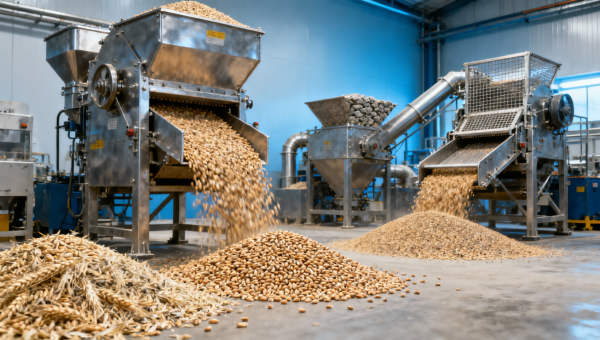
A gravity separator grain system is best suited for processors that need more than basic cleaning. If your operation must remove low-density defects, improve product uniformity, reduce contamination risk, and protect downstream equipment performance, a gravity separator is often a practical investment. In real-world terms, that usually includes feed mills, grain processing plants, seed processors, pulse and cereal handlers, exporters, and facilities working under tighter quality or compliance requirements. For buyers, operators, and project managers, the key question is not simply “what is a gravity separator,” but “when does density separation create measurable value in my line?”
Who is the right user of a gravity separator grain system?
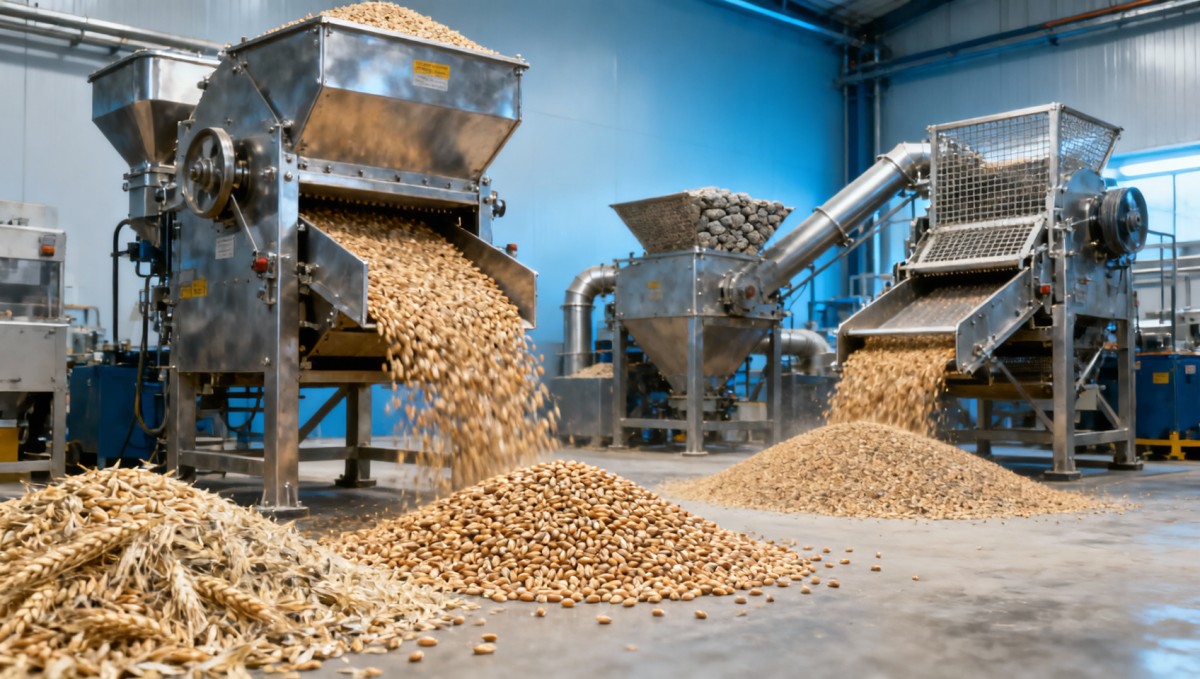
The right user is any business that needs to separate visually similar materials by density when screening, aspiration, or magnets alone are not enough. A gravity separator grain machine is especially useful when the product stream contains shriveled kernels, insect-damaged grain, immature seeds, mold-affected material, stones with similar size characteristics, or other difficult-to-remove impurities that reduce final quality.
In practice, the most suitable users include:
- Feed mills that need stable raw material quality before pelleting, cooling, crumbling, or dosing through systems such as a feed grading sieve, double roller crumbler, feed pellet cooler, and liquid adding machine feed.
- Grain cleaning and storage facilities operating a grain pre cleaner machine, rotary drum sieve grain, and grain destoner machine where density control helps reduce poor-quality carryover.
- Seed processors that require higher germination consistency and more uniform seed lots.
- Export-oriented processors facing strict buyer specifications for purity, soundness, and foreign material control.
- Food and ingredient plants where downstream efficiency and contamination risk have direct financial consequences.
- Operations with enclosed handling lines, such as enclosed belt conveyor systems, where cleaner product flow improves total plant performance.
If your line already removes large debris, dust, and magnetic contaminants with a magnetic separator for feed or standard screening equipment, but quality complaints still occur, that is a strong sign density separation deserves evaluation.
What problem does a gravity separator solve better than basic cleaning equipment?
Many processors initially assume a pre-cleaner, sieve, aspirator, and destoner are enough. In many cases they are not. The reason is simple: a large share of quality loss comes from materials that are close in size and shape to the desired grain, but different in weight or density.
A gravity separator grain unit is designed to handle that gap. It can separate:
- Sound kernels from lightweight, immature, or damaged kernels
- Good seed from weak seed with poorer planting value
- Dense contaminants from marketable product
- Heavier, cleaner fractions for premium applications
This matters because poor-density material affects more than appearance. It can lower bulk quality, reduce processing yield, impair storage behavior, create more fines, and weaken consistency in later process stages. For example, in feed production, variable incoming material can compromise pellet quality, cooling behavior, and crumb uniformity. In grain milling or food processing, it can reduce final product grade and increase rework.
Which industries and operating scenarios benefit most?
The strongest use cases are not limited to one sector. A gravity separator becomes valuable wherever product quality is tied to density uniformity and saleable output.
Feed and grain processing: Plants handling corn, wheat, barley, soybean meal-associated fractions, pulses, or specialty grains often use gravity separation to improve lot consistency before further processing. It complements a line that may already include a grain pre cleaner machine, rotary drum sieve grain, and grain destoner machine.
Seed processing: Density separation can improve the proportion of viable, filled seed in final lots. For seed processors, this has direct commercial value because lot performance influences customer trust and product claims.
Export packing and trading: Exporters benefit when gravity separation helps them meet buyer specifications with fewer disputes, better lot acceptance, and stronger price realization.
Food ingredient plants: Where raw material consistency affects color sorting, milling behavior, cooking response, or ingredient performance, gravity separation can reduce instability upstream.
Facilities with quality-sensitive downstream equipment: If your plant relies on tightly controlled flow through conveyors, sifters, coolers, crumblers, or dosing systems, cleaner and more uniform material usually improves line stability and maintenance outcomes.
How do buyers know whether the investment is justified?
For procurement teams, financial approvers, and plant managers, the most important question is economic fit. A gravity separator should not be purchased because it is technically impressive; it should be purchased because it solves an expensive problem.
The investment is usually justified when one or more of the following apply:
- You lose margin due to downgraded product lots.
- You face repeated customer complaints about purity or consistency.
- You are paying to process material that should have been rejected earlier.
- Your downstream equipment efficiency suffers because of raw material variability.
- You need to meet tighter contract, export, safety, or compliance standards.
- You can create higher-value fractions from the same raw intake.
In many plants, the return comes from a combination of improved saleable yield, lower reject rates, reduced contamination risk, fewer line interruptions, and stronger marketability of final product. That is why gravity separation should be evaluated as part of the full process economics, not as an isolated machine purchase.
What should operators, quality teams, and project managers check before choosing one?
A gravity separator works best when it is matched correctly to the material and process objective. Before selecting a model, teams should define the separation target clearly.
Key checkpoints include:
- Material type: grain, seed, pulses, feed ingredients, or specialty products
- Moisture range: performance can vary depending on material condition
- Contaminant profile: are you removing light defects, heavy defects, or both?
- Required throughput: realistic capacity under actual working conditions, not brochure maximums
- Integration needs: compatibility with existing pre-cleaning, destoning, conveyors, and discharge layout
- Dust control and hygiene: especially important in enclosed or compliance-focused plants
- Adjustment and operator skill: table settings, airflow, feed rate, and vibration must be manageable for the team
- Maintenance access and parts support: critical for uptime and lifecycle cost
For engineering and project teams, layout matters. A gravity separator should be considered within the broader line architecture, especially if the plant already uses enclosed transfer systems, aspiration, magnets, and grading equipment. The machine delivers the best results when upstream feeding is stable and downstream handling preserves the separated fractions without remixing.
When is a gravity separator not the first machine you should buy?
Not every plant needs one immediately. If your current issue is mainly large foreign material, dust, ferrous contamination, or oversized particles, then a pre-cleaner, aspirator, sieve, or magnetic separator may solve the problem at lower cost.
A gravity separator is not a substitute for core line discipline. If feed rate is unstable, moisture control is poor, or the incoming stream has not been pre-cleaned properly, separation efficiency will suffer. In those cases, upgrading the basics may produce a better return first.
This is particularly relevant for smaller operations with broad quality tolerances. If your end market does not reward tighter grading, or if defects are already low, the machine may be underutilized. The best candidates are operations where density-based defects have a real cost and where quality improvement can be monetized.
What results should the best-fit user expect?
When properly selected and integrated, a gravity separator grain system can deliver several practical outcomes:
- Higher product purity and more uniform density profile
- Better final lot consistency for domestic or export markets
- Reduced load on downstream processing equipment
- Lower risk of quality claims and rejected shipments
- Improved recovery of premium fractions
- Stronger process control in plants focused on safety and compliance
For operators, that means a more stable process. For quality managers, it means better control over specification risk. For procurement and finance teams, it means a machine that can support measurable operational gains rather than just adding complexity.
Final assessment: who should use a gravity separator grain machine?
A gravity separator grain machine should be used by processors that need precise density-based sorting to protect quality, increase usable yield, and support reliable downstream performance. The best-fit users are feed mills, grain processors, seed plants, exporters, and quality-sensitive industrial operations that already understand the cost of inconsistent raw material.
If your process line includes equipment such as a feed grading sieve, double roller crumbler, feed pellet cooler, liquid adding machine feed, magnetic separator for feed, grain destoner machine, rotary drum sieve grain, grain pre cleaner machine, and enclosed belt conveyor systems, a gravity separator is often the next logical step when standard cleaning no longer delivers the product purity your market requires.
In short, the right user is not simply any grain handler. It is the operator or business that needs density separation to produce a cleaner, more valuable, and more dependable output—and can clearly translate that improvement into commercial, operational, or compliance value.
Related Intelligence
- Milling MachineryHow to Choose a Horizontal Ribbon Blender for FeedHorizontal ribbon blender feed buying guide: compare vertical feed mixer machine options, animal feed mixers wholesale offers, and line fit for poultry, cattle, and floating fish feed plant projects.
- Milling MachineryWhy use a rotary drum sieve grain line?Why use a rotary drum sieve grain line? Discover how rotary drum sieve grain, grain pre cleaner machine, gravity separator grain, and magnetic separator for feed improve efficiency and quality.
- Milling MachineryHow to avoid grain destoner machine issues?Grain destoner machine issues explained: learn how gravity separator grain, grain pre cleaner machine, and rotary drum sieve grain setup affect performance, reduce downtime, and improve line efficiency.
The Morning Broadsheet
Daily chemical briefings, market shifts, and peer-reviewed summaries delivered to your terminal.
