
Why use a rotary drum sieve grain line?
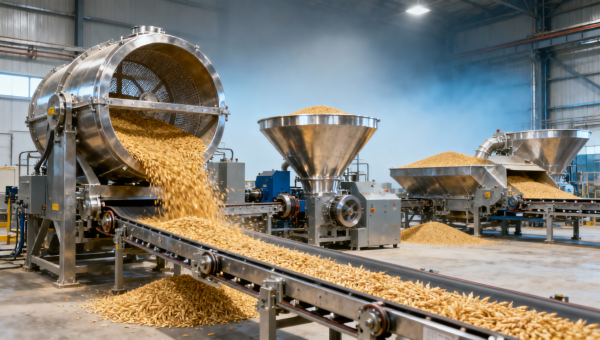
In modern grain handling, choosing a rotary drum sieve grain line is not just about basic cleaning efficiency—it directly affects product quality, throughput stability, and downstream equipment performance. From grain pre cleaner machine integration to gravity separator grain systems, magnetic separator for feed units, and enclosed belt conveyor layouts, this setup offers a practical, scalable solution for processors seeking cleaner raw materials, lower maintenance risks, and stronger operational control.
For most buyers and operators, the short answer is simple: a rotary drum sieve grain line is worth using when you need reliable pre-cleaning, stable continuous capacity, and better protection for the rest of the processing line. It is especially valuable in facilities handling grain lots with variable impurity levels, where stones, straw, dust, husks, metal particles, and oversized materials can disrupt downstream sorting, grinding, storage, or packaging. Compared with a less integrated cleaning approach, a properly designed rotary drum sieve line improves consistency, reduces unplanned stoppages, and supports better final product quality.
Why do many grain processors choose a rotary drum sieve grain line first?
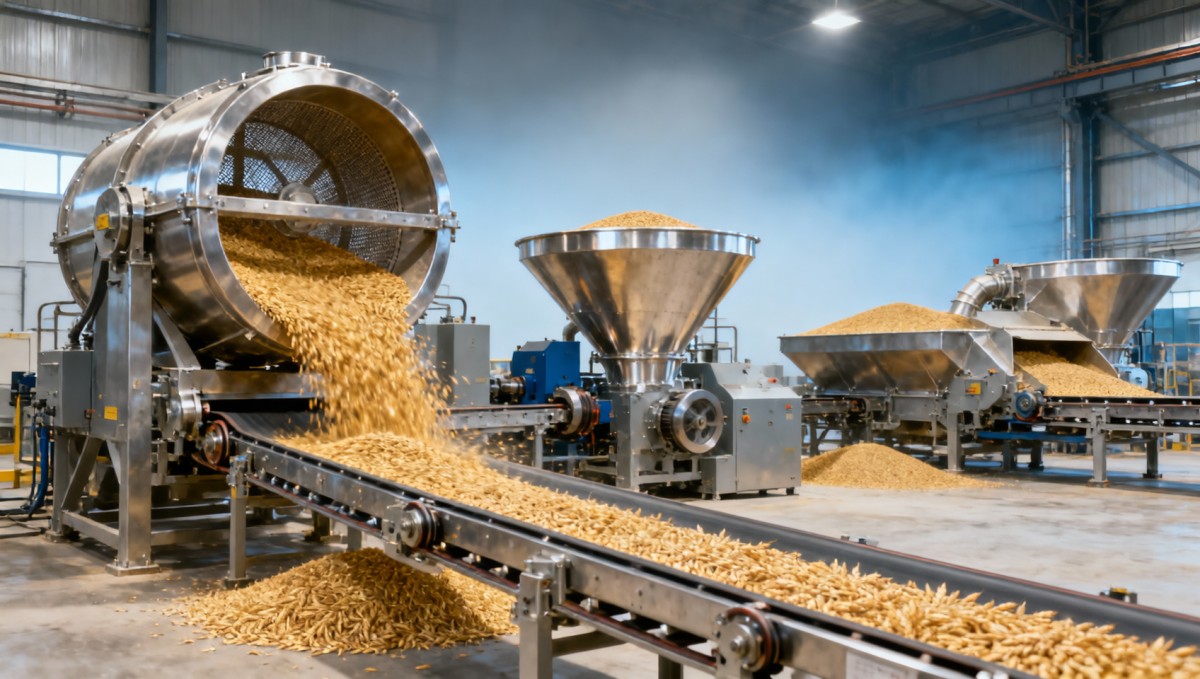
A rotary drum sieve grain line is often selected because it solves a very practical production problem: incoming grain is rarely clean or uniform enough to feed directly into sensitive downstream equipment. In real operating conditions, grain may contain coarse debris, fines, broken material, dust, stringy residues, and occasional ferrous contaminants. If those materials are not removed early, they can increase wear, reduce grading accuracy, cause blockages, and create avoidable quality risks.
The rotary drum sieve acts as a robust front-end cleaning stage. Its rotating cylindrical screen separates materials by size in a steady, continuous manner. This makes it well suited for bulk grain handling operations where throughput matters as much as cleanliness. In a complete grain line, it is commonly paired with a grain pre cleaner machine, a magnetic separator for feed applications, a gravity separator grain unit for density-based refinement, and enclosed belt conveyor systems for controlled transport between stages.
For procurement teams and decision-makers, the appeal is not just the machine itself, but the line-level benefit. A rotary drum sieve grain line helps create a more stable input stream for the rest of the plant. That translates into fewer disruptions, more predictable output quality, and lower maintenance pressure across the process.
What problems does it solve better than basic cleaning equipment?
The main advantage is that it handles high-volume, mixed-condition raw material with less sensitivity than many lighter-duty screening methods. In operations where grain quality fluctuates by season, supplier, moisture level, or storage condition, this matters a great deal.
Key problems it addresses include:
- High impurity loads at intake: Rotary drum sieves are effective for removing large and small foreign materials before they reach precision equipment.
- Throughput instability: Continuous drum rotation supports smooth material flow, helping facilities maintain line balance.
- Downstream equipment wear: Cleaner grain reduces stress on separators, mills, conveyors, and packing systems.
- Dust and housekeeping burden: When integrated into enclosed systems, the line can improve plant cleanliness and reduce airborne particulate issues.
- Inconsistent cleaning results from manual or fragmented setups: An integrated line provides more repeatable process control.
For operators, this means fewer jams and easier line management. For quality and safety personnel, it means more confidence that contamination risks are being reduced early in the process. For finance and approval stakeholders, it means fewer hidden costs caused by downtime, rejected batches, and maintenance-intensive operation.
Where does a rotary drum sieve grain line add the most value in a complete process?
The greatest value appears when the rotary drum sieve is treated as part of a system rather than as a standalone machine. On its own, it is a capable screening device. In a coordinated grain cleaning line, it becomes a productivity and quality control asset.
A typical line may include:
- Receiving and intake section: Bulk raw grain enters the system with variable contamination.
- Rotary drum sieve: Removes oversized and undersized impurities in the first cleaning stage.
- Grain pre cleaner machine: Refines separation and supports more uniform material presentation.
- Magnetic separator for feed or grain: Captures ferrous metal contaminants that could damage equipment or compromise safety.
- Gravity separator grain system: Removes denser or lighter defective kernels and foreign materials for higher purity output.
- Enclosed belt conveyor network: Moves product efficiently while limiting spillage, contamination exposure, and dust escape.
This arrangement is particularly useful in feed mills, grain storage and handling centers, seed processing units, flour-related pre-cleaning operations, and integrated agricultural processing plants. In each case, the line supports the same goal: improve the condition of raw material before it enters value-adding steps.
What should buyers evaluate before investing?
Not every facility needs the same configuration. The right question is not merely “Is a rotary drum sieve good?” but “Is this rotary drum sieve grain line appropriate for our material profile, process objective, and operating model?”
Buyers should focus on the following decision points:
- Material characteristics: What grains are being handled? What are the impurity types, moisture ranges, and seasonal variations?
- Required capacity: Can the line maintain target throughput during peak intake periods without sacrificing cleaning performance?
- Cleaning objective: Is the goal basic pre-cleaning, feed safety improvement, seed preparation, or higher-grade commercial output?
- Integration needs: Will the equipment connect smoothly with existing conveyors, separators, dust collection, and control systems?
- Maintenance practicality: How easy is screen replacement, cleaning access, bearing service, and routine inspection?
- Footprint and layout: Can the line fit into current plant space while maintaining safe access and logical material flow?
- Compliance and hygiene: Does the design support site requirements for dust control, contamination reduction, and operational safety?
For project managers and engineering leads, layout logic is critical. A technically strong machine can still underperform if discharge paths, conveyor transitions, or access points are poorly planned. For distributors and resellers, understanding the customer’s actual impurity profile is often the difference between recommending the right line and overselling unnecessary complexity.
How does it affect operating cost and return on investment?
The ROI of a rotary drum sieve grain line is usually created through cumulative operational gains rather than a single dramatic metric. Facilities often justify the investment through a combination of quality protection, labor efficiency, reduced maintenance, and improved process continuity.
The most common economic benefits include:
- Lower downtime costs: Cleaner feedstock reduces interruptions in downstream machines.
- Reduced repair frequency: Less abrasive or contaminant-heavy material reaches vulnerable equipment.
- Higher usable yield: Better separation can improve the proportion of acceptable product entering the next stage.
- More stable labor utilization: Operators spend less time reacting to clogs, cleaning scattered waste, or correcting line imbalance.
- Better final product consistency: This can support pricing, customer confidence, and lower rejection rates.
For financial approvers, the most useful evaluation method is total process impact rather than machine price alone. A lower-cost system that causes frequent stoppages, screen issues, or poor contaminant removal may be more expensive over time than a well-matched integrated line. In capital planning terms, reliability and process protection often matter as much as nominal throughput.
What concerns do operators and quality teams usually have?
Operators typically worry about blockage, cleaning difficulty, vibration, wear parts, and whether the equipment can handle inconsistent grain conditions without constant adjustment. These are valid concerns, especially in facilities where raw material quality changes quickly.
Quality control and safety teams usually focus on contamination removal effectiveness, dust management, sanitation access, and protection of downstream product standards. In feed and food-adjacent environments, early-stage removal of physical contaminants is not just a process benefit; it can also support broader risk reduction goals.
To address these concerns, facilities should look for:
- Accessible inspection and maintenance points
- Suitable screen specifications for the target grain and impurity profile
- Stable frame and drive design for continuous operation
- Good sealing and enclosure options where dust control matters
- Compatibility with magnetic separation and gravity-based refinement
- Supplier support for commissioning, spare parts, and process optimization
A rotary drum sieve grain line performs best when it is correctly sized, properly installed, and matched to the actual material stream. Many performance complaints are not caused by the screening principle itself, but by incorrect screen selection, unrealistic capacity assumptions, or weak system integration.
When is it the right choice—and when is it not?
It is the right choice when a facility needs dependable front-end cleaning for bulk grain, wants to protect downstream assets, and values steady continuous operation over overly delicate separation at the first stage. It is particularly effective in medium- to high-capacity operations where incoming grain cleanliness is inconsistent and where process stability has direct commercial value.
It may be less suitable as a standalone answer when the real requirement is ultra-fine grading, specialty seed calibration, or highly specific separation that depends more on density, aerodynamic behavior, or precision sorting than on robust size-based pre-cleaning. In those cases, the rotary drum sieve should be viewed as one stage in a broader line, not the complete solution.
The key is to match the technology to the process role. For most grain handling plants, its strongest role is early-stage cleaning and flow stabilization—not replacing every other separation method.
Conclusion: why use a rotary drum sieve grain line?
Use a rotary drum sieve grain line because it delivers a practical combination of cleaning reliability, throughput stability, and downstream process protection. For grain processors, feed operators, procurement teams, and plant managers, its value lies in more than removing visible impurities. It helps create a cleaner, more controllable production environment, supports better equipment utilization, and reduces the operational risks that come from feeding contaminated raw grain into the rest of the system.
When integrated with a grain pre cleaner machine, a magnetic separator for feed, a gravity separator grain unit, and enclosed belt conveyor handling, it becomes a strong foundation for efficient and scalable grain processing. The best investment decisions come from evaluating the entire line impact: material variability, cleaning target, maintenance needs, and long-term operating economics. If those factors align, a rotary drum sieve grain line is not just a cleaning upgrade—it is a strategic process improvement.
Related Intelligence
- Milling MachineryHow to Choose a Horizontal Ribbon Blender for FeedHorizontal ribbon blender feed buying guide: compare vertical feed mixer machine options, animal feed mixers wholesale offers, and line fit for poultry, cattle, and floating fish feed plant projects.
- Milling MachineryWhy use a rotary drum sieve grain line?Why use a rotary drum sieve grain line? Discover how rotary drum sieve grain, grain pre cleaner machine, gravity separator grain, and magnetic separator for feed improve efficiency and quality.
- Milling MachineryHow to avoid grain destoner machine issues?Grain destoner machine issues explained: learn how gravity separator grain, grain pre cleaner machine, and rotary drum sieve grain setup affect performance, reduce downtime, and improve line efficiency.
The Morning Broadsheet
Daily chemical briefings, market shifts, and peer-reviewed summaries delivered to your terminal.
