
What Does a Commercial Rice Mill Plant Cost in 2026?
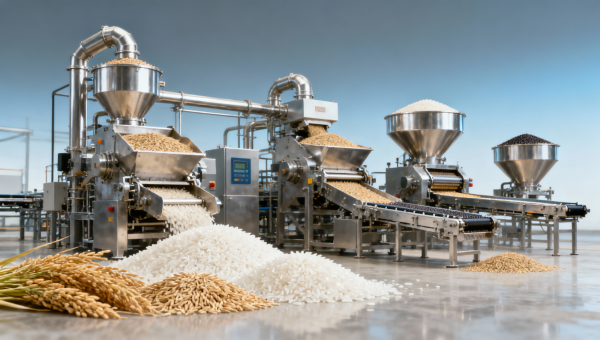
Planning a commercial rice mill plant in 2026 means looking far beyond headline equipment prices. From a paddy husker machine and paddy separator machine to a rotary rice grader, rice color sorter machine, rice whitener machine, and grain dampener machine, total investment depends on capacity, automation, compliance, and downstream quality targets. This guide helps technical, commercial, and financial stakeholders assess real project costs with greater clarity.
In most cases, a commercial rice mill plant in 2026 can range from roughly US$80,000 for a smaller semi-automatic line to US$1.5 million or more for a large, automated, export-oriented facility. The wide gap exists because the real cost is not just the rice milling machines themselves. Capacity, required rice quality, building and utilities, installation, dust control, labor strategy, and after-sales support often change the investment decision more than the quoted machine list.
For buyers comparing suppliers, the smartest question is not “What is the machine price?” but “What total installed cost and operating performance will this plant deliver for my target market?”
What drives the cost of a commercial rice mill plant in 2026?
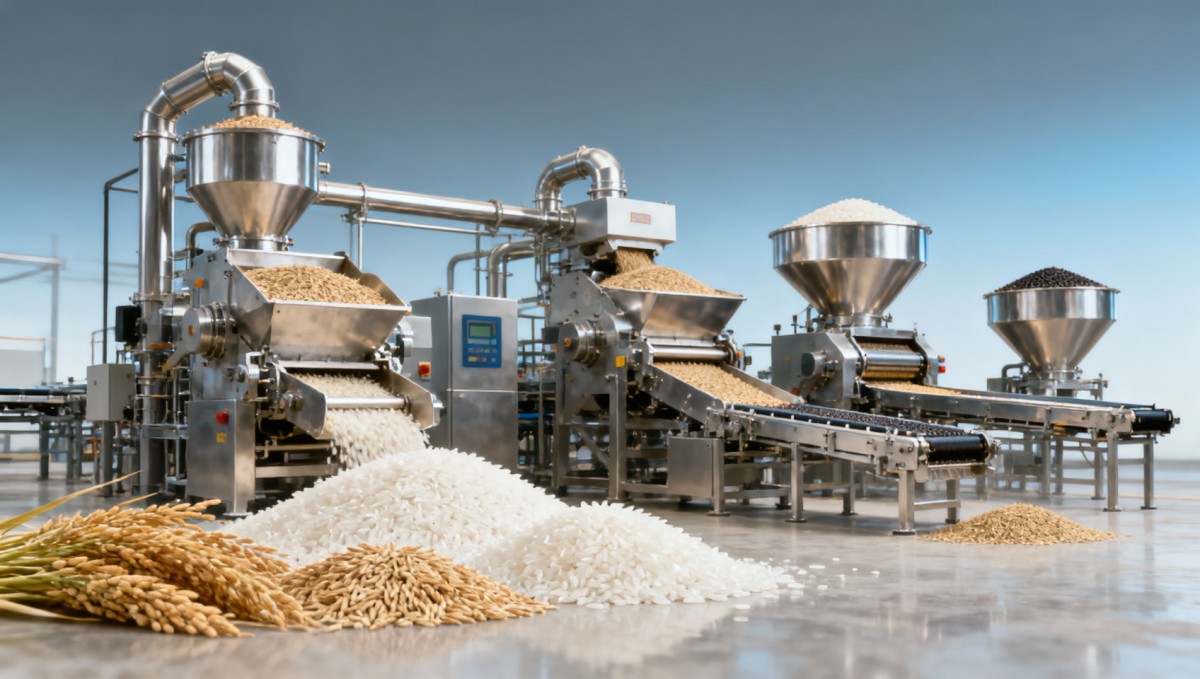
The core search intent behind this topic is usually commercial and evaluative. Readers want a realistic price range, but more importantly, they want to understand what makes one rice mill plant cost far more than another and how to avoid underbudgeting.
The biggest cost drivers typically include:
- Plant capacity: 1–2 tons/hour, 5 tons/hour, 10 tons/hour, and above are completely different project classes.
- Automation level: manual feeding, semi-automatic operation, or PLC-based integrated control.
- Finished rice quality target: local market rice, premium retail rice, or export-grade polished rice.
- Machine configuration: whether the line includes only basic milling or also grading, color sorting, destoning, dampening, and packing.
- Raw paddy condition: moisture variation, impurity level, variety mix, and broken ratio requirements.
- Compliance and safety requirements: dust management, electrical safety, food-contact materials, and local environmental rules.
- Country of installation: freight, duties, civil works, electrical standards, and technician travel costs vary significantly.
This is why two suppliers may both quote a “commercial rice mill plant,” yet one project comes in at US$120,000 and another at US$650,000.
Typical 2026 price ranges by rice mill plant size
While exact pricing depends on specification and destination, the following ranges are useful for initial budgeting:
Small commercial rice mill plant
Estimated range: US$80,000–US$180,000
Commonly used for small processors, regional traders, or rural industrial operators. These plants often include a paddy cleaner, paddy husker machine, paddy separator machine, rice whitener machine, and basic grader. Packing and color sorting may be optional.
Best suited for:
- Entry-level commercial processing
- Moderate local-market quality targets
- Buyers with limited capital expenditure
Mid-size commercial rice mill plant
Estimated range: US$180,000–US$500,000
This is a common range for serious commercial investors. The line may include improved cleaning, destoning, multiple whitening stages, silky polishing, a rotary rice grader, rice color sorter machine, and semi-automatic packing.
Best suited for:
- Regional brands
- Contract milling operations
- Processors targeting better head rice yield and visual quality
Large automated rice mill plant
Estimated range: US$500,000–US$1.5 million+
These projects typically serve export processors, integrated grain groups, or industrial food supply chains. They may feature full automation, online monitoring, large silos, advanced dust collection, color sorting, multiple grading stages, moisture conditioning via grain dampener machine, and sophisticated packing systems.
Best suited for:
- High-throughput operations
- Export-quality rice production
- Institutional buyers focused on consistency, traceability, and labor efficiency
What equipment is usually included in the plant cost?
One of the most important evaluation points is whether the quoted price covers a complete production line or only the main milling section.
A standard commercial rice mill plant may include:
- Paddy cleaner
- Destoner
- Paddy husker machine
- Paddy separator machine
- Rice whitener machine
- Rice polisher
- Rotary rice grader
- Rice color sorter machine
- Grain dampener machine
- Elevators, conveyors, and bins
- Control cabinets and cabling
- Dust collection systems
- Packing and weighing systems
Many buyers make the mistake of comparing a basic machine quote against a near-turnkey quote. A lower supplier price may exclude conveyors, electrical panels, steel platforms, spare parts, or installation supervision. That can distort the real comparison.
Hidden costs that often matter more than the equipment quote
For project managers, finance teams, and decision-makers, hidden or secondary costs are often where budgets go wrong. These can easily add 20% to 60% beyond the base machinery value, depending on project scope.
1. Civil works and building preparation
Foundations, floor load requirements, drainage, ventilation, and plant layout adjustments can represent a major share of investment, especially for retrofits.
2. Power supply and utility upgrades
A larger rice mill plant may require transformer upgrades, cable trays, motor control systems, compressed air, and backup generation.
3. Installation and commissioning
Freight is only one part. Buyers should confirm who is responsible for installation labor, technician accommodation, local lifting equipment, and trial production.
4. Freight, tax, and customs
Ocean freight volatility, insurance, port charges, inland transport, import duties, and customs clearance fees can materially change landed cost.
5. Spare parts and wear components
Whitening rollers, screens, rubber rollers, bearings, and sorter parts should be planned as part of the first-year operating budget.
6. Training and startup loss
A plant may be technically installed but commercially underperform if operators are not trained on moisture control, husking pressure, separation efficiency, and grading settings.
7. Quality and safety systems
Dust explosion risk mitigation, aspiration systems, food safety process control, and maintenance procedures may be mandatory in more regulated environments.
How capacity, yield, and rice quality affect return on investment
Technical and commercial buyers should not evaluate a rice milling plant on throughput alone. A cheaper line can become more expensive over time if it produces lower head rice yield, more broken grains, inconsistent whitening, or higher reprocessing rates.
Key ROI variables include:
- Head rice recovery rate
- Broken percentage
- Whitening consistency
- Color sorting accuracy
- Labor cost per ton processed
- Energy consumption per ton
- Downtime and maintenance frequency
For example, if a higher-grade plant improves saleable rice yield by even a few percentage points, that can significantly affect annual profitability. For processors selling into premium channels, better appearance and grading can also support stronger pricing and fewer customer complaints.
What different stakeholders should evaluate before approving the project
Because the target audience for this topic is cross-functional, the cost question should be reviewed from several perspectives.
For technical evaluators
- Check machine compatibility across the line
- Review motor brands, bearings, screens, and wear-part quality
- Assess maintenance access and expected uptime
- Confirm actual performance on your paddy type
For operations teams
- Evaluate ease of control and cleaning
- Estimate labor needed per shift
- Confirm training support and manuals
- Review spare-parts availability
For quality and safety managers
- Check dust extraction design
- Review food-contact surfaces and hygiene points
- Confirm sorting and grading capability versus product specification
- Assess compliance with local safety codes
For commercial and finance teams
- Compare total landed and installed cost, not ex-factory price only
- Build a yield-based payback model
- Estimate maintenance and utility cost over 3–5 years
- Review warranty scope and service response time
For executives and project owners
- Match plant scale to market demand, not supplier upselling
- Confirm whether the line supports future expansion
- Assess supplier credibility and commissioning success record
- Consider brand positioning: bulk commodity versus premium packaged rice
How to compare supplier quotations correctly
If you are collecting quotes in 2026, request a standardized quotation format. This makes apples-to-apples comparison possible.
Your comparison sheet should include:
- Capacity in tons per hour under defined raw material conditions
- Machine list with model numbers
- Installed power and expected energy use
- Expected head rice yield and broken rate
- Scope of supply exclusions
- Electrical and control scope
- Installation and commissioning terms
- Spare parts package
- Warranty duration and service terms
- Delivery time
Also ask for references from plants with similar paddy varieties and production goals. A supplier strong in one market may not be equally effective in another if grain characteristics differ.
When is a higher-cost rice mill plant worth it?
Paying more is usually justified when one or more of the following are true:
- You target premium retail or export markets
- You process large annual volume and downtime is expensive
- Labor costs are rising and automation matters
- You need better sorting, grading, and consistency
- Your business model depends on stronger head rice recovery
- You need auditable quality and safer plant operation
By contrast, if your market accepts lower polish and less stringent visual quality, a simpler semi-automatic plant may offer a better financial fit.
Final answer: what should buyers budget for a commercial rice mill plant in 2026?
As a practical starting point, buyers should budget:
- US$80,000–US$180,000 for a smaller commercial line
- US$180,000–US$500,000 for a mid-range plant with better quality control
- US$500,000–US$1.5 million+ for a large automated operation
But the more useful budgeting rule is this: add machinery cost, then build in realistic allowances for civil works, utilities, freight, installation, training, and first-year spares. For many projects, that full installed budget is the number that matters.
In short, the cost of a commercial rice mill plant in 2026 is determined less by one machine and more by the performance standard your business needs to achieve. The best investment is not the cheapest line on paper, but the one that delivers reliable yield, stable quality, manageable operating cost, and a credible path to payback.
Related Intelligence
- Milling MachineryHow to Choose a Horizontal Ribbon Blender for FeedHorizontal ribbon blender feed buying guide: compare vertical feed mixer machine options, animal feed mixers wholesale offers, and line fit for poultry, cattle, and floating fish feed plant projects.
- Milling MachineryWhy use a rotary drum sieve grain line?Why use a rotary drum sieve grain line? Discover how rotary drum sieve grain, grain pre cleaner machine, gravity separator grain, and magnetic separator for feed improve efficiency and quality.
- Milling MachineryHow to avoid grain destoner machine issues?Grain destoner machine issues explained: learn how gravity separator grain, grain pre cleaner machine, and rotary drum sieve grain setup affect performance, reduce downtime, and improve line efficiency.
The Morning Broadsheet
Daily chemical briefings, market shifts, and peer-reviewed summaries delivered to your terminal.
