
How to Match a Paddy Husker Machine to Your Mill Size
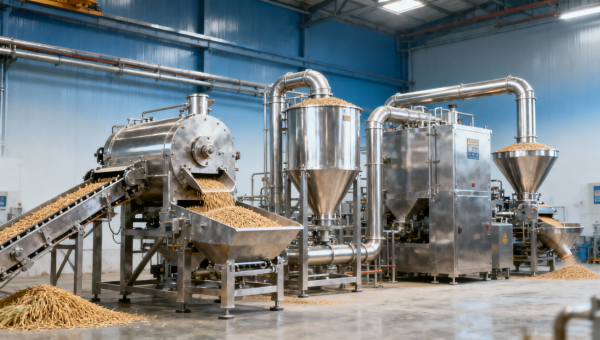
Choosing the right paddy husker machine is critical to rice yield, energy efficiency, and long-term mill profitability. Whether you are upgrading a commercial rice mill plant or comparing a paddy separator machine, rotary rice grader, rice whitener machine, and rice color sorter machine, proper size matching helps prevent bottlenecks, reduce breakage, and improve processing consistency across every production stage.
For mill owners, plant engineers, procurement teams, and financial approvers, the question is not simply which paddy husker machine is available. The real question is how to match husking capacity, rubber roll configuration, automation level, and upstream-downstream flow to the actual size of the mill. A machine that is too small creates queues, excess recirculation, and labor waste. A machine that is too large often drives unnecessary capital expenditure, unstable feeding, and inefficient power use.
This guide explains how to size a paddy husker machine against mill throughput, production goals, grain quality targets, and plant layout. It also connects the husker decision with related equipment such as the paddy separator machine, rotary rice grader, rice whitener machine, and rice color sorter machine, so selection decisions support the whole line rather than one isolated process point.
Understand the Role of the Paddy Husker in Overall Mill Capacity
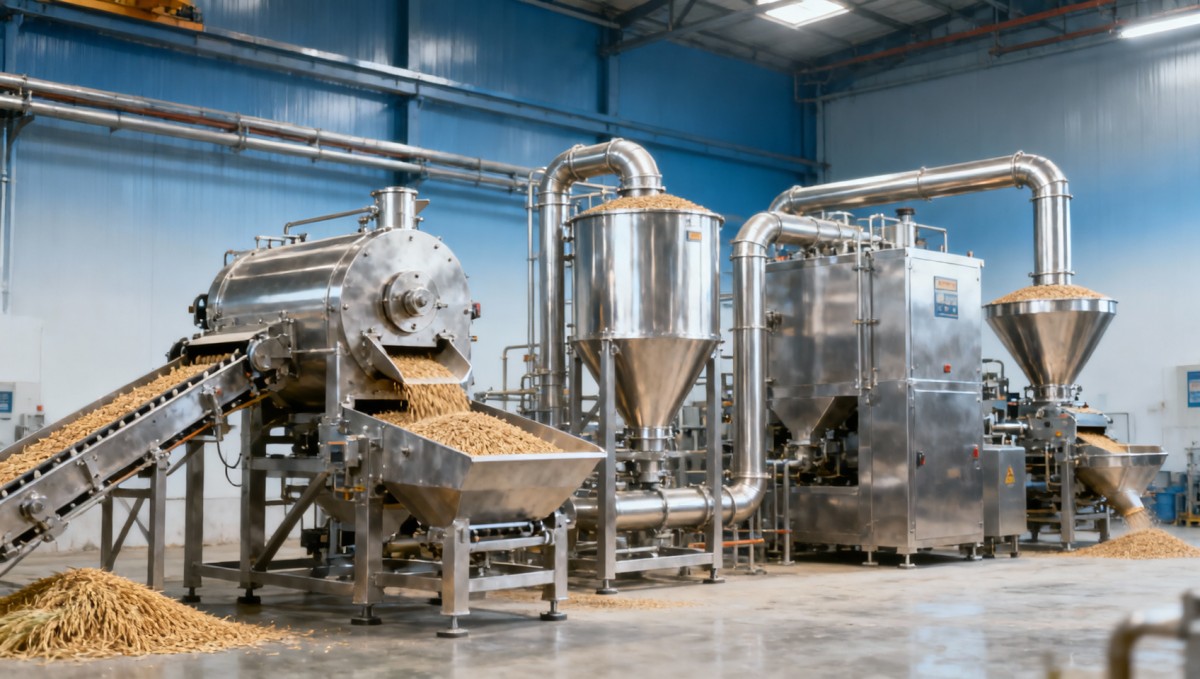
A paddy husker machine removes the husk from paddy rice and determines how efficiently the line can move from cleaning to separation and whitening. In most commercial configurations, the husker sits between pre-cleaning and the paddy separator machine. If it is undersized, the separator receives irregular feed. If it is oversized, the line may suffer from low load ratios, unstable husking pressure, or avoidable energy consumption.
In practical terms, mill size should be measured by hourly throughput rather than by building area or installed motor count alone. A plant processing 2-3 tons per hour needs a different husker strategy than a 5-8 tons per hour line or a 10-12 tons per hour integrated milling system. Matching by throughput gives operators a more reliable basis for planning machine size, roll dimensions, and feed regulation.
The husking stage also has a direct effect on head rice yield. Excessive pressure, poor roll speed balance, or mismatched feed rates can increase broken rice before the grain even reaches the rice whitener machine. In many mills, a difference of 1%-3% in breakage has a meaningful effect on annual margins, especially where premium whole-kernel rice is a major revenue stream.
A correct sizing decision should therefore account for four linked variables: design throughput, target husking efficiency, broken grain tolerance, and the capacity of downstream machines. In many cases, buyers focus only on nominal machine output, but the more useful measure is stable output across an 8-12 hour operating shift with realistic paddy moisture and mixed grain conditions.
Why line balance matters more than isolated machine output
A husker may be rated at 4 tons per hour under ideal conditions, yet the effective plant output can fall below 3.2 tons per hour if the paddy separator machine is overloaded or if feeding is inconsistent. That is why mill planners should compare rated capacity against sustained capacity, recirculation load, and line synchronization.
- Upstream cleaning capacity should generally equal or exceed husker design capacity by 5%-10%.
- The paddy separator machine should usually handle at least 100%-120% of husker output because of mixed flow and recirculation.
- The rice whitener machine and rotary rice grader should be checked for bottlenecks after separator discharge, especially in multi-pass systems.
Typical capacity bands for mill planning
The table below shows a practical planning framework for matching a paddy husker machine to different mill sizes. These are common planning ranges rather than fixed specifications, but they help technical and commercial evaluators screen equipment options before detailed factory layout review.
The key takeaway is that husker selection should follow the production system, not the catalog headline. A medium-capacity paddy husker machine correctly integrated into the line often outperforms a larger machine that runs at inconsistent loading or creates downstream congestion.
Core Sizing Factors: Throughput, Grain Condition, and Process Targets
When matching a paddy husker machine to your mill size, throughput is only the first filter. Rice variety, paddy moisture, impurity level, and target finished quality all affect the real machine requirement. A husker sized for dry, uniform grain may struggle if incoming paddy moisture varies from 12% to 15%, or if the line frequently handles mixed varieties with different husk adhesion characteristics.
For technical evaluation, three performance indicators are especially useful: husking efficiency, broken percentage increase, and power use per ton processed. Many mills target husking efficiency above 85%-90% in stable conditions, but pushing aggressively beyond that level without careful roll adjustment can increase kernel damage and offset gains in separator performance.
Operators should also consider actual feeding consistency. A paddy husker machine rated at 6 t/h may need a well-designed elevator, flow regulator, and buffer bin to hold output near that level. Without these support elements, effective capacity can swing by 10%-20% during a shift, making the separator and whitener stages less predictable.
Commercial evaluators often ask whether it is better to buy one larger unit or two smaller units. The answer depends on redundancy, maintenance strategy, and shift planning. For mills operating 16-20 hours per day, a parallel or standby arrangement may lower production risk even if initial equipment cost is higher.
Key technical checks before purchase
- Confirm design throughput in tons per hour under your expected paddy moisture range, not only ideal test conditions.
- Review rubber roll size, expected wear rate, and replacement interval; in heavy use, rolls may need inspection every 150-300 operating hours.
- Check motor power, vibration stability, and feed control method, especially for mills above 5 t/h.
- Match separator inlet capacity and recirculation route to avoid overload after husking.
- Assess dust extraction and service access if the machine will be placed in a compact plant room.
Practical parameter ranges for screening
In many mid-scale applications, buyers compare machines in the 3 t/h to 8 t/h range with motor power bands around 7.5 kW to 22 kW, depending on configuration and automation. What matters most is not choosing the highest number, but selecting a combination that can hold stable husking pressure, manageable roll temperature, and acceptable grain breakage over a full shift.
The following table helps translate process requirements into selection logic. It is particularly useful for project managers and procurement teams aligning technical and commercial expectations before supplier discussions.
This comparison shows why a larger mill should not evaluate a paddy husker machine by purchase price alone. Operating hours, staffing structure, and maintenance windows frequently determine total value more than initial capital cost.
How to Match the Husker with Separator, Whitener, Grader, and Color Sorter
A paddy husker machine never works alone in a serious rice mill plant. Once husked, the mixture moves to the paddy separator machine, then typically toward whitening, grading, and optical sorting. If one section is oversized and the next is tight, the plant loses the advantage of the higher-capacity machine. That is why system matching should be done as a flow map, not a shopping list.
The paddy separator machine usually needs some capacity margin because it handles a mixed stream of brown rice, unhusked paddy, and partially processed material. In many plants, assigning 10%-20% higher handling capacity to the separator than to the husker reduces recirculation pressure and improves line stability. This is especially important when raw paddy quality changes between batches.
Downstream, the rice whitener machine should be matched to the average brown rice output after separation, not just the nameplate of the husker. A common mistake is to size the whitener for theoretical line output while ignoring separator losses, grade variation, and actual shift utilization. The same logic applies to the rotary rice grader and rice color sorter machine, which should be sized according to finished rice stream and quality goals.
From a commercial perspective, balanced sizing often improves return on investment more than buying a single premium machine. A 6 t/h paddy husker machine paired with an undersized color sorter can still leave the plant unable to ship premium-grade product at target volume. True capacity should be measured at packed saleable output, not at one machine’s inlet rate.
A simple line-matching framework
- Cleaning section: target 105%-110% of husker feed to avoid starvation.
- Paddy husker machine: sized for stable hourly throughput with realistic moisture variation.
- Paddy separator machine: target 110%-120% of husker discharge due to mixed-material handling.
- Rice whitener machine: aligned to effective brown rice throughput after separation losses.
- Rotary rice grader and rice color sorter machine: based on saleable output target and grade specification.
Operational bottlenecks to watch
If broken rice rises after whitening, the problem may actually begin at the husking stage through aggressive roll pressure. If final sorting capacity becomes unstable, the issue may stem from inconsistent separator output rather than from the rice color sorter machine itself. This is why engineering teams should review at least 4 process points together: feed uniformity, husking efficiency, separator recovery, and finished grade consistency.
For projects with capital constraints, phased upgrades are common. In that case, priority should go to the bottleneck with the highest impact on yield or plant uptime. Many mid-sized mills begin with the paddy husker machine and separator section because improvements there often make the rest of the line easier to optimize over the next 6-12 months.
Procurement, Cost Control, and Installation Planning
For buyers and approvers, the right paddy husker machine is a capital decision that must balance technical fit with lifecycle cost. Initial machine price matters, but so do rubber roll consumption, spare parts lead time, power draw, maintenance labor, and installation complexity. A lower-priced unit can become more expensive within 12-18 months if roll wear is high or service access is poor.
Installation planning is equally important. Before purchase approval, teams should verify floor loading, inlet and outlet heights, ducting needs, electrical supply, and the service space required for roll changes. A compact mill may save several days of commissioning time if it chooses a machine that fits the existing conveying arrangement rather than forcing major layout changes.
Commercially, buyers should request supplier documentation that clarifies rated output conditions, recommended paddy moisture range, standard spare parts list, and commissioning scope. This reduces disputes later and helps project managers compare offers on equivalent terms. For cross-border projects, practical lead times often range from 4 to 10 weeks depending on configuration, documentation, and logistics route.
Financial approvers also benefit from looking at payback in terms of yield protection and downtime reduction. If a correctly sized husker cuts breakage by even 1% and reduces unplanned stoppage by 2-4 hours per month, the value may justify a higher-spec machine more quickly than expected in medium or high-volume operations.
Key procurement checkpoints
Use the checklist below to compare supplier proposals consistently across technical, operational, and commercial criteria.
A structured comparison often reveals that the most economical paddy husker machine is the one with the best process fit and service clarity, not necessarily the lowest quoted price. This is especially true for mills where shutdown costs are high and product quality premiums matter.
Common Mistakes, Maintenance Priorities, and FAQ
One of the most frequent mistakes is selecting a paddy husker machine based only on future expansion plans. Some growth allowance is sensible, but oversizing too far can create low-load operation, irregular feed pressure, and slower payback. A practical margin is often around 10%-20% above current stable demand rather than doubling capacity without a near-term production schedule.
Another mistake is ignoring raw material variability. A mill may process long-grain paddy for one season and mixed grades in another. If the machine has limited adjustment range or the operator team lacks clear settings guidance, performance can drift quickly. This is why training, setup records, and maintenance discipline matter as much as the machine itself.
Maintenance priorities are straightforward but often under-managed. Roll wear, bearing condition, feed gate calibration, vibration, and dust accumulation should be checked on a routine schedule. In many plants, a daily visual check, a weekly alignment review, and a monthly performance audit are enough to detect most developing issues before they affect yield and product grade.
For quality control and safety managers, consistent housekeeping and dust management are also essential. Clean operating conditions reduce contamination risk, improve operator visibility, and support more stable mechanical performance across long shifts.
How do I know if my paddy husker machine is undersized?
Typical signs include persistent queueing before the husker, separator overload, irregular shift output, and excessive recirculation. If your planned throughput is 5 t/h but sustained output remains near 4 t/h despite stable upstream feeding, the husker or its feeding system may be the limiting point.
Is one large machine better than two smaller machines?
Not always. One larger machine can simplify layout and controls, but two smaller units may provide maintenance flexibility and risk reduction. For operations running more than 16 hours per day, partial redundancy can be valuable if downtime would disrupt supply commitments.
What should operators monitor each shift?
At minimum, track feed stability, husking rate, broken rice trend, roll wear condition, noise or vibration changes, and separator load behavior. A simple 6-point shift checklist can help maintain more consistent output and make troubleshooting faster.
How long does commissioning usually take?
For a straightforward replacement in an existing line, mechanical and electrical installation may take 2-5 days, with process adjustment requiring another 1-3 days. New line integration can take longer depending on conveyors, controls, and dust extraction modifications.
Matching a paddy husker machine to your mill size is ultimately a system decision. The best result comes from aligning realistic throughput, grain condition, downstream equipment capacity, maintenance access, and commercial objectives. When the husker, paddy separator machine, rice whitener machine, rotary rice grader, and rice color sorter machine are sized as one coordinated process, mills are better positioned to protect yield, control operating cost, and maintain reliable product quality.
If you are evaluating a new rice mill plant, planning an upgrade, or comparing equipment offers, a structured technical review can prevent expensive mismatches. Contact us to discuss your production targets, request a tailored equipment matching plan, or explore more feed and grain processing solutions suited to your operating profile.
Related Intelligence
- Milling MachineryHow to Choose a Horizontal Ribbon Blender for FeedHorizontal ribbon blender feed buying guide: compare vertical feed mixer machine options, animal feed mixers wholesale offers, and line fit for poultry, cattle, and floating fish feed plant projects.
- Milling MachineryWhy use a rotary drum sieve grain line?Why use a rotary drum sieve grain line? Discover how rotary drum sieve grain, grain pre cleaner machine, gravity separator grain, and magnetic separator for feed improve efficiency and quality.
- Milling MachineryHow to avoid grain destoner machine issues?Grain destoner machine issues explained: learn how gravity separator grain, grain pre cleaner machine, and rotary drum sieve grain setup affect performance, reduce downtime, and improve line efficiency.
The Morning Broadsheet
Daily chemical briefings, market shifts, and peer-reviewed summaries delivered to your terminal.
