
Why Garlic Powder Making Machines Lose Fineness Over Time
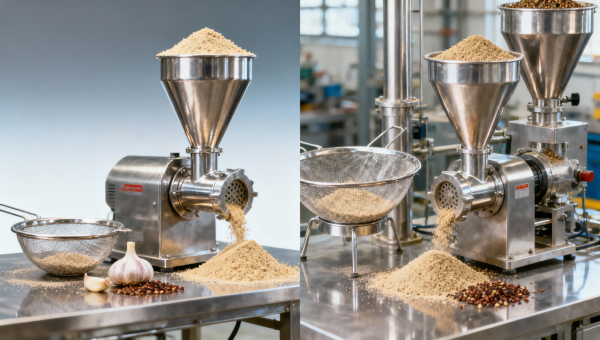
When a garlic powder making machine starts producing coarser output, the issue rarely comes from one part alone. Across spice and food processing lines—from a commercial spice grinder to a turmeric grinding plant or chili powder making machine—fineness loss often signals wear, heat buildup, screen fatigue, or feed inconsistency. This article explains the root causes, operational warning signs, and evaluation points that matter to operators, buyers, and quality-focused decision makers.
Why does a garlic powder making machine lose fineness over time?
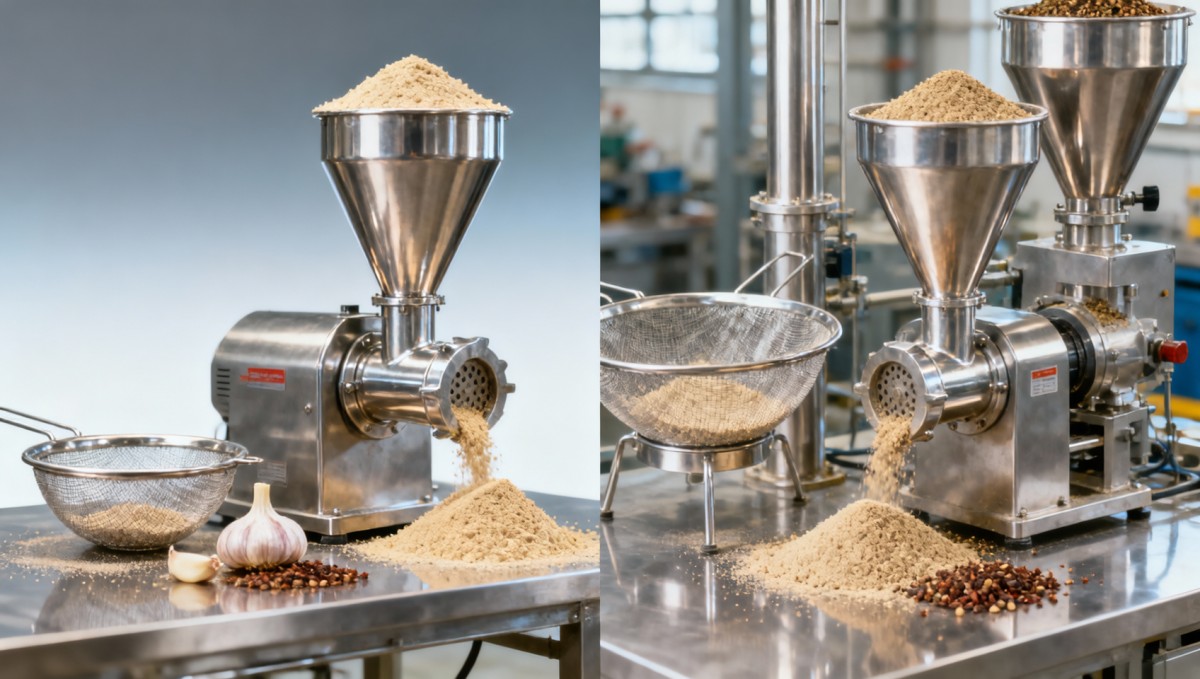
In most processing plants, fineness drift appears gradually over 3 stages: first, the output still meets visual expectations; second, particle size distribution widens; third, the line starts generating more rejects, regrind, or customer complaints. A garlic powder making machine may seem mechanically sound while already losing micron-level consistency due to internal wear and unstable grinding conditions.
For operators, the first warning is often a longer grinding time, higher discharge temperature, or an increase in residue on the screen. For quality teams, the problem shows up in sieve analysis, bulk density changes, or color variation caused by heat. For procurement and finance teams, the hidden cost appears later through lower yield, higher energy use, and more maintenance interventions every month or quarter.
In a commercial spice grinder or a garlic powder production line, fineness depends on a system, not a single component. Rotor speed, hammer or pin condition, screen aperture, feed moisture, airflow, and discharge efficiency all interact. Even when one parameter moves slightly outside its normal range, the powder can become noticeably coarser in 1–2 shifts of continuous production.
This matters across the broader primary processing sector covered by AgriChem Chronicle, where machine performance, raw material variability, and compliance discipline shape purchasing decisions. Institutional buyers and technical evaluators increasingly need evidence-based criteria, not sales claims, when comparing a garlic powder making machine with a chili powder making machine, turmeric grinding plant, or other dry spice milling system.
The most common technical drivers
The root causes usually fall into 5 groups rather than one isolated fault. Understanding those groups helps reduce downtime and prevents repeated trial-and-error adjustments on the factory floor.
- Grinding element wear: hammers, pins, liners, or impact surfaces lose edge integrity after repeated abrasive contact.
- Screen fatigue: perforations deform, crack, or clog, reducing classification accuracy and increasing coarse carryover.
- Thermal buildup: product temperature rises during long runs, causing softening, caking, or agglomeration.
- Feed inconsistency: garlic slice size, dryness, and foreign material content vary from batch to batch.
- Airflow and discharge imbalance: inadequate suction or poor cyclone/bag filter performance allows oversize material to circulate incorrectly.
These factors are relevant not only to garlic powder processing but also to dehydrated onion, chili, ginger, and botanical ingredient lines. That is why technical due diligence should include both machine inspection and process review.
Which parts and operating conditions affect powder fineness the most?
In practice, three machine zones deserve the closest attention: the feed section, the grinding chamber, and the classification or discharge section. If the feed system overloads the chamber, the machine cannot maintain stable impact intensity. If the chamber surfaces are worn, breakage efficiency drops. If the discharge section is restricted, fine powder remains too long inside and heats up.
A garlic powder making machine processing dry flakes or granules usually performs best within a controlled moisture window. If feed moisture rises above the typical dry-spice range, even by a small margin, the machine may produce sticky fines, wider particle distribution, and visible clumping. Operators often misread this as a speed problem when the actual issue is material condition entering the mill.
Another overlooked factor is screen life. A screen may remain physically intact while already losing effective separation accuracy. In continuous use, inspection intervals of every 80–160 operating hours are common, though exact timing depends on garlic dryness, throughput, and whether the line also handles tougher materials such as turmeric or chili. Ignoring screen fatigue is a frequent reason a commercial spice grinder drifts into coarse output.
The table below summarizes the machine areas that most often influence fineness loss, the symptoms they create, and the evaluation focus for plant personnel and buyers.
For technical assessment teams, this table is useful because it links symptoms to inspection points. For procurement teams, it also shows why spare parts policy and maintenance access matter almost as much as initial machine price.
How heat and moisture change the result
Garlic contains volatile compounds that are sensitive to temperature and handling. During a 4–8 hour production run, excessive chamber temperature can affect not only fineness but also aroma retention and powder flowability. Once product starts to cake on the screen or chamber wall, the apparent grinding capacity drops and the coarse fraction increases.
That is why many processors treat temperature rise and fineness drift as linked indicators. A stable line should track at least 4 routine variables: feed moisture, amperage trend, discharge temperature, and sieve result. If one variable drifts, the others often follow within the same shift.
How should buyers and engineers evaluate a garlic powder making machine before replacement or retrofit?
When fineness declines, companies often rush toward machine replacement. That can be necessary, but not always. In many cases, a structured 4-step review—material audit, wear inspection, process test, and economic comparison—provides a more reliable decision path. This approach is especially important for enterprises managing multiple spice lines where one commercial spice grinder may be expected to handle garlic, chili, ginger, and herb ingredients under different conditions.
Technical evaluators should ask whether the current line still matches the required output range. A machine designed for one throughput band may lose control if pushed beyond its stable loading zone. Buyers should also examine spare parts lead times, because a low purchase price can become expensive if screens, hammers, seals, or bearings require 2–6 weeks to replace during peak season.
For finance approvers, the correct question is not only “What does a new machine cost?” but also “What is the cost of particle size instability?” That includes rework, rejected lots, excess energy, labor for cleaning, and downtime. On regulated supply chains or export-oriented food ingredient programs, unstable powder specifications may also trigger additional documentation and customer review.
AgriChem Chronicle’s value in this context lies in translating engineering detail into procurement clarity. Decision-makers in primary industries increasingly need comparisons grounded in process reality, supply chain transparency, and compliance logic rather than broad marketing statements.
A practical selection checklist
Before approving retrofit, overhaul, or replacement, teams can use the following checklist to separate a maintenance issue from a capacity-mismatch issue.
- Confirm the target fineness range with sieve data from at least 3 batches, not a single sample.
- Verify feed condition, including dryness, pre-crush size, and foreign matter control.
- Inspect wear items and compare current dimensions against service limits recommended by the supplier.
- Review airflow, dust collection, and discharge performance during continuous operation, not idle checks.
- Calculate the cost of recurring maintenance versus the cost of a more suitable mill configuration.
Using a checklist reduces the risk of solving the wrong problem. It also creates clearer communication between operations, quality, engineering, and purchasing departments.
Comparison table for decision-making
The next table helps compare three common response paths when a garlic powder making machine no longer delivers the required fineness.
For distributors and project consultants, this comparison also helps frame client conversations. Many end users do not need a larger machine; they need a better-matched process configuration and a more disciplined maintenance schedule.
What operating practices prevent fineness loss in daily production?
Daily discipline often has a greater effect on fineness than dramatic equipment changes. In spice grinding operations, even a well-built garlic powder making machine can drift if cleaning intervals are inconsistent, pre-processing is weak, or operators make unrecorded speed and feed adjustments. Plants with stable output usually standardize 5 routine controls and document them by shift.
The first control is feed preparation. Garlic flakes should enter the mill with consistent dryness and manageable input size. Large uneven pieces increase impact variability, while excess fines in the feed can increase chamber loading and temperature. The second control is loading stability. Overfeeding for short periods may boost hourly tonnage on paper but usually worsens particle distribution and causes residue buildup.
The third control is preventive inspection. Instead of waiting for visible failure, plants should inspect wear surfaces, screen integrity, and fastener tightness on a defined schedule, often weekly for heavy use or after a fixed operating-hour threshold. The fourth control is housekeeping in the airflow path. Dust collector loading, duct blockage, or poor sealing can quietly reduce discharge efficiency over time.
The fifth control is verification. Quality teams should correlate visual checks with sieve results, because powder that looks acceptable in a bag may still fall outside customer expectation. In higher-value food ingredient programs, one out-of-spec lot can cause downstream blending problems or packaging inconsistency.
Recommended routine checks for operators and quality teams
- At start-up: confirm screen installation, chamber cleanliness, feeder response, and no abnormal vibration.
- During production every 2–4 hours: check amperage trend, discharge temperature, airflow condition, and sample texture.
- At shift end: record throughput, stoppage causes, sieve result, and any changes in noise or powder color.
- Weekly or by operating hours: inspect wear items, bearings, seals, and dust collection components.
These routines are especially useful where one line runs multiple botanical products. Cross-product scheduling matters because residues from oily or fibrous materials can alter the next garlic batch and accelerate apparent fineness loss.
Common mistakes that create coarse powder
A common mistake is assuming that higher rotor speed always means finer powder. In reality, speed must match product characteristics and discharge capacity. Another mistake is changing only the screen while ignoring worn impact elements. A third is evaluating fineness immediately after maintenance without running long enough to observe temperature behavior under real load.
Plants also sometimes delay parts replacement until failure. That can reduce cash outflow in the short term, but it usually increases variability and total production cost over a 6–12 month period. For financial decision-makers, this is the difference between visible maintenance spending and hidden quality loss.
How do compliance, documentation, and supplier support affect machine performance decisions?
In industrial procurement, technical performance is only part of the decision. Documentation quality, material contact suitability, cleaning access, traceability of replacement parts, and support response times also influence whether a garlic powder making machine remains reliable over years of operation. This is especially relevant for processors serving export markets or customers with strict audit expectations.
Depending on the application, teams may review general food-contact expectations, hygiene design features, dust control requirements, electrical safety conformity, and documentation needed for internal validation. While requirements vary by market and product type, buyers commonly ask for 4 categories of information: technical drawings, wear-parts list, operating instructions, and maintenance intervals. Without these, troubleshooting becomes slow and expensive.
This is where AgriChem Chronicle offers practical advantage to industrial readers. ACC’s editorial approach aligns technical detail with procurement logic, regulatory awareness, and supply chain transparency. For buyers comparing international equipment sources, that combination reduces the gap between machine specification on paper and real-world plant performance.
For distributors and agents, stronger documentation also improves after-sales efficiency. A replacement screen delivered in 7–15 days is useful only if the customer has the correct part code, installation reference, and service procedure. Otherwise, lead time gains disappear in internal confusion.
FAQ: questions decision-makers ask most often
How can we tell whether fineness loss is caused by wear or raw material inconsistency?
Compare at least 3 recent batches with similar operating settings. If the garlic powder making machine shows inconsistent results with visibly different feed dryness or flake size, the issue may start upstream. If feed condition remains steady but fineness steadily worsens over weeks, inspect wear items and screen condition first.
Is a retrofit better than buying a new commercial spice grinder?
A retrofit is often suitable when the structure, motor, and safety systems remain sound and the gap lies in feeding, airflow, or classification. A new machine is more justified when maintenance frequency is high, spare support is weak, or production targets have shifted significantly in capacity or fineness range.
What should procurement teams ask suppliers before approval?
Focus on 5 points: stable fineness range under continuous load, wear-parts replacement cycle, cleaning and inspection accessibility, documentation package, and realistic spare lead time. If the line will handle multiple products such as garlic, turmeric, and chili, also ask how changeover affects performance and maintenance.
How often should particle size be verified?
For routine production, many plants verify at start-up, after major setting changes, and then every 2–4 hours or by batch. Higher-frequency checks may be necessary in export programs, premium food ingredients, or whenever raw material moisture fluctuates across incoming lots.
Why consult AgriChem Chronicle when evaluating garlic powder processing performance?
Complex equipment decisions rarely belong to one department. Operators need clear troubleshooting logic. Quality managers need consistent specifications. Procurement teams need comparable supplier data. Finance teams need lifecycle cost visibility. AgriChem Chronicle helps connect these viewpoints through industry-focused analysis rooted in agricultural machinery, bio-extract processing, and regulated industrial supply chains.
If your organization is reviewing a garlic powder making machine, a commercial spice grinder, or a broader turmeric grinding plant configuration, ACC can help structure the conversation around measurable criteria. That includes parameter confirmation, wear-part evaluation, process bottlenecks, supplier comparison, and documentation expectations relevant to institutional buyers.
For manufacturers, OEMs, and solution providers, ACC also offers a high-authority publishing environment for validated technical content, whitepaper-based communication, and supply chain credibility building. This is particularly valuable when selling into cross-border markets where buyers require more than a catalog—they require operational clarity and trust signals.
If you are assessing fineness loss, planning a retrofit, or preparing a new equipment procurement cycle, contact AgriChem Chronicle to discuss the points that matter most: target particle size range, expected throughput band, spare-parts planning, likely delivery cycle, cleaning and compliance considerations, sample evaluation approach, and quotation-stage comparison criteria. A more disciplined review at this stage can prevent months of avoidable quality drift and capital misallocation later.
Related Intelligence
- Milling MachineryHow to Choose a Horizontal Ribbon Blender for FeedHorizontal ribbon blender feed buying guide: compare vertical feed mixer machine options, animal feed mixers wholesale offers, and line fit for poultry, cattle, and floating fish feed plant projects.
- Milling MachineryWhy use a rotary drum sieve grain line?Why use a rotary drum sieve grain line? Discover how rotary drum sieve grain, grain pre cleaner machine, gravity separator grain, and magnetic separator for feed improve efficiency and quality.
- Milling MachineryHow to avoid grain destoner machine issues?Grain destoner machine issues explained: learn how gravity separator grain, grain pre cleaner machine, and rotary drum sieve grain setup affect performance, reduce downtime, and improve line efficiency.
The Morning Broadsheet
Daily chemical briefings, market shifts, and peer-reviewed summaries delivered to your terminal.
